
Best Seats At Milan Puskar Stadium
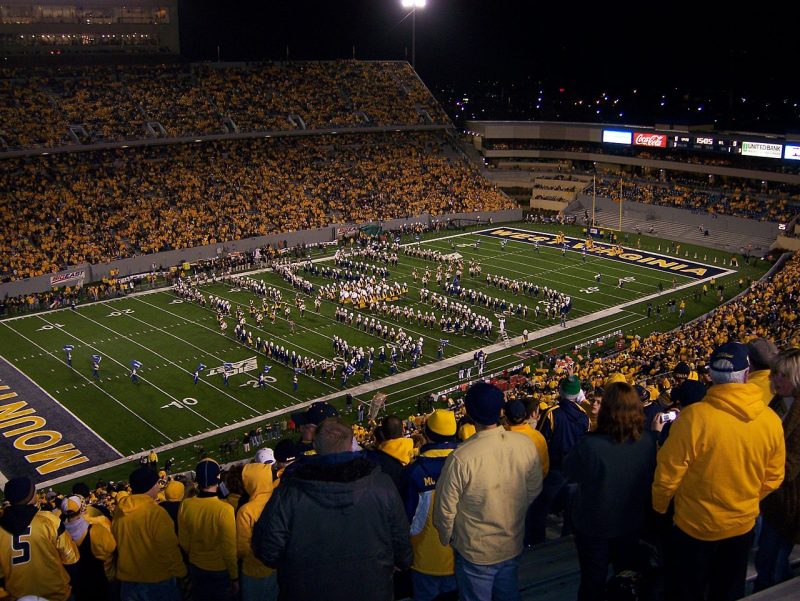
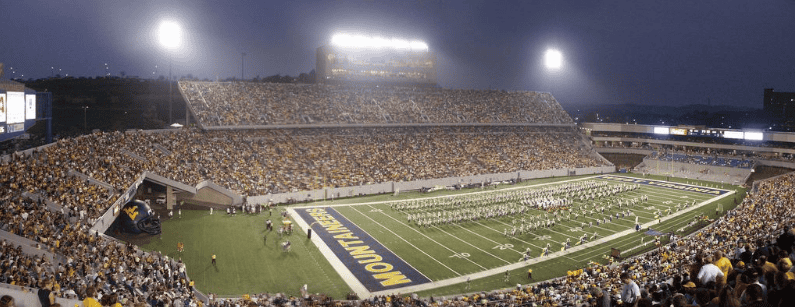
Mountaineer Field at Milan Puskar Stadium isn’t just a football venue — it’s a 60,000-seat declaration that West Virginia takes this sport personally. Built in 1980 and carved into the hills of Morgantown, it has the kind of compact, steep, double-tiered ferocity that makes opposing teams wish they’d scheduled an easier road trip. The Mountaineer faithful are notoriously loud, unapologetically passionate, and unified in a way that only a state where the university is the big-league team can produce.
The atmosphere here consistently ranks among the best in the Big 12, and if you’ve never heard 60,000 people swell into “Take Me Home, Country Roads” after a win, you’re missing one of college football’s legitimate bucket-list moments. Here’s everything you need to make the most of your first — or fifteenth — trip to Morgantown.
Seating Overview at Milan Puskar Stadium
The lower bowl is one continuous ring running roughly from section 97 around to 134, and the upper deck sits on the sidelines only — the end zones are single-tier, with the two-story Touchdown Terrace suite structure closing off the north end. That matters more than it sounds: there is no cheap upper end zone here, so the budget seats are on the ground behind a goal post, not in the sky.
Learn three landmarks and you can read the chart. The WVU bench fronts sections 124–127 on the west sideline; the visiting bench fronts 104–107 on the east; and students pour into 109 and 110, just around the corner from the visitor sideline, with overflow into lower 121 and upper 205–211. Visiting fans are grouped in 98, 99 and 100. Section 133 is the alcohol-free Family Fun Zone, and it’s printed right on the ticket.
Best Non-Premium Seats
WVU Sideline Lower Level (Sections 124–127): The bench side, on the 40s and midfield, surrounded by the people who have held these seats for decades. It’s the best combination of sightline and crowd in the building. The catch is that almost all of it is season-ticket territory, so the resale market is your way in and the price says so.
Visitor Sideline Lower Level (Sections 104–107): Identical geometry from the other side of the field, usually cheaper, and you spend the afternoon looking at the WVU bench and the student corner rather than the backs of their heads. Visiting fans get grouped up the row in 98–100, so you’re not stranded. The tradeoff is you’re on the quieter sideline in a stadium where noise is the entire product.
Upper Deck Sidelines (200 Level): The deck is steep and it hangs close to the field, so you get the whole play developing without feeling exiled. For a night game this is arguably the better seat, because the noise collects up there. Just know the climb is real and there’s no shelter if the weather turns.
Best Value Seats
Upper Deck Directly Above the Benches: You give up the intimacy of the lower bowl and keep almost everything that makes the seat good — midfield angle, full field vision, and the same crowd noise, which travels up rather than out. It’s routinely a fraction of what the equivalent lower row costs. Bring layers; the upper deck catches every bit of wind.
Any Seat, Plus a $20 Seatback: WVU rents single-game seatbacks for $20, buyable online with your ticket as an add-on or at the stadium on game day, and it’s cashless like everything else here. On aluminum benches, for a game that runs past three hours in the cold, that’s the highest-return $20 on the entire trip. Nobody selling you a ticket will mention it.
Cheapest Way In
South End Zone Lower Bowl: The cheap end of the building, behind the goal, at ground level. You lose depth perception on anything happening at the far end, and you’ll watch a lot of football through the back of a defensive line. What you keep is the noise, the musket and the full pregame, which is most of what people come here for.
The 304 Mobile Pass: For $304 plus fees you get all seven home games — under $50 a game — with a randomly assigned seat in the upper deck or south end zone each week and no Mountaineer Athletic Club per-seat contribution attached. If you’re going to more than two games, nothing else is close. Inventory is limited and it has sold out in past seasons, so it’s a spring purchase, not an October one.
Our Pick
Sections 125–126 on the WVU sideline, rows 20–35, with a rented seatback. You’re at midfield, high enough in the lower bowl to see cleanly over everyone in front of you, and planted in the middle of the most invested block of fans in the state. If a first-timer takes one piece of advice off this page, it’s that one.
Weather at Milan Puskar Stadium
Nothing in this stadium is covered — no canopy, no overhang worth the name, no dry seats anywhere in the bowl. Umbrellas are prohibited inside, which catches people out every year, so pack a poncho instead and treat it as required kit for anything from mid-October on.
A noon kick in early September is genuinely hot on aluminum, and the late-season games are the opposite problem: once the sun drops behind the ridge the temperature falls faster than the forecast suggests, and the upper deck takes the wind first. Layers, not a single heavy coat — you’ll want to shed them by the second quarter and put them back on by the fourth. Here is the Weather Forecast for Morgantown.
What to Avoid (and What’s Worth Trying Once)
The Lower End Zone Corners: Where the bowl bends from sideline to end zone you get the worst of both — a diagonal look at the near 20 and no real feel for the far half of the field. If the price gap between these and a proper end zone or upper sideline seat is small, take the other one.
Overpaying for the Ends on a Big Game: Resale prices for marquee opponents climb across the whole building, including the seats nobody wants. Check what an upper-deck midfield seat costs before you commit to an end zone ticket at the same number, because on the big days they often converge.
Worth It Once — The Seats Next to the Students: You can’t sit in 109 or 110 without a student ID, but you can sit near the overflow. The first 2,200 students through the east gate get wristbands for the lower bowl, and everyone after that fills lower 121 and upper 205–211 — so a ticket adjacent to those is a legitimate, cheap way to spend three hours inside the loudest part of the stadium. You will stand the whole game. That’s the deal.
Premium Seating & Clubs
Understand the scale before you start hunting: premium is roughly 3.4% of capacity here, against a national average closer to 6.5%, and every suite and club seat on the west sideline and in both end zones is spoken for with a waiting list behind it. Single-game premium access effectively doesn’t exist. Everything below runs through the Mountaineer Athletic Club on a season basis.
The Best Club — The Terrace, North End Zone: Outdoor assigned seats in the north end zone paired with a climate-controlled indoor club carrying a buffet, a cash bar, TVs and private restrooms. Currently branded the Diversified Energy Terrace, it’s the one premium product that changes what a cold November afternoon in Morgantown feels like. Terrace ticket holders get the club; the seats alone don’t.
Suites and Field-Level Lounge: The 18 suites in the two-story Touchdown Terrace complex sit above the north end zone, each with indoor seating, retractable windows, a refrigerator and TVs, and they hold 15–20 people on a full-season commitment. At the other end, the MAC Field Lounge is a sectioned-off upscale seating area at field level in the south end zone for donors at a set giving level.
Group Tickets: Groups of 20 or more in non-premium areas are handled by the WVU Ticket Office at 1-304-293-8424 with a discount attached, and they aren’t bookable online — you have to call. REVELxp also runs turnkey full-service tailgate tents outside the north gate for anyone who wants the setup without hauling it.
Milan Puskar Stadium Renovations: The West Tower Project
The press box on the west side hasn’t been meaningfully touched since the stadium opened in 1980, and WVU is planning to demolish it outright. The West Tower Project would replace it with a taller structure carrying three tiers of premium — club, founders and suite levels — plus modern broadcast space, at an estimated $156 million funded through donations, sponsorship and naming rights.
The Board of Governors gave first-phase approval in November 2025 and cleared design development in February 2026, with a further authorization vote still to come once fundraising and design firm up. Athletics has aimed at the 2028 season. Expect roughly 1,000–2,000 general seats to disappear on that sideline when it happens, and expect the waiting list for premium to get shorter. If you’ve been trying to get into a club here, this is the project to watch.

Milan Puskar Stadium Capacity and Seating Chart
Milan Puskar Stadium holds 60,000, a figure that’s been steady since 2004 and one that’s routinely beaten by the crowd that actually shows up — the record is 70,222 against Miami on November 20, 1993, back when the listed capacity sat at 63,500.
Two quirks of the chart are worth knowing before you shop. The lower bowl is a single unbroken ring in the 90s and 100s–130s rather than four separate stands, so section numbers run continuously around the building and the sideline blocks aren’t where a first glance suggests. And the upper deck exists only on the two sidelines, which is why the 200-level list stops well short of wrapping the ends. Here is the official interactive Milan Puskar Stadium seating chart with 3D seat views.
Getting the Best Tickets
Most of this stadium is season-ticket territory, so single-game buyers work two channels: WVUGAME.com when tickets first release each summer — Mountaineer Athletic Club members and existing season holders get the window first, the general public a couple of days later — and SeatGeek, WVU’s official fan-to-fan marketplace, for everything after that. If you’re coming to multiple games, the mobile passes beat everything: the 304 Mobile Pass for the cheap seats, or the 681 Mobile Pass, which puts you in the Red Zone with at least one lower-level game guaranteed.
Three-game mini packs sit in between. For a single non-rivalry game, set an alert and wait — prices soften in the final 72 hours, especially after a loss. When the Backyard Brawl is on the home schedule, throw that playbook out: WVU has kept the Pitt game out of mini packs and single-game sales entirely, leaving season tickets, the mobile passes or resale, and resale will hurt.
Milan Puskar Stadium Bag Policy
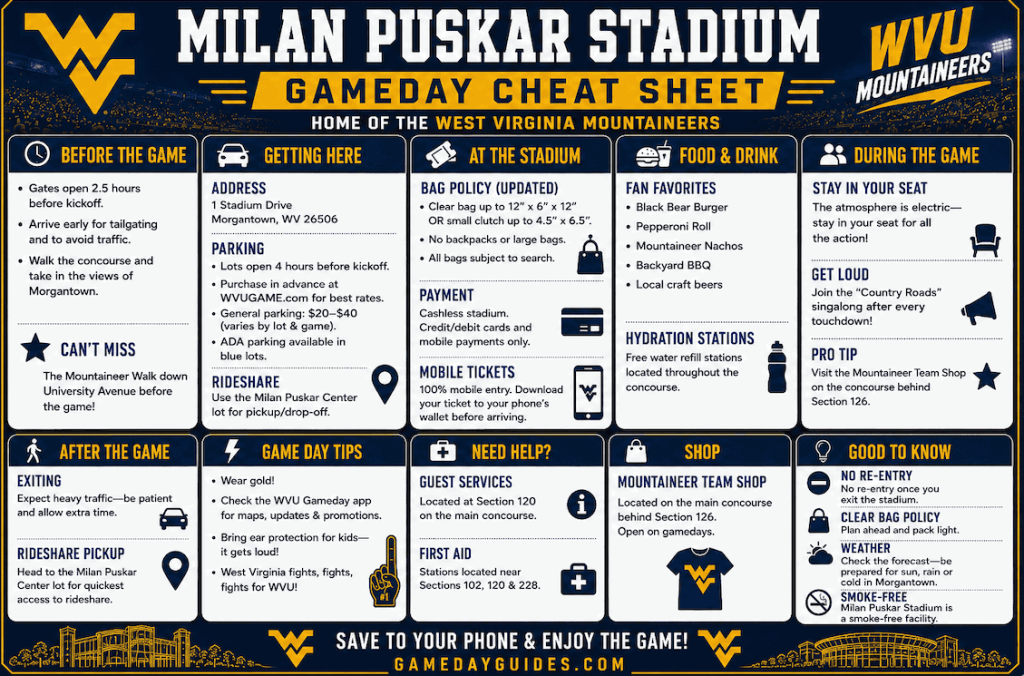
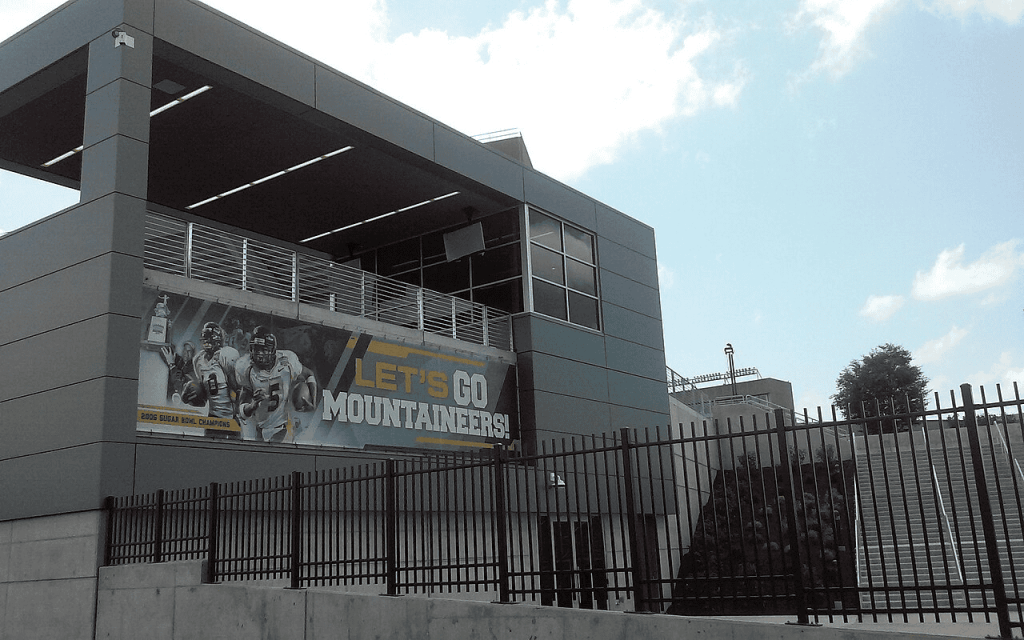
WVU enforces a clear bag policy at every ticketed event, and the dimensions are strict. You get one clear plastic, vinyl or PVC bag no larger than 12″ x 6″ x 12″, or a one-gallon clear freezer bag, plus one small clutch no bigger than 4.5″ x 6.5″ that doesn’t have to be clear. Logos printed on a clear bag can’t exceed 4.5″ x 3.4″.
Backpacks, diaper bags, fanny packs, cinch sacks and camera cases are all out regardless of size. Chairbacks are allowed up to 16″ x 9″ x 16″. Medically necessary items are fine after inspection at a designated gate. The fastest move is bringing no bag at all — there’s an express lane at the West and North gates for fans carrying nothing.
Cashless Stadium and Other Policies
You can bring a sealed drink in. Unopened plastic bottles of water or soft drinks are permitted — a rule most Power 4 stadiums have scrapped and most guides get wrong for this one. Hard containers, open containers and any outside alcohol are refused at the gate.
Everything is cashless. Concessions, merchandise and the parking lots — including the Green Lot — all run card or phone only. Don’t arrive with cash and a plan.
Walk-through detectors at every gate, no re-entry. The screening is pass-through, so you keep your phone and keys in your pocket, but it still adds minutes when the lines build. Once you’re out, you’re out for good.
Also banned: umbrellas, selfie sticks, drones, laser pointers and any sign or banner not tied to WVU Athletics. Personal video cameras are fine as long as the camera doesn’t exceed 12″ x 12″ x 12″.
Accessibility: the North, Northwest, Northeast, Southeast and Southwest gates are all ADA accessible, and courtesy golf-cart shuttles circle the stadium stopping at every gate except North, running from two hours before kickoff until the middle of the first quarter and again from the start of the fourth. ADA parking is sold day-of in the Brown Lot at the WVU Law School with accessible vans running to the Southeast and Southwest gates. For anything on game day, call the Fanline at 304-293-FANS or text WVU to 83200.
Full policy details: wvusports.com/milan-puskar-stadium
Getting to Milan Puskar Stadium
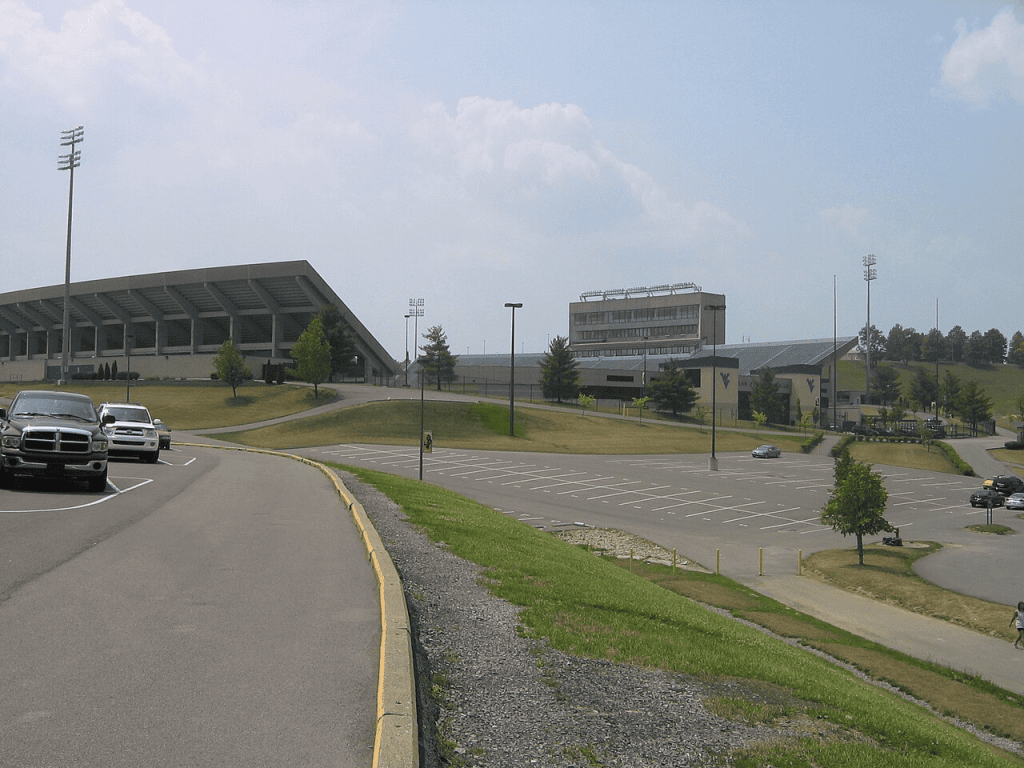
Morgantown is a hill town with one road network and 60,000 people aiming at the same corner of it, and the smartest play isn’t driving to the stadium at all — it’s parking downtown for five dollars and riding the PRT up. Coming in from the interstate, use the University Avenue or Pierpont exits off I-68 rather than fighting Star City on I-79, where the delays stack up.
Parking at Milan Puskar Stadium
Lots open at 7 a.m. for Saturday games and anything parked in a permit lot before then gets towed, permit or not. The Gold Lot is the walkable pre-purchase option at $45 through wvugame.com and it sells out on season passes — it was gone before the 2026 opener. The Green Lot and Green garage are the day-of options at $25, also walkable, with a complimentary ADA shuttle running from there to the Southeast and Southwest gates. Med Center Drive, the road directly in front of the stadium, is closed to everyone but Blue Lot permit holders. Tents are capped at 10′ x 10′, can’t go up before 7 a.m., and require a permit for that lot with your vehicle parked beside them.
The hack: pull a ticket from any Morgantown Parking Authority garage downtown up to six hours before kickoff and you pay a $5 flat rate for the day, with your car sitting safe until midnight. You have to pull the ticket inside that window or you lose the rate. Then walk to the Walnut Street PRT station and ride up.
Riding the PRT to the Game
WVU’s Personal Rapid Transit is a fleet of driverless pod cars running on an elevated track between downtown and the Health Sciences campus, and on football game days it is completely free for everyone — no fare, no ID needed, unlike the 50 cents the public pays the rest of the year. It runs from 9:30 a.m. until one hour after the game ends, and the Health Sciences station drops you a short walk from the stadium, bypassing the traffic entirely.
It’s also the strangest ride in college football and worth filming once. The catch is the return trip: service stops one hour after the final whistle and everyone wants the same pod at the same time, so either move immediately or let the crowd bleed off at a bar first.
Rideshare, Buses and Walking
Uber and Lyft both work here, and WVU designates an official rideshare and taxi lot at United Bank – Suncrest, 990 Elmer Prince Drive — go there rather than trying to summon a car from the gates, where the roads are closed or reversed after the game. MountainLine runs stadium buses from the Mountaineer Mall starting two hours before kickoff and continuing at least an hour after, $3 round trip with kids 3 and under free, which makes the mall a legitimate free park-and-ride. If you’re staying downtown or near campus, walking up is perfectly doable and the foot traffic on Don Nehlen Drive is half the experience.
Mountaineer Gameday Tips & Hacks
Morgantown reorganizes itself around one event. Lots fill at dawn, the bars near campus go gold and blue by ten, and the rituals start long before kickoff — the Mantrip, the coal, the wave to the hospital, the musket, the song. First-timers are consistently caught off guard by how much of the day happens outside the stadium. Here’s how to work it.
Arrival Strategy and Gates
Gates open 90 minutes before kickoff. That’s the number to plan around — showing up two hours early leaves you standing outside, and showing up 20 minutes out puts you in a detector line while the band plays.
Carry nothing and use the express lane. The West and North gates run a dedicated lane for fans without bags. Put your phone, card and ID in a pocket and you’ll walk past the entire clear-bag queue.
The coal block at the Northeast gate is your meeting point. It’s unmistakable, it’s where the Mantrip ends, and it’s the one photo everyone wants — which makes it the easiest place in Morgantown to say “meet me there.”
Pregame at Almost Heaven Village
Almost Heaven Village is free and opens well before the gates. WVU moved it to the North Lawn next to the Blue Lot for 2026, and it runs roughly three and a half hours out until 30 minutes before kickoff with food trucks, inflatables, a photo booth, caricature and balloon artists, and the spirit squads and mascot circulating. No ticket required to walk in.
The Hall of Traditions is the underrated stop. Inside the Milan Puskar Center, it opens three hours before kickoff and closes 30 minutes out, and on a cold day it’s a warm 20 minutes with the program’s actual history in front of you.
Kids Zone runs inside the indoor practice facility. Free, open to the public, games and inflatables in the front half of the Caperton IPF from two and a half hours out until 30 minutes before kick.
WVU Traditions: The Mantrip, the Musket and Country Roads
Get to the Mantrip route about two and a half hours before kickoff. The team is dropped at the corner of Don Nehlen and Med Center drives and walks to the Northeast gate through a corridor of fans, escorted by the Mountaineer, the cheer squad and members of the Pride of West Virginia. The exact time is published in each game’s information release — check it, because it has shifted between 2:15 and 2:30 in recent seasons.
Know what the coal actually is. The 350-pound block every player touches on the way in came from the Upper Big Branch mine, where 29 men died in 2010. “Mantrip” is the name of the shuttle that carries miners underground at the start of a shift. Nobody explains that to visitors, and it changes how the walk reads.
Stay for the hospital wave — it happens right after the Mantrip. Players and fans turn and wave up at the windows of WVU Medicine Colisano Children’s Hospital next door. It’s a pregame moment, not a quarter break, so if you’re planning to arrive at gate-open you’ll miss it entirely.
The musket is louder than you’re expecting. The Mountaineer fires a real black powder rifle during introductions and after every score. Bring ear protection for small kids and warn anyone jumpy the first time.
Never leave before “Country Roads.” The band has played it in the pregame show since 1972, but the version that matters comes after a win, when the players walk the perimeter high-fiving fans and 60,000 people sing it together. John Denver himself sang it here to dedicate the stadium in 1980. There is no highlight reel substitute for standing in it.
The Student Section at Milan Puskar Stadium
It’s first-come, first-served now. The first 2,200 students through the east gate get wristbands and the lower-bowl sections 109 and 110; upper 205–211 and lower 121 don’t even open until those wristbands are gone. That’s why the student gate line forms absurdly early for big games.
If you’re buying near 121 or 205–211, know what you’re buying. Those are the overflow blocks, so a “regular” seat there comes with student-section volume and everyone on their feet for four quarters. Fantastic if that’s what you want, miserable if you brought your parents.
Food and Drink at Milan Puskar Stadium
Concession prices here are genuinely reasonable. WVU’s fan-first pricing keeps the basics in single digits, which after a season of $9 waters at NFL stadiums registers as a small act of decency. All of it is card only.
Eat a pepperoni roll before you go in. Soft bread baked around pepperoni, invented in this state’s coal camps as a lunch that didn’t need refrigeration, and sold at gas stations and bakeries all over Morgantown. It costs a couple of dollars and it’s the single most West Virginian thing you can eat.
Beer is sold on the concourses, and there’s a reward for skipping it. Sodexo runs controlled beer sales inside the gates; nothing alcoholic comes in or out of the stadium. Designated drivers can sign up at booths inside for a wristband and a free soda coupon.
Go at the end of the first quarter. Halftime lines here are brutal because the concourses are narrow. The quarter break is the window nobody uses.
Best Photo Spots at Milan Puskar Stadium
The coal monument at the Northeast gate. The signature shot, and it means something once you know the story behind it. Get there before the Mantrip crowd builds.
The hillside approach from the Health Sciences side. Walking up from the PRT station gives you the stadium rising off the ridge with the hospital beside it — the establishing shot that actually looks like Morgantown rather than Anywhere, USA.
The lots at 10 a.m., not the stadium. Grills going, gold and blue in every direction, mountains behind it. Shoot wide.
Getting Out After the Game
Don’t try to drive out immediately. No vehicles are allowed onto Don Nehlen Drive from Route 705 after games, both lanes run outbound only, and priority routes get cleared before secondary ones. Fans heading for I-68 or I-79 are pointed at the Mileground and Route 705.
The best exit strategy is a bar. If you parked downtown, the PRT runs one hour past the final whistle and the whole stadium is in that line with you. Kegler’s or the Varsity Club for 45 minutes costs you nothing and saves the queue.
Ruby Memorial is closed to the public on game days. It sits right beside the stadium and it is not a cut-through, a bathroom or a warm place to wait. Visitors need passes arranged in advance.
Bringing Kids to a WVU Game
Everybody needs a ticket, at any age. There’s no lap-child policy and no infant exception at Milan Puskar. Count your party before you get to the gate, because this one catches families every season.
Section 133 is the alcohol-free Family Fun Zone. It’s a real policy, printed on the ticket and enforced, not a line on a website.
Strollers can’t go to your seat, but they can be checked. Guest Services on the north and south concourses will hold them. Plan the walk in accordingly.
Do the Kids Zone and the musket warning in that order. Burn the energy in the indoor practice facility pregame, then have ear protection ready before introductions.
Milan Puskar Stadium History and Record Attendance
It opened on September 6, 1980. Built for around $22 million on a hillside above the medical campus, replacing the old Mountaineer Field downtown, and dedicated by John Denver singing “Country Roads” before Don Nehlen’s first game in charge. The playing surface still carries the old name — officially it’s Mountaineer Field at Milan Puskar Stadium.
The name came from a $20 million gift. Milan Puskar co-founded Mylan Pharmaceuticals in Morgantown and donated the money to WVU in 2004; the stadium has carried his name since.
Record attendance is 70,222. Set on November 20, 1993 against Miami during WVU’s undefeated regular season — more than 10,000 above today’s listed capacity, in a building that has been expanded and renovated repeatedly since, most recently in 2016 and 2017.
Gear, Tech and the Team Store
Download your ticket before you leave the hotel. Everything is mobile through the WVU Sports app or SeatGeek, and 60,000 phones in a river valley is not a recipe for reliable data. Load it into your wallet the night before.
Buy merch before the gates open, not at halftime. Sizes thin out fast on big days, and the concourse stores are the worst place in the stadium to be during a break.
Check the theme before you pack. WVU runs Gold Rush, Coal Rush, Stripe the Stadium and White Out games most seasons, and Stripe assigns colors by odd and even section number. Turning up in the wrong one is a small, avoidable tragedy.

Hotels in Morgantown
Morgantown hotels on gameday weekends — especially for Pitt and major rivalry games — book out weeks in advance at premium rates. Book as early as possible; last-minute availability is essentially nonexistent for marquee matchups.
Best Areas to Stay
Near the Stadium (University/Evansdale area): The closest you can get without being in a parking lot. Walking to the stadium is possible, bars are nearby, and you’re completely inside the gameday bubble. Best for fans who want total immersion.
Downtown Morgantown: About a mile from the stadium, downtown gives you access to the best restaurants and bars without being surrounded entirely by parking lots. You’ll walk or rideshare to the game. Great option if you’re treating this as a full weekend trip.
Gameday Weekend Hotels
Hilton Garden Inn Morgantown — About a half mile northeast of the stadium, walking distance confirmed. Mid-range, reliable, popular with visiting fans. Books fast.
Holiday Inn Morgantown – University Area — Walking distance to the stadium, solid mid-range option. Convenient location makes it a consistent pick for gameday visitors.
Hampton Inn Morgantown — Within walking distance per fan reviews. Reliable budget-to-mid-range Hilton property; a sensible base for the weekend.
Hotel Morgan (Wyndham) — Downtown Morgantown, a historic property with character. Mid-range, great access to pregame bar scene, about a mile to the stadium.
Morgantown Marriott at Waterfront Place — Downtown on the Monongahela River, the upscale option in town. Solid restaurant, good bar, and a legitimate luxury experience by Morgantown standards.
Courtyard by Marriott Morgantown a reliable Marriott mid-range a few miles out, good if the closer hotels are sold out.
Budget Options
Holiday Inn Express Morgantown — More affordable than its IHG sibling in the University Area, and rated well by independent reviewers. You’ll need a ride to the game, but it’s a solid place to sleep on a budget.
Euro Suites Hotel — An independent property that tends to fly under the radar of chain-obsessed travelers. Good reviews, lower price point, and solid value if you’re not prioritizing walkability.

WVU Gameday: Where to Go in Morgantown
Morgantown’s gameday splits into three pockets and knowing which one you want shapes the whole day. The lots around the stadium are the tailgate proper — grills going by 8 a.m., RVs that arrived Friday, and the Almost Heaven Village on the North Lawn if you didn’t bring your own setup.
Ten minutes east, Suncrest Towne Centre has quietly become the sit-down pregame hub, with Primanti Bros. and The GOAT drawing the crowd that wants a table and a TV before walking or riding over. And downtown on High Street is where the night happens, win or lose, with a mile of bars that go from ten-deep to celebratory the moment the final whistle reaches them.
If you only get one call right, make it this: eat before the game, drink after it, and be inside the stadium two hours early rather than fighting for a barstool you’ll abandon anyway.
Best Pregame Bars Near Milan Puskar Stadium
Varsity Club — On Willowdale Road directly across from the stadium, alumni-owned, enormous menu, deep beer list. The closest thing to a walk-out-the-door pregame in Morgantown, and calmer than you’d expect for the location.
Kegler’s — The Chestnut Ridge Road institution, attached to a bowling alley, where the coaches’ radio shows are taped and the wings come out by the bucket. Mayhem on big days; go early or go with the flow.
The GOAT Country Roads Pub — WVU’s NIL-branded bar in Suncrest Towne Centre, newer and a notch more polished than the campus dives, with loaded tots that are worth the trip on their own.
Mountaineers Taphouse — On Oakland Street near campus with 40-plus taps and specials that shame the rest of the market. The place to go when you want a beer list rather than a scene.
Crockett’s Lodge — Up University Avenue toward Star City, the townie-and-alumni bar for people who’ve aged out of High Street but not out of Saturdays. Good Philly, cheap drafts, no pretense.
Restaurants in Morgantown
Mario’s Fishbowl — A Morgantown rite of passage: beer and sangria served in actual fishbowls, wings that hold up, and a dive-bar warmth that three locations haven’t diluted. The original on Richwood Avenue is the one to do; the Suncrest location on University Avenue is closer to the stadium.
Black Bear Burritos — The Evansdale location on University Avenue, a few minutes from the stadium, doing oversized burritos and bowls with a real beer list. The most reliable good meal near campus and the easiest place to feed a group with mixed diets.
Sam’s Pizza — Next door to Mario’s on University Avenue, a decades-old Morgantown pizza institution that players and locals have kept in business through every coaching change. Thin, loaded, open late.
Iron Horse Tavern — Bottom of High Street downtown, a proper gastropub with local taps and a kitchen that outperforms the room. The best sit-down dinner within walking distance of the downtown hotels.
Primanti Bros. — The Pittsburgh import with fries and slaw inside the sandwich, and yes, it’s a Pittsburgh thing being eaten enthusiastically in Morgantown. Note the downtown High Street location closed in 2025 — the only one left is in Suncrest Towne Centre, an easy stop on the way in.
Why You Should Go
There are louder stadiums, bigger stadiums, and fancier stadiums in college football — but there are very few where the entire experience feels this personal. Milan Puskar Stadium exists in a state where the university is the biggest thing going, the fans have nowhere else to channel their pride, and the tradition of “Country Roads” at the end of a win creates a communal moment you genuinely cannot replicate anywhere else. Come for the football, stay for the atmosphere, and don’t you dare leave early.
You can check out all of our college football guides here, as well as these regional gems:
Written by Brad Richards, Founder of Gameday Guides. This guide includes insights from personal visits as well as updated info from team sources, fan forums, and stadium policies. We aim to help you plan with confidence — enjoy your gameday.