
Best Seats At Ben Hill Griffin Stadium
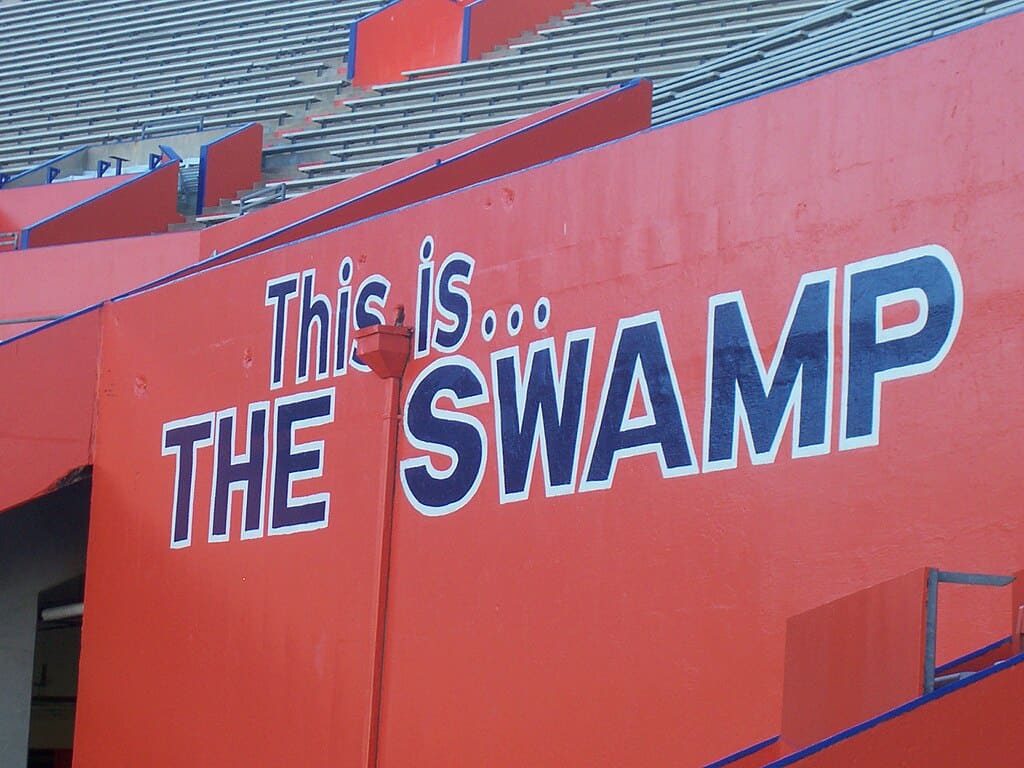
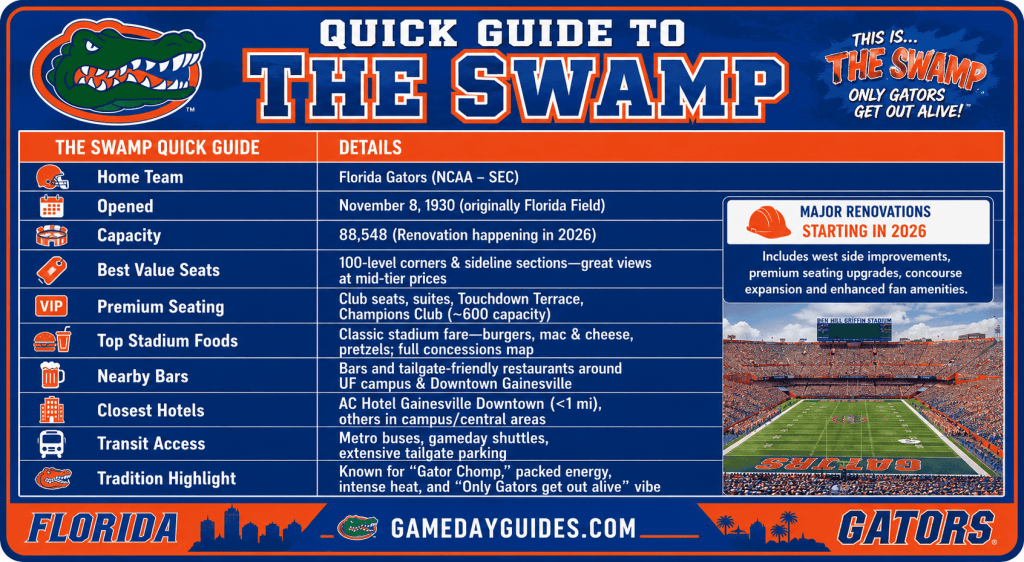
Ben Hill Griffin Stadium — everyone just calls it The Swamp — is a steep bowl dug below ground level in the middle of the University of Florida campus, and that single design choice is why it’s one of the loudest, most claustrophobic places to play in college football. The field sits beneath the surrounding terrain, the stands rake up sharply right on top of it, and the whole structure traps both noise and heat by design. The nickname came from Steve Spurrier, who pointed out that a swamp is hot, sticky, and dangerous, and that’s where Gators feel at home while everyone else feels tentative. It holds 88,548, it’s the largest stadium in Florida, and it hosts the occasional concert too (Morgan Wallen played back-to-back nights here in May 2026). Here’s the one honest thing to know before you commit to a ticket: a noon kickoff in September is genuinely brutal, and where you sit determines whether you spend the afternoon enjoying the game or just surviving it. That’s where this guide starts.
Seating Guide
The thing that drives a good seat versus a bad one here isn’t really sightlines — the steep bowl means almost every seat sees the field well. It’s sun. Which sideline you land on, and how high you sit, decides your whole afternoon for any day game from August into October. Get that right and the rest is detail.
The shorthand that holds up: the west side is the home sideline and the shade side, the east side is the student section and the sun side, and the end zones trade a worse angle for a cheaper ticket. Everything below builds off that.
Best Non-Premium Seats
The lower west sideline at midfield is the classic Gators seat — home sideline, low-numbered sections, close to the 40s and 50s, high enough to watch plays develop and low enough to feel the noise come up out of the bowl. This is also the side that picks up shade as the afternoon goes on, which matters more than any sightline advantage in September. The catch is price: these are the most in-demand reserved seats in the building and they’re priced like it, often $100–$200+ depending on the opponent.
The lower east sideline, near the student section, puts you on the 40-yard-line range with a strong angled view and close enough to feed off the student energy without being swallowed by it. The atmosphere over here is the loudest in the stadium. The tradeoff is the sun — this side bakes for day games, so it’s a much smarter buy for a 7 p.m. kickoff than a noon one.
A handful of lower-bowl sections have actual chairback seats instead of aluminum bleachers, which is a real comfort difference over four hours in the heat. You give up nothing on the view; you just pay a little more for a back to lean against. If you’re bringing someone who won’t love sitting on metal in the sun, it’s worth asking specifically for chairback rows when you buy.
Best Value Seats
The upper-deck west sideline is the smart-money play. You’re on the home side, you get the same shade progression the expensive lower seats get, and the elevation gives you the all-22 coach’s view of the whole field — and you pay a fraction of what the lower sideline costs. The honest downside is that you’re a long, steep climb up and farther from the noise. For a fan who cares more about watching the game develop than being in the front row of the chaos, this is the best dollar-for-dollar seat in the stadium.
The north end-zone corners, mid-level, are the other value pick. The angle from the corner is better than straight-on end zone — you can actually follow plays — and prices drop well below sideline rates. Some of the back rows up here also catch a bit of overhang shade, which is a quiet bonus for a day game.
Cheapest Way In
The upper-deck end zones are the cheapest real tickets in The Swamp, often in the $30–$50 range for a non-marquee game. You’re high and far, player numbers get hard to read, and you’ll rely on the videoboard for detail — but you can see the entire field, the scoreboard’s right there, and you’re surrounded by people who simply wanted to be inside the building. If the goal is “experience The Swamp without spending much,” this does the job.
The student section is its own kind of cheap-and-loud answer if you qualify for student pricing. It’s relentless — standing the entire game, chanting from before kickoff, generating most of the noise that makes this place intimidating. Buy here if you’re young and want the full-contact version of college football. Avoid it entirely if you want to sit down and actually watch.
Our Pick
If a friend were coming for their first Swamp game and wanted one piece of advice, it’d be this: get the upper-deck west sideline. You get shade, the best view of the whole field, the home-side atmosphere, and you keep money in your pocket for parking and post-game. It’s the seat that makes a Florida day game enjoyable instead of endured.
Heat & Shade
This is the most important decision you’ll make here, so it’s worth being blunt about it. The Swamp is an open bowl in north-central Florida, and day games from August through October are hot in a way that catches out-of-towners every single year. Fans pass out at games; the stadium runs misting cooling stations for exactly this reason.
The west side is the shade side. As the afternoon goes on, the press-box structure throws shade across the west stands, and the seats highest up and under the overhang get relief first and keep it longest. If you’re bringing kids or older family members to a day game, sit on the west side — it’s not a preference, it’s the difference between a good day and a medical tent.
The east side gets full sun and holds it. That’s the student side, and students can take it; if you’re heat-sensitive, don’t put yourself over there for a noon or 3:30 kickoff. And whatever side you’re on for a day game, bring a hat, sunscreen, and water, and know where the cooling stations are. Night games (7 p.m.) flip all of this — the whole stadium is comfortable, and you can sit wherever you like.
What to Avoid (and What’s Worth Trying Once)
The east-side sun sections for a noon or afternoon game are the clearest “don’t” in the building. They’re sometimes a little cheaper, and that discount is a trap — you’ll spend four hours baking and miss half the game looking for shade. Save that side for a night kickoff.
The very front rows anywhere sound great and aren’t. The field sits below ground level, so the low rows don’t give you the elevation you’d expect — you lose the far sideline and the geometry of plays. A dozen rows up is genuinely a better watch.
Worth it once: the student section for a ranked-opponent night game. The sightlines aren’t the point and you won’t sit down once, but standing in the middle of that wall of noise for a top-15 SEC matchup is one of the real college-football experiences in the country. Do it once even if you’re a sit-and-watch person the rest of your life.
Premium Seating At The Swamp
The Swamp’s premium options all solve the same problem — Florida heat — by adding air conditioning, real food, and chairback seats. There are a handful of distinct experiences, and most of the headline clubs require a per-seat booster contribution on top of the ticket, so they skew toward season holders and donors rather than single-game buyers. Here’s how they actually differ.
The Best Premium Experience
The Bull Gator Deck, at field level near the Florida sideline, is the standout because of where it puts you — down low, close to the action, behind big windows that open you right into the bowl, with a granite bar, high-tops, lounge seating, and a wall of TVs. It’s the most immersive premium space in the building, the one that actually feels like you’re at The Swamp rather than watching from a glass box above it. The catch is access: this tier sits behind a high-level Bull Gator booster commitment, so it’s not something you casually buy for one game.
Best Value Premium
If you want the premium experience you can realistically get into and it should over-deliver for what it costs, aim at the Holloway Touchdown Terrace — the air-conditioned club at the top of the north end-zone sections (the 218–229 range), around a $2,200-per-seat contribution level. You get a private entrance, indoor climate-controlled relief with the buffet running pre-game, private restrooms, and newer chairback seats. The honest tradeoff is the view: end-zone angles aren’t as good for following the game as a sideline seat. But for a Florida day game, being able to duck into air conditioning whenever you want is worth a lot, and this is the cheapest door into that. The naming sponsor changes from time to time, so think of it by location — the north end-zone club — first.
Other Premium Options
The Champions Club sits up on the west sideline (the 501–513 range, upper level), covered and climate-controlled, with chairback seats and some of the best views in the stadium looking down the home sideline toward campus and the city. It runs a bit higher than the Touchdown Terrace per seat. If you want premium comfort and a great sideline view rather than the end-zone angle, this is the trade-up.
Skyboxes and Gator Dens are the enclosed suite-style spaces, and they’re sold on a full-season basis only — no single-game buys — so they’re really for businesses and season holders.
Suites & Group Options
The traditional luxury suites hold roughly 15–20 guests with catering available, private climate-controlled space, and premium parking, and they’re booked by corporate groups and for big-deal celebrations. Pricing scales hard with the opponent — a marquee SEC game runs into the thousands per suite. Because suites and dens are season-only commitments, a group wanting a one-game premium outing is usually better served buying into one of the club areas above; for suite leasing, the university’s premium-seating office (Gator Hospitality) is the place to start.
Ben Hill Griffin Stadium Seating Chart and Stadium Capacity
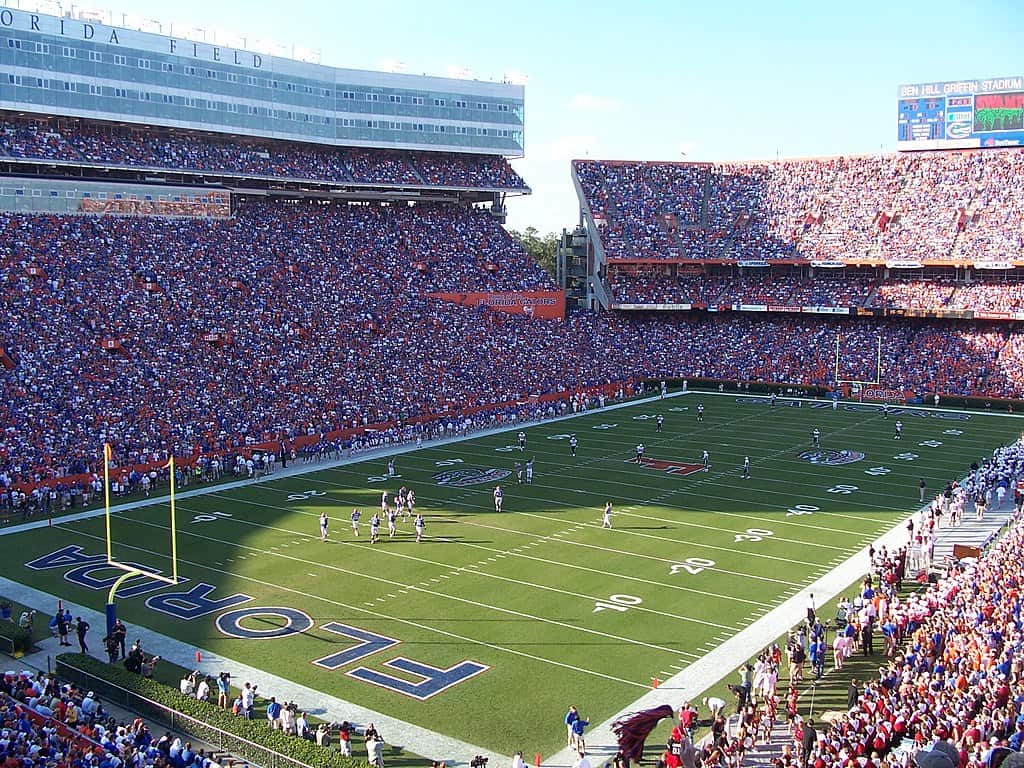
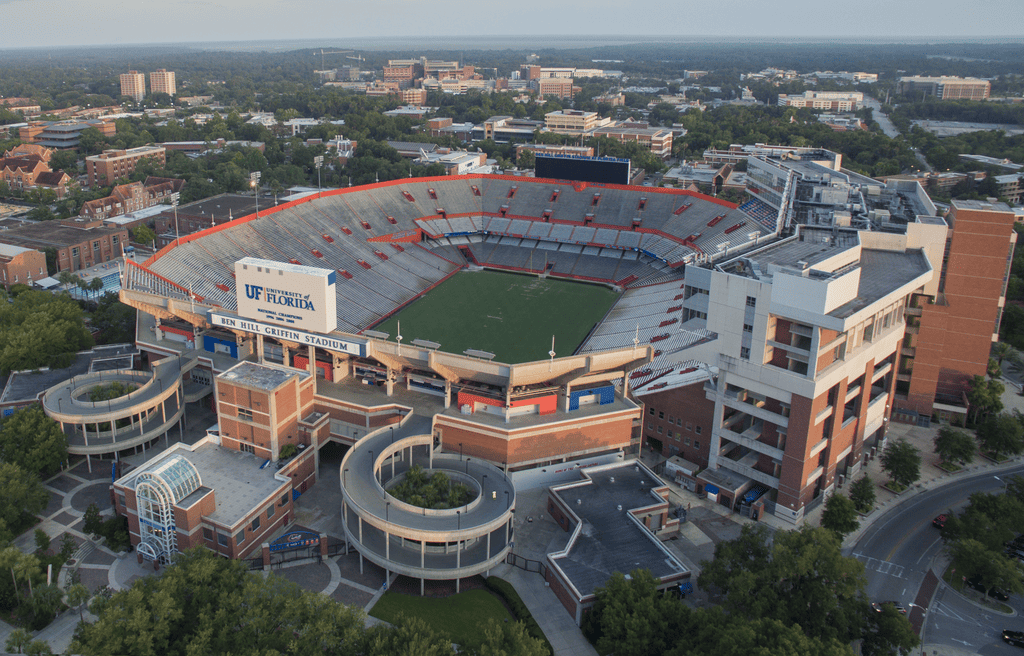
The Swamp seats 88,548, making it the largest stadium in Florida, in a continuous bowl with the playing surface below ground level. The lower bowl wraps the field, an upper deck rises above the sidelines and end zones, and the premium clubs (Champions Club on the upper west, Touchdown Terrace at the north end zone, the field-level Bull Gator Deck) are folded into that structure. The west side is the home sideline; the student section fills the east.
You can visit the Official Seating Chart Here.
Florida Gators Football Tickets Tips and Tricks
Florida sells out — the program has run a long streak of consecutive home-game sellouts — so this is not a market where you stroll up and find cheap seats on game morning. Strategy matters, and it changes completely depending on which game you’re buying.
Know your demand tier first. Not all games cost the same. The genuine hard tickets are the marquee SEC and rivalry games — when Georgia, Tennessee, LSU, or a top-15 opponent comes to Gainesville, and the Florida State game. (Florida–Georgia is played in Jacksonville, not here, so it’s off this schedule.) Early-season non-conference and mid-tier SEC games still sell out, but they cost dramatically less on the secondary market — often a third or less of a marquee game.
For the big games, buy when you find a price you can live with, and don’t wait. The “prices drop the week of the game” trick works for a September non-conference matchup and almost nowhere else here. A sold-out rivalry game does not get cheaper as kickoff approaches. If you’re traveling in for a ranked opponent, lock it in early rather than gambling your trip on a deal that won’t come.
Get Florida Gators Tickets Here: With our partnership you can get tickets to Florida Gators games or any event on the planet!
Future Renovations of Ben Hill Griffin Stadium
The University of Florida is planning a massive $400 million renovation of Ben Hill Griffin Stadium that will begin after the 2025 season. The comprehensive renovation will touch every aspect of the fan experience, including improvements to concourses, seating, entry gates, concessions, restrooms, video boards, and the sound system, while preserving the stadium’s iconic atmosphere and maintaining its current capacity of 88,548. Athletic Director Scott Stricklin describes it as a “restoration” that will keep the uniqueness of The Swamp, including the wing walls and close proximity of fans to the field that make gameday so special.
Ben Hill Griffin Stadium Bag Policy
The Swamp runs a strict clear-bag policy, and it’s the single most common thing that trips up first-timers. Bags must be clear plastic, vinyl, or PVC and no larger than 12″ × 6″ × 12″, one per person, or a one-gallon clear resealable freezer bag. You can also carry a small clutch no bigger than 4.5″ × 6.5″. Backpacks, drawstring and cinch bags, fanny packs, camera bags, diaper bags, and any non-clear purse over the clutch size are all out. There’s no bag check or storage at the gates — if you show up with the wrong bag, your only options are walking it back to your car or throwing it away, so sort this out before you leave home.
Swamp Policies To Know
Heat is the policy that matters most here. Only one factory-sealed bottle of water per person comes in from outside; no other outside food or drinks. The flip side is that the venue takes heat seriously — cooling stations with misting fans and medical stations are positioned around the bowl, and you should know where the nearest one is if you’re in the sun.
Alcohol changed. Beer and wine are now sold inside the stadium to fans 21 and up — a shift that arrived in 2024 — with sales cutting off in the second half. Outside alcohol and any glass containers are prohibited, as they always have been.
Cashless Stadium: Concessions inside the stadium are cashless — bring a credit card or have mobile payment ready. The one place you’ll still want cash is the RTS game-day shuttle, where day-of tickets at the park-and-ride lots are cash only (more on that below).
Accessibility: Reserved accessible seating is available in the lower (100) level, with general-admission accessible seating in the 200 level, plus companion seating and accessible entrances. The current renovation is specifically targeting ADA improvements — wider aisles, wider seats, and added handrails — so accessibility is set to improve substantially over the next few seasons. For specific accommodations or to coordinate medical needs, contact the Gator Ticket Office ahead of game day.
Here is a full list of official policies: Florida Gators Game Day Policies
Ben Hill Griffin Stadium Parking
Parking at Ben Hill Griffin Stadium is notoriously limited and fills up quickly on gamedays. The stadium has only a limited amount of parking available, so planning ahead is crucial. All lots that are not reserved are available on a first-come, first served basis, and starting 3 hours prior to kickoff, no vehicular traffic will be allowed until the end of the game on roads around the stadium.
Parking at The Swamp
On-campus parking: The new parking garage on Gale Lemerand Drive (Lot 14) has 1,900 spaces and is available for Gator Boosters members. Public lots around campus charge $20-30 (prices change, and usually go up so keep that in mind) and fill by 2 hours before kickoff.
Free street parking: Available in neighborhoods around campus if you arrive 2-3 hours before kickoff. Fans recommend Carolyn Beatrice Parker Elementary area or 22nd Street near 7th Place for free street parking with a 10-15 minute walk to the stadium.
Downtown has three parking lots that offer free parking 24/7, plus all street parking downtown is free on weekends. You can also pay for downtown lots online through the Passport Parking app if you want to reserve a spot.
Timing: Arrive at least 2.5-3 hours before kickoff for big games (Georgia, Tennessee, LSU, Florida State) if you want decent parking. For regular games, 2 hours is enough.
Pro tip: Use the “Park with Waze” feature on the Florida Gators app to navigate around road closures and find available lots. After the game, exit north on 8th Ave for smoother traffic flow than University Ave or 2nd Ave.
GatorAider RTS Shuttle (Highly Recommended)
Gainesville’s Regional Transit System runs dedicated game day shuttles from four park-and-ride locations: Celebration Pointe, 34th St UF Park and Ride (Lot 2), Parking Garage 9 (Archer Road), and UF Health Professional Park (Williston Road). Service begins 3 hours before kickoff, last bus leaves 15 minutes before kickoff, and return service starts at the beginning of the 4th quarter.
Cost: Tickets can be purchased on game day (cash only at park-and-ride locations) or in advance via the RTS Fares app or PASSPORT Transit app. Drop-off/pickup is at East Hall Parking lot near the stadium.
Why it’s good: You avoid all campus traffic, parking fills up fast, and you’re dropped off close to the gates. Return shuttles run for 1 hour after the game ends, so you’re back at your car faster than if you parked on campus.
Rideshare (Uber/Lyft)
Rideshare works, but campus traffic on game day makes pickups slow. Expect to pay $10-20 from downtown Gainesville before the game, and 2-3x that after the game when surge pricing kicks in. If you use rideshare, walk a few blocks away from the stadium after the game to get picked up faster and avoid surge pricing.
Walking
If you’re staying near campus (within 15-20 minutes walking distance), walking is the easiest option. The campus is walkable and safe on game days when thousands of fans are around.

Insider Gameday Tips for The Swamp
The Swamp is all about intensity, heat, and traditions that have been happening for decades—this is pure SEC football atmosphere in one of the toughest venues for visiting teams. Here are some tips to help you survive this legendary atmosphere.
The Signature: A Stadium Built to Be Loud
The reason The Swamp is so intimidating isn’t volume for its own sake — it’s physics. The stadium was built in 1930 in a shallow sinkhole, so the field sits below ground level and the stands rake up steeply all around it, trapping crowd noise and throwing it back down onto the field. It’s been measured among the loudest environments in the sport. The practical tip that comes with it: if you want to feel that wall of sound at its fullest, the lower bowl on a big night game is where it physically concentrates.
Arrival & Gate Strategy
Gates open 90 minutes before kickoff. Show up right when they open, or at least an hour out, because security screening is a full metal-detector-and-bag-check operation and the lines back up fast as kickoff nears. The southwest gates near the main tailgate lots are the busiest; if you’ve got a general ticket, the north end-zone gates tend to move quicker. Have your phone and keys out of your pockets before you reach the detector.
Save your tickets to your phone’s wallet before you leave. Cell service around the stadium reliably collapses under the weight of 90,000 people, so don’t plan on logging into the ticketing app at the gate — load your digital tickets into Apple Wallet or Google Pay back at the hotel where you’ve still got signal.
Beat the Heat: The Survival Hacks
This is the section that matters most for a day game — the seating chapter already covers which side gets shade, so here’s how to actually survive once you’re inside.
Bring your water bottle empty, not full. You’re allowed one personal water bottle, and the smart move is carrying it in empty and using the refill stations inside (there are roughly a dozen around the concourses). It has to be clear-ish commercial plastic, around 20 oz — and this is the part people get wrong: leave the Yeti, Stanley, and Nalgene at home. Metal, glass, and heavy insulated thermoses get confiscated at the gate, so a fancy bottle just means a trip back to the car.
Find the air conditioning next door. The Stephen C. O’Connell Center (the basketball arena) sits right beside the stadium, and when its lobby is open pre-game, its restrooms are clean, cool, and far emptier than anything around the stadium.
Know your cooling stations. Misting-fan cooling stations sit near the main gates, with medical stations on every level. The heat-and-humidity index here is genuinely dangerous — fans go down every game — so if you start feeling dizzy or sick, go to one immediately rather than toughing it out. This is the single most important practical thing in this whole guide for a day game.
Food & Drink Inside
Skip the obvious, find the BBQ. The pulled-pork and BBQ stands on the concourses are consistently the best food in the building; the nachos and generic stuff aren’t worth the line. Buy in the second quarter or early third, never at halftime when every concourse jams at once.
Use the Grab N’ Go stores to skip the wait. Even cashless card lines back up, so for a drink or a quick snack, head for the Grab N’ Go Gators markets near Gate 18 and on the north end-zone main concourse — touchless checkout that moves far faster than the staffed stands. If you’re cash-only, you can convert it to a prepaid card right there (concessions are 100% cashless).
Drink the original Gatorade. It was invented at UF in 1965, and inside the stadium they typically pour only the original Lemon-Lime and Orange — no Fruit Punch, no Glacier Freeze. It’s a small thing, but it tastes a little better in the building where it was born.
Gator Traditions You Can’t Miss
“We Are the Boys” into Tom Petty (end of the third quarter) is the emotional center of a Swamp game, and the one thing a first-timer absolutely has to be in their seat for. Between the third and fourth quarters, fans link arms and sway through “We Are the Boys from Old Florida,” which rolls straight into the late Gainesville native Tom Petty’s “I Won’t Back Down,” the whole stadium singing with phone lights up. Do not leave for the bathroom during this break — it’s the moment people remember.
Mr. Two Bits (pre-kickoff) is a Gainesville institution: an honorary “Mr. Two Bits,” usually a former Gator great, leads the crowd in the old cheer — “Two bits! Four bits! Six bits! A dollar! All for the Gators, stand up and holler!” Stand up and do it.
The Gator Chomp is the arm motion when the band plays the Jaws theme, and there’s a right way to do it: top arm over bottom, opening and closing like a gator’s mouth. The way locals explain it, the top arm is the bigger upper jaw — do it the other way around and you’ve made a tiny-headed gator, and someone nearby will notice.
ORANGE! BLUE! is the call-and-response that rocks the bowl — the student side shouts “ORANGE,” the rest of the stadium answers “BLUE.” It runs pre-game and breaks out on its own after big plays.
Autographs & the Gator Walk
The Gator Walk is both your player-access moment and one of the best pre-game traditions: the team walks through a corridor of fans into the stadium by the north lawn fan zone. The official start is 2 hours and 15 minutes before kickoff — but if you want an actual spot on the rope to high-five players and coaches, get there closer to the 2.5-hour mark, because once that line fills you’re three rows back and seeing helmets, not faces.
Families & Kids
For families, the west (shade) side isn’t optional in warm weather — plan around it. The climate-controlled clubs (the north end-zone Touchdown Terrace especially) are the genuinely comfortable choice if you’re bringing kids who’ll wilt in the sun and want indoor relief and easy restrooms within reach.
There’s a dedicated nursing suite inside the stadium — a private, air-conditioned room where you can nurse or pump, refrigerate milk (label it with your name and number), and even check a pump bag at the reception desk so you’re not hauling it up into the stands. Diapers and baby items still have to come in inside a clear bag, so pack that way, and keep the cooling-station locations in mind.
Photo Ops
The Albert and Alberta Gator statues outside the stadium are the classic first-visit photo — go three or so hours early to beat the crowd around them. Inside, the wide shot from high on the upper west side, looking down into the bowl as it fills, is the one that captures how steep and stacked the place is; shoot it during warm-ups before the stands are packed.
Tailgating Rules That Catch People Out
Tailgating is central to a Gators Saturday, running across the campus lots and the Gator Walk Village fan zone with food, drinks, and activities. Lots open at 8 a.m., tent footprint is capped per pass, and every lot is no-re-entry — set up once and stay put.
Two rules that trip up first-timers setting up on campus grass: bring your own generator (with a muffler, per campus rules) because plugging into university electrical outlets is strictly policed, and remember the entire UF campus is tobacco-free — that includes vapes and e-cigarettes in the tailgate lots, not just inside the stadium. For a marquee game the lots fill early, so treat the parking section above as your real arrival-time guide.
Exit Strategy
The crush after the game funnels onto University Avenue and 2nd Avenue. If you drove and parked on campus, leaving exactly at the final whistle puts you in the worst of it; either beat it out a few minutes early or hang back 20 minutes and let it thin. If you took the GatorAider, the return shuttles running into the fourth quarter and after can get you back to your car faster than the on-campus crowd untangles itself.
For Visiting Fans
If you’re coming in for the other team — or you’re a Gator who’d rather not sit near them — the visitor seating is tucked into the south end zone and southeast corner, upper level (roughly the 43–51 range). Fair warning beyond the obvious hostility: those seats catch a punishing combination of direct afternoon sun and the trapped-heat physics of the bowl, so for a day game, that corner is about the hottest place to sit in the building.
Ben Hill Griffin Stadium Renovation: What’s Changing and When
The short version: The Swamp is heading into a $1.45 billion renovation — the most expensive in college football history — that rebuilds nearly everything except the part that makes it special. Florida is keeping the historic lower bowl intact and building above and around it, the same approach Green Bay took at Lambeau Field. Underneath the headline, it’s really two projects: roughly $500 million of genuine deferred maintenance on a stadium approaching 100 years old, and a much larger premium-revenue play on top of it, aimed at nearly doubling what the building earns on game day.
What’s changing is mostly the apparatus around the bowl. The 82 existing suites get revamped with around 63 more added atop the east side, plus new open-air clubs, loge boxes, and standing-room party decks (the current premium spaces are behind glass — the new ones won’t be). Expect wider concourses, wider aisles and seats with added handrails for ADA compliance, new restrooms, modernized video boards and sound, and what’s slated to be the first Wi-Fi 7 network in a college stadium — a real upgrade given how reliably cell service dies there now.
What’s staying is the identity. Capacity holds at 88,548, the orange wing walls remain, and the below-ground bowl and steep lower-deck proximity to the field — the things that make this place loud and intimidating — are explicitly protected. The tagline is “Bigger, Better, Louder,” and the louder part is structural: more built mass above the bowl is meant to trap more sound.
The timeline runs in phases across the 2027 through 2030 offseasons, beginning after the 2026 season, with completion targeted before the 2030 season — and the Gators continuing to play home games throughout. Final board approval is expected in fall 2026, and the year-by-year specifics may shift (one earlier projection had capacity dipping temporarily during a middle construction year before returning to full size at completion). The practical takeaway for a visitor: if you want The Swamp as generations of Gators have known it, the 2026 season is the window before the work begins.
Things to Do on a Long Weekend
If you’ve got extra time, Gainesville rewards it. The Florida Museum of Natural History is free and excellent, and its Butterfly Rainforest — a walk-through enclosure full of free-flying butterflies — is the standout. Kanapaha Botanical Gardens is a calm couple of hours of bamboo, water gardens, and trails. And downtown is worth a wander for the shops, galleries, and the city’s growing craft-beer scene. None of it is mandatory — for a lot of fans the game is the whole trip — but it’s there if you want to make a weekend of it.
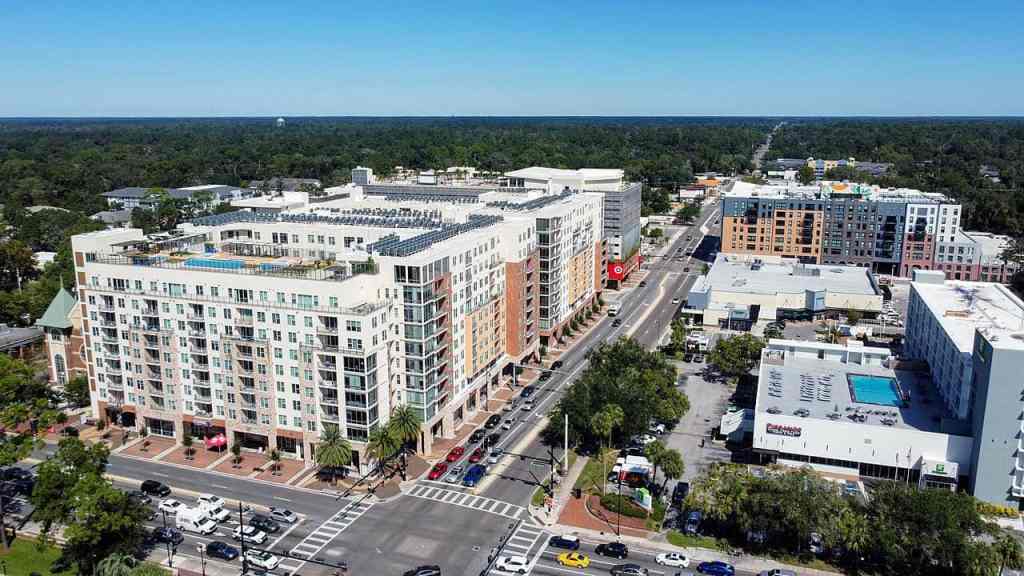
Hotels Near Ben Hill Griffin Stadium in Gainesville
Most Florida fans are in-state and drive in, but if you’re traveling, Gainesville’s hotels cluster near campus and downtown — and they sell out hard on game weekends, especially for the rivalry games. Book six months ahead for Georgia, Florida State, or Tennessee weekends or you’ll be paying premium rates for whatever’s left, possibly a half-hour out of town. You can compare availability and lock in rooms here: [Affiliate: Booking.com].
Best Areas to Stay
On or beside campus is the prize if you want to walk to the stadium and to the University Avenue and Midtown bars — no parking, no shuttle, no traffic. Downtown Gainesville, about a 10–15 minute rideshare from the stadium, gets you the restaurant-and-bar scene with a slightly calmer base and free weekend parking. If those are full or over budget, the cluster of hotels a short drive west and southwest of campus (toward I-75 and Celebration Pointe) trades walkability for availability and easy shuttle or drive-in access.
Hotel Recommendations
Hotel Eleo is the on-campus luxury option, modern and upscale and walking distance to the stadium — the convenient pick if you’ll pay for it, typically $250–$400+ on game weekends. The Hilton University of Florida Conference Center is the full-service on-campus choice with a restaurant and fitness center, also walkable, usually $200–$350. For downtown, the AC Hotel by Marriott Gainesville Downtown is modern and sits right in the walkable restaurant-and-bar district, around $150–$250, a short rideshare to the game. The DoubleTree by Hilton Gainesville and Home2 Suites by Hilton sit a short drive out — the DoubleTree full-service with a pool, the Home2 Suites with kitchenettes that suit families or multi-night group stays — both generally $110–$220.
Budget Options
The Laurel Oak Inn, a budget-friendly inn near downtown within walking distance of restaurants and bars, runs roughly $90–$140 and a 10–15 minute drive to the stadium — you trade stadium proximity for a lower rate and a quieter base. A handful of the standard chain hotels farther out along the highway corridors go cheaper still on a non-marquee weekend; the tradeoff there is purely location and a longer drive in.

Gator Gameday: Bars and Restaurants in Gainesville
Gainesville on a football weekend is all about University Avenue (the main strip running through campus) and Midtown (the area around SW 2nd Ave and SW 1st Ave). Most fans stick to these two zones because they’re walkable from campus, packed with Gators fans, and have the right mix of dive bars, upscale restaurants, and post-game celebration spots.
Pre-game: Fans hit University Avenue spots like The Social or Midtown bars for food and atmosphere 3-4 hours before kickoff. Post-game: Everyone floods back to the same areas to celebrate or commiserate—bars stay packed until midnight, and the energy is electric after big wins.
University Avenue (The Main Strip)
The Swamp Restaurant: (Innovation District): The new location of the iconic Gators bar that reopened in 2022 after the original was demolished. Recreates the old house vibe and is packed with fans in orange and blue on game days. Best spot for post-game drinks, but get there 3 hours early if you want a table pre-game. Note: Do not go to the old 1642 W. University Ave address—it’s now an apartment complex.
The Social at Midtown: Spacious two-story sports bar right across from Ben Hill Griffin Stadium with over 60 TVs, rooftop terrace, 32 craft beers on tap, and all-American sports food (burgers, loaded tater tots, nachos, sandwiches). Hours: noon-midnight Fri-Sun. Perfect for pre-game food and drinks with easy stadium access. The rooftop terrace is clutch for watching other college games before kickoff.
Salty Dog Saloon: Classic Gainesville dive bar with beer from around the globe and daily happy hour specials until 7pm. Low-key, good for pre-game drinks without the intense crowds. Locals love this place for its unpretentious vibe.
Arcade Bar: Fun, vibrant spot with three levels of retro arcade games (pinball, Skee Ball), beer, cocktails, and outdoor seating. Great for groups or if you’re bringing people who want something to do before the game beyond just drinking.
Midtown & Downtown Gainesville
Ballyhoo Grill: Upscale gameday experience with elegant ambiance, top-notch seafood, steaks, pasta, and a well-stocked bar with wines, craft beers, and specialty cocktails. Good for alumni or fans who want a refined pre-game meal instead of the rowdy sports bar scene. Makes sense if you’re entertaining clients or celebrating an anniversary.
Spurrier’s Gridiron Grille & Visors Rooftop Bar: Steve Spurrier’s restaurant with two levels: Gridiron Grille (ground floor) and Visors (rooftop bar). The space is a museum of Gator history with Heisman trophies on display. Hours: 4-10pm Tue-Wed, 4-11pm Thurs, 4pm-midnight Fri, 11am-midnight Sat, 11am-10pm Sun. Critical note: This is 6 miles away at Celebration Pointe, west of I-75—not walking distance from campus. You must drive or Uber. Pro tip: Go here on Friday night for dinner to see the trophies and avoid gameday traffic and crowds.
Dragonfly Sushi & Sake Company: High-quality sushi and Japanese cuisine with a full sake and cocktail bar. Good option if you want something different from the typical gameday bar food scene. The downtown location is walkable from campus.
Top Restaurant & Bar: Farm-to-table restaurant in a converted 1920s bank building with creative seasonal dishes, craft cocktails, and an upscale but approachable vibe. Great for Friday night dinners or a nice pre-game meal if you’re looking for something more refined.
Quick Casual & Breakfast Spots
Maple Street Biscuit Company: Southern-style biscuit sandwiches, breakfast all day, and solid coffee. Popular spot for gameday breakfast before heading to tailgates. Gets busy early on Saturdays.
Volta Coffee, Tea & Chocolate: Local coffee shop with excellent espresso drinks, pastries, and breakfast options. Good for a quiet pre-game breakfast away from the chaos.
Mi Apa Latin Café: Cuban and Latin American cuisine with strong coffee, breakfast sandwiches, and lunch plates. Quick service, authentic flavors, good value.
Post-Game Celebration Spots
After big wins, University Avenue bars (The Swamp, The Social, Salty Dog) stay packed until midnight with Gators fans celebrating. Midtown (around SW 2nd Ave) also fills up with a slightly younger, student-heavy crowd. If you want a quieter post-game meal, head to downtown Gainesville (Main Street area) where restaurants like Top or Dragonfly offer better food and less chaos.
If Florida beats a ranked opponent (especially Georgia, Tennessee, or LSU), the entire downtown area turns into a street party. Embrace it or get out early—there’s no in-between.

Why You Should Go
The Swamp delivers exactly what college football in the South is supposed to be: a loud, sweltering, below-ground bowl where the crowd is a genuine factor, the traditions — Mr. Two Bits, the Gator Chomp, “We Are the Boys” rolling into Tom Petty — are real and felt rather than staged, and the sightlines are good from nearly every seat. It is hot, and you have to plan around that, and the parking is a headache you have to outsmart.
But there’s a clock on the current version of it: the renovation reshaping the stadium begins after the 2026 season, which makes the next couple of seasons the window to see The Swamp as generations of Gators have known it. Bring water, bring sunscreen, sit on the west side, and prepare to sweat — it’s worth it.
For guides to other college towns in the SEC and all over the country click here. For some regular rivals and close journeys for the Gators see below:
Raymond James Stadium and Amalie Arena in Tampa and Kia Center in Orlando.
Written by Brad Richards. Founder of Gameday Guides. This guide includes insights from personal visits as well as updated info from team sources, fan forums, and stadium policies. We aim to help you plan with confidence — enjoy your gameday. If you have any tips, if we missed anything or you have a question, don’t hesitate to shoot us an email.