


Best Seats at the Melbourne Cricket Ground
Locals don’t call it the Melbourne Cricket Ground. It’s “the ‘G,” and it’s been the centre of Australian sport since 1853 — the main stadium of the 1956 Olympics, home of the Boxing Day Test, and the permanent home of the AFL Grand Final, locked in here for decades to come. On a big footy day, 100,000 people pour out of two train stations and walk through the elms of Yarra Park toward the light towers, and the noise when a goal goes in rolls around the bowl like weather.
Melburnians treat a first trip to the ‘G as something you simply have to do — the sporting equivalent of a first trip to Wembley for Brits. It’s the winter home of six AFL clubs and the summer home of the Australian cricket team, so whatever the season, something’s on.
Seating Overview
The MCG is a near-perfect oval bowl, so there’s no “home sideline” in the American sense — the split that matters is wing versus behind the goals, and lower versus upper. The three public stands wrap the ground: the Ponsford Stand (city end, roughly the northwest), the Olympic Stand (northern side), and the Shane Warne Stand (the huge southern stand, formerly the Great Southern Stand). The fourth arc is the MCC Members’ Reserve, which you can’t buy into without a member. For footy, the wings — the long sides of the oval — give you the full flow of the game; behind the goals puts you in the action when play is at your end and squinting when it isn’t.
Best Non-Premium Seats
Level 2 on the wing (the N sections, Ponsford or Olympic side): This is the sweet spot at the ‘G and most Melburnians will tell you the same. You’re raised enough to read the play across a ground that’s 160 metres long, close enough that the collisions still sound like collisions. If you can get centre wing on Level 2, stop looking — that’s the seat.
Level 1 on the wing (M sections): Lower and louder, right on top of the boundary line. You lose a bit of the tactical picture on a ground this size — the far side of the MCG is a long way away — but you gain the speed and physicality of the game up close. Good first-timer’s trade if you want to feel footy rather than study it.
Lower level behind the goals, city end: Cheaper than the wings, and when a forward lines up for goal 30 metres in front of you with 90,000 people holding their breath, you won’t care about the view of the far end. This is where cheer squads live, so it’s also where the banners, the flags, and the most committed barrackers are.
Best Value Seats
Level 2 anywhere between the goals and the wing: The half-forward-flank angle on Level 2 costs less than centre wing for most games and gives up very little. You still get elevation and cover, and for the typical home-and-away game these bays have plenty of availability at face value through Ticketek.
General admission on Level 4 for a low-demand game: Plenty of Melbourne fixtures between two mid-table sides draw 30,000–40,000 in a 100,000-seat stadium. On those days a cheap ticket buys you your pick of the top deck — turn up, walk high, and sit on the wing for the price of a couple of pints.
Budget / Cheapest Way In
Level 4 (the Q sections): The top deck is high — genuinely high — but the rake is steep, the sightlines are clean, and it’s almost entirely under the roof, which matters in a Melbourne winter. This is how generations of families have afforded the footy. Bring a jumper at night; the wind finds Level 4.
Standing room: The MCG holds roughly 5,000 standing spots, and for a sold-out blockbuster, standing on a rail with a pie in hand is a legitimately great way to experience the ground. The downside is obvious: three-plus hours on your feet, and prime rail positions go early.
Our Pick
Level 2 on the wing, as close to centre as your budget allows, Ponsford or Olympic side. It’s the seat locals argue their way into, it’s covered, and it’s the best view in Australian sport that money can straightforwardly buy.
Sun & Shade at the MCG
This mostly matters for summer cricket, not winter footy. For day cricket, fans consistently point the same way: the Ponsford end (west) and the southern side of the Shane Warne Stand escape the afternoon sun, while the eastern side bakes as the day wears on. The roof ring covers most upper-level rows, so if it’s a scorching Boxing Day, aim high or aim west, and use the free water refill stations inside. For AFL season the problem inverts — it’s rain and wind, and the front handful of rows on Level 1 are the ones that get wet.
What to Avoid (and What’s Worth Trying Once)
Level 1 behind the goals, back rows under the overhang: The deck above cuts off the ball in flight — you’ll lose every high kick and most of the scoreboard. If you’re stuck at ground level behind a goal, get as close to the fence as you can.
Level 4 corner bays for a small crowd: High and diagonal to everything, with nobody around you. Fine for price, dead for atmosphere. Move — nobody will stop you on a 35,000 night.
Worth it once — standing room at a final or Anzac Day: Sore feet, imperfect view, and one of the great sporting atmospheres on earth. When the crowd noise hits full voice at the ‘G, you want to be standing anyway.

MCG Premium Seating Options
Premium at the MCG runs through match-day hospitality packages rather than season-long club memberships the way American stadiums do, which is good news for a visitor: most of it is bookable for a single game. Everything sits on Level 2 or the suite levels, catered in-house, and prices scale hard with the fixture — an Anzac Day or Dreamtime at the ‘G package costs multiples of a quiet Sunday game.
The Best Premium Experience
The flagship is the formal dining room at the centre of the ground on Level 2 — floor-to-ceiling glass over the wing, a seated multi-course lunch, and reserved premium seats a few steps from your table. It’s where club presidents host their functions and where the corporate end of Melbourne does footy. Book it for a marquee game and you’re at the best table in Australian sport.
Best Value Premium
The mid-tier lounge packages on Level 2 are the smart buy: all-inclusive food and drink, a reserved centre-wing seat, and none of the suit-and-tie formality of the dining rooms. For a normal home-and-away game they routinely price at a fraction of what the identical package costs on a blockbuster — pick a quieter fixture and you’re getting the full premium experience for restaurant-dinner money.
Other Premium Options
Beyond the dining rooms and lounges, the ‘G runs a spread of smaller experiences: a hidden whiskey bar behind sliding glass over the field, an outdoor-balcony room where the Australian cricket team sits during the Boxing Day Test, and centre-wing suites dressed up for hosting. One is worth knowing exists even if you can’t use it — the Long Room in the Members’ Reserve, all portraits and polished timber, one of the most storied rooms in world sport and accessible only through an MCC member.
Suites & Group Options
Corporate boxes and open suites take groups of 10–20 with catering, booked through the MCG’s corporate hospitality office or authorised on-sellers. Expect several hundred dollars per person for big fixtures, less for standard rounds, and book weeks ahead for anything with a rivalry attached.
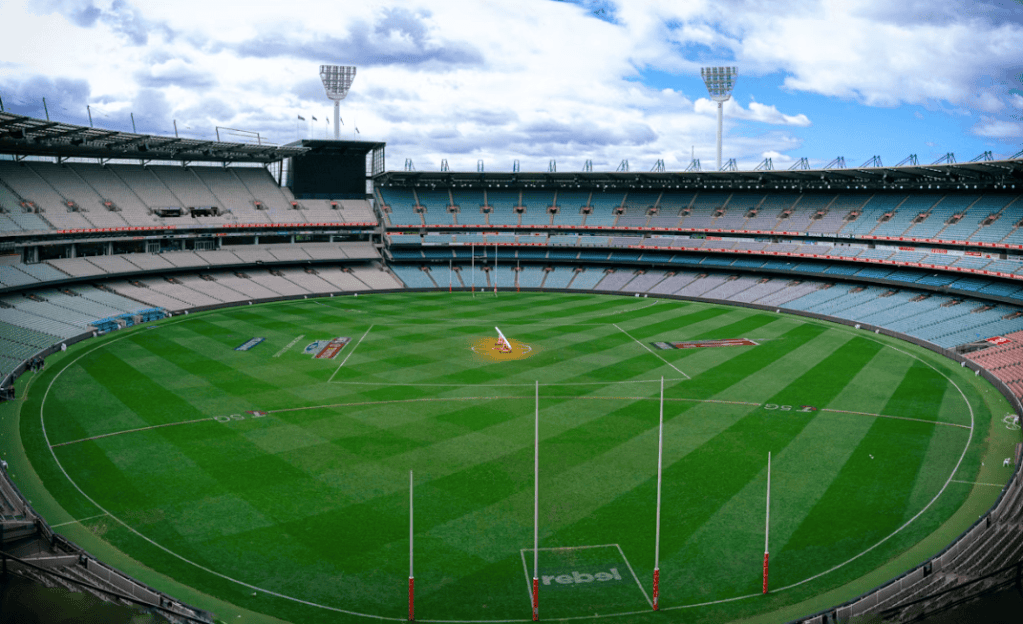
MCG Seating Map & Capacity
The MCG holds 100,024 — about 95,000 seats plus roughly 5,000 standing room — making it the biggest stadium in Australia and the largest cricket ground on earth by capacity. It sits in Yarra Park on Brunton Avenue, on the eastern edge of Melbourne’s CBD.
The bowl has four seating levels, and here’s the quirk that trips up every visitor reading the chart: sections are lettered by level, not named by stand. M is Level 1, N is Level 2, P is Level 3, Q is Level 4 — so a ticket for M26 is ground level, and Q31 is the top deck. Level 3 (the P sections) is largely dining rooms, suites, and media rather than public seating, and the Members’ Reserve arc between the Ponsford and Olympic stands is closed to non-members. The official MCG website hosts the interactive seating map — check your bay letter against it before you buy.
Getting the Best MCG Tickets
Every MCG event sells through Ticketek, the ground’s only authorised ticketing agency — buy anywhere else and you’re on the resale market with no guarantee your ticket is real. Australian resale culture is thinner than America’s; face value through the official channel is the default way in, and for most home-and-away footy that’s exactly as easy as it sounds.
The AFL uses variable pricing set by the home club, so the same Level 4 seat can cost twice as much for a rivalry game as for a Tuesday-table clash. The calendar games — Anzac Day (Collingwood–Essendon), Dreamtime at the ‘G (Richmond–Essendon), King’s Birthday (Melbourne–Collingwood), and the Boxing Day Test — behave like finals: they sell early and price accordingly, so buy the week tickets release. For everything else, general admission usually stays available up to and including match day at the gate windows, and unsold reserved seats release on the day.
One structural thing worth knowing: the AFL requires clubs to sell a tranche of cheap general admission tickets to every game, so a budget way into the ‘G almost always exists. Finals are the exception — those are fully ticketed, allocated first to club members, and the Grand Final is functionally impossible without a club or MCC connection.

MCG Bag Policy
The rule is simple and refreshing: your bag or backpack must fit comfortably under your seat, and all bags get inspected (and patrons wanded) at the gates. There’s no clear-bag requirement and no A4-size limit — normal backpacks are fine. Large bags, suitcases and anything that won’t fit under a seat will be turned away, and there’s no cloakroom or public bag storage at the ground, so don’t arrive with luggage.
Key MCG Policies
Here’s the one that surprises every overseas visitor: you can bring your own food into the MCG. Sandwiches, snacks, a thermos of tea or coffee, sealed plastic bottles of soft drink and water (up to 1.5 litres) — all allowed. No glass, no cans, no alcohol, no knives. Between that and free water refill stations through the concourse, a family can do the footy without buying a thing.
Smoking and vaping are banned everywhere in the ground, drones are prohibited, and — a genuinely local touch — you’re not allowed to collect other people’s empty bottles for the container deposit refund.
Cashless or Cash?
The MCG operates as a cashless venue — card or phone at every food outlet, bar, and merchandise stand. Tap-and-go is universal in Australia anyway, so any Visa or Mastercard from home works everywhere, but check your bank’s foreign transaction fees before you tap your way through a long afternoon.
Accessibility at the MCG
Accessible seating runs across Levels 1, 2 and 4 of the public stands, bookable through Ticketek’s accessibility line, and the Victorian Companion Card is honoured for a free companion ticket. The standout service is the G-Train, a free mobility shuttle that loops between Jolimont Station, Richmond Station, the accessible parking area, and the ground from two hours before events. There’s also a sensory room near the Olympic Stand for anyone who needs a break from 100,000 people. Full details live on the MCG’s accessibility pages.
Full policy details: see the MCG’s official Conditions of Entry page before you go — big events occasionally run tighter rules.
Getting to the Melbourne Cricket Ground
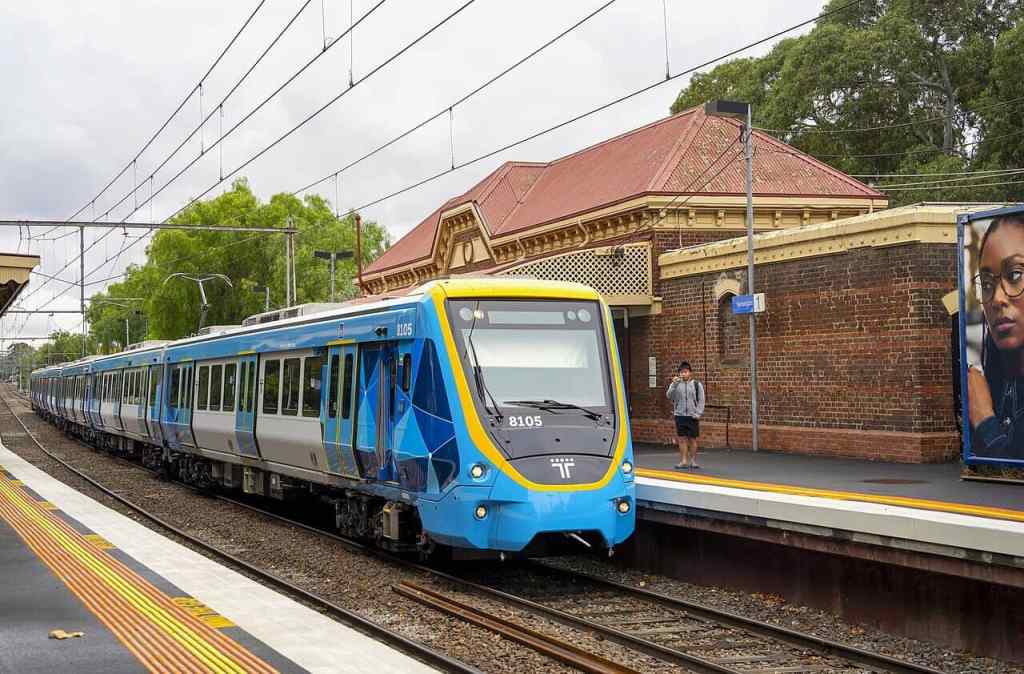
Take the tram. Since September 2025 the Free Tram Zone has extended along routes 48, 70 and 75 all the way to the MCG gates, so the ride from the CBD costs nothing — and every other fare in Victoria is half price until 1 January 2027. Driving here is the worst option and, for much of the year, not an option at all.
Parking
Event-day parking at the MCG is on the grass paddocks of Yarra Park, run by the MCC at $15 per vehicle, EFTPOS only — no cash, and vehicles that can’t pay by card are turned away. The catch is that it frequently isn’t open: Yarra Park closes regularly to protect the turf, turns to mud after heavy rain, and for the remainder of the 2026 AFL season the public car park is closed entirely, with access limited to accessible-permit holders who pre-booked through Ticketek.
When it does run, gates shut 15 minutes after the first bounce or earlier if capacity fills, and queues to get in are normal. Always check the parking schedule on mcg.org.au before you leave — the MCG posts live availability on its homepage and event pages on match days.
The hack: book the Melbourne Park Eastern Plaza car park instead, the night before. It’s on Olympic Boulevard, a 10-minute walk from the ground, and pre-booking by midnight the night before drops the event-day rate from $30 to $20 — a 30% saving for two minutes of planning. You also drive out against none of the Yarra Park pedestrian flood, which is worth more than the $10 after a full house.
Public Transit
Trams routes 48, 70 and 75 run free from the CBD to the gates — no Myki, no tapping on. Don’t tap if your whole trip stays inside the zone or the reader will charge you a full fare for a ride you could’ve had for nothing. Routes 75 and 48 stop at Jolimont Station/MCG (Stop 11), 300 metres from Gate 2; route 70 detours through Melbourne Park to Stop 7B or 7C, a footbridge walk from Gates 1–7. Slower than the train, but it drops you at the door.
Trains always need a Myki, and every fare is half price until 1 January 2027 — a full daily fare is $5.70 rather than $11.40. Buy a card at any station machine or 7-Eleven, or load a mobile Myki into Google Wallet on Android; iPhones can’t run Myki yet, so Apple users need the physical card. Jolimont Station is a five-minute, 350-metre walk through Yarra Park to Gate 2 on the Hurstbridge and Mernda lines, best for the Ponsford and Olympic stands. Richmond Station is 850 metres out on the southeast side, better for the Shane Warne Stand and the Swan Street pubs afterwards.
One critical 2026 change that will burn anyone working off an old guide: since the Metro Tunnel opened, Cranbourne, Pakenham and Sunbury line trains no longer stop at Richmond or run through the City Loop. If you’re on those lines, check your connection before match day.
Post-game, walk out rather than queue in. Both stations run crowd-control barricades after a full house and you can lose half an hour shuffling toward a platform. The 20-minute riverside walk to Flinders Street usually beats it, and the pubs on Swan Street beat both.
Rideshare
Uber and DiDi both operate heavily in Melbourne and a CBD-to-MCG trip is short — expect roughly $15–25 off-peak, considerably more once a crowd starts moving. Drop-off before a game is easy; the problem is after, when surge around Brunton Avenue is severe and drivers can’t get near the ground through the road closures.
Walk five minutes before you open the app. Heading toward Wellington Parade or over to Swan Street in Richmond gets you outside the surge zone and outside the closures, and you’ll usually be moving before someone who ordered at the gate has been matched.
Walking & Accessible Transport
Walk in over the William Barak Bridge at least once. It runs from Birrarung Marr near Federation Square straight to the ground — 15 to 20 minutes from the middle of town — and arriving on foot with the light towers ahead of you is the best approach to this stadium, full stop.
The G-Train runs free for anyone with mobility needs. The MCG’s mobility shuttle loops between the ground’s gates, Yarra Park, Jolimont Station and Richmond Station during public events. No pre-booking — wait at a designated pick-up point for the next buggy.
Melbourne Cricket Ground Top Tips
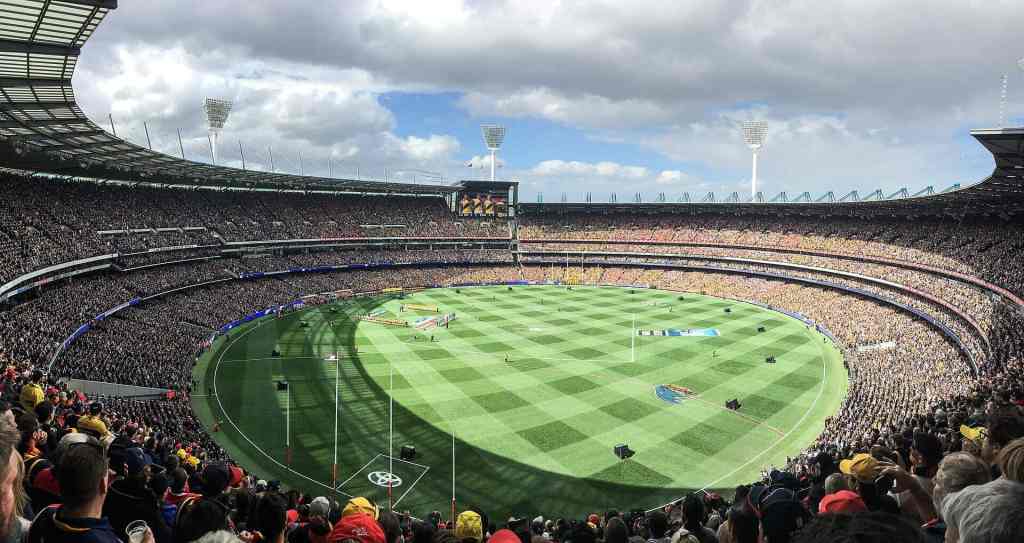
A day at the ‘G has its own rhythm: pub first, in by the first bounce, pie at quarter time, out to Swan Street after the siren. The ground rewards people who know its habits — which gate, which tram, when to leave. Here’s what locals know that first-timers don’t.
What Makes the MCG Special
Walk up the race into the bowl slowly the first time. Whatever level you’re on, the moment the green opens up in front of you is the thing people remember — one of the biggest playing surfaces in world sport, wrapped by 100,000 seats. Don’t do it staring at your phone looking for your row.
Look up at the light towers before they’re gone. The six towers are the tallest at any sporting venue on earth and the single most recognisable thing about the Melbourne skyline at night. Under the redevelopment plans below, lighting moves into the roof and the towers become redundant — they’ll be retained for heritage, but their working life has an end date.
Understand that this is one city’s entire sporting soul in one building. Test cricket was invented here in 1877, one-day cricket in 1971, and the AFL Grand Final is locked in here for decades. No other stadium carries that much of a nation’s sporting history in a single bowl.
How Big Is the MCG? Capacity and Dimensions
The MCG holds 100,024 — roughly 95,000 seats plus about 5,000 standing. That makes it the largest stadium in Australia, the largest in the Southern Hemisphere, and around tenth-largest in the world.
It is not the world’s biggest cricket ground any more. Narendra Modi Stadium in Ahmedabad, India, opened in 2020 at roughly 132,000 and took the title. The MCG is now the second-largest cricket ground on earth, and still the biggest cricket ground outside India.
The playing surface is enormous even by cricket standards. The playing surface is an oval roughly 160 metres long and 138 to 141 metres wide — the largest field in the AFL and one of the biggest playing surfaces in world sport. That size shapes the football: there’s more space out on the wings than at any other ground, which is why the ‘G tends to produce lower-scoring, more attritional games than a tighter ground like Marvel Stadium.
The MCG Redevelopment: What’s Coming
The Shane Warne Stand is being rebuilt, but not soon. The Victorian Government and MCC appointed Architectus, Foster + Partners and MANICA as lead designers in June 2026 for a business case on a rebuild of the 1992 southern stand, with reported costs around $2 billion and some estimates running to $3 billion.
Nothing changes for your visit this decade. The business case is due in 2027 and construction isn’t expected to start until after 2030, staged so the ground keeps a minimum 70,000 capacity to host Grand Finals throughout.
When it’s done, capacity goes up by about 5,000. Concept plans put the ground at roughly 105,000 with skyline bars, deeper concourses, open-air decks facing Yarra Park, a glass façade replacing the concrete, and a possible boutique hotel behind the stand.
Who Plays at the MCG
Four AFL clubs call it home: Collingwood, Hawthorn, Melbourne and Richmond. These are the clubs that play the majority of their home matches here under the MCC’s agreement with the AFL, which schedules a minimum of 45 home-and-away games a year plus finals and the Grand Final.
Carlton and Essendon play here too, but they’re Marvel Stadium clubs. Both are tenants at Docklands and bring their blockbusters to the ‘G — including Anzac Day, which is Collingwood against Essendon. If you’re chasing a specific club’s home game, check the fixture rather than assuming.
In summer it flips to cricket. The Australian team’s Boxing Day Test is the marquee event, and the Melbourne Stars play Big Bash here through the season. Whatever week you’re in Melbourne, something is usually on.
Circle the big four if your dates are flexible. The Boxing Day Test, the AFL Grand Final (late September, always here), Anzac Day and Dreamtime at the ‘G are the days the whole city turns up. Harder tickets, higher prices, and a completely different order of experience to a regular round.
Football — the round-ball kind — visits too. The MCG has hosted international friendlies and major club fixtures on tour.
The NFL (American Football) at the MCG
The NFL now plays regular-season football here. The first game was the San Francisco 49ers against the Los Angeles Rams on Thursday, September 10, 2026, broadcast on Netflix, and Melbourne has joined the league’s international rotation alongside London, Berlin, Madrid, Dublin and São Paulo.
Check the local date, not the American one. Melbourne runs 14 hours ahead of US Eastern time in September, so a Thursday-night kickoff on the US broadcast is a Friday-morning game in Melbourne. Book flights and hotels against the Melbourne date or you’ll arrive a day late.
Kick-off is late morning local so the broadcast lands in US primetime. That means an early start, a very different crowd from a footy Saturday, and the genuinely strange sight of gridiron laid out on a cricket oval.
The seating logic changes for gridiron. A rectangular field on an oval ground means the wings become your sidelines and the bays behind the AFL goals sit well back from the end zones. Check the published gridiron map on Ticketek before you buy — the bay letters stay the same, but their relationship to the field does not.
Arrival Strategy: Gates and Timing
Use the right gate for your stand — they’re not interchangeable. Ponsford Stand is Gate 1, Olympic Stand is Gate 3, and the Shane Warne Stand is Gates 4 and 5. MCC Members enter at Gate 2. Turning up at the wrong gate on a 100,000 night means a long walk around the outside.
Gates open around 90 minutes before the first bounce — use them. For a blockbuster, security wanding backs the queues up badly in the last half hour. Walking in early gets you the curtain-raiser atmosphere, a cheap seat-upgrade window in GA, and a pie before the lines form.
Come in through Yarra Park from Jolimont at least once. The five-minute walk under the elms with the crowd building around you is the classic approach to the ground. Save the Richmond side for your exit to the pubs.
Buy the Footy Record on the way in. AFL guernseys carry numbers, not names, so a first-timer who doesn’t know the players is genuinely lost. The official match program is about $6 from the sellers outside the gates and has both team lists; regulars mark the goalkickers in theirs as the game goes.
Pick your seat’s crowd deliberately. The cheer squads — flags, banners, the loudest barrackers — cluster in the lower levels behind the goals at the Ponsford and Shane Warne ends. Sit near them for atmosphere, or on the wing if you want to watch the tactics in peace.
Food & Drink Strategy
Order the pie, and eat it like a local — sauce on top, no cutlery. The meat pie with tomato sauce is the signature footy feed and it’s best at quarter-time with the ground buzzing. It’s to the MCG what a hot dog is to a ballpark.
Get a dim sim. The “dimmie” — a steamed or fried dumpling the size of your fist — is the other great Melbourne footy food, and visitors who default to chips are doing the day wrong.
Chase the hot jam doughnuts on your way out. The vans on the concourse outside the ground do fresh, sugar-dusted, jam-filled doughnuts that are a Melbourne institution in their own right. Grab a bag even if you’re full.
Bring your own food — this is the tip that shocks overseas visitors. Sandwiches, snacks, a thermos, sealed plastic bottles up to 1.5 litres: all allowed through the gate. No glass, no cans, no alcohol. With free water refill stations inside, a family can do a day at the footy without buying a thing.
Know the mid-strength rule. At high-profile matches and night games the bars often go mid-strength only, around 3.5%, cash-free and in plastic cups. On a beer run for a group, grab a cardboard carry tray — those cups tip on the steep aisle steps and you’ll wear someone’s round.
Exit Strategy
Walk to Flinders Street instead of queueing at Jolimont. After a full house, both stations run crowd-control barricades and you can spend 30 minutes shuffling toward a platform. The riverside walk to Flinders Street takes about 20 minutes and you’ll usually beat the people who queued.
Or walk the other way, to Swan Street. Richmond Station is 850 metres out on the southeast side and the pubs are right there. Turning the exit into a post-game session is the local move and it lets the crowd disperse without you in it.
Don’t order a rideshare at the ground. Surge around Brunton Avenue after a big game is real. Walk five minutes toward Wellington Parade or over to Swan Street before you open the app.
If you drove and parked in Yarra Park, expect to wait. Exits crawl after full-house games because pedestrians flood every path out. Parking at Melbourne & Olympic Parks or a CBD garage costs a 15-minute walk and saves you the jam.
Stay in your seat for the theme song first. The winning club’s song plays through the ground while the crowd belts it, and leaving early to beat traffic means missing the best 90 seconds of the day.
Traditions & Culture
Learn one word: “Ballll!” You’ll hear the crowd roar it at every tackle, appealing for a holding-the-ball free kick. Join in by the third quarter and you’ve gone native.
Spot the blokes with the earpieces. Usually older fans, watching live while listening to SEN or Triple M commentary on a pocket radio, following the numbers and the umpiring calls in real time. It’s one of the great small quirks of Aussie footy culture.
Don’t collect empties — there’s a story behind the rule. You can’t gather up other people’s cups or bottles, officially because of the container-deposit scheme. The real back-story is the “beer snake,” where fans stacked hundreds of empty cups into a chain and paraded it around; security shuts it down fast now.
On Anzac Day, be in your seat before the ceremony. Entry to the ground and service at every outlet stops during the pre-match commemoration, so if you’re still in the gate queue when the Last Post plays, you’re outside for it. Ninety thousand people falling silent is the single best thing that happens in this stadium.
Player Access & Autographs
[This is a required category in the template and you have nothing here. Don’t let me invent it. What to research: where players walk from the race to the ground, whether warm-ups are accessible from any public level, whether the AFL clubs run open training at the ground, and what the post-siren access rules are. Check the club sites for Collingwood, Richmond, Melbourne and Hawthorn — several run member events at the ground and the details differ by club.]
Families & Kids
The ‘G is one of the easiest big stadiums in the world to do with kids. You can bring their food, refill their bottles free, and cheap Level 4 seats mean a family of four gets in without breaking the bank.
There’s a sensory room near the Olympic Stand. If the noise of 100,000 people becomes too much, it’s there — worth knowing about before you need it rather than after.
Kick-to-kick on the actual turf is the holy grail, but check first. At select games, kids and adults can stream onto the ground after the final siren for a kick. It doesn’t run after every game — rarely at night matches or in wet weather — so check the AFL app or the home club’s page on game day before you promise the kids.
Venue Quirks & Things Nobody Warns You About
The seats fold up on their own. MCG seats retract automatically — glance down before you sit or the seat wins. Every local has watched a visitor lose this fight.
Pass-outs exist, but don’t count on them. They’re issued at marked gates for most events and you’ll need to show your entry ticket to get out and back in. The AFL restricts them at its own matches, so check the specific event’s conditions rather than assuming you can pop out for a pint.
There’s no cloakroom or bag storage. Your bag must fit under your seat and there’s nowhere to leave anything bigger, so don’t arrive from the airport with luggage.
If you land a Members’ Reserve or corporate ticket, dress for it. The MCC Members’ Reserve and premium dining rooms enforce a real dress code — collared shirt, tailored trousers, closed shoes, no ripped denim or activewear — and they will turn you away at the door in footy colours.
There’s no tailgating — the pub is the tailgate. Pregame here happens in pubs, not car parks, so build your day around a Richmond or East Melbourne session before you walk to the ground.
Expect your phone signal to struggle. Cell coverage around Yarra Park thins out badly with 90,000 people inside.
The Signature Photo
Shoot from the top of the William Barak Bridge at dusk. The bridge frames the stadium and light towers with the parkland in front — it’s the postcard shot, and arriving on foot over it is the best approach to the ground, full stop.
Inside, use the Level 4 concourse at the city end. You get the full bowl with the Melbourne skyline over the rim, which is the shot that actually conveys the scale.
Walk the statues before you go in. The parkland is ringed with bronzes of Australian sporting legends — Bradman mid-drive, Warne mid-delivery — and it’s the best free pre-game act at any Australian stadium. Give yourself 20 minutes for the loop.
History, Tours & the Australian Sports Museum
Know what you’re standing on. This land was a Wurundjeri meeting place long before it was a stadium, and the club only ended up here in 1853 because Australia’s first steam railway was driven through their old ground — the trains that pushed them out now deliver 100,000 people to the gates.
The war years emptied it completely. For three years the ground was a military camp housing the RAAF, the US Army Air Forces and the US Marines, with no crowds at all.
Do the tour or the museum on a non-match day. The tour gets you into the playing arena, the change rooms and, schedule permitting, the fabled Long Room; the Australian Sports Museum inside Gate 3 holds the AFL and cricket halls of fame. Book ahead — tours sell out.
Hotels Near the Melbourne Cricket Ground
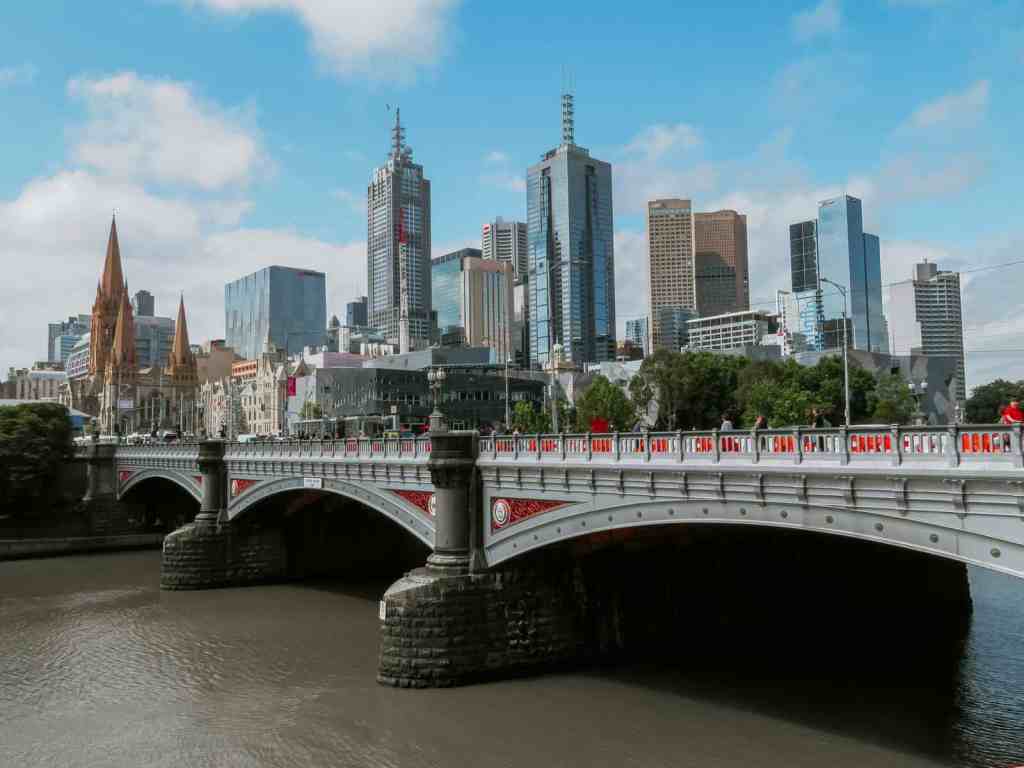
The MCG’s location is a gift for visitors: it’s ringed by leafy East Melbourne, pub-dense Richmond, and the CBD, all within a 25-minute walk. For Grand Final week, the Boxing Day Test, or a big concert, book months out — the whole east side of the city fills.
Best Areas to Stay
East Melbourne is the closest and calmest — heritage terraces and gardens, five to ten minutes’ walk through Yarra Park, quiet at night, and the pick if you want to roll out of bed and be at Gate 2 in the time it takes to finish a coffee. Richmond, across the tracks to the southeast, is the fun option: Swan Street and Bridge Road put you among the footy pubs with a 10–15 minute stroll to the ground, and you can walk home after the siren instead of queueing for a train.
The CBD gives you the most hotel choice and all of Melbourne’s food and laneways, with the ‘G a 20-minute riverside walk over the Barak Bridge or a two-stop train ride away. Southbank is the fallback if the first three are full — river views, still walkable, slightly further out.
One planning note: the MCG shares its precinct with Rod Laver Arena and John Cain Arena, so the Australian Open in January squeezes this whole area at the same time as the cricket. Book earlier than you think for late January.
Where to Stay Near the MCG
The Pullman on Wellington Parade is the closest full-service hotel to the ground — directly across from Yarra Park, five minutes’ walk to Gate 2, with stadium-facing rooms that look straight at the light towers and a tram stop at the front door. It’s the default for travelling teams and cricket tourists, which is the tradeoff: on marquee weekends it books out first and prices like it knows.
Park Hyatt Melbourne is the splurge — beside St Patrick’s Cathedral and Fitzroy Gardens, a 15-minute garden walk from the ground, and the plushest rooms on this side of the city. You’re paying for serenity rather than footy buzz, and it’s a long way from a pub with the game on.
Quest Jolimont on Wellington Parade South is the sharpest location-for-money play in East Melbourne — apartment-style rooms with kitchenettes and washing machines, minutes on foot to the ground and to Jolimont Station. There’s a small car park but it must be pre-booked, and it goes fast on event days.
Mantra on Jolimont sits on Jolimont Road in the same pocket, also apartment-style and also a short walk in. It’s the sensible option for a group or a family splitting a two-bedroom, though it’s the plainest of the East Melbourne options — you’re buying the postcode, not the design.
The Motley Hotel on Bridge Road is the Richmond pick if you want somewhere with a bit of character: a small boutique hotel with a tram stop out front, walkable to both the ground and the Bridge Road pubs. Underground parking exists but there are only a handful of spaces, so don’t count on driving.
CBD hotels along Flinders or Collins Street — there are dozens — trade proximity for the full Melbourne experience: laneway coffee at breakfast, a river walk to the game, and trams to everything else you’re in town for. The DoubleTree on Flinders Street is a solid mid-range anchor, with the honest caveat that Flinders Street traffic noise is real and rooms vary a lot.
Cheap Hotels Near the MCG
The CBD’s hostel and budget-hotel cluster around Flinders and Elizabeth Streets is the value play — basic rooms, unbeatable transit, and the ‘G still only a walk or a two-stop train away. The tradeoff is city noise and thin walls; for a fan spending the day at the ground and the night on Swan Street, that maths works fine.
If you want cheap and close, the older apartment blocks on George Street in East Melbourne put you a genuine few minutes from the ground for well under the Pullman’s rate. Be clear-eyed about it: these are dated, some have no lift, and the fit-out is a long way behind the location. You’re paying for the walk, and if that’s all you need for a night before a Boxing Day Test start, it’s a fair deal.
Pubs and Restaurants Near the MCG
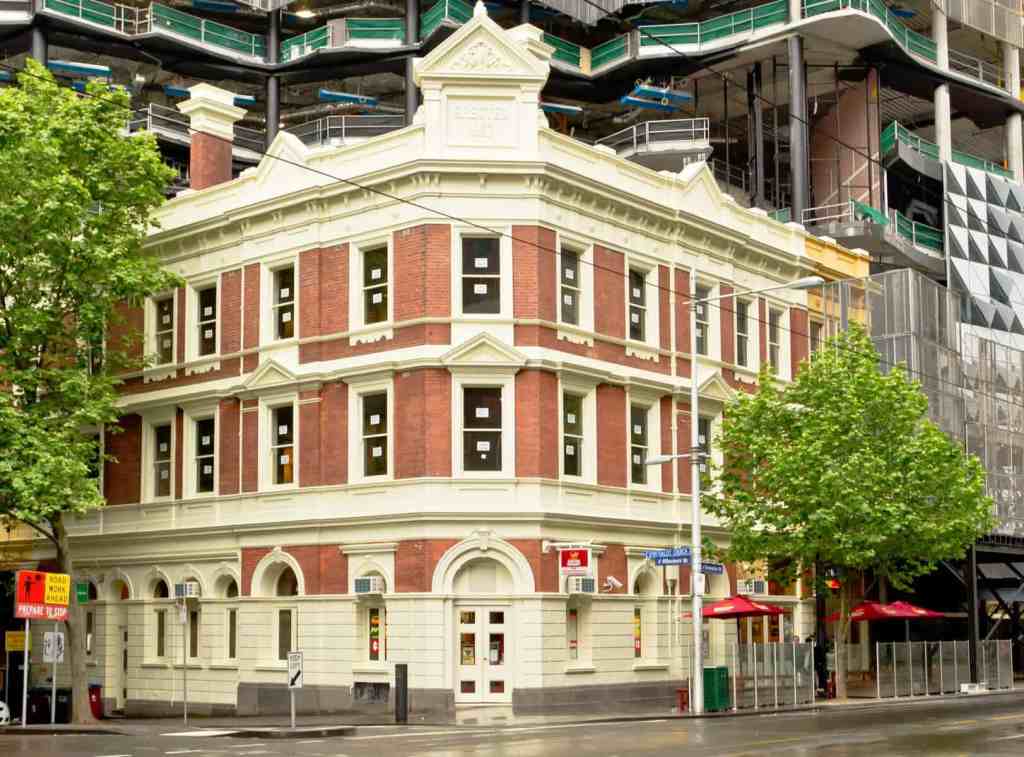
Footy day in Melbourne is a pub-to-ground-to-pub affair, and the epicentre is Swan Street, Richmond — a strip of century-old hotels that fills with guernseys from midday and roars again after the siren. East Melbourne stays genteel; the CBD’s sports bars take the overflow.
Two dates change are a little bit different. Grand Final week turns Yarra Park itself into a free festival site — food trucks, bars, player appearances and a play zone running for four days beside the ground, with the Grand Final Parade rolling past the MCG on the Friday morning. You need no ticket for any of it, which makes late September worth timing a trip around even if you never get inside the stadium.
And on Anzac Day, know this before you plan your pre-game: entry to the ground and service at every outlet stops during the pre-match ceremony, so if you’re still queuing at the gate when the Last Post plays, you’re staying outside for it. Get in early, get to your seat, and let 90,000 people fall silent around you — it’s the single best thing that happens in this stadium..
Best Pubs Near the MCG
The Corner Hotel (Swan Street) is a Melbourne institution twice over — legendary live-music room downstairs, rooftop bar upstairs, parmas and pints in between, ten minutes from the ground.
Richmond Club Hotel (Swan Street) is the classic footy pub: multiple levels, screens everywhere, a rooftop over the train tracks, and a crowd that’s entirely headed where you’re headed.
The London Tavern (Lennox Street) has one of the biggest beer gardens in Melbourne and a die-hard Tigers local crowd — the full pre-game shenanigans experience.
Mt View Hotel (Bridge Road) is practically crawling distance from the ‘G, a sports pub downstairs with a genuinely good rooftop cocktail bar above when you want to change gears post-game.
The Oxford Scholar (Swanston Street) isn’t a pre-footy local — it’s up at the north end of the CBD on the RMIT campus, a good 30-minute walk or a tram ride from the ground — so treat it as a city pub rather than a gameday one. It’s worth knowing about anyway: trading since 1857, one of the oldest pubs in Melbourne, and it does an award-winning parma and a proper Australian craft beer list. Worth a night in the city rather than a stop on the way to the ‘G, and be aware it was gutted and relaunched a few years back, so it’s a polished bar-and-bistro now rather than the old student boozer with the pool table.
Where to Eat Near the MCG
Richmond’s Swan Street and Bridge Road carry the pre-game load — wood-fired pizza, pub steaks, and the parma (crumbed chicken, ham, cheese, sauce) that is Melbourne’s official pre-footy meal. Geppetto Trattoria does proper homestyle Italian for a sit-down before a night game, and LadyBoy on Bridge Road covers creative Thai if you want something beyond pub fare. And give yourself one non-footy night in the CBD laneways — Melbourne’s food scene is the best in Australia, and Flinders Lane alone justifies the trip.
Why You Should Go
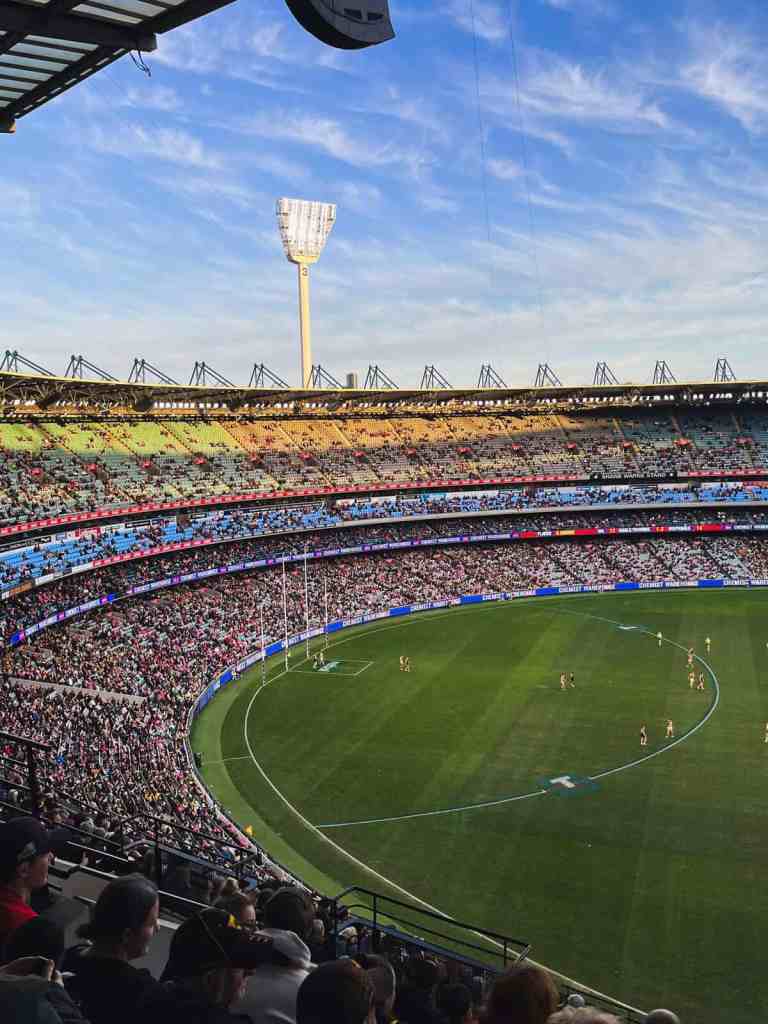
There are bigger-hyped stadiums, but there’s no other building where one city’s entire sporting soul lives — 170 years of cricket and footy, the Olympics, and every Grand Final, all in one bowl you can walk to from the middle of town for the price of a cheap ticket and a pie. Go once and you’ll understand why Melburnians talk about the legendaary ‘G like it’s a person.
Explore all of our International Venues as well as these:
Sydney Accor Stadium and Allianz Stadium Sydney
Written by Brad Richards. Founder of Gameday Guides. This guide includes insights from personal visits as well as updated info from team sources, fan forums, and stadium policies. We aim to help you plan with confidence — enjoy your gameday. If you have any tips, if we missed anything or you have a question, don’t hesitate to shoot us an email.