


Best Seats at the Mortgage Matchup Center
Downtown Phoenix’s arena has worn more names than almost any building in American sports — America West, US Airways Center, Talking Stick Resort Arena, Footprint Center, and for a few months in 2025 just “PHX Arena” — and as of October 2025 it’s the Mortgage Matchup Center, home of the NBA’s Phoenix Suns and the WNBA’s Phoenix Mercury.
Underneath the sign-swapping it’s the same intimate, basketball-first bowl that opened in 1992, since given a $230 million gut renovation that widened the concourses and modernized the seating. It’s one of the older arenas in the league, but it was built for hoops, not hockey, which is the single most important thing to know before you buy a ticket: the sightlines here are genuinely good almost everywhere. The tradeoff is that it’s a compact building with a smaller lower bowl than newer arenas, so the difference between a smart seat and a wasteful one comes down to a few specific sections. Here’s where to sit.
Seating Overview
The bowl is simple to read: a 100 level (lower) and a 200 level (upper), with the suite and club level tucked between them. The floor runs north–south, and because the arena was designed around a basketball court rather than a hockey sheet, even the corners and the upper rows sit closer to the action than they would in most NBA buildings. That’s the good news. The catch is that the lower bowl is shallow and sells at a premium, so your real decision is whether to pay up for the 100 level or take the genuinely-not-bad 200 level and pocket the difference.
Best Non-Premium Seats
Sections 102 and 114 are the center-court sideline sections in the lower bowl, directly across from each other at midcourt — the flat-out best view in the building that doesn’t come with a club wristband. You’re level with the action, you see both baskets square, and you’re close enough to hear the squeak. They price accordingly, so this is the “treat yourself” tier of the regular seating rather than the everyday buy.
Sections 101, 103, 113, and 115 flank those center sections and give you nearly the same lower-bowl sideline angle for a step down in price. One thing worth knowing: the Suns bench sits in front of 101 and the visiting bench in front of 103, so if you want to watch huddles, substitutions, and coaches losing their minds, aim there. It’s a different kind of value than a pure viewing seat.
The 200-level sideline sections are the honest answer for most visitors. Because the upper deck starts lower here than in comparable arenas, a seat in the first handful of rows plays like a mid-tier seat somewhere else. The full-court view is excellent — you see plays develop in a way you can’t from a baseline seat — you just lose the fine detail of faces and footwork.
Best Value Seats
The smart-money pick is the lower rows of the 200-level sidelines, specifically row 5 or closer. That’s the sweet spot: you get the elevated full-court angle that’s actually ideal for reading a basketball game, at a fraction of what the 100 level costs, and you’re not so high that the players shrink. If you only care about watching good basketball and not about being seen, this is where your money works hardest.
The upper corners are the next rung down and still worth it. You’re at an angle rather than square to the court, but the arena’s geometry keeps you tighter to the floor than the price suggests.
Cheapest Way In
The upper-deck baseline and end sections are the floor on price. You’re looking down the length of the court from behind the basket, which flattens the action and makes the far end feel distant — the standard baseline tradeoff. For a Suns game against a non-marquee opponent, these are often the cheapest ticket in town, and for a Phoenix Mercury game in the summer, the whole building gets dramatically cheaper across the board, upper baseline included. If your goal is simply to be inside for a live pro game without spending much, a weeknight Mercury ticket in the upper end is the answer.
Our Pick
If you’re visiting for the first time and want one recommendation, take the 200-level sideline, row 5 or lower, on either side of center. It’s the seat that gets you the best actual view of a basketball game per dollar in this building — high enough to see everything, low enough to feel it, and a real fraction of the lower-bowl price.
Best Seats for Concerts
Concerts flip the math, because the court becomes a stage. Most shows here run an end-stage setup with the stage at the north end, in front of sections 119–121, and the floor fills in with rows of folding chairs (reserved), a standing GA pit, or a mix — always check your specific show, since the layout changes act to act.
Best overall: the lower-bowl sections facing the stage head-on, a handful of rows up. You’re square to the performance, high enough to take in the full stage production and the video screens, and clear of the floor’s flat sightlines. Counterintuitively, this beats a lot of floor seats — get more than a few rows back on the floor and you’re staring at the backs of heads.
Closest: the front floor rows (A–C) or the GA pit if you want to be right on the rail. The pit is standing-room only, so arriving early is the only way to claim your spot, and the tradeoff is a flat angle and boomy sound the farther back you drift on the floor. Worth it once for an artist you love.
Best value: the first few rows of the lower-bowl sideline sections. You get a clean, elevated look at the stage and screens without paying floor or premium prices — the sweet spot most regulars point to for concerts.
Budget: the 200-level sideline sections facing the stage. They’re up high, but the arena’s compact bowl keeps you connected to the show, and they’re the cheapest real seats in the house. Just steer clear of the sharp side angles right next to the stage and anything behind it — those get sold as limited- or obstructed-view for a reason.
Seats to Avoid
The top rows of the upper baseline (the highest end sections) are the one spot where the arena’s friendly geometry runs out. You’re far from the near basket, looking down at a shallow angle, and the far end of the court reads as a distant smudge. They’re rarely worth it unless they’re the cheapest thing available and you just want in the door.
Mortgage Matchup Center Premium Seating
Premium here got a real upgrade in the last few years, and the current ownership (Suns owner Mat Ishbia, who also owns the arena’s naming-rights partner) has leaned into destination hospitality. Most of these are described best by where they sit and what tier they are, because the sponsor names on them turn over often.
The Best Premium Experience
The Ra Ra Room is the standout — a members-and-premium restaurant and lounge from Major Food Group (the group behind Carbone) built into the arena. It’s less “club seat with a buffet” and more “sit-down destination dining you happen to be doing at a basketball game,” and it’s the one premium space here that people talk about as a reason to go in itself. If you want the trophy experience and can get access, this is it.
Best Value Premium
The all-inclusive club on the north end of the lower bowl — roughly behind sections 119–121 — is the one to chase if you want the premium feel without a suite’s price tag. You get a cushioned seat, an in-and-out club space with couch-style lounge seating and a complimentary buffet, and it runs noticeably less crowded than the courtside clubs. Once you tally what you’d otherwise spend on concessions plus the comfort upgrade, the math quietly tips in your favor. It over-delivers relative to a full suite for a small group, and it’s the call a regular would make. Ask specifically for the north-end all-inclusive club rather than a standard club seat when you’re booking.
Other Premium Options
The building’s premium menu also includes courtside and floor seats for the see-and-be-seen crowd; theater-box style seating just off the lower bowl for a semi-private feel without a full suite; the M Club by BMW on the suite level as a members’ lounge; and the FanDuel Lounge, a season-ticket-member space that occupies what was, from 2021 to 2025, the first retail sportsbook built inside an NBA arena — the in-person betting windows closed in July 2025 and the room was converted to a members’ lounge, so there’s no public sportsbook here anymore. Each serves a different buyer, and you can skip straight to the one that fits.
Suites & Group Options
Suites come in roughly three flavors: Loft suites (sideline, smaller groups of about 8–12), standard suites (up to ~22 guests), and all-inclusive suites (up to ~22 with complimentary food and beverage). All of them bundle two to four VIP parking passes in the attached garage, which is a genuine perk downtown. These are booked through the team’s premium sales group and priced for corporate outings and special occasions rather than a casual night out.

Mortgage Matchup Center Seating Chart and Capacity
Mortgage Matchup Center holds up to 18,422 for basketball, with the exact number shifting slightly by configuration. The bowl is two decks — the 100 (lower) level and 200 (upper) level — with a suite and club level sandwiched between them, wrapped in a compact, roughly octagonal shape. The court runs north–south. Section numbers climb sequentially around the bowl, and within any section the lowest seat number sits closest to the adjacent lower-numbered section.
You can pull the live, interactive seating chart from the team’s ticketing page, since floor layouts change between Suns games, Mercury games, and concerts.
Getting the Best Suns and Mercury Tickets
Suns pricing swings hard with the opponent and the calendar. Marquee visitors — the Lakers, Warriors, Celtics, and other national draws — carry the steepest prices, while a random weeknight game against a non-contender is where the deals live. Because the Suns use dynamic pricing, the secondary market frequently beats face value, especially in the days right before a lower-demand game when season-ticket holders dump inventory they can’t use.
Phoenix Mercury tickets are a category cheaper than Suns tickets across the board, which makes the summer WNBA slate the best-value live basketball in the building by a wide margin. Compare the resale market against the box office before you buy either — for weeknight games the gap is often real money.
Get Your Tickets Here – Vivid Seats offers Suns, Cardinals, Diamondbacks, ASU, and other Arizona sports tickets.
Upcoming Events
The arena stays busy most of the year with Suns games, events, concerts, and on and on. Here is a list of upcoming games at events coming to the Mortgage Matchup Center.

Mortgage Matchup Center Bag Policy
The arena uses the NBA-standard bag rule: nothing larger than 14″ × 14″ × 6″, and standard backpacks are not allowed at all. What does get in: small clutches, crossbody bags, clear bags, purses, diaper bags, and single-compartment drawstring bags within that size limit — all subject to X-ray screening. The insider move: arrive with no bag or a clutch smaller than 4″ × 6″ and you can use the Evolv express entry lanes, which are meaningfully faster than the bag-screening line. There’s no bag check, so anything oversized has to go back to your car or your hotel.
Key Venue Policies
A few things trip people up here. Re-entry is not permitted — once you’re in, you’re in, so handle any car trips or smoke breaks before you scan in. The building is entirely smoke- and vape-free, with no in-and-out to a smoking area to fall back on. Mobile tickets are mandatory; there’s no will-call and no paper, so load your tickets into the Ticketmaster app or the Suns–Mercury arena app before you leave home. And you’re allowed one sealed water bottle (one liter or smaller) for Suns, Mercury, and Rattlers games — a small mercy in the desert — though that allowance can be pulled for concerts, so check the event page.
Fully cashless. Every point of sale takes cards and mobile wallets (Apple Pay, Google Pay) and nothing takes cash. If you’re carrying bills, there are reverse ATMs that convert cash to a prepaid Mastercard, located near the Ticket Office and the Team Shop on the northwest side, with another by Section 218. Convert before you get thirsty in a long concession line, not during.
Accessibilty and companion seating is spread throughout the arena, generally at the top of most sections on both levels, and elevators and escalators connect every level. Wheelchair guests can request folding chairs for companions, and accessible parking is available in the on-site structure. Accessible seats can be filtered and bought through the team’s ticketing or by calling the box office directly.
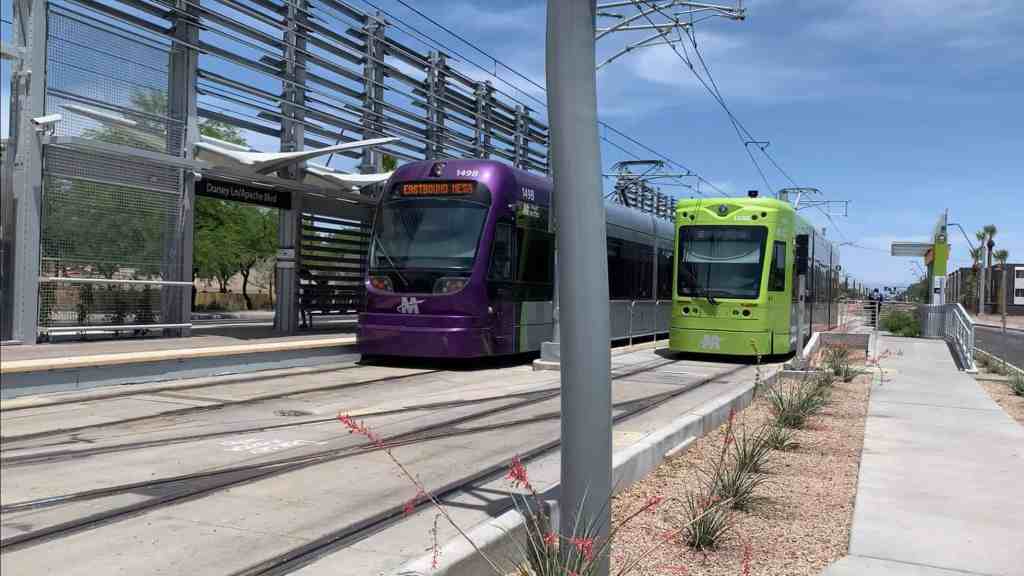
Getting to Mortgage Matchup Center
The arena sits at 201 East Jefferson Street in the heart of downtown Phoenix, one block from Chase Field, and it’s genuinely easy to reach by transit, rideshare, or car. Given downtown parking prices, transit is often the smart play.
Mortgage Matchup Center Parking
The Mortgage Matchup Center Garage is attached to the arena’s west side, but it’s mostly reserved for suite and premium-seat holders, with only limited public space. The public workhorse is the Jefferson Street Garage directly across from the arena, occupying the block between the building and Chase Field.
Beyond those, private surface lots dot Jefferson and Washington streets, typically running $8 to $15 depending on how close you are. Two rules save you here: prepay through a parking app because the closest lots sell out on game day, and arrive early — the lots fill and the streets around the arena bottleneck once a downtown event crowd converges. Prices spike sharply for Diamondbacks games happening simultaneously next door. I’ve parked down here many times, if you plan you can find a spot usually. The parking apps are super helpful.
Light Rail
The Valley Metro light rail stops at 3rd Street/Jefferson, one block from the doors. The best part: your event ticket doubles as a light-rail pass through the Rail Ride Event program — a Mortgage Matchup Center ticket gets you free light-rail travel starting four hours before the event through the end of the transit day. Keep your ticket on you, because a fare inspector can ask for it and the fines for riding without valid fare run $50 to $500. Note it’s good for light rail only, not the bus.
Rideshare
Uber and Lyft are reliable across the Valley, with pickup and dropoff on Jefferson Street. There’s no dedicated taxi stand at the arena. From a downtown hotel, a rideshare frequently costs less than parking and skips the post-game garage crawl entirely — you can be dropped essentially at the doors. Expect surge pricing in the fifteen minutes after the final buzzer; walking a block or two off Jefferson before you request usually gets you a cheaper, faster pickup.

Mortgage Matchup Center Insider Tips
.Downtown Phoenix wakes up on game nights, and the arena rewards fans who show up early and wander. Here’s what regulars know that first-timers don’t.
The Purple Palace (A History)
The arena’s nickname — “The Purple Palace,” after the Suns’ signature color — is a nod to how central this team has been to Phoenix for over three decades, since the era when it was the only major-league game in town. Take the time to walk the upper concourse, which is genuinely more interesting than the lower one: it’s lined with portraits of every Sun in the rafters — Barkley, Kevin Johnson, Steve Nash, Dan Majerle, Shawn Marion, Amar’e Stoudemire — plus glass cases of Suns and Mercury artifacts. It’s a free museum most people walk right past on their way to their seats.
The Building That Reinvented Itself
The most interesting thing about this arena is that a 1992 building doesn’t look or feel like one, because the recent renovation essentially rebuilt it around the original bones — and the boldest move is on the outside. The exterior is wrapped in a 45,000-square-foot kinetic skin made of roughly 130,000 six-inch aluminum flaps that move with no electricity at all: when the wind blows, the facade ripples like water, and when the desert sun hits it, special paint sets it blazing like fire and shifts its color as the light moves. It’s a genuinely arresting thing to stand under before a game, and it’s why the building reads as modern from blocks away.
The other headline is the tech. The center-hung scoreboard is about six times larger and six times sharper than the one it replaced, tied into LED ribbon boards that circle both bowls, and the glass Pavilion entry carries an interactive LED video wall that glows like a beacon down Jefferson Street. Up top, the upper-concourse food hall is themed around Airstream trailers and repurposed shipping containers, a nod to Phoenix food-truck culture that makes the casual eating area more fun to wander than a standard concession row. The wild part: most of this got built during the pandemic while the Suns kept playing — the shortened 2020–21 season let crews start early, and the whole job wrapped just as the team went on its 2021 Finals run.
Arrival Strategy
Most fans funnel in through the Pavilion on the northwest side, off the large plaza facing Jefferson Street. There’s a second major entrance on the east side, near an outdoor bar-and-patio and the set where the local broadcasters do their pregame show — it’s usually less clogged, and worth using if you’re coming from that direction. Doors generally open 90 minutes to two hours before tip; getting in early is the difference between browsing the concourse and standing in a bag line while the anthem plays.
Food & Drink Strategy
Ishbia’s ownership introduced a $2 value menu — genuinely cheap concession staples — which is the move if you don’t want to blow $40 on arena food. The lower concourse has the deeper concession lineup and a food-court-style eating area; the upper concourse is lighter on food but better for wandering. There’s a large sports bar built into the Pavilion with direct views into the bowl on the expanded main concourse — and if you’ve only got the cheapest ticket in the building, you can post up there for a standing-room view of the court instead of hiking to a nosebleed. Stake your spot early, before the concourse fills.
Two hacks that beat arena food. For a cheap, quiet pregame drink away from the packed sports bars, the downtown Fry’s grocery store at CityScape (100 E. Jefferson, about a block from the doors) has an actual wine-and-beer bar inside — a genuinely local move most visitors never think to make. And instead of a concession-stand dinner, eat before you go in: Pomo Pizzeria does authentic Neapolitan a short walk away and moves fast when you’re on a clock (the city’s famous pizza spot gets its due down in the restaurants section, but expect a line there).
Exit Strategy
Because re-entry isn’t allowed, don’t step out for anything mid-game. On the way out, the light-rail platform and the Jefferson Street rideshare zone both back up immediately at the buzzer — if you’re driving out of the Jefferson Street Garage, expect a slow crawl, and if you’re not in a hurry, a twenty-minute stop at a nearby bar lets the worst of it clear.
Instagrammable Spots
The northwest corner plaza, with the big LED sign and the arena’s curving copper-toned roofline behind it, is the signature exterior shot and the natural meet-up landmark before a game. Inside, the large bar overlooking the court gives you a clean frame of the bowl with the videoboard lit up.
Traditions & Culture
The Gorilla — the Suns’ mascot, one of the most famous in all of sports — is a genuine institution here and has been dunking off trampolines since the 1980s; first-timers should watch for his in-game bits. The crowd skews knowledgeable; this is a city that takes its basketball seriously, and a good Suns run turns the building loud.
First-Timer Must-Do
Catch the Gorilla’s routine and walk the retired-jersey concourse before you sit down. Between the two, you get the history and the personality of the franchise in twenty minutes.
Venue App
The Suns–Mercury arena app (and Ticketmaster) is where your mobile tickets live — it’s mandatory, not optional, since there’s no paper or will-call. It also handles mobile food ordering for contactless pickup, which is worth using at halftime to skip the rush.
Families & Kids
Kids age three and up need a ticket for Suns, Mercury, and Rattlers games. A Mercury game in the summer is the family-friendly, budget-friendly way to do a pro basketball night here — cheaper tickets, a shorter, brighter atmosphere, and a genuinely good team to watch. The cashless setup means you’ll want a card loaded before the kids start asking for snacks; the reverse ATMs handle cash-only families.
Autographs & Player Access
For autographs, position yourself near the lower-bowl tunnels by the benches — around sections 101 and 103 — before the game and during pregame warmups, when players are most accessible on their way on and off the floor. Arrive right when doors open; the window closes fast once warmups end. A related trick: even with an upper-level ticket, ushers will usually let you walk down into the lower bowl during warmups to watch the players up close, as long as you clear out of the courtside rows before tip.
Merch & Team Store
The team shop sits on the northwest side by the Pavilion and gets mobbed during events. If you actually want to browse — or grab arena-exclusive gear without elbowing through a crowd — go on a non-game weekday, when it keeps regular daytime hours and you’ll have the place to yourself.
The Mercury Are Worth Your Summer
Don’t sleep on the Phoenix Mercury. This is a three-time WNBA champion franchise (2007, 2009, 2014) that reached the 2025 WNBA Finals, anchored by Alyssa Thomas, one of the best players in the league. The summer WNBA calendar fills the basketball offseason with cheaper tickets and the same building, and on a hot Phoenix night the air-conditioned arena is its own selling point.
No Tailgating — Plan for Bars Instead
There’s no traditional tailgating here; it’s a downtown arena with no dedicated lots for it. The pregame scene happens at the surrounding bars and restaurants instead, which — conveniently — are steps away (see below).
Things to Do in Town
If you’ve got a free afternoon around the game, Phoenix rewards a little wandering. Cruise Roosevelt Row, the downtown arts district a short ride north, where the draw is the constantly-changing street art — murals on nearly every wall — plus independent galleries and boutiques; it’s a walkable, low-cost way to see the city’s creative side. Closest to the arena, the Arizona Science Center at Heritage Square (about a half-mile east) packs four levels of hands-on exhibits, a planetarium, and a five-story IMAX, which makes it the easy call if you’re traveling with kids and have a couple of hours to kill.
Hotels Near Mortgage Matchup Center
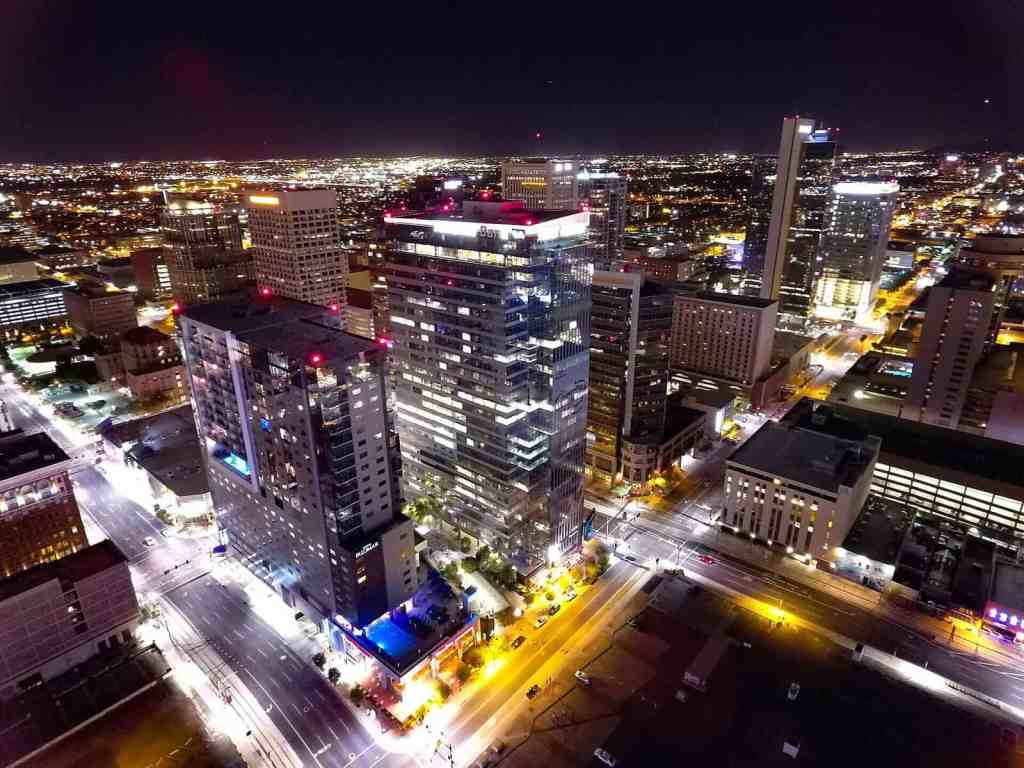
Downtown Phoenix is one of the easier arena neighborhoods to stay in: the building sits inside the walkable core, so most downtown hotels put you within a stroll of the doors, and the desert is pleasant enough at night during basketball season that the walk is a feature, not a chore. For big concerts and marquee Suns games, downtown rooms tighten up — book a couple of weeks out.
Best Areas to Stay
The immediate downtown core / CityScape is the target for game-focused trips — you’re inside the Legends Entertainment District, surrounded by bars and restaurants, and you can walk to your seat in minutes. Around the Convention Center, a few blocks south and east, puts you a five-to-ten-minute walk out with a slightly calmer feel and often better rates. Both connect to the light rail, so you can stay a stop or two out and still ride in free on your event ticket.
Hotel Recommendations
The Kitty-Corner Pick — Kimpton Hotel Palomar Phoenix. Literally across the intersection from the arena and built into the CityScape complex, this is as close as you can sleep. Boutique-styled with a rooftop pool and the on-site Blue Hound Kitchen & Cocktails, it’s the walk-out-your-door-and-you’re-there option, and the splurge-leaning-but-not-crazy tier. The tradeoff is that CityScape’s energy means it’s not the quiet choice.
The Rotating-View Pick — Hyatt Regency Phoenix. A five-minute walk out, across from the Convention Center, with a genuine novelty: the rooftop Compass restaurant slowly rotates for a 360-degree view of the city. Comfortable middle of the market, and an easy business-trip base if you’re catching a game on the side.
The Modern-Downtown Pick — The Westin Phoenix Downtown. About a ten-minute walk, with spacious rooms, floor-to-ceiling city-view windows, a rooftop pool, and a fitness center — a solid balance of proximity and polish without CityScape’s bustle right outside.
The Big-Hotel Pick — Sheraton Phoenix Downtown. Arizona’s largest hotel, a short walk from the arena, with a sun-deck pool and full on-site dining. It’s the choice if you like a full-service, everything-under-one-roof hotel and don’t mind a slightly less intimate feel.
The Value-and-Walk Pick — Courtyard or Residence Inn Phoenix Downtown. Both sit right in the arena’s immediate block, the Residence Inn leaning extended-stay with in-room kitchens. Reliable, walkable, and easier on the wallet than the boutique options next door.
Budget Options
Hampton Inn & Suites Phoenix Downtown is the easy value play — walking distance, free breakfast, and noticeably cheaper than the branded full-service hotels, with the usual tradeoff of a more basic room. For character over polish, the Hotel San Carlos is a historic downtown property with genuine old-Phoenix personality at a budget-friendly rate; you’re trading modern amenities for a building with a story, and it’s still an easy walk to the arena.

Restaurants and Bars Near The Arena
Two names cover most of what you need to know about the pregame. The Legends Entertainment District is the branded downtown sports zone — the cluster of bars, restaurants, and hotels wrapped around the arena and Chase Field a block away — so on game nights the whole neighborhood is oriented around getting fans fed and watered before tip. CityScape is the mixed-use complex directly across the street: a single block packed with restaurants, bars, a comedy club, a grocery store, and the Kimpton hotel, plus a seasonal ice rink in winter.
The practical magic of CityScape is proximity — it’s right across the crosswalk from the arena, so you can settle your tab and be through security in under ten minutes, which matters when a downtown kitchen might otherwise make you cut it close. It’s lively for Suns games and busier still when the Diamondbacks are playing next door, so on a double-event night, get downtown early. After the game, the district stays open, which turns waiting out the traffic into part of the night.
Solid Pregame & Postgame Bars
Majerle’s Sports Grill is the anchor — a block north at 2nd and Washington, owned by beloved former Sun Dan Majerle, and the closest thing downtown has to a team bar, with the Gorilla Wings as the signature order. Crucially for a postgame crowd, the kitchen stays open late — until 10:30 most nights and past midnight on weekends — while a lot of downtown kitchens shut before the final buzzer.
Bitter & Twisted Cocktail Parlour, tucked in the historic Luhrs Building a short walk south, is the craft-cocktail move — a nationally recognized bar with an encyclopedic, playful menu, better suited to a proper drink than a shot-and-a-beer rush. For beer, The Whining Pig on Washington keeps a rotating list of well over 100 brews in a small, low-key room that’s easy to duck into pregame.
For something with more character, Hanny’s occupies a 1947 former department store a couple of blocks up — half cocktail bar, half casual eatery, known for cheap martinis and sidewinder fries, and a good landing spot when the sports bars are jammed. And Copper Blues right in CityScape gives you a big beer list, live music, and the shortest possible walk back across the crosswalk to your seat.
Best Restaurants in the Area
The Arrogant Butcher, in CityScape at the arena’s doorstep, is my personal pick — I’ve been many times — a lively American spot with a deep bar and enough kitchen firepower to handle a pregame rush without making you late. Rosso Italian, a few doors down in CityScape, is the sit-down Italian option (upscale plates plus Napoletana-style pizza) and a smooth spot for a fuller meal before a game. For tacos and margaritas with real pregame energy, Blanco Cocina + Cantina at Block 23 — a block north — brings the lively, colorful Mexican vibe. And for the best pizza in the city, worth the short walk and the wait, Pizzeria Bianco (another fave of mine) in Heritage Square is a genuine national-caliber destination, not just a convenience.

Why You Should Go
Strip away the revolving door of corporate names and this is one of the better basketball-watching buildings in the NBA — compact, well-renovated, with honest sightlines from top to bottom and a downtown location that puts the whole night within a few walkable blocks. Come for a Suns game when the team’s rolling and the Purple Palace earns its nickname; come for a Mercury game in the summer and get championship-pedigree pro basketball for a fraction of the price. Either way, you’re getting a real downtown sports night, not a stadium marooned in a parking lot — and that’s the thing worth showing up for.
Check out all of our arena guides and these Phoenix area stadiums:
State Farm Stadium and Chase Field
Mountain America Stadium (Formerly Sun Devil Stadium)
Written by Brad Richards, Founder of Gameday Guides. This guide includes insights from personal visits as well as updated info from team sources, fan forums, and stadium policies. We aim to help you plan with confidence — enjoy your gameday.