
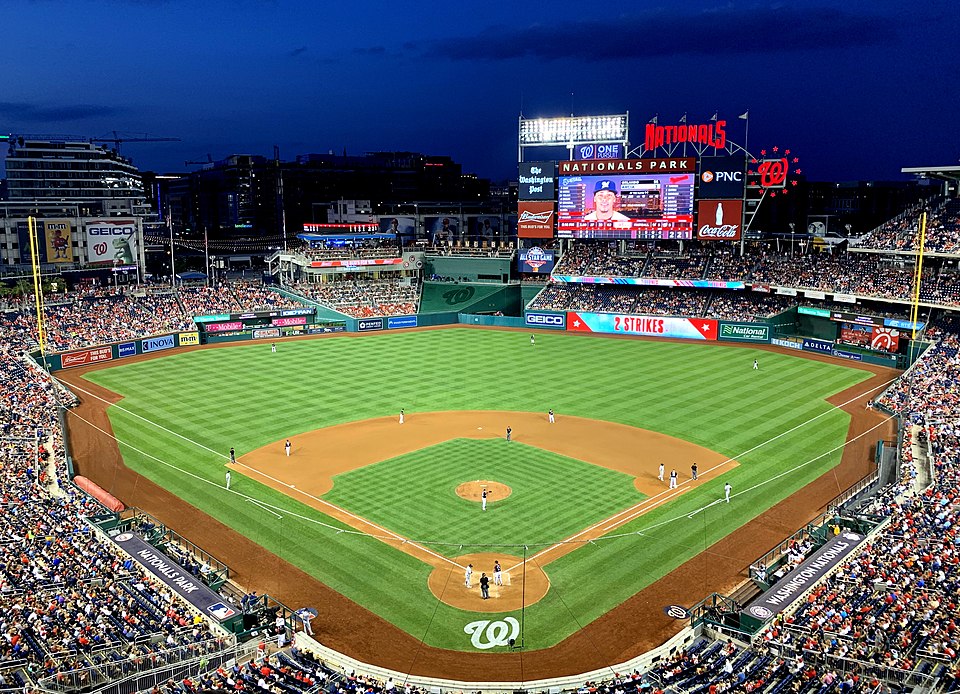
| Nationals Park – Quick Guide | Details |
|---|---|
| Home Team | Washington Nationals (MLB) |
| Opened | March 30, 2008 |
| Capacity | ~41,339 |
| Best Value Seats | Upper-deck infield sections and lower-level corners |
| Premium Seating | Terra Club, PNC Diamond Club, luxury suites |
| Top Ballpark Foods | Half-smokes, crab cakes, Ben’s Chili Bowl items, Ssongs Corn Dogs, local craft beer |
| Nearby Bars/Eats | The Bullpen, Bluejacket Brewery, Mission Navy Yard |
| Closest Hotels | Thompson Washington D.C., Hampton Inn Navy Yard, AC Hotel Capitol Hill |
| Transit Access | Navy Yard–Ballpark Metro (Green Line), walkable from Capitol Riverfront |
| Unique Highlights | Riverfront location with monument views; open concourses; one of MLB’s most walkable stadium districts |
🔍 Need a custom plan for your Nationals gameday?
Use Gameday Guides Planning Tool for seating, food, parking, and transit tips at Nationals Park.

Best Seats At Nationals Park
ationals Park seats 41,546 across three levels: the Lower Bowl, the Mezzanine (200 level), and the Upper Deck (300–400 level). The park runs foul line to foul line, so genuine baseball sightlines are available across almost every section. One heads-up before you buy: netting covers sections A–E of the Terra Club and sections 109–135 of the lower bowl behind home plate, with coverage varying by exact location. The bigger strategic question at this park isn’t which level to sit on — it’s which side of the field you end up on. DC summers are legitimately brutal, and sun exposure turns a great seat into a miserable one by the third inning.
The Sweet Spots: Best Non-Premium Seats
Lower Bowl, 3rd Base Side (Sections 110–116): This is the go-to recommendation for anyone who wants a great seat at a reasonable price. You’re on the home side, which means you’re also on the shade side — for afternoon games, Rows H–M stay shaded for most of the game, which in a DC July is worth more than the view alone. Sightlines to the diamond are excellent, and you’re close enough to see pitch break. Seat numbers 1–15 give you the angle without feeling remote. For evening games these sections are even better; by 6 PM the entire third-base side is fully shaded.
The tradeoff is price — third-base lower bowl commands a premium on the secondary market, especially for weekend games. But if you’re going to spend money on one game, this is where you spend it.
Behind Home Plate, Lower Bowl (Sections 119–126): Obviously premium pricing, but if you can swing it this is peak baseball. The action is directly in front of you and pitch movement is fully visible from this angle. Fair warning: you’re also looking at foul balls coming right at you, so stay sharp. These sections overlap with PNC Diamond Club territory, so secondary market seats here often come with lounge access worth verifying before you buy.
Left Field Mezzanine (Sections 201–205): For evening games, this is the underrated call. The Left Field Mezzanine picks up shade in the late afternoon and is noticeably less crowded than the baseline sections, so you can actually move around. These sections are also associated with the “Drink and a Dog” value offer — oversized padded seats with semi-private concourse access (air-conditioned) and a hot dog/beer credit included in the ticket. It’s one of the best hidden-value buys in the park and most fans don’t know about it.
Best Value Seats
Upper Deck, 1st Base Side (Sections 308–316): Budget $15–30 per ticket on non-premium games and you’re getting something genuinely worth having. The first-base upper deck is where you get the best “I’m in DC” view in the entire ballpark — a direct sightline to the Capitol dome and Washington Monument over the outfield. At night, with the dome lit up, it’s legitimately beautiful. Baseball from the upper deck reads differently too; you see the whole field open up in a way the lower bowl doesn’t give you. The tradeoff is distance, but for a casual game or a first visit, these sections deliver.
Right Field Bleachers (Sections 236–243, lower; 304–320, upper): This is where the louder Nats fans congregate. Cheap tickets, rowdy energy, and if you’re there for the atmosphere as much as the game you’ll have a good time. The lower bleachers get significant sun exposure, though — especially for day games. Bring sunscreen and water, or treat this as an evening-only option.
Best Seats for Families
Right Field Corner (Sections 103–106): The right call for families with young kids, and not for the usual reasons. These sections put you immediately next to the PenFed Kids Fun Zone playground and the family restrooms — which makes any inning-four meltdown dramatically more manageable. Sightlines are fine, the sections are accessible, and keeping kids entertained between at-bats is genuinely easier here than anywhere else in the park.
Weather & Shade Reality
DC summers are not forgiving, and this is the most important practical consideration at Nationals Park for anyone attending a game between May and September.
The safe zone is the third-base side (Sections 108–117 in the lower bowl, 408–420 in the upper deck). These sections stay shaded for most of the game at any start time. For a 1:05 or 4:05 PM game, being on the third-base side is the difference between comfort and suffering.
The danger zone is right field and the first-base line — specifically Sections 135–143 in the lower bowl and Sections 222–243 in the right-field Mezzanine. The sun sets behind the third-base side, leaving right field fully exposed throughout the game. For day games, these sections bake. For evening games starting at 6:45 PM or later, right-field Mezzanine fans stare directly into the setting sun for the first few innings. Bring sunglasses even to “night” games in June and July if you’re on the first-base side.
The 300-level is almost entirely sun-exposed for day games, with the exception of the third-base upper deck sections noted above.
One actionable tip: for afternoon games, Sections 138–139 behind the Nationals bullpen are a solid lower-bowl option — covered, reasonably priced, and protected from the worst of the sun.
What to Avoid
Right Field Lower Bowl for Day Games (Sections 135–143): You will cook. These sections offer no meaningful shade until late in the game, and in DC heat that’s not a minor inconvenience — it’s a four-hour ordeal. Save these for evening games if you want them at all.
Upper Deck 3rd Base End Sections: The high end sections in the 400s start to lose sightline quality on the far foul side, and the distance from the action is compounded by the angle. For the same price or cheaper, the 300-level first-base sections give you a better return.
My Recommendations
- Best Overall: Sections 113-115, rows H-M (lower bowl, 3rd base side). You get shade, you see the action, and you’re not paying insane money.
- Best for Families: Section 301 area (upper deck center field). The Red Porch Restaurant is nearby, bathrooms are close, and kids can get a good view without obstruction.
- Best Cheap Seats: Sections 315-320 (upper deck, 1st base line). $12-18 on off-dates, and the vantage point is actually solid.
- Avoid: Right field lower bowl for day games. You’ll cook.
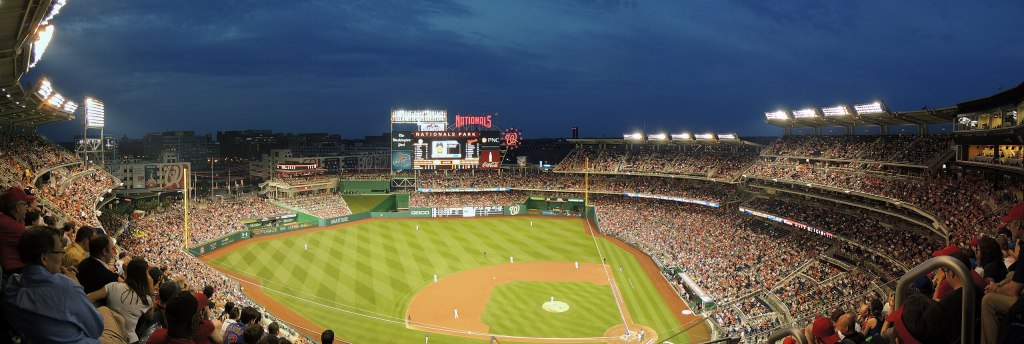
Premium Seating at Nationals Park
Nationals Park punches above its weight on premium options, and some of them genuinely deliver value if you’re willing to spend. The key thing to understand going in: the clubs exist in a clear hierarchy, and the food and beverage inclusions are not the same across all of them — a detail that catches fans off guard when they get the bill.
The Best Club
Terra Club (Sections A–E) — Field Level, Behind Home Plate: This is the ultra-premium option and it earns that status. Field-level seats directly behind home plate with an all-inclusive package: draft beer, house wine, and a chef’s table buffet that’s sit-down meal quality, not ballpark nachos. In-seat service means you never have to leave for food or drinks, and the climate-controlled lounge looks into the batting cages and the press conference room. One VIP parking pass per two season seats if you’re on the full package.
A note on naming: the Terra Club is sometimes referenced in older guides as the “Lexus Presidents Club” or “Presidents Club.” Those names are defunct — they refer to the same physical space that is now the Terra Club. If you see either of those names in a guide, treat it as outdated.
Pricing runs high — expect $200–$500+ per ticket depending on the matchup. You’re essentially buying dinner, premium drinks, and the best seat in the house as one package. Arrive an hour before first pitch to maximize the food.
Best Value Club
FIS Champions Club (Sections 206–221) — 200 Level, Infield: The Champions Club is the most accessible premium experience at Nationals Park and the one that comes up repeatedly among fans who feel they got their money’s worth. It covers the entire infield Mezzanine level in a massive climate-controlled indoor space with two upscale bars, specialty concessions, and access to the Champions Club trophy exhibit where World Series rings and historic Nationals memorabilia rotate through.
One important clarification: this is not an all-inclusive food and drink club. You get a prestige credit (typically $15–$30 depending on the package) to spend on concessions, not unlimited food and alcohol. That’s a meaningful distinction from Terra Club pricing. The value is in the environment — air conditioning, nicer bathrooms, better seats, and the club atmosphere — not in a buffet.
Tickets occasionally drop to around $50 on the secondary market for weeknight games against non-rivalry opponents, which is genuinely exceptional value for a club-level experience.
A note on naming: older guides may reference this as the “Delta Sky360 Club.” That sponsorship ended — it is now the FIS Champions Club. Same space, updated name.
Other Notable Premium Options
PNC Diamond Club (Sections 119–126) — Field Level, Behind Home Plate: Padded seats at the main concourse level behind home plate with private entrance access and the Diamond Club Lounge: premium food buffet, two private bars, climate control, and private restrooms. Also includes Champions Club access for trophy viewing.
One critical clarification the original draft got wrong: alcohol is not included in the standard PNC Diamond Club ticket price. The buffet and non-alcoholic drinks are covered, but beer and wine are paid separately unless you’re on a specific all-inclusive package. Verify exactly what your ticket includes before assuming it matches Terra Club’s open bar. Tickets run $200–$500 depending on the opponent — if you want the full all-inclusive experience at that price point, Terra Club is the more straightforward option.
Left Field Mezzanine / Drink and a Dog (Sections 201–205): Technically not a “club” but worth calling out here because it functions like one. Oversized padded seats, a semi-private enclosed concourse with air conditioning, and a hot dog and beer credit built into the ticket price. It’s the best value premium-adjacent option in the park and consistently flies under the radar. If you want a step up from general seating without spending club prices, start here.
Suites & Group Options
Suites at Nationals Park range from $5,700 to $20,000 depending on location and opponent. The Washington Suites, positioned in the “ring of gold” directly above the lower bowl behind home plate, hold 23–29 guests and run $10,000–$14,000. Party Suites hold up to 32 people and are the standard pick for corporate outings or large group celebrations. All suites include dedicated VIP entry, suite attendants, and private restrooms. Book through the Nationals group sales office directly or work with a suite broker for last-minute inventory at better rates.

Nationals Park Seating Chart
Now that you know where to sit, here’s the current seating chart for Nationals Park.
Nationals Tickets
Getting tickets to Nationals games is generally manageable compared to some other MLB markets. The team has had fluctuating attendance depending on how competitive they are, which means you can often find decent availability even for weekend games. Here’s how to secure your seats:
Get Your Nationals Tickets Here! Through our partnership with Vivid Seats, you can get tickets to Nationals games or just about any event on the planet.
Official Website: Start with the official Washington Nationals website. The team sells tickets directly, and you can choose your seats from an interactive seating chart. This is your cleanest option for avoiding fees and ensuring ticket authenticity.
MLB Ballpark App: Download the MLB Ballpark app. It’s the official app for all MLB teams, and you can purchase, manage, and access your digital tickets directly. No physical tickets needed—just pull up your phone at the gate.
Box Office: The Nationals Park box office is located at the center field gate (Gate A) on Half Street SE. It’s open Monday through Friday from 9 a.m. to 5 p.m., plus game days starting when gates open. They accept cash, credit, and debit cards. If you’re local or arrive early, you can sometimes snag better seats here than online.
Season Ticket Holders: Connect with season ticket holders who sell individual games they can’t attend. Fan forums, Reddit’s r/Nationals, and social media groups are good places to find these deals.
Ticket Alerts: Sign up for email alerts on the Nationals website or through secondary platforms. You’ll get notified about ticket releases, flash sales, and special promotions.
Flexibility Helps: If you’re flexible with dates, you’ll save money. Tuesday and Wednesday games are cheaper than Friday night or weekend games. Division rivals like the Phillies or Mets draw bigger crowds, so tickets cost more.
Last-Minute Deals: Keep an eye on prices as game day approaches. If the game isn’t sold out, you can sometimes find deals an hour or two before first pitch on secondary markets.

Nationals Park Bag Policy
I’ve been caught off-guard by bag policies at stadiums before, so here’s the deal at Nats Park: they’re running a modified clear bag setup that’s actually less restrictive than some MLB venues, but you still need to pay attention or you’ll be stuck at the gate.
Any bag larger than 5″ x 7″ x 0.75″ (basically a small clutch or wallet) must be clear plastic, vinyl, or PVC with contents plainly visible. Your clear bag can’t exceed 16″ x 16″ x 8″—that’s the hard maximum. If you’re bringing just a tiny purse or wallet under those clutch dimensions, it doesn’t need to be clear.
I’ve seen people show up with regular backpacks thinking they’ll get by, and the security staff just sends them straight to the Binbox lockers outside. Those lockers are available at the Home Plate and Right Field gates starting two hours before first pitch through one hour after the game ends. Medical bags and diaper bags get through but you’ll need to use the ADA/Family lanes at Home Plate or Center Field gates, and they’re getting searched regardless. Bin Boxes are in the $15-20 dollar range if you need them, just have your credit card at the ready.
One quirk: you can bring factory-sealed plastic water bottles up to one liter, or just bring an empty reusable plastic bottle and fill it inside. Single-serving food items are allowed too (think sealed snacks or sandwiches from outside), which is honestly clutch for saving money.
Three Important Policies
No backpacks, period. Clear or otherwise, backpacks are banned—the only exception is if you buy one inside the stadium that day and they tag it. This catches people constantly. Leave it at home or use Binbox.
Camera lenses over 8 inches are prohibited. If you’re bringing a DSLR, keep the lens under 8 inches or it’s considered professional equipment. Tripods, monopods, and selfie sticks are also banned.
Aerosol cans including sunscreen aren’t allowed. This one’s brutal for day games—you can’t bring spray sunscreen. Bring stick or lotion sunscreen instead, or just load up before you enter.
Here is the Nationals Park handy A to Z Guide to go over all the polices in the ballpark you could possibly ask or wonder about.
Getting To Nationals Park
Metro is hands-down the easiest way to get to Nats Park, and it’s not even close. The Navy Yard-Ballpark station on the Green Line drops you literally one block from the stadium, you avoid parking headaches entirely, and post-game exit is way faster than sitting in traffic for 45 minutes. I’ve done all methods, and unless you’re driving in from way out in the suburbs with a group that makes parking worth splitting, just take the train.
Public Transit (Metro)
The Navy Yard-Ballpark station is purpose-built for game days—it’s right there, one block south of the stadium. Green Line runs directly to it, so if you’re anywhere along that route (Gallery Place, L’Enfant Plaza, Archives, Waterfront), it’s a straight shot with no transfers. Orange, Blue, and Silver Lines hit Capitol South station, which is about a 15-minute walk to the ballpark if you don’t mind the extra distance. Here is a link to the Metro Schedule.
Important construction note: As of late September 2025, the Half Street entrance (west entrance, closest to the stadium) is closed until Spring 2026 for escalator replacement. You’ll need to use the New Jersey Avenue entrance (east entrance) instead, which adds maybe 2-3 minutes to your walk but it’s not a big deal. The elevator on the east side is still running if you need accessibility access.
Metro runs late on game nights—last Green Line train toward Greenbelt leaves Navy Yard at 11:52pm Monday-Thursday, and toward Branch Ave at 12:18am. Check wmata.com for current schedules since they adjust seasonally. Post-game crowds can get heavy, but trains run frequently after games and the platform handles volume pretty well. Bonus: The Navy Yard station exit dumps you directly in front of The Bullpen, so you can grab a pre-game beer immediately after getting off the train.
One sneaky move: if you’re driving from outside DC (like Baltimore area), park at Anacostia Metro station—it’s $4.45 for all-day parking, the garage connects directly to the station, and it’s just one stop on the Green Line to Navy Yard. Way cheaper than stadium parking and you still avoid traffic near the ballpark. Branch Ave station works similarly if you’re coming from the south.
Parking
Official team lots exist around the stadium, but they book fast and run $25-$45 depending on location and opponent. Lot W is about a 15-minute walk away and charges $25, rarely fills up, and you can usually snag front-row spots if you arrive early. Opening Day and big series against the Phillies or Yankees? Those lots sell out weeks ahead and resale prices double or triple.
SpotHero is your best bet for finding garage parking nearby with advance reservations—rates run around $35-45 for evening games, and you can sometimes find deals up to 50% off walk-up pricing. Garages typically stay open one hour after events end.
Street parking exists in the neighborhood but it’s mostly residential permit zones, and walking back to your car at 10:30pm through unfamiliar blocks isn’t ideal if you don’t know the area. Honestly, unless you’ve got a big group or you’re tailgating (which isn’t really a thing at Nats Park like it is at football stadiums), parking feels like more hassle than it’s worth.
Post-game traffic heading north toward the Capitol or east on I-295 gets absolutely jammed for about 30-40 minutes after final out. If you do drive, consider hanging at a nearby bar for an hour and letting the rush clear.
Rideshare (Uber/Lyft)
Rideshare works fine for drop-off before games—just don’t ask your driver to stop on South Capitol Street, which is a highway and legitimately dangerous. Recommended drop-off spots are N Street SE at New Jersey Ave, L Street SE between First and New Jersey, or M Street SE at Half Street.
Pickup after games is trickier. The official taxi stand sits on the north side of M Street SE between South Capitol and Half Street (walk one block north from Center Field Gate), and that’s also where most people try grabbing Ubers. It operates starting two hours after first pitch through 30 minutes post-game. Wait times vary wildly depending on taxi/rideshare volume, and surge pricing hits hard after big games

Nationals Park Insider Tips
Nationals Park is sitting in a neighborhood that’s transformed completely since opening in 2008. Navy Yard went from a post-industrial waterfront to one of DC’s best dining and bar stretches, which means your gameday options — inside and outside the gates — are genuinely strong. The ballpark itself also has more going on than most fans realize: a ticket hack that requires being in the right place at the right time, views of the Capitol that stop first-timers cold, and a 4th-inning tradition that’s been going for nearly 20 years. Here’s how to actually do it right.
Tickets & Getting In
Two strategies that regular attendees use and that actually work.
The first is the $5 Grandstand deal. The Nationals hold back around 400 tickets for every home game and sell them for $5 at the Main Box Office at the Center Field Gate, starting 90 minutes before first pitch. These are in person only — they don’t appear online. The seats are in Sections 401 and 402, high up in the upper deck, but at $5 you’re getting in the building and that’s the point. Show up early enough; they go fast.
The second strategy is the SeatGeek price-drop. SeatGeek is the official resale marketplace for the Nationals, and because this park rarely sells out outside of Opening Day, Phillies series, and Mets weekends, prices on the secondary market crater in the 45-minute window before first pitch. Season ticket holders who can’t make it would rather get $20 than nothing. If you’re already hanging out in Navy Yard and have the app loaded, this is a real tactic — buy lower bowl seats for a fraction of face value while you finish your drink.
One practical note: Nationals Park is fully digital. There is no will-call window, and you cannot drop tickets for a friend to pick up at the gate. Transfer tickets through the app before you leave for the park, and have the MLB Ballpark app downloaded and your tickets loaded before your phone battery becomes a question mark.
Bring Food In — Seriously
One of the most underused perks at Nationals Park, and one of the most valuable: you can bring in any food from outside as long as it fits in a single-compartment bag. This isn’t a gray area — it’s the policy. Each fan can also bring one factory-sealed plastic water bottle up to one liter. On a July afternoon game, that water bottle alone is worth planning around.
The practical version: Swizzler and Rasa (Indian fast-casual) are both a short walk from the Center Field Gate. Grab a real meal, walk it through security, eat it at your seat. You just spent $12 instead of $25 for equivalent food. The inside concessions are worth exploring — more on that below — but knowing you have this option completely changes what you spend on a family trip.
Best Food Inside the Gates
The concessions at Nationals Park are well above average for MLB, and the key is knowing which stands are worth your time.
Roaming Rooster (Section 238) is the DC cult-favorite fried chicken sandwich spot that somehow made it into a baseball stadium. Get the Honey Butter. It’s messy and worth every napkin. Ben’s Chili Bowl at Sections 110, 141, and 317 is non-negotiable for first-timers and regulars alike — order the Half-Smoke All the Way, which means mustard, onions, and Ben’s signature chili piled on a spicy all-beef sausage. Do not order a regular hot dog from Ben’s. Ssongs Hot Dogs at Section 130 are Korean corn dogs crusted in potato or panko — a great walking snack that’s developed a genuine following. Capo Deli at Section 136 does massive Italian subs (one feeds two people easily) and bagged cocktails. Haute Dogs & Fries at Sections 105, 232, and 315 offers gourmet dogs with seven dipping sauces for hand-cut fries. Phowheels at Section 140 runs Vietnamese street food — roti tacos dressed banh mi-style with pickled veggies and spicy mayo.
For the roaming options: Maracas Ice Pops circle the concourse on mobile bikes. The mango bar with chamoy and Tajin is the call on a hot summer afternoon. If you spot Electric Cool Aid at Sections 102 or 143, the Capri-Sun-style craft cocktails are both good and the best-named drink in the National League.
The Change-Up Food Hall in center field plaza is the best all-in-one destination if you’re indecisive — multiple vendors, rotating Player Pick-‘Em dishes selected by Nationals players (usually hometown food from their backgrounds), and a bar above with local drafts and solid mid-game views.
Timing matters everywhere here: the popular stands build lines fast. Get there before first pitch or in the second inning. Wait until the 3rd and you’ll miss an at-bat standing in line.
Traditions You Cannot Miss
Two in-game traditions that regulars will tell you not to skip under any circumstances.
The Presidents Race happens in the middle of the 4th inning. George Washington, Thomas Jefferson, Abraham Lincoln, and Teddy Roosevelt — in enormous foam costumes — race around the warning track from center field to home plate. It’s been running since 2006 and it remains one of the best in-game traditions in baseball. The lore that matters: Teddy Roosevelt lost every single race for nearly seven years straight, which became a genuine civic narrative in DC. When Teddy wins, the crowd goes completely feral. Screech the Eagle occasionally crashes the race and causes chaos. Be in your seat for the 4th. Food runs wait.
“Take On Me” at the 7th inning stretch is the other one. After the standard “Take Me Out to the Ballgame,” the park plays A-ha’s 1985 synthpop classic. The crowd tradition involves aggressively belting the high falsetto note in the bridge — the “Haaaa” moment — with whatever you’ve got left in the tank. If you don’t know it’s coming, it’s genuinely confusing. If you do, it’s one of the stranger and more joyful things that happen in any MLB ballpark all season.
Views & Instagram Spots
A few things inside the park that most fans walk right past.
The Capitol dome and Washington Monument views from the upper deck on the first-base side (Sections 301–310) are the best “sense of place” moment in MLB. At night, with the dome lit up behind the outfield, you’re watching baseball in a way that belongs specifically to DC. Those sections aren’t the most crowded, so you have room to stop and actually look.
The Blue Seat in Section 142 marks where Ryan Zimmerman hit the first home run in Nationals Park history on Opening Night 2008. It sits in a sea of red seats and is worth finding. Scattered red seats through the upper deck centerfield sections each mark where a massive homer landed — plaques around the concourse give the full story.
From the upper concourse on the third-base side, the Anacostia River and Frederick Douglass Bridge are visible from the southeastern viewing platform. It’s genuinely peaceful during a pitching change and worth the walk. Tour guides sometimes note that certain upper-deck angles give you a sightline to Fort McNair across the river — the site where Lincoln’s assassins were tried and executed. Whether newer construction still allows the view is worth checking, but it’s the kind of morbid DC history detail that makes this park worth exploring.
The Drink and a Dog sections (201–205) are semi-private, overlook left field with climate control, and every ticket includes a $26 credit toward food or merchandise. It flies under the radar compared to the premium clubs and is genuinely worth knowing about if you want a small upgrade without going full club level.
The scoreboard is worth looking at deliberately at least once before you get absorbed in the game — it’s a single massive high-resolution screen that puts a lot of newer parks to shame.
Ballpark Tours
Worth doing for first-timers and baseball history fans. Pregame tours on select days cover the 4th-floor press box, Champions Club, Diamond Club, the Terra Club with batting cage views, and the press conference room, finishing with field-level access during batting practice — dugouts, bullpen, and kids can throw from the mound. The off-day tour gets you even more access without working around an active game. Check nationals.com for the current schedule.
Getting Autographs
Nationals Park has one of the most structured autograph programs in MLB, and if you know how it works, Sunday games are genuinely the best bet in the league for getting a signature.
Signature Sundays is the official program: two Nationals players sign autographs at the top of the home dugout starting one hour before first pitch. It’s free, but it requires a voucher — and that’s where most fans get tripped up. Vouchers are distributed at Section 103 on a first-come, first-served basis when gates open, which is 80 minutes before first pitch. One voucher per person, no exceptions. If you want one, be at Section 103 as soon as gates open. By the time you wander over, they can be gone.
For non-Sunday games, the official program doesn’t run, but there are still opportunities. The extended protective netting eliminated the old method of getting balls over the dugout roof, but there’s a low rail on the outfield side of each dugout where players sometimes sign before game time as they come out to warm up. The timing that tends to work best is the window when position players first emerge to throw and loosen up — roughly 60–75 minutes before first pitch.
The specific sections to know: the Nationals dugout sits in front of Sections 127–130 on the first-base side. The visitor dugout is in front of Sections 115–118 on the third-base side. For big-name visiting stars, the visitor side is often less crowded and can actually be the easier play — fewer fans think to go there. Ushers check tickets at the lower sections, so having a lower bowl ticket helps for getting close. If you’re in the upper deck, the Signature Sunday voucher program is your most reliable path.
Families & First Timers
Kids can run the bases after Sunday home games — it’s a standing program, not a lottery. Jr. Nats Kids Club members get front-of-line access, which is worth signing up for before the season if you have young kids.
For first-game certificates and birthday buttons, the Hospitality Hub on the Main Concourse across from the Team Store near the Right Field Gate is the spot. Free, takes two minutes, and kids remember it.
There’s also a nursing lounge on the first-base side with comfortable seating, a toddler play area, and game TVs. Worth knowing it exists before you need it.
Getting There & Getting Out
Take the Green Line to Navy Yard-Ballpark. It’s the right answer from almost anywhere in DC. If you’re near the Mall or Capitol Hill, the walk down is genuinely pleasant — about 15–20 minutes through a neighborhood worth seeing at street level. The approach along Half Street with the outfield wall visible ahead of you and vendors lining the path is one of the better walk-up experiences in the National League.
The exit hack most people don’t know: when the game ends, do not use the main escalators at the Navy Yard/Half Street station entrance. That’s where 90% of the crowd goes and it becomes a mosh pit within minutes. Walk one block over to the New Jersey Avenue entrance of the same station — it consistently has no line while the main entrance is backed up to the street. Same train, dramatically less suffering.
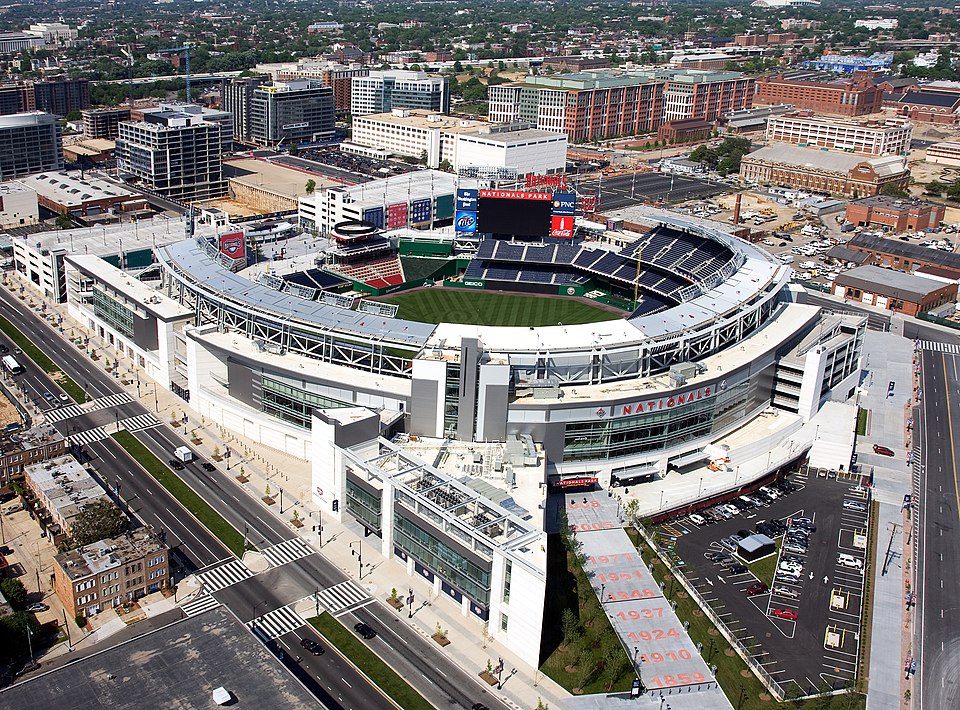
Bars and Restaurants Near Nationals Park
The Capitol Riverfront neighborhood around Nats Park has become legitimately solid for pre-gaming, and it’s way better than it was even five years ago. You’ve got this condensed stretch of bars, breweries, and restaurants within a 5-10 minute walk of the stadium, so the move is showing up 2-3 hours early, eating and drinking outside the ballpark, then heading in for first pitch.
The vibe here is pretty casual—sports bar energy mixed with newer waterfront dining spots. Most places run happy hours until 6:30 or 7pm on weekdays, which lines up perfectly with evening games. Weekends get packed on game days, so arriving early (like 2-3pm for a 4pm start) gives you breathing room and better service. Post-game works too since kitchens stay open longer on game nights, and the crowd disperses pretty quickly after the final out.
Where to Go
Mission Navy Yard – Massive two-story space right across from the Centerfield Gate with four bars including a 150-foot main bar. Sixteen beers on draft, full tequila selection, and tacos that actually slap. This place handles big groups easily and doesn’t feel claustrophobic even when it’s packed. 1221 Van Street, SE
The Big Stick – Rustic lodge-themed sports bar down the street serving “big sticks” (half smokes, brats, chorizo) with solid happy hour deals. Monday-Thursday 4-7pm, Friday 3-7pm with $2 off drafts and rail drinks. It’s got that classic sports bar layout with TVs everywhere, perfect if you want to catch other games before first pitch. 20 M Street, SE
Bluejacket Brewery – Local craft brewery that’s become a pre-game institution. Full restaurant menu, rotating house beers, and they know their audience on game days. Gets busy but worth it if you’re into actual good beer instead of just stadium Bud Light.
Walters Sports Bar – Named after Senators pitcher Walter Johnson, located directly across from the ballpark with happy hour running 4-7pm daily. $5 drafts and $7 wines, straightforward sports bar setup, perfect if you just want cheap drinks and proximity to the gates. 10 N Street, SE
Agua 301 – Contemporary Mexican spot with weekday happy hour 3:30-6:30pm featuring $5 drafts, $7 margaritas, and 2-for-$7 tacos. Waterfront location with outdoor seating when weather cooperates. Good middle ground between sports bar chaos and sit-down dining. 301 Water Street, SE
The Brig – Beer garden with outdoor seating that’s ideal for warm weather game days. More relaxed vibe than the sports bars, picnic table setup, rotating local brews. Gets packed in summer but the outdoor space keeps it from feeling claustrophobic.
Due South – Southern-themed restaurant with actual food quality beyond bar snacks. Bacon-braised collard greens, proper entrees, waterfront views. Happy hour Monday-Friday 5-7pm and Saturday-Sunday 12-2pm with $2 off drafts and $5 house wines. This is the move if you’re treating game day like an actual outing instead of just drinking and heading in. 301 Water Street, SE
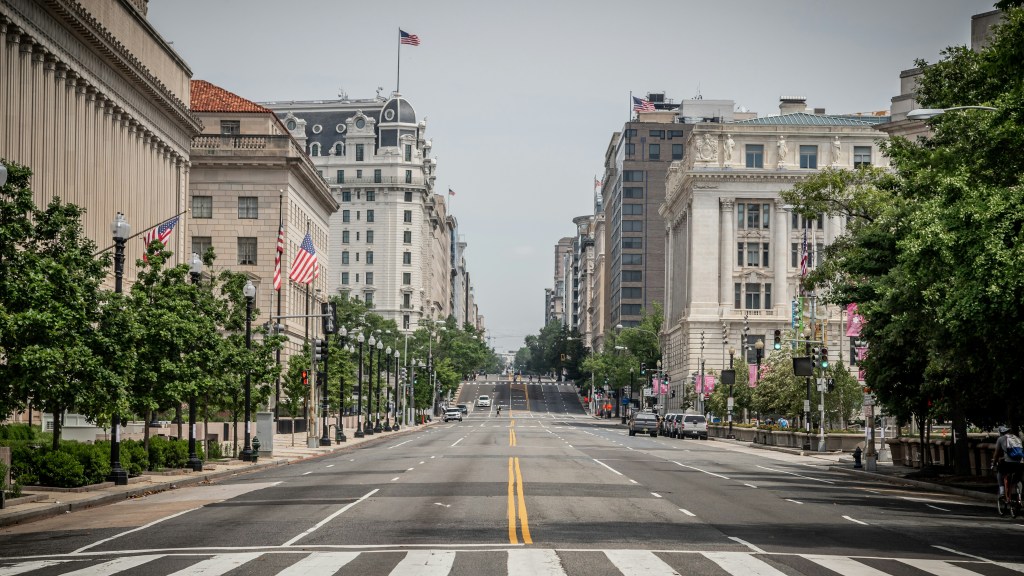
Hotels Near Nationals Park
Navy Yard (Capitol Riverfront) is basically the only neighborhood you need to consider if you’re going to the game. It’s literally where the park sits, it’s been completely revitalized in the last decade, and staying here means you can walk to the stadium, grab food pre-game, and hit the bars after without dealing with Metro crowds. The neighborhood itself is young, energetic, and packed with restaurants, breweries, and waterfront spots. The downside? It’s pricey and you’re paying for convenience. If you stay here, you’re doing it right—just expect to pay for it.
Other areas to consider are Capitol Hill, Downtown/Penn Quarter and The Wharf. Here are some hotels to look at
Hotel Picks
Premium Pick: Thompson Washington DC, by Hyatt: This is the move if you want to feel like you’re treating yourself. Modern, stylish, rooftop bar (Anchovy Social) with city views, floor-to-ceiling windows in many rooms, and you can literally see the park from the hotel. The neighborhood energy is right there. It’s an upscale, adult vibe—great if you’re there with a partner or a friend trip.
Best Value Mid-Tier: Residence Inn Washington Capitol Hill/Navy Yard: This is the real sleeper. Extended-stay suites with full kitchens, separate bedroom, living area, free daily breakfast, pet-friendly, and it’s essentially in the ballpark parking lot. The location is absurd—you can see the stadium from the building. Free WiFi, fitness center, and the breakfast actually matters when you’re saving $20+ per meal.
AC Hotel Washington DC Capitol Hill Navy Yard: Distance: Newer property (opened 2022), rooftop lounge with Capitol views, modern European design, and it actually feels different than the chain-hotel sameness. The rooftop bar is a legitimate place to hang, not just a gimmick. Clean, contemporary rooms with natural light.
Best Breakfast + Rooftop Deal: Hampton Inn & Suites Washington DC-Navy Yard: Directly adjacent to the park, free hot breakfast buffet (actually decent), and a rooftop bar/lounge with stadium views. Basic but clean rooms, and you can grab breakfast, head to the game, and be there in 5 minutes. Great for families because of the breakfast and proximity. Free WiFi, 24-hour gym.
Best Upscale Riverfront Vibes: Cambria Hotel Washington DC Navy Yard Riverfront:This is the upscale-but-not-ridiculous option. Rooftop bar (Perch SW) with actual Capitol views, on-site restaurant (RowHouse), modern design with local DC influence, and it sits right on the river. The rooms are spacious and well-designed. Pets allowed ($50 fee). Best deals in January/December and on Sundays/Thursdays.
Homewood Suites by Hilton Washington DC Capitol-Navy Yard: Extended-stay suites with full kitchens and living areas (like Residence Inn), free hot breakfast, indoor pool (rare for this area), pet-friendly. Good middle ground between budget and premium. Less flashy than Thompson, more amenities than Hampton.
Cambria Hotel (Get the Off-Season Rates): The Cambria’s pricing fluctuates wildly. Book it during the low season or mid-week and you’re getting a 4-star property at 3-star prices. Same rooftop bar, same riverfront location, same restaurant. The savings are real if you’re flexible with dates.
Things To Do Near Nationals Park
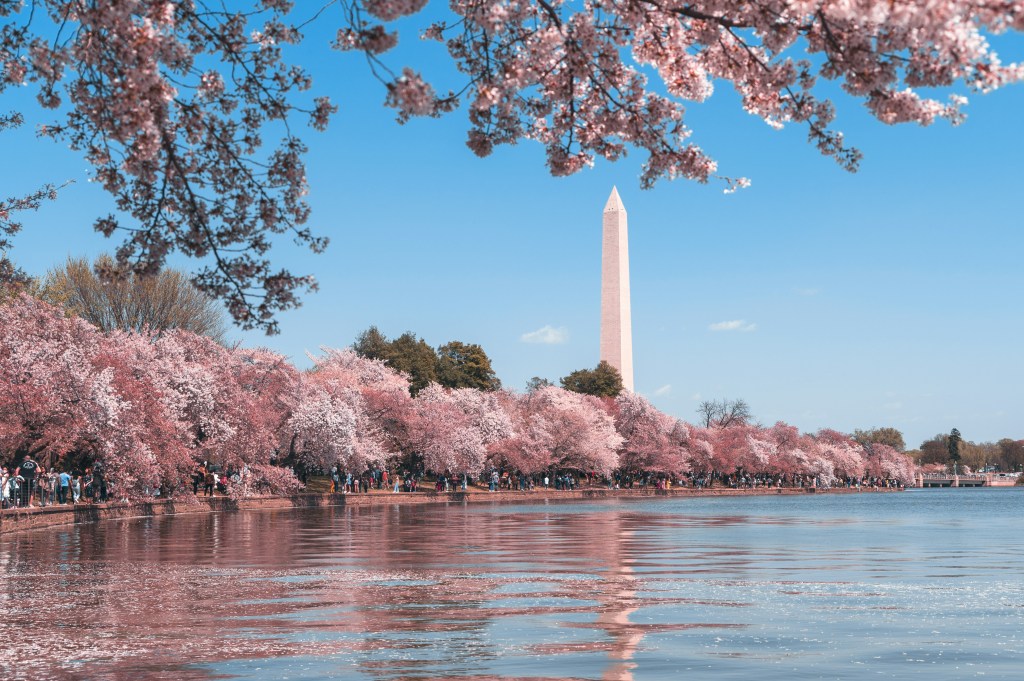
DC is genuinely one of the best baseball + city combinations in America. Most of the Smithsonian museums are free, the National Mall is walkable and massive, there’s world-class food, incredible neighborhoods to explore, historical sites everywhere you look, and you’ve got the Capitol, monuments, memorials, plus vibrant areas like Capitol Hill, Georgetown, and the waterfront all within reach. If you’re coming for a Nationals game, the city itself is the real draw.
Smithsonian National Air and Space Museum: This is the most visited museum in the Western Hemisphere, and for good reason. You’ll see the actual 1903 Wright Flyer that completed the first powered flight, the Apollo 11 Command Module Columbia (the thing that went to the moon), Charles Lindbergh’s Spirit of St. Louis, and you can literally touch moon rock. The main building on the National Mall is currently undergoing a major renovation with new galleries opening through July 2026, but roughly half is open and includes brand-new exhibits plus a renovated planetarium.
The museum is free, but you’ll need a timed-entry pass (also free, reserve at airandspace.si.edu). Spend 2-3 hours minimum. If you want a second location with even more aircraft, the Steven F. Udvar-Hazy Center near Dulles Airport has the Space Shuttle Discovery, the Enola Gay, and the Concorde in a massive hangar-like setting ($15 parking).
Smithsonian National Museum of Natural History: Unlike Air and Space, this museum requires NO timed-entry pass—just show up. You’ll see the Hope Diamond (one of the most famous gemstones in the world), an entire floor of dinosaur skeletons, Egyptian mummies, gems and minerals that look like they’re from another planet, and exhibits on everything from human evolution to ocean life. The building itself is gorgeous, with soaring ceilings and a sense of old-school grandeur that makes you feel like you’re in a 19th-century natural history institution (because you are).
Free admission, open 10 a.m. – 5:30 p.m. daily. Plan 3-4 hours if you’re being thorough, 90 minutes if you’re hitting the highlights.
Yards Park (Capitol Riverfront): Yards Park is an award-winning 42-acre waterfront park with playgrounds, water features (including dancing fountains with color-changing lights at night), green lawns, a dog run, and multiple restaurants/bars right on the water. It’s the centerpiece of the Capitol Riverfront neighborhood and honestly one of DC’s best outdoor spaces. The park sits on what was formerly the Navy Yard Annex, so there’s a bit of naval history woven in.
Show up early before the game to grab a drink, sit on the lawn, and actually feel like you’re in a nice city by the water. Post-game, it’s perfect for cooling off and having a beer without the stadium chaos. Free to visit, open year-round.
Union Market (NoMa Neighborhood): Union Market is DC’s food hall—40+ vendors in a restored 1967 building that was originally a produce-and-meat market. Think dumplings (Laoban Dumplings), banh mi, taco stands, Brooklyn-style bagels (Buffalo & Bergen), shrimp and grits (Puddin’), and weird creative stuff that changes seasonally. It’s chaos in the best way, packed on weekends, and genuinely one of the coolest food experiences in DC.
The Union Market neighborhood (called NoMa—north of Massachusetts Avenue) has blown up in the last five years with restaurants, bars, boutiques, and that specific “we’re new and excited” energy. Grab lunch or an early dinner here before heading to the park. It’s worth the trip.
National Mall & Memorial Parks (The Historical Core): The National Mall stretches from the Capitol Building to the Lincoln Memorial and is essentially an open-air museum of American history and power. You’ve got the Washington Monument (the big obelisk), Lincoln Memorial (where MLK gave his speech), World War II Memorial, Korean War Veterans Memorial, Eisenhower Memorial, plus museums dedicated to African American history, American history, and the Holocaust (all Smithsonian, all free).
And Finally….
Nationals Park is one of the nicest stadiums in baseball—good sightlines, genuinely excellent food, and you’re literally watching a game with the Capitol dome in view. Whether you’re dropping $15 or $500 on a seat, go on a Tuesday if you can, grab a Ben’s Half-Smoke, and enjoy it. The Nationals might not be World Series favorites right now, but the ballpark experience? That’s the real win.
Here are some other stadiums and arenas in D.C and the area:
Northwest Stadium Home of the Commanders
Here is a link to all of our MLB Parks
Written by Brad Richards, Founder of Gameday Guides. This guide includes insights from personal visits as well as updated info from team sources, fan forums, and stadium policies. We aim to help you plan with confidence — enjoy your gameday.