
Best Seats At Kyle Field
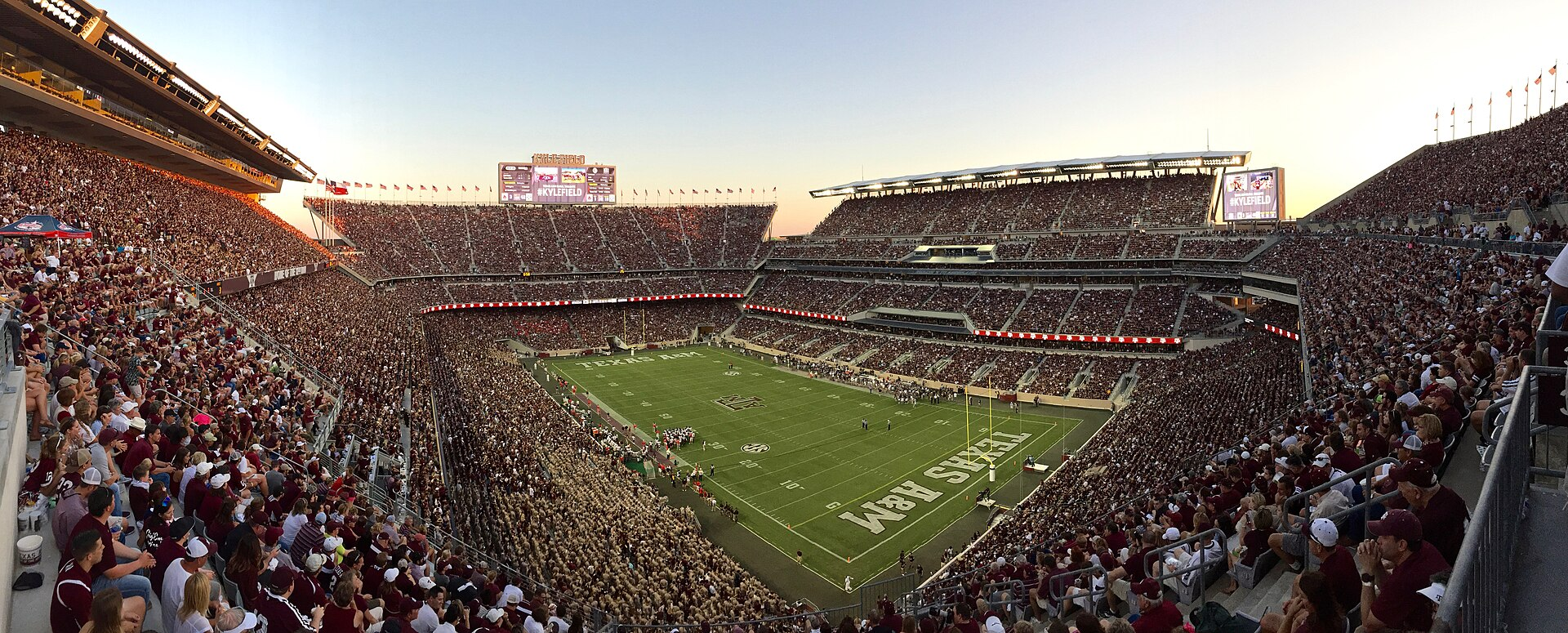
There are a few louder stadiums in college football. There are prettier ones. There are even a few with better food. But if you want to understand what it means when people say a stadium has a soul, you need to walk into Kyle Field on a Saturday night in October when the Aggies are playing a ranked SEC opponent and 102,000 people are collectively losing their minds. The place holds an unmistakable energy — part cult, part military academy, part Texas pride — that no renovation budget or conference realignment can manufacture.
Speaking of which: the Aggies’ move to the SEC didn’t just upgrade the schedule, it turned Kyle Field into one of the most anticipated road trips in college football. Visiting fan or lifelong Aggie, you’re going to feel it. This guide will make sure you’re in the right seat when you do.
Seating Guide
Three things decide a seat here: which sideline, how high, and whether anything is over your head. Kyle Field runs northwest to southeast, the Aggies sit on the west side, and the west side is where both the shade and the atmosphere live. The east sideline belongs to students from the second deck up and bakes in afternoon sun. The wrinkle that catches everyone: the entire west lower bowl is premium — Field Boxes and clubs — so the best general-admission seats at Kyle Field aren’t on the first deck at all. They’re one and two levels up.
Best Non-Premium Seats
West sideline, 300 level (sections 301–313). The answer for most visitors. You’re on the home sideline directly across from the student section, high enough to watch route concepts develop instead of guessing, and the roof over the back half of the deck puts you in cover for a chunk of the game. Full-service bar at 313, draft at 303 and 310, and a concourse wide enough that halftime isn’t a knife fight. The tradeoff is price — these are the most in-demand non-club sideline seats in the building.
North end zone, 100 level (sections 129–134). Close, and quietly the smartest cheap-ish buy. You’re behind the goal at field level, and the last eight rows sit under the Zone Club deck — the only real cover on the first deck. Sightlines to the far end are exactly what you’d expect from an end zone: fine on the goal line, guesswork at the other 20. Walk-On’s and a bar at 130, Schlotzsky’s and a Pepsi refill station at 134.
South end zone and corner, 200 level (sections 239–246). The calmest part of the stadium that still feels like it’s in the game. Second deck, away from the students, easy concourse access, and the angle looking north into the full horseshoe is the shot people take when they want to show someone what 102,000 people look like. Not the seat for tracking a run fit. The seat for bringing people who won’t love standing for four hours.
Best Value Seats
West sideline, 400 level (sections 401–408). Top deck, right side of the building, back half under the roof. You trade detail for the whole game as a diagram, and the shade line arrives here earlier than anywhere else on the west side. There’s a free Water Monster refill station at 408 — bring your frozen bottle up and top it off at halftime instead of paying twice.
Third deck south end zone (sections 314–329). Cheaper than the west sideline 300s with the same elevated full-field perspective, and Rudy’s BBQ sits at the Southeast Activation Tower, which is the best food in the building. The catch is sun: for any kickoff before mid-afternoon this stretch is fully exposed. Buy it for a night game and it’s one of the best values here. Buy it for an 11 a.m. and you’ve made a mistake.
Cheapest Way In
North end zone, 400 level (sections 409–421). Cheapest tickets in the stadium and there’s no dressing it up — top of the building behind an end zone, the far goal line is a rumor, no roof. What you get is the full sweep of the bowl, a straight-on look at the video board, and a price that for a non-conference opponent lands closer to a bar tab than a ticket. Better still for a night game, when the lack of cover stops mattering.
Worth knowing generally: inventory on soft non-conference games tends to loosen inside the last week as season ticket holders decide the drive isn’t worth it. Watching that window beats any specific section strategy.
Our Pick
West sideline, 300 level, sections 303 through 309, above the first several rows. Between the 20s on the home side, in the loudest quadrant without paying club prices, shaded for an afternoon kick, with a clean view of the whole field. If someone’s flying in for their one Kyle Field game, that’s the ticket.
Heat and Shade at Kyle Field
Confirmed and simple: the west side is the shade side, the east side bakes. The stadium runs northwest to southeast, so the sun sits high over the south end zone by noon and spends the afternoon dropping behind the west stands.
For a 2:30 or 3:00 kickoff, the west sideline — Field Boxes, the club sections, 301–313 and 401–408 — has the sun at its back and picks up shade as the game goes. The Zone Club is covered outright. The sun sits on the east side in 123–128, 230–238 and 330–338, and the upper east deck is the worst of it: shaded early, then sun directly in the eyes as it swings around.
For a late-morning or noon kickoff, shade barely exists. Your only real options are covered seats — the last eight rows of 130–134, the Zone Club, or the back half of 330–338 and 401–408. Sections 115–128, 230–238, 314–329 and 409–421 are fully exposed in that window. For evening games none of this matters and the end zones are fine.
Freeze your water bottle overnight. Single highest-return thing you can do for a September game here.
What to Avoid (and What’s Worth Trying Once)
East sideline, second and third decks (230–238, 330–338). Student section and its overflow. You’ll stand for four hours surrounded by people who started at Northgate before noon, the home crowd energy is behind you rather than around you, and in an afternoon game the sun is in your face. Wrong seat for kids or for anyone who wants to watch football sitting down.
East side lower bowl (123–128). Sun-soaked, with the added problem that the first several rows on any sideline here put you level with the bench area — players, staff, camera crews, medical carts, all between you and the play. Anywhere on the first deck, get above row 10.
Worth trying once: the upper deck during the War Hymn. When the crowd links up and starts sawing, the upper decks physically sway. It’s a known quirk of the building and press box regulars wait for it. From a 400-level seat you can watch the wave move across 100,000 people and feel the concrete move underneath you. It’s not the best seat for watching football. It’s the best seat for understanding why people talk about this place the way they do.
Aggieland Premium Seating Options
When Kyle Field made the call in the rebuild around a decade ago: it stacked the premium inventory on the west sideline and put the biggest club in the north end zone. That end zone club is better than it sounds, if you can get a good priced seat there do it. Here is an overvew:
The Best Premium Experience
The Legacy Club, west sideline. Every seat sits between the 20-yard lines on the home sideline with enough elevation to see the whole field cleanly. Chairs are 21-inch padded chairbacks with cupholders, and the club is a 12,000-square-foot climate-controlled lounge with a full-service bar, premium concessions, private elevators and escalators, and Hall of Champions access. Enter at Entry 3. In a stadium that’s mostly bare aluminum in Texas heat, sideline geometry plus air conditioning is the whole argument.
Best Value Premium
The Zone Club, north end zone, second tier. If you buy premium once here, buy this. Genuinely covered — not “the overhang reaches most of it” — with armchair seats, a lounge with a full bar and multiple concession areas, and a self-checkout market so you’re not queuing in the third quarter. Yes, it’s an end zone view, and that costs you something tracking a play sideline to sideline. But you’re looking straight down the field with the whole bowl in front of you, in shade from the opening kick, at a price well below the west side clubs. On a September afternoon that shade isn’t a luxury feature, it’s the product. Entry 5.
Other Premium Options
West Field Box (FB1–FB13) puts you at field level on the home sideline with its own concessions and air-conditioned space behind the seats — the splurge for proximity over perspective. The All-American Club (AC1–AC12) is the big west sideline club across the multi-level Stadium Club West footprint, with interior lounge, exterior chairbacks and full bars at both ends; Entry 3. Loge boxes sit in the northeast, northwest and southwest corners — private four-to-six-seat boxes with chairbacks, a TV and a private bar area, good for a small group that doesn’t want a whole suite.
Suites and Group Options
Suites ring all four sides and are booked through Texas A&M Athletics or the 12th Man Foundation, with brokers handling most single-game resale. Expect several thousand dollars and up depending on the opponent, typically covering the suite, seating for 10 to 20, and club access; catering is ordered separately on top. For the marquee games you’re bidding against donors and corporate accounts who committed months ago.

Kyle Field Seating Chart and Capacity
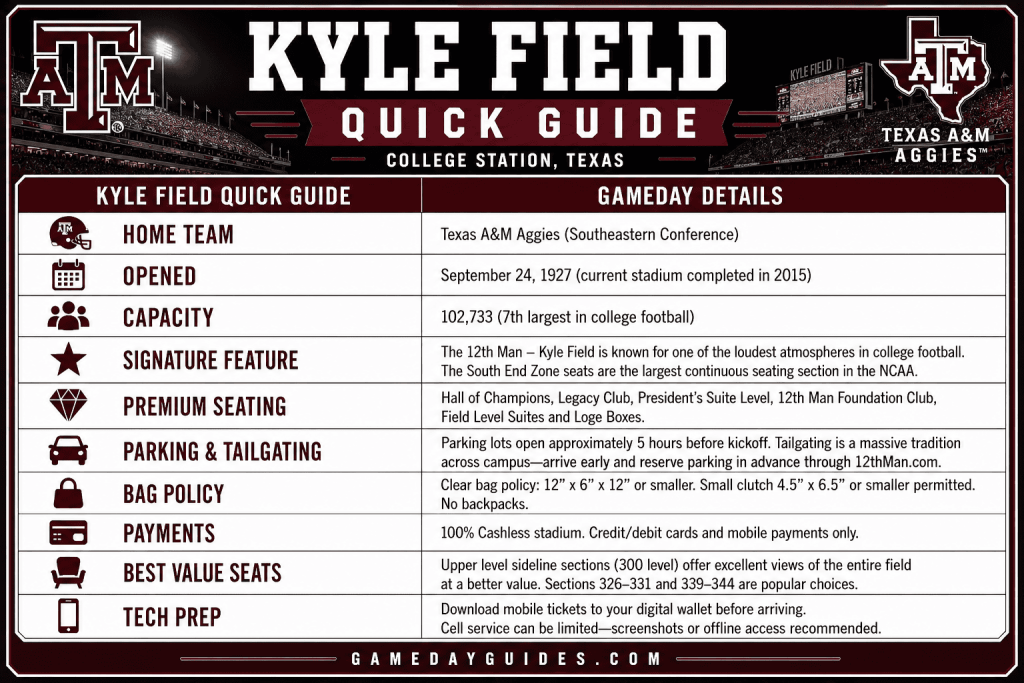
Kyle Field seats 102,733, making it the largest stadium in the SEC and the fourth-largest in the country. It sits at 161 Wellborn Road (for your GPS purposes) on the west edge of the Texas A&M campus in College Station, and has hosted Aggie football on the same ground since 1904.
Two quirks worth knowing before you read the map. The numbering isn’t continuous — the west lower bowl is lettered rather than numbered, because it’s all Field Boxes (FB), All-American Club (AC), Legacy Club (LC) and Zone Club (Z) rather than general seating. And most of the stadium is bench aluminum with no backs; chairbacks are concentrated in the clubs, and seat-back rentals are sold at kiosks outside sections 114, 130, 239, 341 and 405.
.Here is an updated Seating Chart of Kyle Field.
Getting Tickets To Texas A&M Football
SeatGeek is the official secondary partner of Texas A&M Athletics, and single-game primary inventory runs through the athletics site.
The structural thing to understand about this market: seat access at Kyle Field is tied to 12th Man Foundation giving levels, which makes season ticket holders unusually reluctant to release seats. They mostly let go for personal scheduling reasons rather than because a matchup is weak, so resale supply arrives in irregular bursts instead of a smooth slide.
For non-conference and lower-draw SEC opponents, patience pays — inventory loosens inside the last seven to ten days and prices soften with it. For the games everyone wants, patience is expensive; the rivalry and top-ten home games price like postseason and only move up. Buy those the week the schedule drops.
One thing worth checking before you default to the cheapest seat: the gap between a 400-level end zone ticket and a mid-range 300-level ticket on the secondary market is often smaller than the face-value tiers suggest.
Click here for Aggies Tickets: With our partnership with Vivid Seats you can get tickets to any Texas A&M game or just about any event on the planet! This may be good for big games where tickets are tough.

Kyle Field Bag Policy
Kyle Field follows the SEC clear bag standard, which A&M calls the 12-1-1 rule. You get one clear bag no larger than 12″ x 6″ x 12″, or one one-gallon clear plastic storage bag, plus one small clutch that fits in your hand and doesn’t exceed roughly 4.5″ x 6.5″. Clear backpacks are fine as long as they stay inside those dimensions; logos on the bag can’t exceed 4.5″ tall by 3.4″ wide. Non-clear backpacks, totes and traditional purses do not get in, and there is no bag check — you’ll be walking back to your car.
Diaper bags have to be clear and meet the same requirements. Medically necessary items that can’t fit the policy are screened separately at Entries 2, 3, 5, 8 and 9. Cameras and binoculars are allowed but their cases are not, so carry them or fit them in the clear bag. Tailgating is unaffected — the policy only applies at the stadium gates.
Key Venue Policies (Cashless Stadium, Alcohol Sales)
No re-entry. SEC rule, no pass-outs, no exceptions. Whatever you’re doing at the tailgate, finish it.
One sealed water bottle per person, clear plastic, up to one gallon. That’s the only outside beverage allowed and the only outside anything allowed. No outside food, no ice chests, no outside cups or containers — including the branded cup you bought here last season.
Umbrellas and strollers are both prohibited. The umbrella one catches people every year; bring a poncho if there’s weather. The stroller one matters if you’re bringing small kids — plan to carry or leave it in the car.
Tobacco products of any kind are banned, along with artificial noisemakers, unauthorized banners, signs and flags, pets, firearms, and stadium seats over 16 inches.
Alcohol is sold throughout the stadium, including liquor, under the SEC’s alcohol policy. Refills on Pepsi products are free with a soda purchase.
The stadium lights flash. The LED system runs dramatic lighting effects throughout the game — worth knowing in advance if anyone in your group is sensitive to that.
Cashless or Cash? Fully cashless. Every concession stand in the stadium operates without cash — have a card or mobile pay ready. No cash-to-card kiosks are available inside, so don’t count on converting at the gate. Sort this out before you leave your tailgate.
Accessibility ADA seating and accessible companion seats are available throughout the stadium. Escalators provide upper deck access at the northeast and northwest entrances only — if you enter through the north, southeast, or southwest gates, you’re on ramps. Accessible parking is available at the University Center Garage and Lot 88 for $20–$25. Accessible shuttle service runs from Lot Y/114 via the Stotzer route, dropping next to the Zone entrance from three hours before kickoff through 90 minutes post-game. Full accessibility info is on the official 12thman.com site.
For a full list of policies check the Texas A&M gameday guide.

Getting to Kyle Field
College Station has no rail and no useful transit for visitors, so this is a driving and shuttle town — and the smartest move is usually to park somewhere other than campus and let a free bus do the hard part.
Kyle Field Parking
Prepay reserved parking sells through ParkMobile and is the only way to lock a campus spot in advance, covering Lots 49, 43 and 100m plus the West Campus, Southside, Central Campus, Gene Stallings Boulevard and Northside garages. Pay-on-arrival general parking runs $25 or $40 in limited areas near the Bush Library, the Bonfire Memorial and Agronomy Road. Lots open at 7:30 a.m. Approach on FM 2818 or Highway 6. Pregame road closures begin four and a half hours before kickoff or at 7:30 a.m., whichever is later.
Parking Hack: Park in Downtown Bryan. The free Downtown Bryan Gameday Shuttle loops from the Roy Kelly Parking Garage to the Memorial Student Center, a short walk from the stadium, starting three hours pregame, running during the game, and continuing an hour after. Parking in the surrounding city and county lots is free, the garage is cheap, and Downtown Bryan has real restaurants and bars to sit in on both ends of the day. You skip the campus queue entirely. No open containers on the bus.
One access note if you do park on campus: you can’t reach the west side from the southwest anymore. Construction at the Graham Athletic Complex closed that approach, so you’ll route around the east side via Houston Street and the Zone Plaza to get to Entries 2, 3 and 4.
Gameday Shuttles
Every campus shuttle route is free and runs three hours pregame through one hour post-game, with service continuing during the game. The Bush Library route starts five hours out. On-campus routes include Agronomy, Bush Library, Stotzer, Bonfire, Reed/Olsen and WR; off-campus routes 22, 26, 31 and 35 cover the apartment corridors. Live bus locations show up in the Texas A&M app on gameday, and route maps post the Wednesday before each home game.
Rideshare
Uber and Lyft work fine in College Station, and there are designated pickup zones — Lot 30e plus three curbside locations. Use them rather than dropping a pin near the stadium, because the perimeter is closed and your driver will circle. If you’d rather avoid the surge entirely, walk to Northgate after the game, get a drink, and order a car from there once the first wave has cleared.
Walking, Bikes and Pedicabs
From Northgate or the on-campus hotel, it’s a 10-to-15 minute walk and it’s the best option available. No Wheels Zones go into effect three and a half hours pregame through an hour post-game — cyclists, skateboarders and scooter riders have to dismount and walk through them, and that includes golf carts. Pedicabs operate under a university pilot program with designated pickup and drop-off zones on main campus and west campus, and they no longer cross Wellborn Road, so don’t count on one to get you across the tracks.
Insider Tips for Texas A&M Games
Texas A&M gameday is less a sporting event than a full-day civic ritual that happens to include football. The traditions aren’t decoration bolted onto the product — they are the product, and first-timers who show up ninety minutes before kickoff miss most of what they came for. Here’s how to actually work the day.
Kyle Field Tours and History
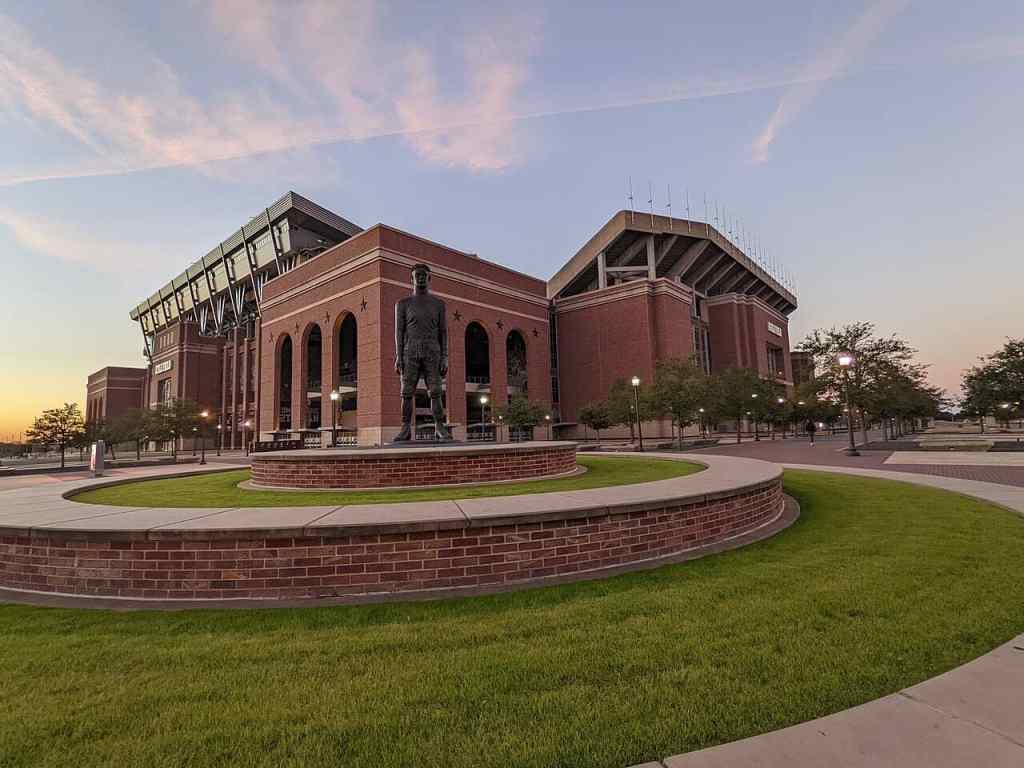
Kyle Field is named for Edwin Jackson Kyle, class of 1899, who bought a covered grandstand from the Bryan fairgrounds with his own money and hauled it onto the campus agricultural plots so A&M’s teams would have somewhere to play. Every expansion since — the 1927 concrete stadium, second decks, third decks, the Zone — went up on that same footprint instead of relocating somewhere with more room. That’s why parking is a puzzle, and why the walk in takes you past the Memorial Student Center, Academic Plaza and the Bonfire Memorial instead of a sea of asphalt. Budget the walk; it’s part of the experience.
Also, for fans looking for a tour, its apparently offered.
Kyle Field Renovation and Rebuild
The redevelopment ran 2013 to 2015, cost $485 million, and demolished and rebuilt both the east and west sides in two phases across 22 months without the Aggies missing a home game. The west side was imploded in front of 5,000 people who turned up to watch on a Sunday morning. Populous designed it, and the brief was explicitly about sound: enclose the bowl, steepen the pitch, keep the noise in.
Three things came out of it that you’ll notice. Concourses got wide, which is why halftime here is bearable in a way it isn’t at older SEC venues. Premium got stacked on the west sideline, which is why the general-admission lower bowl on the home side no longer exists. And the north end zone got the Zone Club deck, which incidentally created the only shaded first-deck seats in the building.
The main video board runs 163 feet wide with two 54-foot boards in the corners, and 71 American flags fly at the stadium honoring Aggie veterans who died in World War I.
Arrival Strategy: Gates, Entries and Timing
Gates open 90 minutes before kickoff, not two hours. Ticket booths open at least two hours out, and the north-side booths near Entries 5 and 6 open three hours out. Plan your campus time around that 90-minute window.
Use the entry printed on your ticket. Entries here are numbered and assigned by seat location — Zone Club and Northeast Loge at Entry 5, the west clubs and Field Box at Entry 3, students at the Northeast and Southeast Towers. Walking to the wrong side of a 102,733-seat stadium in 95-degree heat is a ten-minute mistake you’ll feel all day.
Load your ticket into your mobile wallet before you leave the hotel. Everything is digital and cell service around the stadium is genuinely bad. A wallet ticket also auto-updates if kickoff moves. Transfer everyone their own ticket in advance rather than scanning four passes off one phone at the gate.
Text AgAssist at 844-724-1212 for anything that goes wrong inside. Official channel, faster than hunting for an usher.
Tailgating in Aggieland
Aggie Park is the center of gravity — 20 acres near the Alumni Center with a pond and dedicated tailgating areas. Reed Arena’s lots also take tailgaters. Both have free and paid options, and paid spaces go through the weekly Virtual Land Rush, which moves fast for big games.
The Fan Zone, directly north of the stadium, opens three and a half hours before kickoff with food trucks, games and live broadcasts. Free, and the easiest way to burn pregame time if you don’t have a tailgate to attach yourself to.
Food and Drink Inside Kyle Field
Rudy’s BBQ at the Southeast Activation Tower is the best food in the building and it isn’t close. Third deck, worth the walk from anywhere.
Skip the staffed stands at halftime. Use the Amazon just-walk-out markets or the Mashgin self-checkout stands instead — you scan or grab and go, and the time difference at intermission is significant.
By deck: Little Patagonia Empanada at 122 and Walk-On’s at 130 on the first level; Good Bull Cattle Co. at 242 for the smash burger on the second; Pardon My Cheesesteak at 323 on the third.
Free water refill stations are at 334 and 408, and Pepsi refills are free with any soda purchase. Between those, you never need to buy a second drink.
Beating the Heat
Kyle Field has four public Cool Zones — air-conditioned relief rooms scattered through the building — plus large fans on some concourses and expanded covered concourse space. Find yours before you need it rather than after. September here regularly runs into the mid-90s with humidity, four hours of standing takes a real physical toll, and the stadium’s own guidance is to start hydrating the night before, which is not something venues usually bother saying.
Traditions a Visitor Needs to Understand
Midnight Yell is the actual main event on Friday. It’s free, open to anyone, and held at Kyle Field the night before every home game — gates at 10:45 p.m., roughly 30 minutes long, regularly 25,000-plus people, and for the big ones it has drawn crowds north of 40,000. The Yell Leaders run the crowd through the yells and the War Hymn, and Parsons Mounted Cavalry fires the cannon three to five times, so brace for it. If you’re making a weekend of this, Friday night is not optional.
There are no cheerleaders — there are Yell Leaders. Five upperclassmen in white, elected by the student body, who signal the crowd with hand motions called pass-backs. Once you’re watching them instead of the scoreboard, the coordination of a six-figure crowd suddenly makes sense.
“Humping it.” When the Yell Leaders call certain yells, thousands of students bend forward at the waist with hands on knees. It opens the diaphragm and makes the crowd louder. Visitors aren’t expected to join. Knowing what’s happening means you’re not the one person standing upright looking confused.
The Corps of Cadets marches in. More than 2,500 cadets step off from the Quad with the Fightin’ Texas Aggie Band roughly an hour and a half before kickoff, march through the Fan Zone and into the stadium. It’s the best free thing on campus that day.
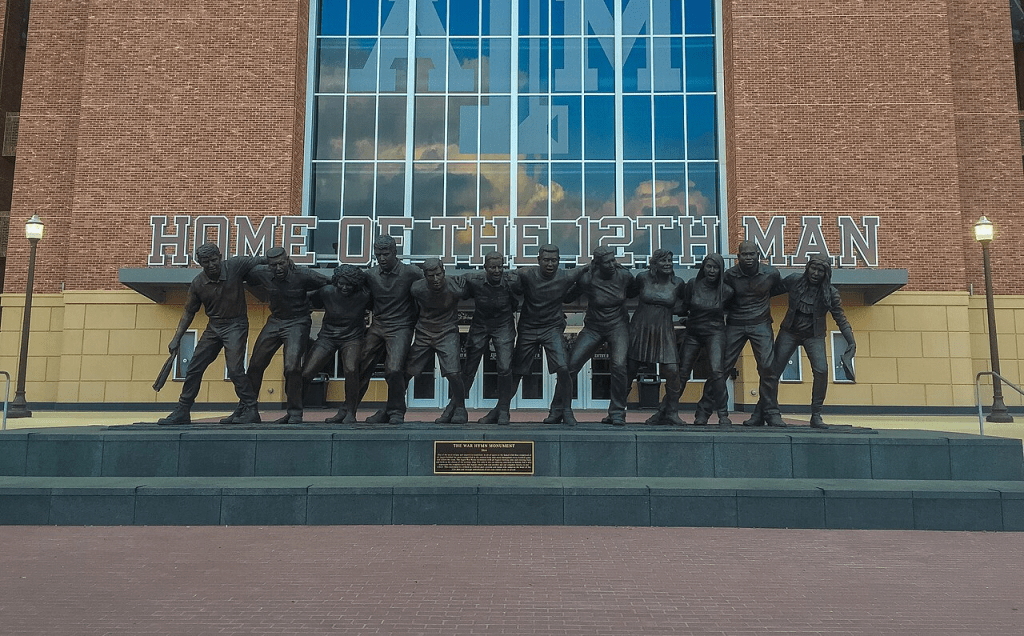
Spirit Walk. The team buses drop at the north end of Houston Street, near the War Hymn statue, two hours and fifteen minutes before kickoff, and the team walks down Houston Street with the band and Yell Leaders. Line the route and you’ll get high-fives.
Kissing after scores is a real tradition with a real origin — A&M was all-male for most of its history and a football game was the date. Nobody around you will find it remarkable.
Do not leave at halftime. The Fightin’ Texas Aggie Band halftime performance is a genuine must-see and the reason a lot of people buy the ticket. And if A&M wins, stay for the War Hymn — the whole stadium links arms and saws, the upper decks physically sway, and being halfway up an exit ramp when it starts is the most common regret first-timers report.
Photo Ops
The stadium exterior before gates open. Come to the north end early, before the Fan Zone crowd builds, and shoot the stadium from the Zone Plaza. You want the light and the empty concourse — a 102,733-seat bowl with nobody in it photographs better than most people expect.
The Bonfire Memorial, near the north side of campus, honors the twelve students killed in the 1999 Aggie Bonfire collapse. It is not a gameday attraction and it should not be shot like one. Give it five quiet minutes. It explains more about this school’s culture than anything inside the stadium does.
Bottle Cap Alley, next to the Dixie Chicken in Northgate, is a narrow passage paved in decades of bottle caps swept out of the bar. Two minutes, a good story, a good picture.
Sully in Academic Plaza. The statue of Lawrence Sullivan Ross is permanently covered in pennies students leave for luck. Bring a few and add to the pile.
The 12th Man Mobile App
You need it. Tickets, parking passes and stadium navigation all live there, and A&M went fully digital on ticketing. Download it and load everything before you get anywhere near campus, because cell service in the lots and inside the bowl is unreliable on gamedays. The app also carries the live radio broadcast, which is useful in the upper deck.
Merch and the Team Store
12th Man Shop locations are scattered through the concourses, and the least painful time to hit one is during the first quarter — everyone shops before kickoff and at halftime. If you’d rather not spend stadium time on it, the shop operates outside the stadium and online year-round. You can also check out our partner Fanatics for great Aggie Gear.
Families and Kids
Kids’ Yell Practice is the sleeper. Yell Leaders run a kids-only session at the War Hymn statue on the east side of the stadium, outside Entry 8 off Houston Street, starting two and a half hours before kickoff — right before the Spirit Walk comes down the same street. It’s free, it teaches the yells so your kids aren’t lost during the game, and it puts you in position for the team walk-by.
The Fan Zone opens three and a half hours pregame with games, food trucks and live music, north of the stadium. Free.
Strollers are prohibited inside Kyle Field. Plan around it — this is the policy that ruins the most family plans here.
Best family seating is the south end zone and corner on the 200 level, sections 239 through 246 — away from the student sections, straightforward concourse access, and reasonable sightlines. Baby changing stations are in all family restrooms plus the men’s and women’s restrooms throughout the stadium.
Venue Quirks Worth Knowing
Cell service is a genuine dead zone in the lots and patchy inside. The stadium’s own signature detail: 71 American flags fly at Kyle Field, honoring Aggie veterans who died in World War I, with 16 of them installed in the Northeast and Northwest Activation Towers. Most of the building is bench seating — if you want a back, rent a seat back at the kiosks outside sections 114, 130, 239, 341 or 405, and note that club sections with armchairs can’t take them.
After the Final Whistle
Don’t rush to the exits. With 102,000 people leaving at once, the immediate stadium perimeter is a traffic and pedestrian bottleneck for 30–45 minutes after the game. If you’re ridesharing, walk a few blocks east or west of the stadium to a quieter street before requesting a car — surge pricing and driver availability near the stadium are both brutal in the first post-game window. Northgate is a natural post-game destination and a better rideshare pickup spot than anywhere near Kyle Field.
If the Aggies win, listen for the War Hymn. The full in-stadium version at the end of a home victory, with 100,000 people singing together, is the moment that makes first-timers understand what the 12th Man thing actually means. Don’t be mid-exit when it starts.
Leaving the Stadium
Post-game road closures start around the beginning of the fourth quarter, so the traffic plan is already in motion before the game ends. Shuttles run until an hour after the final whistle. Heading west of FM 2818, take Wellborn Road south to Deacon Drive or Rock Prairie Road; leaving from the north side of campus, get to Villa Maria Road and go east or west. If you’re ridesharing, use the designated zones or walk to Northgate first — the perimeter is closed and pinning a location near the stadium just means a driver circling while the meter runs.
Things to Do in College Station
The George H.W. Bush Presidential Library and Museum is on the west side of campus and is legitimately good — a replica Oval Office, a section of the Berlin Wall, and a serious treatment of the 41st presidency. Aggie Park is a pleasant walk even when nobody’s tailgating. Downtown Bryan, a few miles north, has the best concentration of independent restaurants, bars and shops in the area and pairs perfectly with the free gameday shuttle. And the Century Square district across University Drive is where you go when you want a good dinner instead of a Northgate night.
Hotels Near Kyle Field
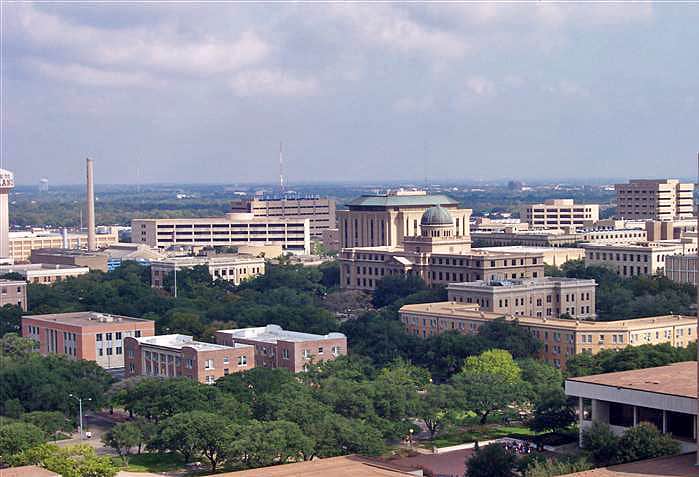
College Station is a small city built around a very large university, which means on gameday weekends — especially for marquee SEC matchups — hotel inventory gets thin fast. Book as early as you possibly can for Alabama, LSU, or Texas. Seriously. The on-campus and Northgate-area hotels sell out months in advance for top-tier games.
Best Areas to Stay
Northgate District: This is the bar strip directly across from campus and the closest walkable area to Kyle Field. Staying here means you roll out the door into pregame bars, walk to the stadium in 10 minutes, and walk back to Northgate post-game without dealing with traffic. It’s the most convenient location on the planet for an Aggie gameday and priced accordingly.
On Campus: The Texas A&M Hotel and Conference Center is directly on campus, a short walk from Kyle Field, and the most immersive gameday stay you can book. If you want to feel like you’re inside the Aggie universe from check-in to final whistle, this is your spot.
Century Square / Around Bryan: For a slightly more relaxed vibe with solid dining nearby, the hotels near Century Square (about a mile from campus) offer nicer finishes and more availability at a moderate distance. You’ll need a car or rideshare to the stadium but it’s not a big deal.
Hotel Recommendations
Doug Pitcock ’49 Texas A&M Hotel and Conference Center is on campus across from the stadium, with some rooms looking directly at it. Shortest walk to a gate you can buy, rooftop pool, maroon everywhere. The honest tradeoff: freight trains run past campus and guests notice — the hotel puts earplugs in the rooms for a reason. Books out first for every big game.
The George, in Century Square, is the boutique pick — library-style lobby, whiskey bar downstairs. The reason to choose it over something closer is the free Century Square shuttle: starts three hours before kickoff, runs continuously, last drop-off ninety minutes after the game. You never touch parking or surge pricing.
Cavalry Court, also in Century Square, is a retro motor-court concept with fire pits and actual personality instead of a branded box. Same complimentary shuttle at a friendlier price. On-site parking gets tight on gamedays.
The LaSalle, in Downtown Bryan, is a 1928 landmark reopened after a full restoration — 50 rooms, two restaurants and the hidden speakeasy. Pair it with the free downtown shuttle and it’s the best value-to-experience ratio on a game weekend. You’re a few miles out and committed to the shuttle or a rideshare.
The Stella, out at Lake Walk, is the quieter resort-style choice with a big pool and a restaurant on site. Good when campus and Century Square have both sold out.
Budget Options
Hotel McCoy is the best cheap-with-character play — a renovated older motel done up as an art-and-pool property, close to campus, with a pickleball court people actually use. You’re giving up size and polish, not location.
The chain corridor along Texas Avenue South is the fallback: unremarkable rooms at unremarkable rates most of the year, spiking hard on football Saturdays. Book the moment the schedule is announced or you’ll pay boutique money for a standard room ten minutes out.

Gameday In College Station: Bars and Restaurants
College Station essentially doesn’t exist apart from Texas A&M, so on a home Saturday the whole town is the venue. This is one of the places that makes college football unique and great. Its truly its own kingdom.
The pregame splits cleanly in two. Campus — Aggie Park, the Reed lots, the Fan Zone — is families, alumni and smokers going since 6 a.m. Northgate, the bar strip directly across University Drive, is 20-plus bars and cold beer and maroon shirts as far as you can see. Do campus in the morning, Northgate in the afternoon, and Northgate again after.
Best Pregame Bars
The Dixie Chicken (307 University Dr.): A College Station institution since 1974 and the oldest bar in the Northgate district, the Chicken is not optional. It’s a honky-tonk with swinging doors, carved wooden tables, a live rattlesnake named Sneaky Snake on display next to an aged cow skull pool tables, dominoes, and a legitimate claim to serving more beer per square foot than any bar in the country.
In the late ’70s, Aggies Robert Earl Keen and Lyle Lovett played shows on the back porch here before they were anybody. The ring dunk tradition — where A&M graduates dunk their class ring in a pitcher of beer and drink it — was born here. The City of College Station awarded the Chicken its first-ever historic destination plaque in 2025. You don’t check this place off a list. You go in and have a great time.
Bottle Cap Alley: Not technically a bar — it’s the alley next to the Dixie Chicken, paved in decades of bottle caps from the bar’s patrons. It’s a photo op and a vibe all in one. Just walk through it. The story goes that Don Ganter started covering the muddy alley with discarded bottle caps at the end of each night and it’s been accumulating ever since.
Northgate in general: The entire district is walkable, Aggie-saturated, and very good at making gameday last all day. Bar hop the strip, find the one playing the best country music, and settle in. Chimy’s does solid margaritas if you need to break from beer. The options are plentiful and the vibe is consistently good.
Solid Restaurants in the Area
Freebirds World Burrito: Yes, it’s also inside the stadium, but the original College Station location is a Texas institution that puts Chipotle to shame. Come here before the game if you want something that’ll actually hold you through four quarters.
Fuego Tortilla Grill: Late-night legend among Aggies, open until the early hours, and famous for Potato Bacon tacos. If you’re in Northgate post-game and hungry, this is your move.
Mad Taco: Solid local taco option that skews more upscale than Fuego but does outstanding brisket tacos. Worth a stop for a pre-game lunch.
Harvest Kitchen: If someone in your group wants something beyond bar food, Harvest does farm-to-table style Texas cooking at a price point that doesn’t feel obscene. Good for a Friday dinner before Midnight Yell.
Why You Should Go
Kyle Field is one of a handful of American stadiums where the event around the game is bigger than the game. Between Midnight Yell, the Corps march-in, the band at halftime and 102,733 people standing for four straight hours because of something a benchwarmer did in 1922, the football is almost the least remarkable part of the day. It doesn’t translate on television and it doesn’t translate in writing. Go once, do the whole Friday-to-Saturday version of it, and you’ll understand why there is no other place quite like Aggieland.
Check out all of our college football guides, and these A&M Rival roadtrips as well.
For NFL Fans check out AT&T Stadium in Dallas and NRG Stadium in Houston.
For baseball fans check out Minute Maid Park in Houston and Globe Life Park in Arlington.
Written by Brad Richards. Founder of Gameday Guides. This guide includes insights from personal visits as well as updated info from team sources, fan forums, and stadium policies. We aim to help you plan with confidence — enjoy your gameday. If you have any tips, if we missed anything or you have a question, don’t hesitate to shoot us an email.