


Best Seats At T-Mobile Park
You want beautiful scenery? As ballparks go not much can beat T-Mobile Park. With the roof open, the third-base side frames the Seattle skyline, the Olympic Mountains sit out past the outfield, and on a clear summer evening you get some of the most comfortable outdoor baseball weather in the country. The retractable roof gets regular use, especially in April and May when Pacific Northwest rain is common, and is often left open for pleasant summer evening games.
The honest reality: this is a pitcher’s park with a reputation for marine-layer chill, so even with the roof tucked away you’ll want a layer after the seventh. The park opened in 1999 as Safeco Field, took the T-Mobile name in 2018, and seats just under 48,000. Where you sit shapes whether you’re chasing shade, skyline, or just the cheapest way through the gate — so here’s how the place actually breaks down.
Seating Guide
The bowl wraps the diamond in three main tiers — the field-level Main seats, the 200-level Terrace Club, and the 300-level View — with the bleachers filling the outfield. Two things drive a great seat here that don’t matter at most parks: which way you’re facing relative to that skyline, and whether the sun’s on you for a day game.
The Best Non-Premium Seats: Lower Main Infield
First-base side (roughly sections 130–146): This is the postcard angle. Seats along the first baseline give you the best views of the Seattle skyline beyond the left-field wall, you’re close enough to read defensive shifts, and you’re right in the thick of the action behind the Mariners’ dugout side. The tradeoff is real, though — when the roof is open, the first-base lower level catches the afternoon sun, so for a day game you’ll be squinting.
Third-base side (roughly sections 115–125): The mirror image, and the smarter play for an afternoon start. The third-base lower level falls into shade sooner thanks to the upper-deck and roof-panel overhang. You trade a bit of the head-on skyline view for genuine comfort on a sunny day, which on a July day game is no small thing.
One note that applies to both: the entire infield run from sections 115 through 146 now sits behind protective netting, with the tallest screen in the sections directly behind home plate (126–134). It disappears once the game starts, but if you’re picky about it, aim for the higher section numbers toward the foul poles.
Best Value Seats: View Level Infield (Sections 320–340)
This is where the draft had it wrong before, and it’s worth getting right. The real “great view for a fraction of the price” play isn’t the 200s — that’s the premium Terrace Club — it’s the View Level up top. Upper-level infield seats in the 320–340 range offer excellent value, and rows 1 through 4 give you the best sightlines and the easiest in-and-out before the climb gets steep above row 15. Sit on the first-base half up here and you still get the skyline. You’re high, but the full-field perspective is genuinely good and the price gap versus the lower bowl is large.
Budget Option: Outfield Bleachers (Sections 180–195)
The cheapest real seat in the house. Center-field bleacher seats run $10 for every regular-season home game, and Value Games drop bleacher and View Level seats to $10 as well. Just know what you’re buying: center field sits directly under the main videoboard, which limits visibility, while the left-field sections give you better angles back toward the infield, and sections 183–185 have nice sightlines into the bullpens. If you want to stay in the outfield but upgrade the comfort, the lower-level outfield sections 102–110 use traditional stadium seats instead of bleachers and sit closer to the action, for a bit more money. Cheapest of all is standing-room-only, if you’d rather roam.
My Pick
For a night game — which is most of them — take the lower Main infield on the first-base side, somewhere in the 130s. You get proximity, the skyline framed beyond the outfield, and no sun to fight. If you’re going to a day game, slide over to the third-base mirror sections (115–125) and let the overhang keep you in the shade. That’s the one swap most first-timers don’t know to make.
Shade & Roof Reality
When the roof is closed, none of this matters — the park is fully covered and the sun’s a non-factor (closed games also play louder, which is its own kind of fun). But with the roof open on a day game, the first-base lower level bakes in the afternoon sun while the third-base side and anything under the roof-panel overhang stays shaded, and the outfield bleachers are fully exposed. Rule of thumb: day game, roof open, sun-sensitive? Third-base side or up under the View Level overhang.
Seats to Avoid
Center-field bleachers if you actually care about watching the game — that spot under the videoboard is the worst sightline in the building, and it’s only worth it if you’re there for the $10 price and the home-run-ball lottery. Also skip the very last rows of the View Level (15 and up) unless legs aren’t an issue; the climb is steep and you’re a long way from the field for not much savings over the front rows of the same sections.

Premium Seating & Clubs
T-Mobile Park’s premium tier is a genuine step up, and it’s important to know going in that the two best clubs are nearly impossible to buy at face value. The Diamond Club and Press Club are sold almost entirely as season tickets — the resale market is generally your only way in for a single game.
The Best Club — Press Club (Club Level): The newest and, by most accounts, the best in the house. Built in the 2023 renovation where the old press box used to be, it holds 200-plus guests with both indoor and outdoor seating, a large bar, and a menu from top Seattle chefs. Those elevated, dead-center views behind home plate are the ones broadcasters used to have. Expect resale pricing in the same rarefied range as the Diamond Club.
The Original VIP — Diamond Club (Sections 25, 27, 33, 35): The all-inclusive experience right on top of the field. It sits directly behind home plate between the dugouts — the most central spot in the park — with complimentary food and drink, a private entrance, and access to the Diamond Club Lounge, and just eight rows per section for a low-density feel. Field-level proximity with white-glove service; resale runs well into the hundreds per seat depending on the opponent.
Best Value Club — Terrace Club (200 Level): The premium experience you can actually buy without a season-ticket commitment. It runs the 200 level from roughly sections 211 to 227 on the first-base side and 233 to 249 on the third-base side, with club-only lounges, upgraded food and bars, and shorter lines than the general concourse. Single-game pricing typically lands around $50–100, with Loge Boxes and Tables higher but including a food-and-beverage credit — and on Value Games, regular Terrace Club seats drop to about $30. This is the savvy move: real club perks without the four-figure tickets.
Suites & Groups: Private suites work for groups of roughly 14–29, with catering and in-suite service; book through the Mariners’ premium sales or a suite broker.
Bang-for-Buck Recommendation: Terrace Club, every time. It’s the only premium space a normal fan can walk up and buy, and on a Value Game it’s barely more than a regular Main Level seat for a genuinely upgraded day.
For the official seating map and premium inquiries, fans can visit the Seattle Mariners premium seating page.

T-Mobile Park Seating Chart
T-Mobile Park boasts a seating capacity of 47,929, making it the sixth-largest venue in Major League Baseball. Curious about the seating arrangement at T-Mobile Park? Check out the T-Mobile Park Seating Chart Here to plan your visit and secure the best seats for an unforgettable experience.
Mariners Tickets Tips
Buying tickets to T-Mobile Park is easy, but getting the right tickets at the best price takes some strategy. Here’s what actually works when you’re trying to score seats without overpaying.
Start with secondary markets for better deals: Through our partnership with Vivid Seats, you can find tickets to Mariners, Seahawks, and Huskies games at competitive prices. Secondary markets (Vivid Seats, StubHub, SeatGeek, Gametime) usually beat face value, especially for mid-week games against non-contenders. Prices drop as game day approaches, so if you’re flexible, wait until 24 to around 48 hours before first pitch.
Buy direct for premium seats and clubs: The official Mariners website has the best selection for club seats, premium options, and season ticket packages. If you want All-Star Club or Press Level seats, this is where you’ll find availability first. Buying direct also gets you access to presales and promotional nights before secondary markets.
Time your purchase strategically: Weekday games (Monday-Thursday) against teams like the A’s, White Sox, or Royals are your cheapest options—tickets can drop to $15-30 on secondary markets. Weekend games, division rivals (Angels, Astros, Rangers), and Yankees/Red Sox matchups cost 2x-3x more. If you’re planning multiple games, buy early in the season when prices are lower.
Watch for promotions and giveaways: The Mariners run bobblehead nights, jersey giveaways, and themed promotions throughout the season. These games sell out faster, but if you buy tickets directly from the team, you get first access to promotional game presales. Follow the Mariners on social media and sign up for their email list to catch early announcements.
Consider the box office for last-minute deals: If the game isn’t sold out, the T-Mobile Park box office sometimes releases discounted seats on game day—especially upper deck and standing room sections. This works best for weekday games or teams that don’t draw big crowds.
Season tickets and mini-plans for regulars: If you’re going to 10+ games, look into half-season or mini-plan packages. You’ll save 15-25% per ticket compared to single-game prices, and you get priority access to playoff tickets if the Mariners make a run.
Flash sales and dynamic pricing: The Mariners use dynamic pricing, which means ticket prices fluctuate based on demand. Check prices multiple times—they can drop mid-week if sales are slow. The team also runs flash sales through email and social media, usually offering $10-20 off select sections.

T-Mobile Park Bag Policy
Clear plastic bags no larger than 12″ x 6″ x 12″ are permitted, along with one-gallon clear zip-top bags. Small clutch bags under 4.5″ x 6.5″ are allowed and don’t need to be clear. Backpacks, multi-compartment bags, duffels, and purses larger than 4.5″ x 6.5″ are prohibited. Exceptions: medically necessary items and single-compartment diaper bags (child must be present). There is no bag check at T-Mobile Park, so non-compliant bags must be stored elsewhere before arriving.
Key Policies
Outside food allowed, but limited: You can bring in outside food in single-serving sizes. Sealed, clear plastic water bottles up to 32oz, baby bottles, and medical beverages are permitted. One empty plastic reusable bottle (32oz or smaller) is also allowed. No soda, coffee, alcohol, or glass containers.
No re-entry: Once you leave the ballpark, you cannot come back in. In emergencies, re-entry permission may be granted by an Event Security Captain or Gate Host Captain, and you’ll be re-screened.
Security screening: All guests pass through walk-through metal detectors. You don’t need to remove phones, keys, or coins from pockets. Secondary screening uses a hand-held metal detector if needed. Prohibited items include weapons, professional cameras with lenses over 6 inches, aerosol containers, noisemakers, laser pointers, and wrapped packages.
For a full list of policies, check out the Mariners website here.
Getting To T-Mobile Park
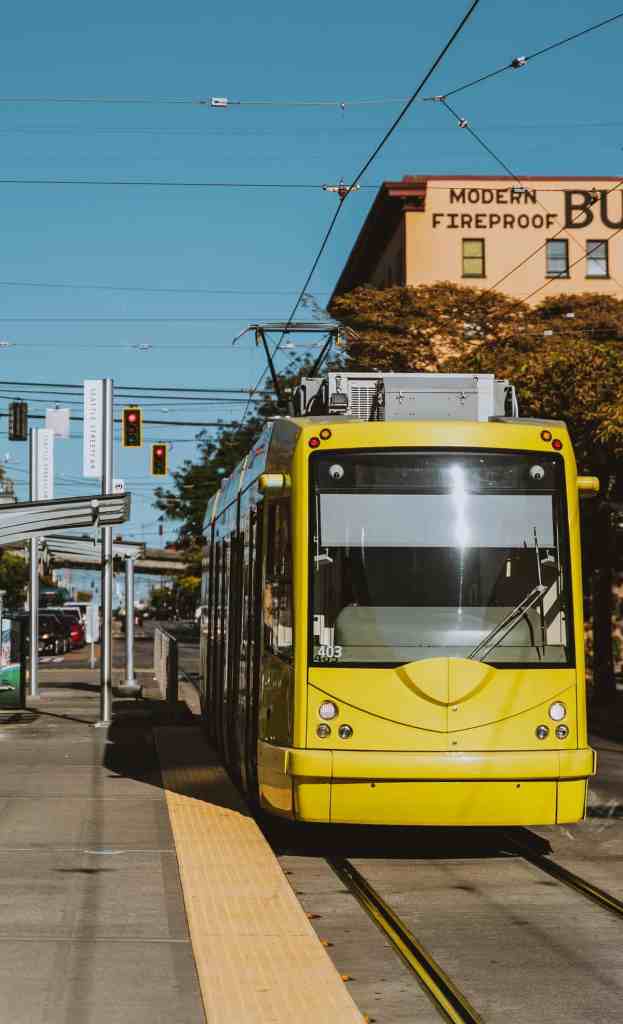
Link light rail is the easiest and cheapest way to get here—it drops you three blocks from the stadium and runs until 1am post-game. Parking exists but fills fast and costs $30+, and post-game traffic is brutal. Rideshare works but surges hard after games.
Public Transit (Link Light Rail)
Link light rail stops at Stadium Station, a 3-block walk from T-Mobile Park. Trains run every 8-15 minutes depending on time of day, and service goes until 1am every night (including post-game). Adult fares are a flat $3 regardless of distance, and youth 18 and under ride free.
Free parking is available at Lynnwood City Center, Northgate, Angle Lake, and Tukwila International Boulevard stations—park there and ride in to avoid stadium parking costs. Downside: trains get packed after games, so if you want a chill ride home, stick around the stadium for 20 minutes after the final out. Check the Link light rail schedule to get an overview of the schedule. I’m sure they have an app as well.
Rideshare (Uber/Lyft)
Uber and Lyft pickup/dropoff is near the stadium on South Royal Brougham Way. Expect to pay $10-20 from downtown Seattle or Capitol Hill depending on demand. During games, prices surge 2x-4x, especially right after the final out. Pro tip: schedule your pickup for 30 minutes after the game ends, or walk a few blocks away from the stadium to avoid surge zones.
Rideshare Hack: Walk east to International District/Chinatown (5-10 min walk) or north to King Street Station. The surge pricing drops significantly once you escape the immediate stadium radius
T-Mobile Park Parking
Official stadium parking lots charge $25-40 depending on proximity and must be pre-purchased online in most cases. Lots fill by 6pm for a 7:10pm game. Independent lots near the stadium charge $15-30 and accept cash or card. Street parking is extremely limited and mostly permit-only in surrounding neighborhoods. Pro tip: Park at a Link light rail station with free parking (Northgate, Angle Lake) and ride the train in—you’ll save $20+ and avoid post-game traffic entirely.
Walking
If you’re staying in Pioneer Square, the Chinatown-International District, or downtown Seattle, walk to the stadium—it’s safe, well-lit, and you’ll avoid all parking drama. The neighborhood around T-Mobile Park is walkable, and you’ll be in the stadium in 10-15 minutes from most nearby hotels.
T-Mobile Park Insider Tips
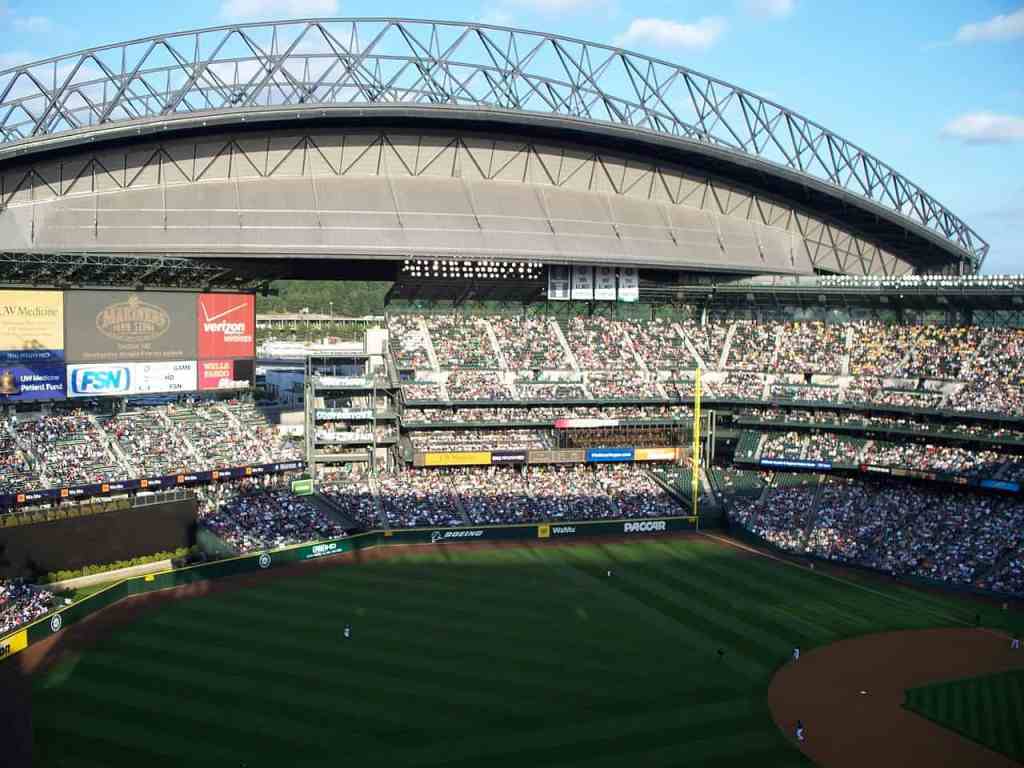
T-Mobile Park is genuiniely a cool place to see a game, and has arguably the best food situation in MLB. It feels like a high-end Seattle food festival that happens to have a baseball game in the middle. Because of the retractable roof (which acts like an umbrella, not a sealed dome), the atmosphere is unique—you get fresh air without the rain delay.
Access & Gate Strategy (The Real Secrets)
The “Pen” Hack (Happy Hour): The T-Mobile ‘Pen Gate (Centerfield, next to the stairs) opens 2 hours early, while other gates open 90 minutes early.
Why this matters: For that first 30 minutes, you get access to “The ‘Pen” (bullpen area) which features $6.50 beers and discounted food. It is the best pre-game happy hour in the city.
If you aren’t going to The ‘Pen, walk around to the Left Field Gate (near the giant Glove statue) or the Right Field Gate. They are significantly faster.
Food & Drink: The 2026 Hit List
This ballpark has always had solid food, here are the current faves:
Ivar’s Garlic Fries: It is statistically probable you will eat these. 11% of all fans do. They are potent. Bring mints.
Moto Pizza (Section 314/The ‘Pen): This is Seattle’s “cult” pizza (Detroit-style, sourdough crust). The lines at their actual restaurants are months long. Here, you wait 15 minutes. Get the “Mr. Pig.”
Din Tai Fung (Section 132): Yes, the world-famous dumpling house is inside the stadium. The Pork Buns and Garlic Green Beans are the best “easy to eat” stadium food on the planet.
Marination (Section 119): Hawaiian-Korean fusion. The Spam Musubi and Kalbi Beef Tacos are legendary.
The “Viral” Dare: Poquitos (Section 106) sells Toasted Grasshoppers (Chapulines). They are crunchy, taste like chili-lime chips, and sell out constantly. Eat them for the story.
Value Menu: Look for “Value Menu” signs. You can get $3 hot dogs, $3 popcorn, and $2 water at specific stands. Critical for families.
The Value Beer Guide
The $5/$6 Beer: You do not need to pay $18 for a beer. T-Mobile Park has specific “Value Beer” locations selling 12oz cans for $5–$6.
Where to find them: Look for the “Value” signs in Sections 105, 113, 118, 136, 219, 227, 309, 318, 329.
Craft Options: If you want the good stuff (Georgetown Bodhizafa, etc.), head to the “Hit It Here” Cafe area or the craft walls in the main concourse.
Weather & The Roof
Even though there is a roof, Its always good to keep an eye on Seattle’s changing weather. Here is a link to the current conditions from the National Weather Service so you can be prepared.
It’s an Umbrella: The roof covers the field, but the sides are open. It is not climate controlled.
Dress Layers: If it’s 55°F and rainy outside, it will be 55°F inside, just dry. The wind still blows through. Bring a jacket even in June.
Sun Strategy: For evening games, the sun sets on the Third Base side. If you sit in Right Field or the First Base line, you will have the sun in your eyes for the first 3 innings.
Best Photo Ops
The Bronze Glove: Outside the Left Field Gate. It is massive and the classic “meet up” spot.
The “Trident” Deck: Go to the upper deck (View Level) behind home plate/3rd base. You get the skyline, the roof structure, and the field all in one shot.
The retractable roof itself is impressive when open—shoot from the upper deck looking down at the field with the roof structure framing the shot. The centerfield concourse has views of the city and Mount Rainier on clear days
Dave Niehaus Statue (Section 105): Sit next to the legendary broadcaster. It’s a required pilgrimage for Mariners fans.

Hotels Near T-Mobile Park in Seattle
Pioneer Square is where you want to be. It’s Seattle’s oldest neighborhood, sitting just blocks from the ballpark with actual character—brick buildings, walkable streets, and bars that don’t feel like corporate chains. You’re a 5-10 minute walk to first pitch, close to the waterfront, and surrounded by places worth your time before and after the game.
SoDo (South of Downtown) puts you right across the street from T-Mobile Park if proximity is all that matters, but there’s not much around except the stadium and industrial warehouses. Pioneer Square gives you the full Seattle experience without needing a car or an Uber every time you leave the hotel.
Silver Cloud Hotel: Literally across the street from T-Mobile Park—you can see the stadium from the rooftop deck. This is the closest hotel to the ballpark, period. You get modern rooms, complimentary breakfast, an indoor pool, and a rooftop with panoramic city views. The location is unbeatable if you’re here purely for a game and want to walk back to your room in under 3 minutes. Downside: you’re in SoDo, which means there’s not much around except sports venues and parking lots. Expect to pay $180-300 per night depending on game schedules and day of the week.
Populus Seattle: This brand-new boutique hotel opened in spring 2025 in a renovated 1907 building in Pioneer Square. It’s Seattle’s second carbon-positive hotel with 120 rooms designed to feel like a Pacific Northwest rainforest—exposed brick, natural light, curated local art. The rooftop bar is Pioneer Square’s first and offers post-game cocktails with city views. Salt Harvest, the on-site restaurant, serves Pacific Northwest-focused cuisine with a chef’s counter and private dining. You’re a 9-minute walk to T-Mobile Park and surrounded by the best bars and restaurants in the neighborhood. This is where you stay if you want boutique style and sustainability without sacrificing location. Rooms run $250-450 per night.
Embassy Suites by Hilton Seattle Downtown Pioneer Square: Spacious two-room suites with separate living areas, complimentary cooked-to-order breakfast, and an indoor pool. You’re half a mile from T-Mobile Park—walkable in 10 minutes—and positioned perfectly in Pioneer Square near restaurants, bars, and the waterfront. The breakfast alone saves you $20-30 per person daily, which adds up fast. Rooms feel more like apartments than hotel rooms, making this ideal for families or groups staying multiple nights. Expect $200-350 per night depending on season.
Best Western Plus Pioneer Square Hotel Downtown: Mid-tier pricing with a great location on Yesler Way, right in the heart of Pioneer Square. You’re a 10-12 minute walk to the ballpark and surrounded by local restaurants, coffee shops, and bars. Rooms are clean and modern without being flashy, and the staff is genuinely helpful. This is where you stay if you want to save $50-100 per night compared to boutique hotels but still be in the best neighborhood. Rates run $140-220 per night.
citizenM Seattle Pioneer Square: A compact, design-forward hotel with tech-heavy rooms you control via iPad—lighting, temperature, blackout shades, everything. Rooms are small but efficiently designed with floor-to-ceiling windows and comfortable beds. The lobby has a 24/7 bar and communal seating that feels more like a lounge than a hotel. You’re 12-15 minutes walking to T-Mobile Park, but centrally located for exploring Pioneer Square, Pike Place Market, and downtown. This works best for solo travelers or couples who don’t need tons of space and appreciate modern minimalism. Rooms run $150-250 per night.

Bars and Restaurants Near T-Mobile Park
Seattle’s pregame splits cleanly by direction, and knowing which way to walk is half the game. Most of the game-oriented bars sit north of the stadiums in Pioneer Square, the SoDo side to the south leans toward sandwiches and pizza, and heading east drops you into the Chinatown–International District for the best eating of the three.
The typical rhythm: fans drink in Pioneer Square, drift down First Avenue South toward the gates, grab a Seattle dog from a sidewalk stand on the way in, and then circle back to the same bars after the final out. Post-game, the smart exit is the light rail — SoDo traffic backs up hard, and walking to SODO or Stadium Station puts you downtown in minutes.
Best Pregame Bars
The Boxyard (Hatback Bar & Grille + Steelheads Alley): The Mariners-backed anchor of the SoDo scene, directly across from the park in the former Pyramid Brewing building. The complex includes Hatback’s 20-TV main hall, the Steelheads Alley inner bar, an indoor-outdoor beer garden, and Victory Hall. It’s all-ages and built for crowds — the default first stop.
Sluggers Sports Bar & Grill: A laid-back classic sports bar steps from the park, wall-to-wall TVs and standard bar food, popular with locals and visitors alike. Less polished than the Boxyard, which is exactly the appeal for some.
Flatstick Pub: A mini-golf bar in Pioneer Square with an excellent selection of local craft beers on tap. You can play mini-golf while drinking, which makes it a perfect pre-game spot if you’re showing up early. The course spells out “SEATTLE” as you work through holes 2-8. They open at 8am on Seahawks game days, so you know they take gameday seriously. The vibe is fun and unpretentious—locals and tourists mix without it feeling touristy. Great for groups who want something more entertaining than just sitting at a bar.
Damn the Weather (Pioneer Square): A cozy gastropub in a historic Pioneer Square building where the cocktail program is serious enough to beat most dedicated sports bars, with a sturdy burger, a patio, and late hours. It’s versatile — natural wine and pasta, or a beer and duck-fat fries, or cocktails and oysters. The pregame spot that doesn’t feel like one, no minors.
Gantry Public House: A dive bar feel steps away from the stadium with pub food, drink specials, and a crowd that’s here for the games. They have Mariners-inspired cocktails, nachos, burgers, sandwiches, and quesadillas—classic bar food done right. DJs play every Friday and Saturday night after Mariners games, so it’s a solid post-game spot if you want to keep the night going. The espresso martini gets mentioned often enough that it’s worth trying. This is where you go when you want a no-frills spot with good energy and cheap drinks.
Solid Restaurants in the Area
Taylor Shellfish Oyster Bar (Pioneer Square, $$): A fifth-generation shellfish company’s own oyster bar, with simple raw and cooked preparations meant to show off the local “merroir” — the closest thing to a true Pacific Northwest pregame, and close enough to the stadium that locals often pick a dozen oysters over barbecue.
Un Bien (SoDo, $): The famous Caribbean slow-roasted pork sandwich, with a patio of picnic tables when the weather cooperates — a cheap, iconic, walk-it-off pregame bite.
Il Terrazzo Carmine (Pioneer Square, $$$): A classic Italian institution running since 1984, tucked into a Pioneer Square courtyard, long acclaimed as some of the city’s best and beloved by a loyal local crowd. The pick for a proper sit-down dinner after the game.
Mio Oh Mio (Pioneer Square, $$$): The newest restaurant from James Beard-winning chef Renee Erickson — an intimate, art-filled 32-seat room serving Northwest steaks, shellfish, pasta, and seasonal vegetables. Book ahead; this is the special-occasion after-game table.
Elliott’s Oyster House (Waterfront, $$$): A media-praised seafood spot with a waterfront terrace on Elliott Bay — worth the short trip for a nicer night out that leans all the way into Seattle seafood, views included.
Why You Should Go
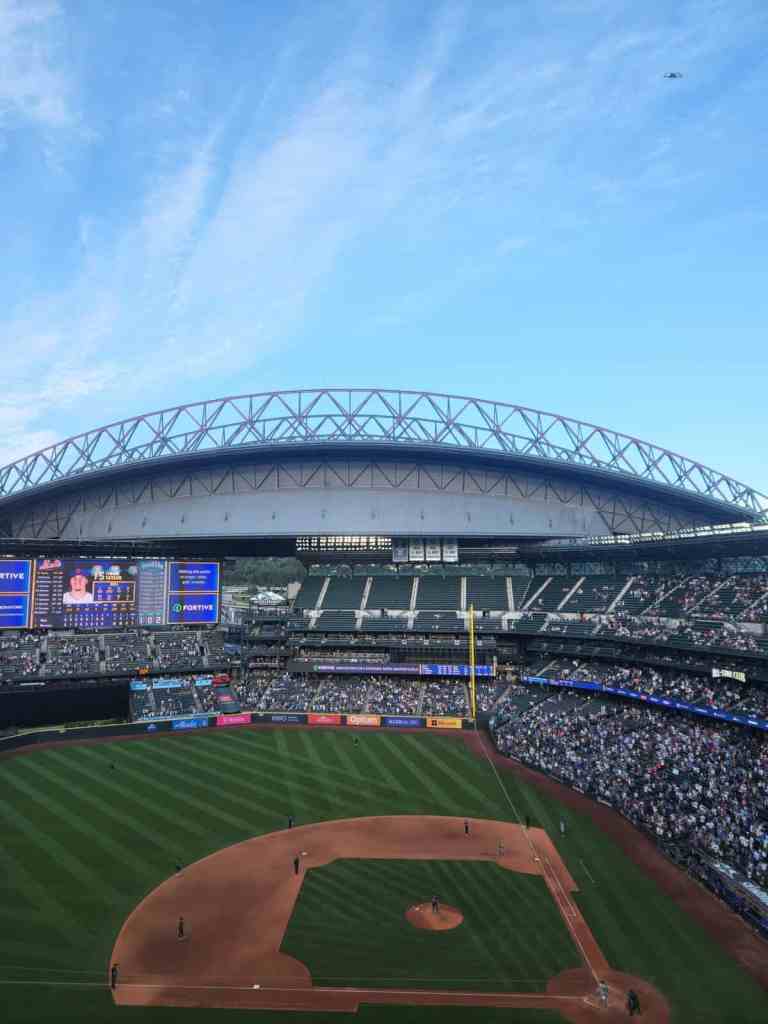
T-Mobile Park earns its reputation honestly: it’s one of the genuinely beautiful ballparks in the majors, with a retractable roof that makes a trip bookable rain or shine and a setting — skyline, water, mountains — that few parks can touch. The neighborhoods around it do real work too; you can build a full day out of oysters, a Pioneer Square bar crawl, and a walk to the gates without ever needing a car. It’s not a cheap city, and the Mariners don’t always cooperate on the scoreboard, but as a baseball weekend, Seattle delivers more than the box score.
Check out all of our MLB Parks here and these as well:
Written by Brad Richards. Founder of Gameday Guides. This guide includes insights from personal visits as well as updated info from team sources, fan forums, and stadium policies. We aim to help you plan with confidence — enjoy your gameday. If you have any tips, if we missed any thing or a question, don’t hesitate to shoot an email.