
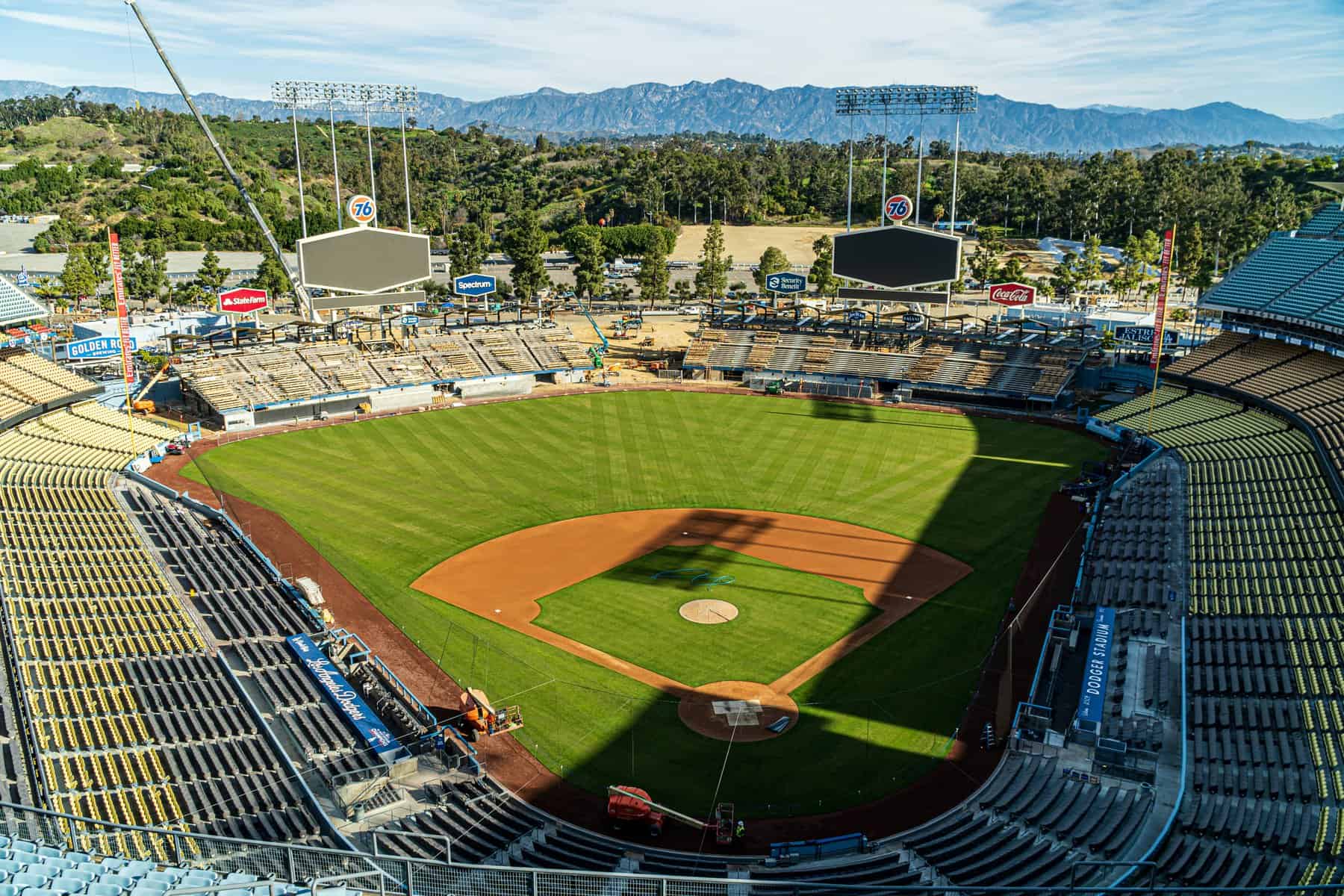
| Category | Details |
|---|---|
| Home Team | Los Angeles Dodgers |
| Opened | 1962 |
| Capacity | 56,000 |
| Best Value Seats | Reserve Level Infield (Sections 1–10) |
| Premium Seating | Dugout Club, Lexus Club, Baseline Club, Suite Level |
| Top Ballpark Foods | Dodger Dog, LA Taqueria Street Tacos, Shake Shack, King’s Hawaiian Slider Dog |
| Nearby Bars | Short Stop, The Gold Room, The Echo (Echo Park area) |
| Closest Hotels | E-Central Downtown LA, Miyako Hotel, Omni Los Angeles |
| Transit Access | Dodger Stadium Express (from Union Station or South Bay) |
🔍 Need a custom plan for your Dodgers gameday?
Use our Gameday Guides chat tool to get personalized tips on where to sit, what to eat, and where to stay near Dodger Stadium.

Best Seats at Dodger Stadium
This place gets loud, bright, and crowded—and that’s before first pitch. Dodger Stadium is baseball mixed with LA energy: celebrity sightings happen casually, the sun hits harder than you’d expect, and the food is genuinely worth talking about. It’s beautiful in daylight, packed on weekends, and the concourses can feel tight when 56,000 people are moving around at once. But the sightlines from most lower-bowl seats are genuinely good, the history soaks in through the walls, and if you pick your spot right, you’ll have a day worth remembering.
Seating Guide
Dodger Stadium holds 56,000 fans and sits in Elysian Park with the LA skyline peeking over left field. The layout is straightforward: Field Level and Loge (200s) wrap the entire diamond, Reserve (300s-500s) is the next ring out, and Top Deck (1-13RS) sits highest. Even-numbered sections are on the first base side; odd numbers are third base. The key to a good experience here isn’t just where you sit—it’s understanding sun exposure, how far you really are from the action, and what you’re trading off for the price.
Field Level (Sections 1-50): Where Everything Happens: These are the closest non-premium seats, and they matter. You’re close enough to see the pitcher’s expression, close enough that foul balls come at you faster than you’d expect. Rows 1-6 are genuinely intimate; rows 7-12 are still excellent. One real downside: rows in the outfield sections (44-50) are deep—you’re not as close as the behind-home-plate sections make you think. Sun is brutal here during day games no matter what. Row 8 gets afternoon shade around the 5th inning on the third base side, but rows 1-4 stay exposed most of the game. If you’re sensitive to sun, buy sunscreen before entering.
The Field Level seats behind home plate (sections 1-10) are the absolute best regular non-premium seats in the building. Full view of everything, you feel the action, and the energy down there is electric. Downside: they’re expensive, even for regular Field Level. But if you can swing it once, do it.
Best value on Field Level: Sections 27 through 40 (1st base to 3rd Base), rows 10-15. You’re far enough back that you don’t pay premium prices, but you still have a direct line to the pitcher and batter. You miss some foul ball danger, sun exposure isn’t as intense, and the view is legitimately clean. Not as flashy as behind home plate, but smarter baseball watching.
Loge Level (Sections 101LG to 168LG): This is where regulars actually sit. You’re elevated enough to see defensive alignment and positioning, close enough that you still feel connected to the game, and the sightlines to all four corners of the field are excellent. Sections 101-136 (mostly behind home plate and along the baselines) are the prime Loge seats—genuinely great views without Field Level pricing. Rows 1-6 are premium Loge; rows 7-12 offer similar views for less.
Last 6-7 rows of Loge sections get shade coverage from the structure above, which matters on day games. Outfield-side Loge (157-170) is cheaper because you’re looking at the warning track, but honestly, if you don’t need to be in the action, these seats are quiet, less crowded on the concourse, and still have a full field view.
Who should sit here: Anyone going to multiple games, families wanting good sightlines without the sun exposure, fans who actually want to watch baseball rather than be seen. This level does the job better than anywhere else in the stadium.
Reserve Level (Sections 1RS-52RS): The Family-Friendly Option: These are higher up, farther away, but the view is still complete—you see the whole field and scoreboard clearly. Early rows (1RS-6RS behind home plate) are legitimately good. Back rows are where it gets cheap, but you’re losing intimacy with the action. The tradeoff is real: you’re trading “I can see the players’ faces” for “I can actually afford a day for four people.”
Sun exposure is moderate here because you’re higher up. The back rows of Reserve sections get shade from the roof overhang, which is a huge hidden advantage on hot days. Sections 1RS-11RS behind home plate offer shade in back rows—if you go here, sit in rows 12-20 and you’ll be comfortable even in July.
The real value play: Reserve Loge sections along the baselines (sections 28 through 36). You’re still elevated, you see great, and you save $20-40 per ticket compared to Field or pure Loge. Shade situation improves the later in the day you go.
Top Deck (Sections 1TD-13TD): Budget With Attitude: You’re far from the action, but the view is complete and panoramic—you see the whole game unfold like a chess match. The energy up here is different: younger, looser, passionate in a different way than the Field Level crowd. Rows 2-8 are the sweet spot—high enough that sightlines are clear, not so high that you’re reading the scoreboard to follow the play.
Real talk: Top Deck gets surprisingly cold even on hot days because of the shade from the roof. Bring a light jacket even if it’s 85 degrees at field level. That said, if you’re going to a day game in summer and want to actually enjoy yourself without melting, Top Deck is your answer. The view is legitimate, the crowd is real, and you might spend $15-30 per ticket instead of $60+.
Best budget move: Sections 1-6, rows 2-8. You’re close to the action zone of the park, sightlines are clean, and on a hot day, the shade is an actual amenity, not a bug.
Outfield Pavilion (Sections 301-316): Home Run Territory: These are bleacher seats in the outfield with a specific vibe: younger crowds, standing room energy, and the genuine thrill of potentially catching a home run. They’re cheap, they’re fun, but you’re watching from the corners. The view of the game is angled and limited. Sections 301-302 near the foul poles are better angled than 303-315 in deep outfield. Wind plays tricks with fly balls here, so if you’re actually hoping to catch one, understand you’re fighting physics.
Who this is for: Fans who want atmosphere over sightlines, groups of friends, one-time visitors who want the quintessential bleacher experience. Not for families with young kids or serious baseball watchers.
Weather & Shade Reality
Dodger Stadium is oriented with home plate facing north-northeast. In morning games, sun rises over right field and curves around home plate by lunchtime. By evening, sun sets beyond the left-field foul pole. Here’s the brutal truth: during day games, most of the stadium is in direct sun for at least part of the game.
First-base side sits in sun most of the day. Third-base side gets shade by the 4th-5th inning and is shaded through the game by late afternoon. If you’re going on a hot day and have a choice, third-base side wins. Don’t buy first-base Field Level seats in July without knowing what you’re getting into.
Loge and Reserve back rows have structural shade from the overhangs—this is worth paying attention to. Top Deck is mostly shaded because of the upper-deck roof. Outfield bleachers (Pavilions) have no shade, period. Bring sunscreen and a hat, seriously.
Day games starting at 1:10 p.m.? Sun is high and brutal everywhere except Top Deck and the absolute back of Loge/Reserve. Night games (7:10 p.m. starts) have minimal sun issues—sun sets by 8 p.m. most of the year.
What to Avoid
Bleacher outfield seats in July/August: These are a trap. Yeah, they’re $15 per seat, but you’re getting sunburned for four hours with no shade, no bathroom access without leaving your seat, and you’re watching baseball from the parking lot. Not worth it.
Field Level back rows (rows 18-25) in the corners: You’re far enough back that you lose the intimacy that makes Field Level worth it. You’re also in direct sun. You’re not getting the value of closer seats or the refuge of Loge elevation. Skip these.
Baseline sections 43-51 in any upper level: These are cheap because the angle is terrible and you’re watching through the pole structure. Legitimately obstructed in ways that aren’t obvious from the seating chart. Pass.
This said..Dodger Stadium doesn’t really have bad seats. Even the cheap ones and the ones i said to avoid work if you really want to be in this gem of a ballpark.

Premium Seating at Dodger Stadium
Dodger Stadium’s premium options are legit good after the recent renovations, but you have to know what you’re actually getting.These exclusive areas give fans better access to the action, more comfort, and improved dining and service. Whether you’re hosting clients, celebrating an occasion, or looking to enjoy Dodgers baseball in style, the stadium’s premium options fit various group sizes and tastes. Here’s the real breakdown.
The Gold Standard: Yaamava’ Dugout Club
If you can swing it, sit here. You’re in the first 9 rows directly behind home plate between the dugouts—closer to the action than the pitcher. The view is unreal, and yeah, celebrities actually sit here. You’ll see them between innings.
Comes with access to the Dugout Club lounge featuring complimentary buffet (Wolfgang Puck catering), private restrooms, and a full bar. In-seat service brings food and drinks to you. The buffet runs from when gates open until the 7th inning, so you can eat before the game actually starts if you want.
Reality check: Mostly sold as season packages (20+ games). Single-game tickets exist but they’re rare and expensive—$1,000-$2,500 per seat depending on who’s playing. Worth it if you can get them, but don’t expect easy access.
The Smart Play: Lexus Baseline Club
These are first-base or third-base line, first 6 rows. Not behind home plate, but still field-level with excellent views of the infield. The seats are actually the widest in the stadium—you’re genuinely comfortable. You get a dedicated server checking on you all game, which sounds like a small thing until you’ve sat in regular seats and had to flag down vendors.
Same lounge access as Dugout Club—complimentary food, full bar, private restrooms. The catering is legit (Wolfgang Puck/Levy), and you can eat before the game or during. Climate-controlled if it’s one of those brutal LA summer days.
Reality check: $300-$600 per ticket. Usually season packages too, but you might find single-game availability better than Dugout Club since there’s more of them. If I had to pick one premium option that’s actually achievable, this is it.
Stadium Club: The Understated Option
Located on the 3rd level (sections 229-261), these club-level seats don’t get the marketing that Dugout or Baseline do, but they’re legitimately good. Complimentary beer and soft drinks, food options, dedicated bathrooms, regular seating in a solid location. Prices run $200-350 per seat depending on the game.
Why pick this over the big clubs: Less crowded than the lounge experience of Baseline, still gives you amenities and quiet space, prices are lower, and the seating is elevated so sightlines are excellent. This is underrated.
Suites (If You’re Bringing People)
Bank of America Suite Level — The main private suite option. 20 or 30-person configurations with your own suite attendant, indoor/outdoor seating, multiple TVs, catering available (you pay extra), and VIP parking. You get your own space, climate control, and none of the crowd hassle.
$4,500-$32,000 per game depending on size and opponent. Yeah, that’s expensive, but if you’re splitting it 20 ways for a corporate event or big group, it pencils out. Weekend games against the Giants? Expect the higher end. Tuesday night against someone random? Much cheaper.
BMW Club Suites — Similar setup, slightly better personal service. Attendants check in more frequently. Same pricing range as Bank of America suites.
The Loge Party Boxes are semi-private 12-person boxes with outdoor seating and in-seat service. Good if you’re bringing a group, cheaper than a suite, still feel private. Field Party Boxes exist too but are limited and pricey
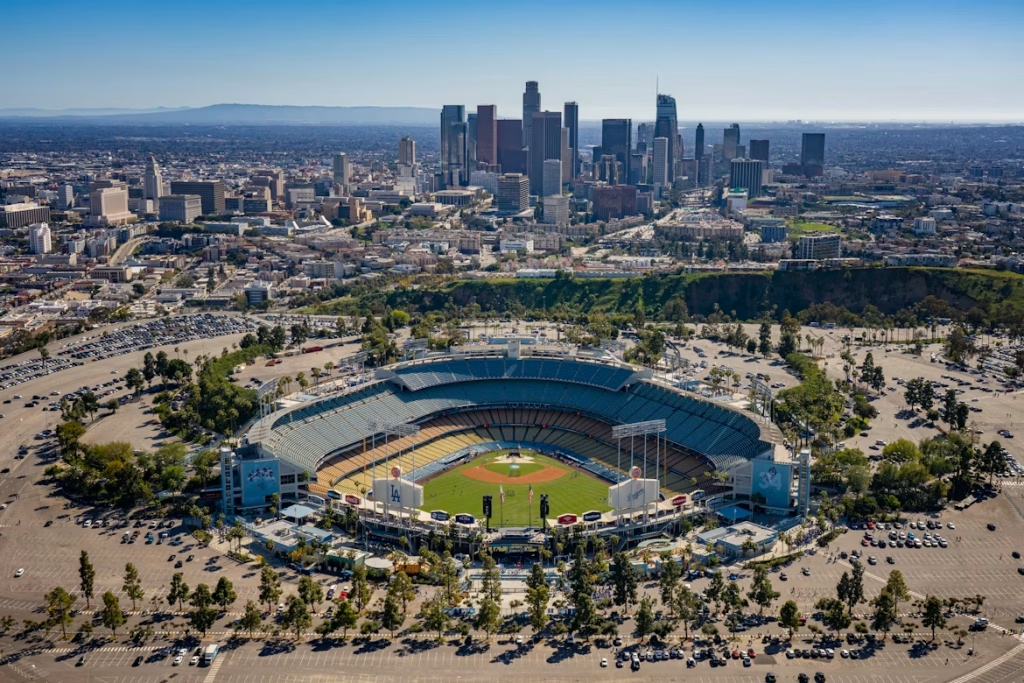
Dodger Stadium Seating Chart
The recent renovations at Dodger Stadium are part of a $300 million, multi‑phase modernization effort led by architect Janet Marie Smith. Highlights include a brand-new, expansive three‑story clubhouse with upgraded locker rooms, training facilities, weight rooms, hitting tunnels, and sleep rooms.
Fans also enjoy a 2‑acre Centerfield Plaza with playgrounds, statues (Jackie Robinson, Sandy Koufax), plazas, wider concourses, updated HD video boards, modern restrooms and concessions, plus upgraded premium clubs and pavilion bars has a current seating capacity of 56,000. The largest in the majors. Click Here for the Dodger Stadium Seating Chart.
Tickets To Dodgers Games
Tickets to Dodger Stadium are becoming increasingly competitive due to Shohei Ohtani’s addition and the recent World Series titles. Here are some options to get tickets:
- Get Dodgers Tickets Here! Through out partnership with Vivid Seats you can get tickets to Dodgers Games or any event in L.A or around the country.
- Official Dodgers Website: The team’s official website is a primary source for tickets. It provides a user-friendly platform to browse available options, including season tickets, single-game tickets, and special packages.
- Season Ticket Plans: Explore season ticket plans, which can provide priority access to coveted matchups and events. Season ticket holders often enjoy additional perks and benefits.
- Dynamic Pricing: Monitor ticket prices, as they may fluctuate based on factors like team performance, opponent, and player popularity. Being flexible with game choices could result in more affordable options.
- Dodger Stadium Box Office: Visit the Dodger Stadium box office in person for face-value tickets. This option may offer a chance to secure tickets for popular games.
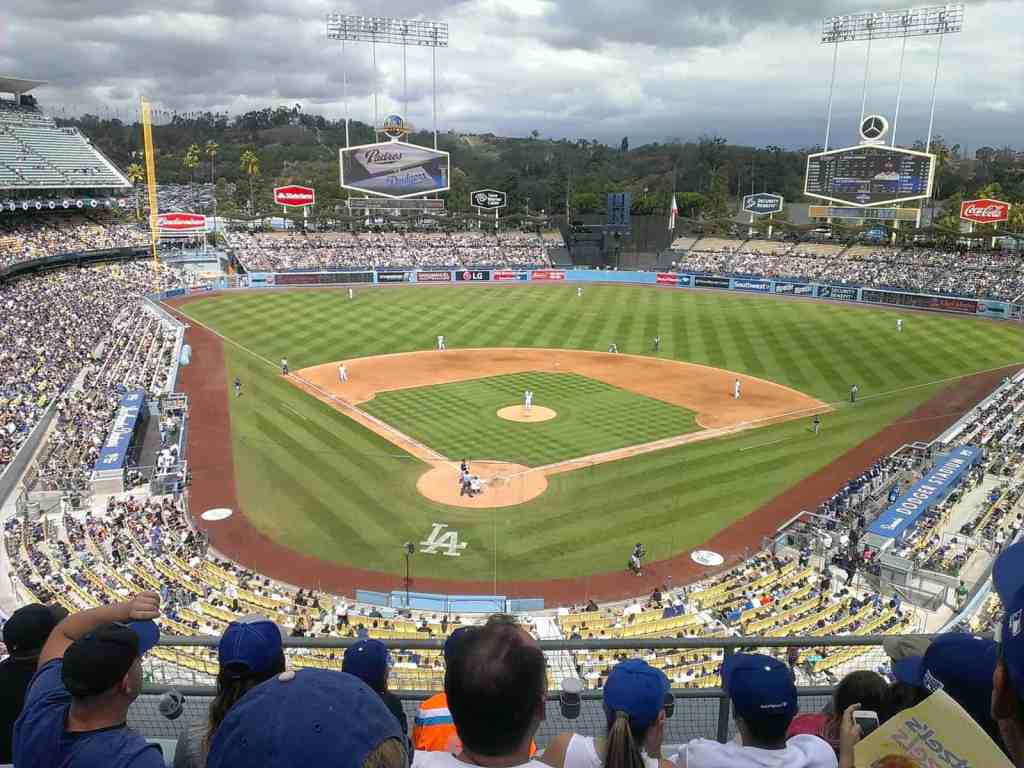
Dodger Stadium Bag Policy
Clear plastic bags no larger than 12″x12″x6″ only. Non-clear wristlets or clutches can be no larger than 5″x8″x2″ (smaller than a sheet of paper). No backpacks, no large purses. Security will check everything. There’s no bag storage at the stadium—if your bag doesn’t qualify, you’re out of luck.
Outside food is allowed if it’s in a clear bag no larger than 12″x12″x6″. No glass bottles, cans, coolers. Factory-sealed water bottles up to 1 liter are fine. Take advantage of this—pack sandwiches, fruit, snacks. Dodger Stadium food is good, but it’s also expensive.
Other Key Policies
In addition to the bag policy, there are several other important policies at Dodger Stadium that fans should be aware, I put some key ones below, but for a full list check out the handy Dodgers Policy Guide.
Cashless Transactions: All purchases at Dodger Stadium are now cashless transactions, so fans should be prepared to use cards or mobile payments for their transactions.
No smoking, vaping, or smokeless tobacco anywhere in the stadium or parking lots. This is enforced.
Re-entry is not allowed: Dodger Stadium has a strict No Re-Entry Policy for general admission. Once you scan out, you are done.
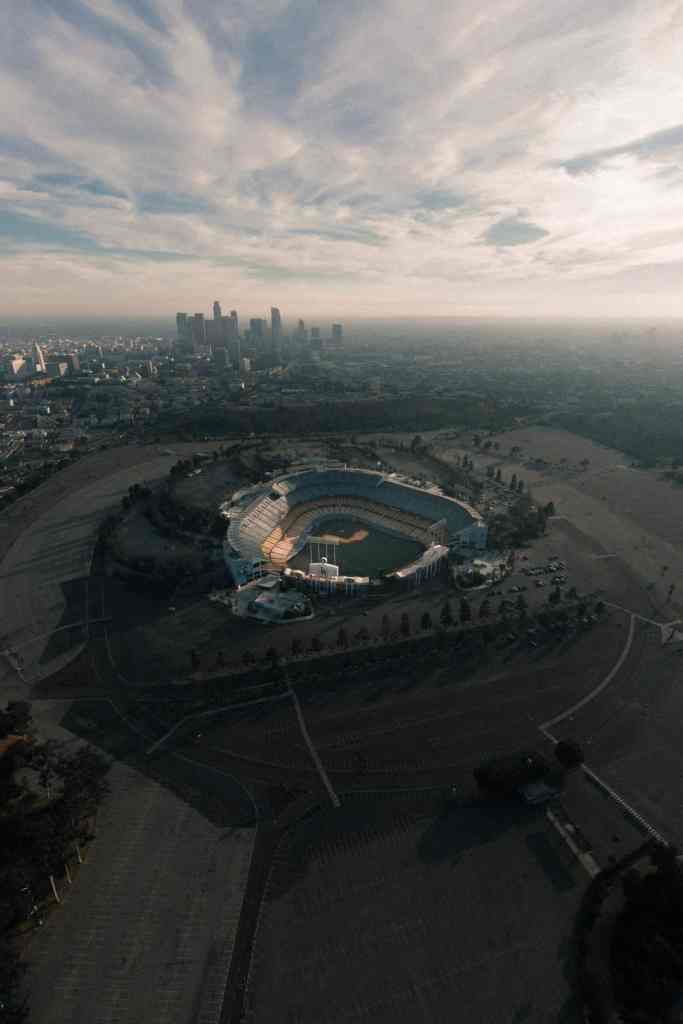
Getting To Dodger Stadium
Public transit gets you here faster than driving during games and costs way less. Parking is expensive and stressful. Rideshare has surge pricing after the game. Here’s what actually works.
Driving & Parking
If you absolutely must drive: Arrive before 5:15 p.m. for a 7:10 p.m. game. General Admission parking is $35 in advance, $40 at the gate. Preferred Parking ($40-60) gets you closer and earlier exit. You can also get Dodger Parking Passes through our partner at Vivid Seats.
Lot access: You can get to any freeway from any lot exit. It doesn’t matter which lot you end up in—everyone can exit efficiently.
Free Street Parking: Explore nearby areas such as Boyleston Ave, Lilac Terrace, and Stadium Way for free street parking options. Keep in mind that these spots are in high demand and are typically occupied rapidly, so s VERY early arrival is recommended.
Pro tip: Pay for parking in advance online. It’s $5 cheaper and you skip the gate line. Here is the link to Dodgers Parking Overview on their official website. And here is a link to the Dodger Stadium Parking Map.
Pro Tip 2: Consider external Parking (Lots 13 & 14). It is the best value in the stadium but requires an uphill walk.
Dodger Stadium Express (Free Shuttle)
This is the single best way to get to Dodger Stadium. It’s free with your game ticket, no parking costs, no traffic stress.
From Union Station (Downtown LA): Buses run every 10 minutes starting 2.5 hours before game time. Departs from the west side of Union Station on Alameda Street. Drop-off is behind Center Field or at the Top Deck. Return buses run for 45 minutes after the final out. You can park at Union Station East garage for $8, or take Metro Rail from anywhere in LA.
From South Bay stations (Harbor Gateway, Rosecrans, Manchester, Harbor Freeway, Slauson): Buses run every 30 minutes starting 2.5 hours before game time. Free parking at most South Bay stations (Harbor Gateway is $3 on Sundays during NFL season). Drop-off is behind Center Field. This route is perfect if you’re coming from the south.
Real talk: This beats driving and parking. Take it.
Public Transit + Walking
If you’re in LA and have access to Metro, take the Red, Purple, Gold, B, D, or A Lines to Union Station, then transfer to the Dodger Stadium Express. Total cost: under $10, total time: 30-45 minutes depending on where you start.
A Metro bus stop is a quarter-mile away from Gate A on Sunset Boulevard—if you don’t mind a short walk, this works.
Rideshare (Uber/Lyft)
Drop-off: Gate B entrance (near Lot 1). This is where Uber, now the official rideshare partner, has their designated zone.
Cost: $12-18 depending on demand. Surge pricing can make this $35-50+ after the game, so use the app’s scheduled pickup feature or wait 20-30 minutes after the final out before requesting a ride.
When it makes sense: If you’re already in the stadium area, small group, late night arrival. Not the best value for price-conscious fans.
Alternative: Street parking exists in the neighborhood but is unreliable and limited. Don’t count on it.

Dodger Stadium Insider Tips
Dodger Stadium is as much about food and atmosphere as it is about baseball. The stadium embraces this—the concessions here are legitimately good, way better than standard ballpark fare. Come hungry and with time to explore.
Access & Gate Strategy
Gate C is the emptiest option for upper-deck entry on weekends. Most crowds funnel through Gate A. If you’re in the Top Deck or Reserve, go through Gate C and skip 20 minutes of traffic.
Scott Avenue Gate (Gate B/Lot 1 & 2 access) is the true “Insider” secret for avoiding traffic on the way out of the Dodger Stadium.
Gates open 90 minutes before first pitch. If you show up at 60 minutes, you avoid the crowds but catch most of batting practice from the outfield concourse. Batting practice is open to anyone who gets there early—it’s free and worth 30 minutes of wandering around.
Food & Drink Strategy
Skip the $16 Dodger Dog. I know, it’s iconic, but if you’ve done it before move on. Go for the Loaded BBQ Baked Potato” (smoked brisket) found at the King’s Hawaiian Grill (Left Field Plaza)
Fresh Bros. Pizza (Field 28, Loge 130, Reserve 3) is legitimately solid. Better than standard ballpark pizza. Get here during the 2nd-3rd inning when lines are still short.
The “Churro Sundae” Helmet: If you get one dessert, make it the Churro Sundae served in a full-sized souvenir helmet. It feeds two people easily. This is what I’m doing friends.
The Korean Fried Chicken bucket is worth the hype. It’s spicy, crispy, and fills you up. Located at multiple concession stands. Warning: it’s about 25% chicken and 75% fries, but they’re good fries.
Chicken Katsu Club (Field 8) and the Pastrami Burger (Fan Fare at Field 10 or Reserve 31) are the new items worth hunting for. Real food, not stadium food trying to be real food.
The Loaded BBQ Baked Potato (Think Blue BBQ, Left Field Plaza or King’s Hawaiian, Reserve 32) is massive and actually delicious—smoked brisket, mac and cheese, the works.
Pro tip: Eat during 2nd-5th innings. Lines get absolutely brutal during the 7th-inning stretch. Also, the third-base side concourse has the same food and shorter lines than the first-base side. Everyone clusters on the first-base side—you’re leaving money on the table by following the crowds.
Arrival & Gate Timing
Parking is a nightmare. Seriously, consider alternatives (more below in our getting to Dodger Stadium Section) If you’re driving, arrive by 5:15 p.m. for a 7:10 p.m. game. Parking fills by 6:15 p.m. General Admission lots fill fastest; if you want a specific area, buy Preferred Parking in advance.
Giveaways run out by 2nd inning on promotional days. If you want the bobblehead or t-shirt, show up 90 minutes early.
Merchandise lines get long immediately. If you want team gear, go before first pitch, not after.
Show up 90 minutes early if you want batting practice access. 60 minutes early avoids crowds but catches most of BP from the outfield concourse. 30 minutes early means shorter bathroom lines but you’re walking into a packed stadium.
The Dodger Stadium Express: I mentioned this in the Getting To Dodger Stadium section but it bears repeating. Your game ticket includes free fare on the Dodger Stadium Express shuttle from Union Station or the South Bay. It uses a dedicated bus lane to bypass the worst traffic on Sunset Blvd.
Stadium Traditions & Culture
When the Dodgers score, the crowd loses it—there’s a specific energy here that’s LA through and through. Fans bring signs (no poles), they yell, they care deeply. First-time visitors should sit near passionate fans and let them teach you how the crowd operates. There’s no single “lucky section,” but the entire place becomes one unified roar when something good happens. The vibe is celebratory without being mean-spirited.
The Stadium Club and club lounges often host Dodgers alumni—sometimes you’ll see legends walking through. It’s part of the culture here.
Instagrammable Spots & Photo Ops
The scoreboard is massive and iconic—shoot from the right-field concourse during the 1st-2nd inning when the light is good and the sun isn’t directly behind you. It dominates the frame.
The LA skyline peeks over the left-field wall at sunset—if you catch a 6 p.m. game and walk to the left-field plaza, you get an incredible shot of the city lights and the ballpark together. This is the money shot for first-time visitors.
Top Deck Views: Even if you have tickets in the Field Level, take the elevator or stairs to the Top Deck (Section 1) at sunset. It offers the absolute best panoramic view of downtown Los Angeles framing the field. It is the “postcard” shot.
Jackie Robinson and Sandy Koufax statues outside the stadium are tourist central—everyone gets these photos, but they’re worth having if you’re visiting for the first time.
Center Field Plaza has display areas for the World Series trophy and championship memorabilia. This changes based on the season, but when the Dodgers win, this becomes the place to celebrate and photograph.
Gate entrances and vintage displays around the stadium (game-used bats in section 50, bobbleheads in section 51) offer real, specific shots if you explore before the game starts.
Random Stuff and Hidden Gems
The Secret “Speakeasy”: Tucked under the Right Field Pavilion is a hidden bar with a darker, retro vibe. It overlooks the visitor’s bullpen. It’s a great escape from the sun on day games. I haven’t seen this yet but it sounds cool.
The Botanical Garden: Yes, really. Dodger Stadium is built into a ravine, and behind the parking lots in Center Field/Top Deck, there are massive agave and succulent gardens maintained by the team. It’s a surprisingly zen spot to walk through before entering the chaos.
The “Vin Scully” Tribute: Look up at the press box (Club Level). You’ll see the “Vin Scully Press Box” sign. It’s a required photo op for purists.
The “Philippe’s” Hack (The Local Standard): Since outside food is allowed, locals stop at Philippe the Original (near Union Station) for a French Dip sandwich and bring it in. It is widely considered the “best meal” at Dodger Stadium.
Hotels Near Dodger Stadium
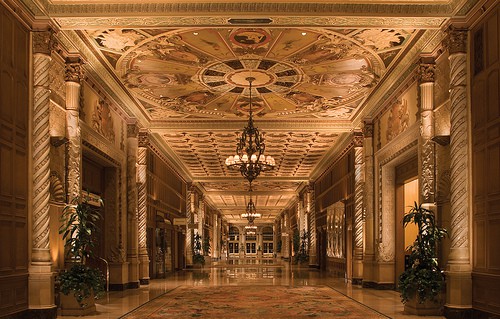
When you’re heading to LA for a Dodgers game, the best place to stay depends on what kind of experience you want beyond the ballpark. Downtown LA puts you close to the stadium with easy transit access and plenty of post-game options, while neighborhoods like Echo Park, Silver Lake, and Los Feliz offer a more local vibe just minutes from Chavez Ravine. If you prefer a quieter base with easy freeway access, Pasadena gives you safety, walkability, and a quick 10-minute drive down the 110—plus you get Old Town Pasadena’s restaurant scene and a more relaxed atmosphere away from downtown’s hustle. Avoid staying too far west unless you enjoy sitting in traffic—the commute from Santa Monica can eat up your pre-game excitement real quick.
Luxury Stays Downtown
The Hoxton Downtown LA: This renovated 1920s Railway Building on Broadway brings European boutique style to the heart of downtown, complete with a rooftop pool and killer restaurant scene. The vibe is chic without being stuffy, rooms mix vintage architecture with modern touches, and you’re walking distance to L.A. LIVE with easy access to the stadium.
Omni Los Angeles Hotel at California Plaza: Positioned at One California Plaza, this spot delivers breathtaking city views and puts you just 1.6 miles from Dodger Stadium. It’s centrally located for exploring downtown and has that upscale polish without going full Ritz-Carlton on your wallet.
Conrad Los Angeles: Frank Gehry designed it, José Andrés handles the dining, and the whole package screams contemporary luxury in the best way possible. The spacious rooms and downtown location make it perfect if you want to mix a Dodgers game with exploring LA’s cultural scene.
InterContinental Los Angeles Downtown: The panoramic views from this downtown tower are legitimately stunning, especially from the top-floor bar at Spire. It’s sophisticated without feeling corporate, and the central location means you can Uber or Metro to the game without hassle.
Mid-Tier Comfort Zones
citizenM Los Angeles Downtown: Modern, compact, and surprisingly well-designed for the price point, this spot gets consistent praise for cleanliness and friendly staff. The tech-forward rooms feel European in their efficiency, there’s a solid bar scene, and breakfast is available if you need it.
The NoMad Hotel Los Angeles: Blending classic architecture with contemporary design, The NoMad offers that boutique hotel experience without the pretense. It’s stylish, well-located downtown, and gives you easy access to both the stadium and LA’s restaurant scene.
DoubleTree by Hilton Los Angeles Downtown: Tucked into Little Tokyo with a gorgeous Japanese garden on the fourth floor, this one’s a sleeper hit. The neighborhood is vibrant and walkable, rooms are comfortable if a bit dated, and you’re steps from great Japanese restaurants and shops.
Freehand Los Angeles: Trendy, affordable, and known for its rooftop pool and unique design, Freehand attracts a younger crowd looking for style on a budget. The downtown location keeps you connected to transit and nightlife without breaking the bank.
The Westin Bonaventure Hotel & Suites: This iconic downtown cylinder offers contemporary rooms, multiple dining options, and that classic LA hotel experience. It’s centrally located and comfortable—perfect if you want reliable quality without hunting for hidden gems.
Pasadena Options
Courtyard by Marriott Los Angeles Pasadena/Old Town: I stayed here when I went to a Dodger game, and I thought it was a solid hotel—you’re right near the Old Town Pasadena area with all its restaurants and shops within walking distance. The rooms are spacious and clean, the staff is genuinely helpful, and the pool area makes for a nice pre-game hangout spot. It’s about 10 miles from the stadium, but the drive down the 110 is straightforward, and you get that Pasadena calm without sacrificing convenience.
DusitD2 Hotel Constance Pasadena: This sleek, modern boutique spot brings an upscale vibe to Pasadena with a rooftop pool, hot tub, and even a free Tuk Tuk shuttle for trips within three miles. The rooms come with iPads that control lighting and temperature, plus the Cal Asian restaurant and Blue Room Lounge add some legitimate style. It’s 25 minutes from Dodger Stadium but puts you right on Colorado Boulevard near Old Town’s best dining and the Tournament of Roses Parade route.
Bars/Restaurants Near Dodger Stadium
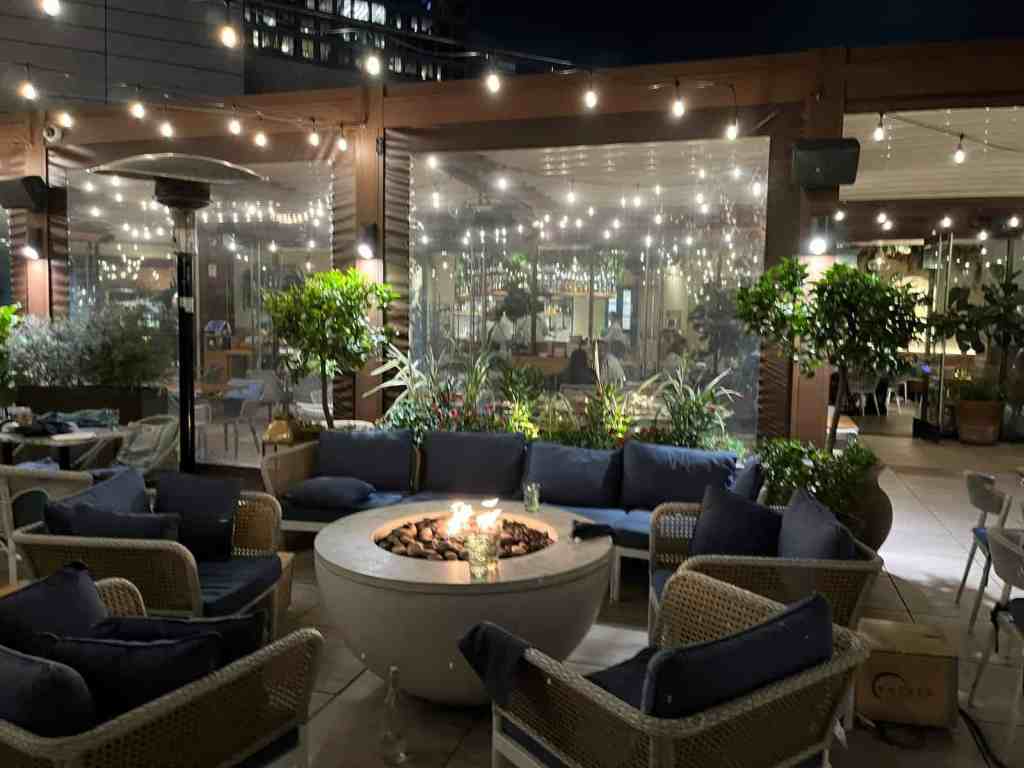
Your game plan for eating around Chavez Ravine really depends on timing and what kind of vibe you’re after. If you’re rolling in early for a 7:10 first pitch, hit up Echo Park or Chinatown for a proper sit-down meal—these neighborhoods are packed with local spots that won’t gouge you like typical sports-district traps. Post-game is when the strategy shifts: grab something quick on Sunset Boulevard before the parking lot empties, or if you’ve got time and want to dodge traffic, settle into a bar in Echo Park where you can dissect that questionable bullpen decision over drinks.
If you’re staying in Pasadena, Old Town gives you a completely different approach—catch the pre-game hype at a sports bar there, then cruise down the 110 with a buzz going. The beauty of Dodger Stadium’s location is you’re surrounded by legitimately good restaurants, not just overpriced stadium adjacents.
Philippe The Original: This downtown landmark claims to have invented the French dip sandwich back in 1908, and the sawdust floors and communal tables keep that old-school vibe alive. It’s about a 10-minute drive from the stadium, making it perfect for an early dinner before heading up to Chavez Ravine—just don’t expect anything fancy, this is counter service at its finest (1001 N. Alameda St, Los Angeles, CA).
LaSorted’s Pizza: Named after Dodgers coach Tommy Lasorda, this Chinatown spot is basically a shrine to the Boys in Blue with memorabilia covering the walls and game audio piped throughout. Their Upside Down Mamba pizza flips the script with cheese melted directly onto the crust, and they run game-day hot dog specials tied to whoever the Dodgers are playing (984 N. Broadway, Los Angeles).
Little Fish: This Michelin Bib Gourmand spot started as a seafood pop-up and now serves killer fried fish sandwiches, whitefish tartines, and fish congee from a casual order-at-the-window setup. They close at 4pm, so this is strictly for weekend day games, but it’s worth the planning if you can swing it (1561 Sunset Blvd, Los Angeles).
Lowboy: Dark, spacious, and right on Sunset Boulevard, this bar nails the pre-game casual vibe with nightly drink specials, Jell-O shots, and a smashburger covered in pepper relish that’s perfect for soaking up beer. There’s also Bar Flores upstairs if you want cocktails in a slightly more chill setting (1540 Sunset Blvd, Los Angeles).
El Compadre: The Echo Park location of this Mexican restaurant classic is louder and more relaxed than its Hollywood sibling, with TVs showing Dodgers coverage and flaming margaritas strong enough to make any game entertaining. It’s a solid spot to park nearby for free and walk through the gates afterward (1449 W Sunset Blvd, Los Angeles).
Amboy: This Chinatown burger spot keeps it simple with their Classic Double—smash patties made from short rib, brisket, and rib-eye trim, topped with American cheese and caramelized onions. Grab it to-go and eat it in the car, or sit in Far East Plaza if you’ve got time to appreciate those crispy edges.
Bia Ôm: This Vietnamese beer garden on Sunset brings a fun, casual energy with sausages, potato noodles, a massive pork schnitzel, and slushie spritzes you order from a window or roaming waiters. The outdoor seating makes it great for groups getting hyped before first pitch (1250 W Sunset Blvd, Los Angeles).
Old Town Pasadena Sports Bars
Barney’s Beanery: This Old Town staple packs over 100 hi-def TVs, 40 beers on draft, and enough distractions—arcade games, pool tables, an actual bus parked inside—to keep your crew entertained through nine innings. The menu’s massive, covering everything from chili to pizza, and the rock ‘n’ roll décor gives it that rowdy Route 66 roadhouse energy. It’s open late, gets loud, and works whether you’re pre-gaming before the drive down or watching from Pasadena (99 E Colorado Blvd, Pasadena).
Yard House: Located upstairs in The Paseo with huge windows overlooking Colorado Boulevard, Yard House brings 100+ beers on tap and that polished sports bar vibe. The menu hits all the marks—Poke Nachos, street tacos, USDA prime burgers—and the energetic atmosphere with classic rock makes it a solid spot to catch the game if you’re not making the trek to Chavez Ravine (300 E Colorado Blvd, S, Pasadena)

Things To Do Near Dodger Stadium
If you’re int town a long LA weekend to see the Dodgers stay mindful of LA’s notorious traffic, and know planning is key. Here’s a list of enjoyable activities near Dodger Stadium, ensuring you make the most of your time without venturing too far from the excitement of the game. From scenic parks to cultural enclaves, these options provide a perfect balance of entertainment and convenience.
Explore Elysian Park: Take a leisurely stroll or have a picnic in Elysian Park, the city’s second-largest park, located adjacent to Dodger Stadium. Enjoy scenic views of the city, discover hidden trails, and appreciate the natural beauty.
Visit Chinatown: Immerse yourself in the vibrant atmosphere of Los Angeles’ historic Chinatown, just a short drive from Dodger Stadium. Explore unique shops, savor delicious cuisine, and experience cultural events in this bustling neighborhood.
Discover the Arts District: Head to the nearby Arts District, known for its eclectic galleries, street art, and trendy boutiques. Enjoy a blend of creativity and urban vibes, with plenty of cafes and eateries to explore.
Wander Through Little Tokyo: Experience the rich cultural enclave of Little Tokyo, offering authentic Japanese cuisine, shops, and cultural exhibits. Stroll through charming streets, visit museums, and enjoy the unique blend of tradition and modernity.
Tour the Grammy Museum: If you’re staying at L.A Live, Delve into the world of music at the Grammy Museum. Explore interactive exhibits, discover the history of the Grammy Awards, and engage with the evolution of music across genres.
I’ve been going to Dodger stadium since i was a kid, and its truly one of the great ballparks in America. If you’re someone just embarking on their first Dodger Stadium adventure, or been many times like me, this guide aims to enhance your journey and ensure that every visit to this legendary venue becomes an unforgettable experience you’ll repeat time and again. Go Dodgers!
Check out these other guides for the great venues in Southern California:
Angel Stadium in Anaheim and Petco Park In San Diego
The Rose Bowl and The Coliseum
Crypto.com Arena and Intuit Dome
Written by Brad Richards, Founder of Gameday Guides. This guide includes insights from personal visits as well as updated info from team sources, fan forums, and stadium policies. We aim to help you plan with confidence — enjoy your gameday.