
Best Seats at Xfinity Mobile Arena
This arena is full of events all year and three teams call it home: the Flyers, the Sixers, and the Wings of the National Lacrosse League. Add a heavy concert calendar, Villanova and Big 5 college basketball, and you get a building that runs close to 200 nights a year — which is part of why it’s had five names in thirty years and why locals have stopped keeping up. It was Wells Fargo Center until August 2025. Plenty of people still call it that, and a few holdouts still say Wachovia. Nobody will correct you.
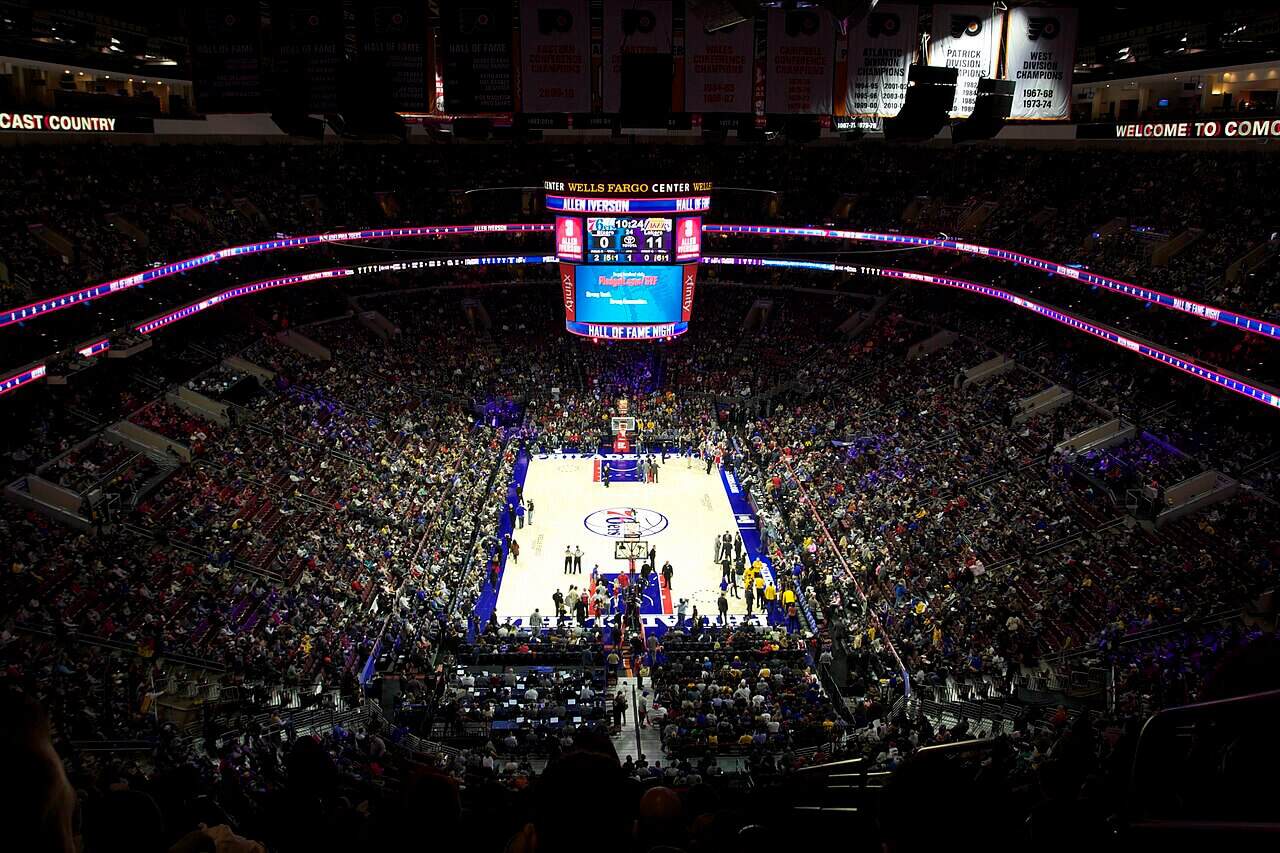
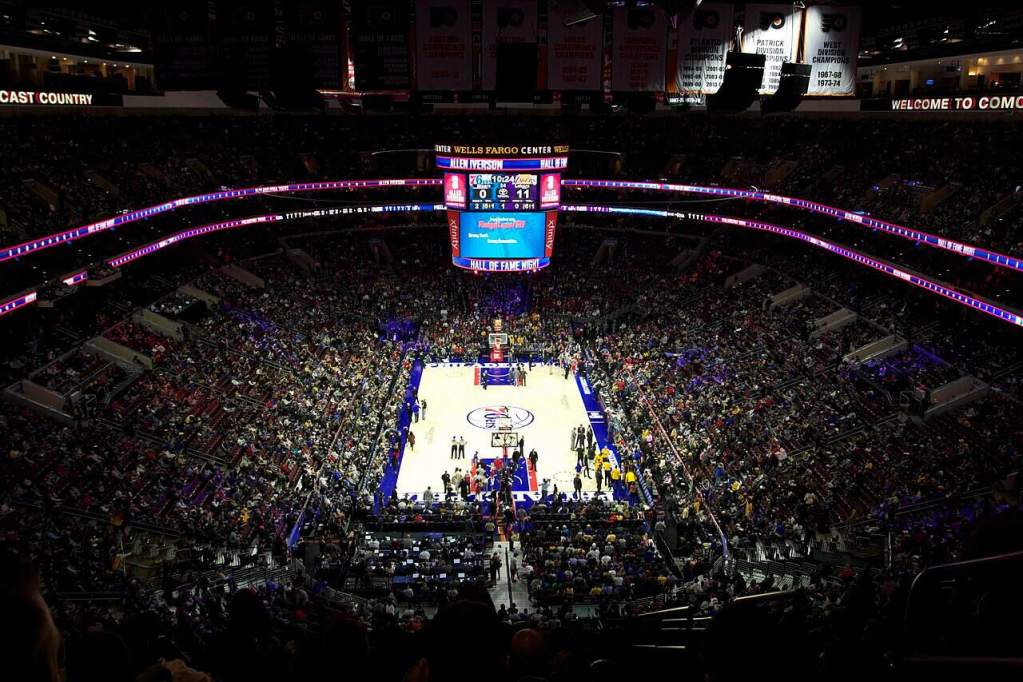
What you’re walking into is a 1996 arena that’s had roughly $400 million spent on it since. The bowl is compact and steep with three tiers that matter, the sightlines are good from nearly everywhere, and the food is legitimately above league average. Hanging over the floor is the thing worth showing up for: a kinetic 4K scoreboard, the first in pro sports, that physically expands and contracts during the game. Oh and Lebron James now plays for the Sixers.
Seating Overview
This is a compact, steep-sided bowl with only three seating tiers that matter to most buyers: the 100 level, the club level tucked just above it, and the mezzanine 200s up top. There’s no dead middle deck to get lost in, and there’s no bad angle in the lower bowl. The real decision is how much elevation you want and whether you’re here for hockey geometry, basketball sightlines, or a stage at one end of the floor.
For Flyers games, elevation helps more than proximity — you want to see the puck move through the neutral zone, and the corners of the lower bowl and the front of the mezzanine both do that better than a fifth-row seat behind the glass. For Sixers games the opposite is true: get low and get near center court. For concerts, the stage sits at one end, and half the “close” seats are actually side-stage.
Best Seats for a Flyers Game
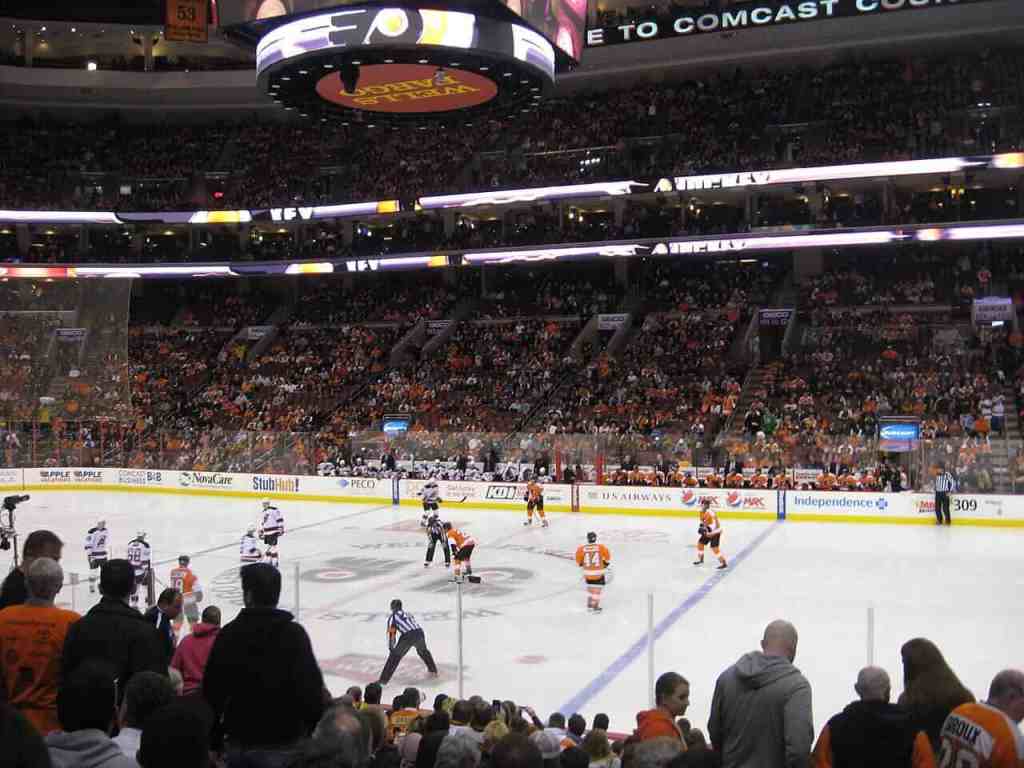
Height beats proximity for hockey, and this is the building that proves it. A fifth-row seat behind the glass at center ice sounds like the dream and delivers a night of watching the puck vanish behind the near boards every time it goes into the corner.
Lower bowl corners, roughly 105–108 and 118–121. The sweet spot of the 100 level for hockey. You’re elevated enough to read a breakout developing, angled enough to see both nets without craning, and you’re paying meaningfully less than the center-ice sections. If you want to be close and still see the game, this is the compromise that works.
Mezzanine front rows in the corners, the low 200s and the 220s. The coaches’ view for a fraction of the money. Each mezzanine section runs about fifteen rows and the first four or five are genuinely good seats — you get the full sheet, you see how plays are built, and you can follow line changes. Row matters more than section up here: row 1 of 215 beats row 5 of 214 every time.
Behind the goal in the lower bowl, the 110s and the 122–124 range. Underrated for hockey specifically, because you get a full period of watching the Flyers attack straight at you. The tradeoff is the other two periods, when the action is 200 feet away and the near glass is in your way. Worth it if you can get it cheap.
Team benches run along the side fronted by sections 101, 102, and 124, so if you want to watch line changes and hear the bench, aim there.
Best Seats for a 76ers Game
Basketball inverts the hockey math entirely. The floor is small, the players are large, and getting low is worth real money here in a way it isn’t for hockey.
Lower bowl sidelines, the 112–118 range and their counterparts across the floor. Straight-on at midcourt, low enough to see faces and hear the game. This is where the building feels tightest and loudest, and it’s the seat worth stretching the budget for if you’re only doing this once.
Lower bowl sideline corners, the 105–109 range. Slightly off midcourt, meaningfully cheaper, and the angle penalty for basketball is small. Better value than the equivalent hockey seat because there’s no far-boards problem to worry about.
Baseline lower bowl. Cheap for a reason — you’re looking down the length of the floor and depth perception on a jump shot goes flat — but you’re close to the action at one end and you’re in the lower bowl. Fine for a first visit on a budget.
Skip the deep mezzanine for basketball if you can help it. The floor is 94 feet and from the back rows up there it reads small in a way an ice sheet doesn’t.
Best Seats for a Concert
The stage sits at one end for most shows, which changes every assumption above. The single most important thing: pull the event-specific seating map, not the generic arena map, because the configuration moves with every tour.
Lower bowl center, 112 through 118. Straight-on at the stage, slightly elevated off the floor, and usually a better view than mid-floor seats where you’re behind a thousand standing people. For an end-stage show these are the best non-floor seats in the building.
Front rows of mezzanine 214 and 224. The best-kept value in the arena. These two sections sit at the ends and their proximity to an end stage genuinely makes them better than lower-level side sections in the 105–109 range that often cost more. If you’re buying a show ticket on a budget, look here first.
Lower bowl sides, the 103–109 and 117–121 ranges. Sold as premium proximity, and for a side-stage angle that’s mostly marketing. You’ll be looking at the production from the wing and the speaker stacks will be in frame. Only worth it if the price reflects the angle.
Floor seats are their own gamble. Rows A through F are the experience; anything past the mid-floor mark leaves you standing behind taller people with no elevation, and the mezzanine front row will out-see you all night.
Best Value Seats
The cross-sport rule in this building: the front five rows of any mezzanine section outperform the back half of the lower bowl at a lower price, every time. The mezzanine here isn’t a nosebleed deck — it’s a compact upper tier with a good pitch, and the first few rows of it are legitimate seats. Sort by row before you sort by section and you’ll find the deal.
The second one: club-level seats bought on the secondary market late in a weeknight cycle frequently land near lower-bowl pricing, and many Flyers and Sixers club tickets carry preloaded concession credit in the twenty-five to thirty dollar range. Net that out and the club level occasionally costs less than the seat below it.
Cheapest Way In
Standing room at the New City Terrace. The upper level’s south end was converted into a 23,000-square-foot social floor called the Assembly Room, and standing-room tickets get you access to it. That means two bars, two eateries, four working fireplaces, communal tables, and screens, with the bowl right there when you want it. It is a better night than a cheap fixed seat in the back rows of the mezzanine, and it’s usually priced in the same neighborhood. Downside: you’re standing, and on a sellout it gets genuinely packed.
Upper rows of the mezzanine, the back of any 200-level section. The honest cheapest option. It’s high and it’s steep, and if heights bother you, know that going in.
Our Pick
Front five rows of a mezzanine corner — the 202 through 205 range or 220 through 223 — for a Flyers game. Lower-bowl 112 through 118 for the Sixers, because basketball rewards being close and hockey doesn’t. Front rows of mezzanine 214 or 224 for a concert. Three different answers in the same building, and picking the wrong one is the most common way people overpay here.
What to Avoid (and What’s Worth Trying Once)
Lower bowl behind an end stage. For concerts, sections directly behind the stage are usually killed off entirely, but the ones just off the edge sometimes stay on sale and get marketed as “lower level.” You’ll see the back of the production. Check the specific event map before you buy anything in the 100s for a show — the configuration changes with every tour.
The last three or four rows of any mezzanine section. The pitch up there is aggressive and the top rows tuck under the roof structure. You’re saving very little over the front of the same section, and the experience gap is large.
Worth it once: the Assembly Room standing-room ticket. Not a seat, not a great view of the game, and one of the more genuinely enjoyable ways to spend three hours in an arena anywhere in the league. Get there early enough to claim a rail spot, treat it like a bar with a hockey game attached, and don’t expect to follow every shift.

Premium Seating and Clubs
The premium landscape here was rebuilt from scratch during the Transformation 2020 project and the renovations that followed it, and the result is unusually good for a building that opened in 1996. The club level is a full open-concept floor rather than the old semi-private boxes, and the upper level’s south end became a premium-adjacent social space that anyone can buy into.
The Best Premium Experience
The club level, one tier directly above the 100s. Every seat on this floor is within thirty rows of the floor, which is why it doesn’t feel like a separate deck — it plays like an extension of the lower bowl with better legroom and its own concourse. The four best sections sit at the middle of each side and get the widest seats in the building plus a drink ledge. Many club tickets for Flyers and Sixers games arrive with concession credit already loaded, typically in the twenty-five to thirty dollar range, which effectively covers dinner.
Best Value Premium
The standing-room ticket into the Assembly Room, without much argument. It costs a fraction of a club seat and it delivers the thing people actually buy premium for — space, a real bar, food that isn’t a concession line, and somewhere to stand that isn’t a concourse. You’re trading a guaranteed seat for a much better room. If you’re bringing someone who cares more about the night out than the box score, this is the ticket, and it’s the one a local would tell you about.
Other Premium Options
Revolutionary Row sits at the front edge of the New City Terrace with cushioned seats and built-in charging, sold primarily as a season product. The Liberty Lofts are open-plan suite-style spaces along the south end with lounge seating and catered options, and they’re among the best angles in the building for a concert stage. There’s a center-ice all-inclusive lounge membership tied to the Flyers that comes with a private lounge and its own kitchen. And on the event level there’s a club that operates below the bowl entirely.
Suites and Group Options
Private suites here fit roughly twelve to twenty-four guests depending on whether you’re in a suite-level box or a balcony suite above the 200s, with catering ordered separately and access to club-level concessions included. Shared suite seats — individual tickets inside a suite you don’t rent outright — turn up on the resale market and are the realistic way in for a couple or a small group. Book through the arena’s premium seating office for anything private.
Xfinity Mobile Arena Seating Chart and Capacity
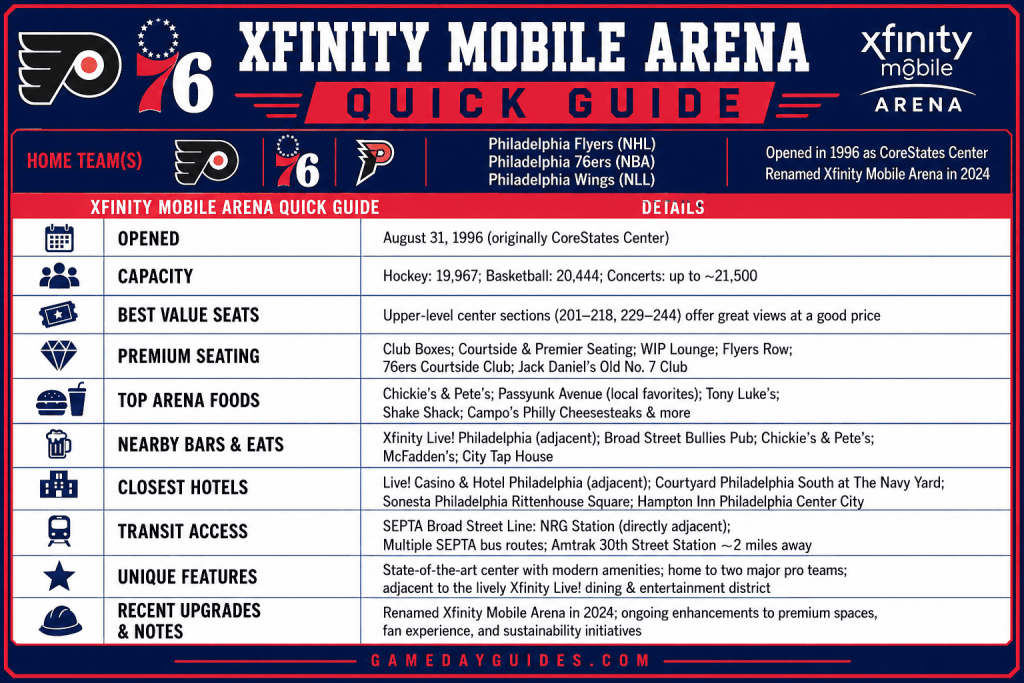
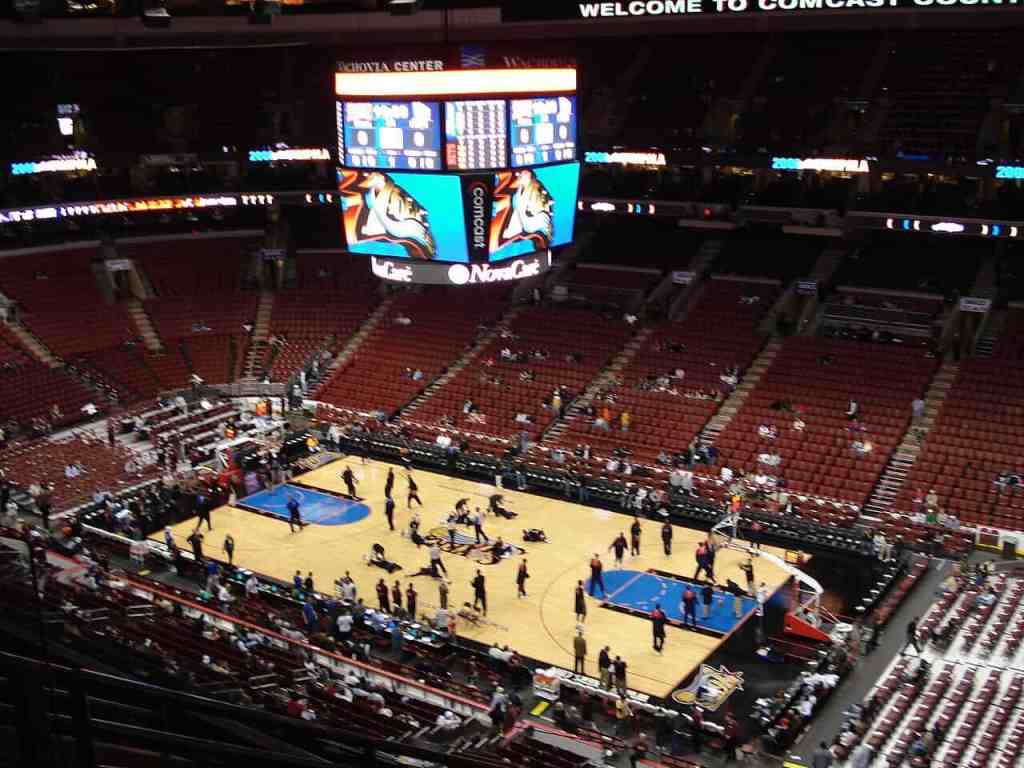
Capacity runs about 19,173 for hockey and lacrosse, expanding to roughly 20,000 with standing room, and 20,478 for basketball, up to 21,305 with standing room. Concerts top out around 21,000 depending on stage configuration. The bowl has three public tiers: the 100 level, numbered 101 through 124; the club level directly above it; and the mezzanine, numbered 201 through 224 with several lettered sub-sections mixed in. Suites ring the building above the club level, and the New City Terrace occupies the south end of the upper level. The team benches run along the side fronted by sections 101, 102, and 124.
For concerts, floor sections are lettered and change with every tour. Pull the official seating map at xfinitymobilearena.com before you buy, and pull the event-specific map, not the generic one.
Getting Flyers, Sixers and Concerts Tickets
Flyers and Sixers pricing here swings hard on opponent, but the Sixers half of that calculation just changed. With LeBron James signing in July 2026 alongside the Jaylen Brown trade, the soft midweek Sixers ticket that used to exist in January and February probably doesn’t this season — expect demand closer to a permanent sellout footing, and expect the secondary market to hold its price rather than fade in the last forty-eight hours. If a Sixers game is the reason for the trip, buy early rather than waiting for the dip that used to come.
Hockey still behaves the old way. Rangers, Penguins, and Bruins dates carry a premium that has nothing to do with the seat and everything to do with the visiting fan base buying in, while midweek Flyers games against non-rivals in the dead of winter are where the secondary market genuinely goes soft and prices drop inside two days of puck drop.
Villanova and Big 5 college basketball dates remain the real bargain on this building’s calendar. For concerts, this is a strong tour market and the good shows sell, but the mezzanine tends to release additional inventory once the production finalizes sightlines — worth checking back a week out even on a show that looked gone.
For Flyers, 76ers, Soul and Villanova tickets along with all the other Philly Sports teams check out our partner Vivid Seats.

Xfinity Mobile Arena Bag Policy
Small hand clutches, wristlets, and purses that don’t exceed 4.5 by 6.5 inches go straight through without X-ray screening, though staff can still inspect them. Anything larger than that and smaller than 14 by 14 by 6 inches has to be X-rayed, and only three entrances are set up to do it: the Broad Street entrance, the 11th Street entrance, and the premium entrance. Backpacks, suitcases, and large multi-compartment bags are not permitted at all. Medical equipment bags and parental bags under 14 by 14 by 6 inches are allowed as exceptions but still go through X-ray. Lockers for prohibited bags sit on the 11th Street side of the building, run roughly five to fifteen dollars depending on size, and take credit cards only. Concert and family show policies can be stricter depending on the tour, so check the event page rather than assuming.
Key Venue Policies
No re-entry once your ticket has been scanned. Exceptions get handled one at a time by security and guest services, so don’t plan around it — if you want to spend time at Stateside Live!, do it before you go in, not at intermission. Screening is either walkthrough metal detectors or frictionless scanning depending on the event, and vehicles in arena lots are subject to screening too.
Signs, banners, and flags are generally welcome as long as they don’t block anyone’s view and aren’t political, ideological, or commercial. Professional camera equipment is out for most events, and the camera policy is set event by event.
Is Xfinity Mobile Arena Cashless?
Completely cashless. Every transaction in the building — concessions, retail, box office — is card or mobile only. The parking lots run on the same system with kiosks that take cards. If you show up with cash, you’ll be converting it at a kiosk before you can buy anything.
Accessibility: ADA and companion seating exists on every level, and elevators serve all tiers. The arena also operates the Kidology Sensory Room on the suite level, open for all sporting events and select family shows and concerts, and sensory bags are available to any guest who needs one — a genuinely above-average provision that not many arenas match. Guest Services desks sit at Section 121 on the main concourse and Section 214 upstairs, which is also where lost and found runs during events. Check the guest services page for current accessible entrance locations and to arrange mobility assistance in advance.
Here is a full A to Z list of all the Xfinity Mobile Arena policies.

Getting to Xfinity Mobile Arena
The arena sits at the southern end of Broad Street inside the South Philadelphia Sports Complex, wedged between I-95 and I-76 with the Walt Whitman Bridge feeding in from Jersey. The subway is the best answer for most people, and it isn’t close.
Xfinity Mobile Arena Parking
Eight event lots surround the complex with more than 6,000 spaces, and rates run roughly nineteen to forty-four dollars depending on the lot and whether you prepaid. The on-site lots closest to the arena doors sit at the top of that range. The Jetro lot on South Darien Street is the cheapest official option at around nineteen dollars (this can change), and the Stateside Live! lot on Pattison runs about twenty-two and doubles as your pregame destination, which is why it’s the best combination of price and purpose.
Prepaying typically saves five to ten dollars over the gate rate. Arrive sixty to ninety minutes out on a Flyers or Sixers night — not because the lots fill, but because the Broad Street approach backs up behind everyone making the same left turn.
The genuinely smart move if you’re anywhere along the Broad Street Line: park at a station up the line — Fern Rock’s lot is a couple of dollars — and ride down. You skip the event rate and the postgame lot crawl entirely.
Public Transit
The Broad Street Line runs straight down the spine of the city and terminates at NRG Station, which puts you a five-minute walk from the arena gates. From Center City it’s a direct ride with no transfers; from University City or Old City, take the Market-Frankford Line east to 15th and Market and transfer down to the Broad Street Line southbound.
Regional Rail riders come into Suburban Station and walk through the concourse to City Hall Station to make the same transfer. Bus routes 4 and 17 also stop at the complex. Post-event, the platform is a crush for about fifteen minutes and then it isn’t — one beer’s worth of patience saves you the worst of it.
Rideshare
Lyft is the arena’s official rideshare partner and has a dedicated onsite pickup lot — Lot D, at the southeast corner of the building — that operates during events. Uber riders don’t get that lot. For drop-offs, the designated zones are near Broad Street and Pattison Avenue and near Pattison Avenue and 11th Street; if your driver pulls into one of the main event lots instead, you’ll get waved off or asked to pay at the gate.
The geography still works against everyone after the final horn, because the complex empties onto a handful of roads at once and Lot D backs up fast. The move that actually works: walk five to ten blocks north up Broad toward Snyder Avenue before you open the app. You’ll be out of the surge zone and your driver won’t be sitting in the same queue you just left. Requesting while the third period or fourth quarter is still running gets you someone already in position instead of someone fighting inbound traffic.
Arena Insider Tips and Hacks
Everything about the approach to this building is straightforward. The stuff worth knowing is what’s inside, what’s about to happen to the place, and where the good food hides.
The History of Xfinity Mobile Arena and the Old Spectrum
It opened in August 1996 — Ellerbe Becket design, $210 million, and an impossible job from day one: replace the Spectrum.
The Spectrum is why this building was never quite loved. That’s where the Broad Street Bullies won Cups in 1974 and 1975 and where Julius Erving played. It stood a few hundred feet away and came down in 2011.
Neither tenant has won a title here. Thirty years, five names, no banner. That combination is most of the explanation for the arena’s reputation.
Architecturally it’s pure mid-nineties: low brick-and-glass exterior, one broad curved concourse, a steep and tight bowl. Nothing radical — the interest is in what’s been bolted on since.
Roughly $400 million in renovations landed between the Transformation 2020 project and its completion in 2024.
Watch the scoreboard, not just the screens. The kinetic 4K center-hung board went in in 2019, the first anywhere in pro sports. It weighs 90,000 pounds, carries 65 percent more LED than the old one, and the panels physically expand and contract on two crown trusses during the event. Most people never notice it move.
The last nod to the old building is a pair of concession stands called Spectrum Favorites at sections 101 and 113. The original Spectrum-red seats carried over into this arena were replaced in the renovation — 8,000 new lower-bowl seats — so that name is what’s left.
This Building Has About Four Seasons Left
Don’t file this one away for later. The Flyers and Sixers are leaving, and the timeline is short.
After the Sixers abandoned their Center City arena plan in January 2025 — the Market East project that ran into sustained opposition from Chinatown — the team and Comcast Spectacor formed a 50-50 joint venture to build a new shared arena right here in the sports complex. Philadelphia’s incoming WNBA team will share it. Comcast Spectacor’s chairman said in May 2026 that it’s projected to open in spring 2030, timed to the WNBA team’s debut, though some earlier reporting pointed at 2031.
The LeBron Factor, and What It Probably Means for Your Visit
He signed in late July 2026 on a reported two-year deal with a player option, joining a roster that had just added Jaylen Brown.
Treat two years as a ceiling, not a promise. He’ll be 41 to start the season and had publicly floated retirement weeks earlier.
Expect the cheap Sixers ticket to disappear. The quiet Tuesday-in-February game that used to be the easy way into this building is probably gone for the duration.
If seeing him is the whole reason for the trip, be careful. Rest days at his age are routine and teams rarely flag them far ahead — a ticket bought in October for a March back-to-back carries real risk.
Target marquee opponents or nationally televised dates. Those are the games stars actually play. Check the injury report that morning rather than assuming.
Which Entrance to Use, and the No-Bag Shortcut
Only three gates X-ray bags: Broad Street, 11th Street, and the premium entrance. If you’re carrying anything larger than a 4.5-by-6.5-inch clutch, those are your only options.
So don’t carry one. Phone, card and keys in your pockets, bag left in the car, and you can walk into any gate in the building. On a sellout that’s ten or fifteen minutes saved.
If you do have a bag, pick your side. Broad Street absorbs everyone coming off I-95. Arriving from the Walt Whitman Bridge or the south, 11th Street moves faster.
Lockers are on the 11th Street side, five to fifteen dollars, cards only.
Don’t assume ninety minutes. Door times vary by event here — the arena posts the specific time on each event page.
Pregame Access: The Best Free Thing in the Building
Get in an hour before puck drop and go down to the glass. The lower bowl is wide open during Flyers warmups, nobody polices which section you’re standing in, and you’ll be six feet from NHL players taking shots.
It’s also your autograph window. Stand at the ends where players are shooting, bring something small and flat, and go early rather than late.
It closes about fifteen minutes before the anthem. After that you’re in your actual seat.
Sixers access is tighter. The realistic spot is the tunnel area near the benches during pregame, and it fills fast. Neither team runs a formal autograph session, so warmups are what there is.
Navigating the Concourse
Both concourses are continuous loops — but the ends of the building aren’t symmetrical anymore. The south end of the upper level is now the New City Terrace, so “walk straight across” doesn’t work up there.
Use the arena’s 3D map on its website to find a specific stand before you start walking. It’s better than it needs to be.
Guest Services is at Section 121 downstairs, Section 214 upstairs. Same desks handle lost and found during events.
The mezzanine is steeper than photos suggest and the aisles are narrow. Back half of a 200-level section means climbing past a lot of people twice on any food run.
Food and Drink Strategy
Crab fries, and don’t queue for them. Chickie’s & Pete’s has six locations — 104 and 116 downstairs, 204, 210, 216 and 222 up top. There’s no excuse for standing in the longest line.
9th Street Italian Sandwiches, sections 104 and 117. The Italian pork sandwich is the closest thing in the building to the real South Philly article.
Line Change, section 107. Rotates its menu every event. The most interesting stand in the arena and the one nobody knows to check.
Carselliano’s Steaks, section 124, for a cheesesteak that doesn’t embarrass itself.
Buena Onda, section 112, for tacos and burritos if you want something that isn’t fried.
Pizzeria Salvy, section 114, with Vetri-associated pizzas on the neighborhood menu.
Skip Shake Shack at 115. It’s fine, it’s identical to forty other buildings, and the line is long purely because the logo is familiar.
Sweets: Federal Donuts at 102 and 207, Insomnia Cookies at 118 and 207A, Rita’s Water Ice at 106 and 204.
Eat during play, not during the break. The concourse empties in the first period and jams solid at every intermission and timeout.
The upper concourse moves faster all night — the skyline bar at 219 and the bar at 224 beat anything downstairs.
Don’t leave the food run late. Specialty stands close before the event ends, and your options collapse back to hot dogs and pretzels. Get the good stuff in the first half of the night.
Beer is a two-drink limit per transaction, caps already removed so you can’t stockpile. Service cuts off earlier than the food.
Exit Strategy
Skip the escalators. When the horn sounds, the 200-level escalators become a standing queue because everyone defaults to them. The stairs are right there and empty.
Parked on the 11th Street side? Exit toward 7th Street, not Broad. Longer on the map, shorter in practice.
The best move costs nothing: walk to Stateside Live!, have one drink, leave twenty-five minutes later into an empty road.
Or take the subway — the platform crush at NRG resolves in about fifteen minutes.
Check the Whole Complex Schedule, Not Just Yours
The arena shares lots with Citizens Bank Park and Lincoln Financial Field.
A Tuesday Flyers game in January is easy. That same game on a Phillies playoff date or a late-season Eagles Sunday is a different event entirely — the shared lots become an all-day tailgate, the lot you planned on may not be open to you, and the exit takes an extra half hour.
Check the complex calendar before you decide to drive. If there’s an overlap, take the Broad Street Line and skip the problem.
Photo Ops and Instagrammable Spots
Exterior: the Broad Street face at dusk with the signage lit. It’s the frame every news chopper used when the name changed.
The shot people miss: from the top of the New City Terrace looking back across the bowl when the kinetic board is fully expanded. Whole arena plus the scoreboard at its widest, and the LEDs do the lighting for you.
The rafters. The 1974 and 1975 Cup banners hang alongside retired numbers from both franchises — the densest concentration of Philadelphia sports history in the building. Shoot from a mezzanine corner to get banners and ice in one frame.
Outside the arena: the AVA Rooftop Bar at Stateside Live! puts three major venues in a single frame. Not a shot you can get in many American cities.
Traditions Worth Knowing
Gritty is not a gimmick here. He leads drum-driven “Let’s Go Flyers” chants through the game and the crowd genuinely follows. The Sixers have Franklin.
The pregame build is coordinated and loud — hype video, PA call, the whole building bought in.
Booing is engagement, not abandonment. Philadelphia crowds are participatory and not polite about it, and they will boo the home team when warranted. Don’t read it as the building turning on the team.
The 50/50 Raffle Is Bigger Here Than You Think
Buy from a roaming seller, not a kiosk. The concourse kiosks get swamped at first intermission, which is exactly when everyone remembers the raffle exists. Sellers walk the aisles all night — Sixers sellers wear red vests.
Flyers Charities: seven tickets for ten dollars, twenty-five for twenty, seventy-five for fifty. On a full house the jackpot regularly climbs past fifty thousand, and the winner takes half the pot.
Sales close halfway through the third period for hockey. Sixers sales open ninety minutes before tip and close at the end of the third quarter.
You don’t need to be present to win. Card and Apple Pay only, same as everything else here.
Dress for the Sport, Not the Weather
The climate inside changes dramatically depending on what’s on the floor. A Flyers game means an ice sheet radiating cold into a lower bowl that sits right on top of it, and people in short sleeves are visibly miserable by the second period.
A sold-out Sixers game with the hardwood down and twenty thousand bodies in the building runs warm, and the upper level runs warmest of all. Layer for a hockey game and don’t overdress for basketball — this catches out-of-towners who checked the Philadelphia forecast and stopped there.
Tickets, WiFi, and Going Cashless
Load your tickets before you leave the hotel. Entry is mobile-only through the arena’s Ticketmaster account manager or the team app, and cell congestion outside the gates is real.
Inside, connectivity is excellent. This was the first East Coast arena with the high-power WiFi that came with the Xfinity naming rights deal.
Everything is cashless — concessions, retail, box office, parking kiosks. Have a card in your phone even if you’re carrying a wallet.
Designated driver perk: sign up at Section 112 on the main concourse for a coupon for a free water or soda from any stand. Almost nobody knows this exists.
Merch and the Team Shop
Outphitters is the flagship, southeast side of the main concourse, typically open about ninety minutes before Flyers and Sixers games.
Shop during the second period or third quarter. The store is mobbed in the twenty minutes before the event and the ten minutes after it ends, and dead in the middle.
If you’d rather not spend part of your night in a merch line, or you want to show up already wearing the jersey, our partner Fanatics carries the full Flyers and Sixers range and it ships before you travel: shop the team gear here. Worth doing if you’re buying for a kid — the in-arena youth sizing runs thin by the third period on a busy night.
Quirks Worth Knowing
The name is the first one. Your rideshare app, your ticket, and the person you ask for directions may each call this building something different. Wells Fargo Center, Xfinity Mobile Arena, and “the Center” all get you to the same place, and nobody in Philadelphia is confused by it.
No outside food or drink, and they mean it — security will make you surrender an apple or a candy bar at the door. Eat before you come or plan on buying inside.
Beer runs twelve to fifteen dollars for a 24-ounce pour, which is the going rate but still a surprise if you’re expecting a 16-ounce cup for that money.
Families and Kids
The Kidology Sensory Room is on the suite level, open for every sporting event plus selected family shows and concerts. Sensory bags are available on request at Guest Services.
Worth planning for in advance — events here run heavy on flashing lights and volume, and having an exit ramp from the noise already identified beats improvising.
Diaper bags need the right gate. Parental bags under 14 by 14 by 6 inches are a bag-policy exception, but they still clear X-ray — so Broad Street or 11th Street, not whichever gate is closest.
Sit in the mezzanine corners with kids. Cheaper, closer to bathrooms and food, and far less of a production getting in and out than a lower-bowl center section.
The New City Terrace works for restless kids too, since standing and moving around is the point rather than a problem.

Stateside Live! and Bars/Restaurants Near The Arena
The complex at 1100 Pattison Avenue, five minutes’ walk from the arena, was Xfinity Live! from 2012 until fall 2025, when Stateside Brands — the Kensington distillery behind Surfside — took the naming rights on a fifteen-year deal. A $20-plus million expansion opened May 29, 2026 and roughly doubled what the place can do.
The indoor anchors haven’t changed. Broad Street Bullies Pub is the one to go to if you care about the Flyers at all — papered in 1970s Cup memorabilia, close to fifty taps, and the closest thing to a shrine the franchise has left now that the Spectrum is gone. NBC Sports Arena is built around a 32-foot screen and is the loudest room in the building. PBR Philly covers the country-and-mechanical-bull end and nearly doubled with the new PBR Backyard. 1100 Social does elevated bar food and is the calmest option. Miller Time Beer Hall, Geno’s Steaks, a Chickie’s & Pete’s, and the Philly Marketplace food stalls fill out the rest.
The new outdoor build is what changes the calculus. AVA Rooftop Bar is a two-story open-air lounge with the best sightline across the stadium district. The Coors Light Stage holds 5,000 and runs a real concert schedule through summer and fall. The Blue Moon Beer Garden and Stateside Crush Bar handle open-air drinking, the latter doing hand-squeezed crushes and oversized fishbowls for groups. A proper fan plaza and upgraded walkway now point straight at the arena.
Two practical notes. This is the only place in the city where you can watch the game indoors on a giant screen or outside under the sky, which makes it the default answer for anyone in your group without a ticket. And because the arena has no re-entry, do all of it before you scan in.
Best Restaurants Near Xfinity Mobile Arena
Chickie’s & Pete’s on Packer Avenue is the flagship a few minutes northwest of the complex, and the origin point for the crab fries you’ll eat inside the arena. Loud, packed on event nights, and the real version of the thing.
Tony Luke’s on Oregon Avenue has no dining room — you order at a street-side window and eat at picnic tables. Get the roast pork with sharp provolone and broccoli rabe, not the cheesesteak. Five minutes by car.
John’s Roast Pork is the counter-argument most locals will defend to the death. Largely a daytime operation, so it works for a matinee or early event and not a nine o’clock puck drop.
East Passyunk Avenue is the real move if you have ninety minutes. Fifteen minutes north of the complex, it’s one of the better restaurant corridors in the country — Italian bakeries next to Malaysian street food, British pie shops, Filipino kitchens. Le Virtu does Abruzzese Italian and justifies the detour on its own; Stargazy does savory British pies; Sate Kampar grills Malaysian skewers. Passyunk keeps later hours than most stadium-adjacent neighborhoods, which makes it a better postgame stop than a pregame one, and you’re back at NRG Station in minutes on the subway.
For the cheesesteak pilgrimage, Pat’s and Geno’s face each other at 9th and Passyunk, open around the clock. Try both and form your own opinion.
Hotels Near Xfinity Mobile Arena
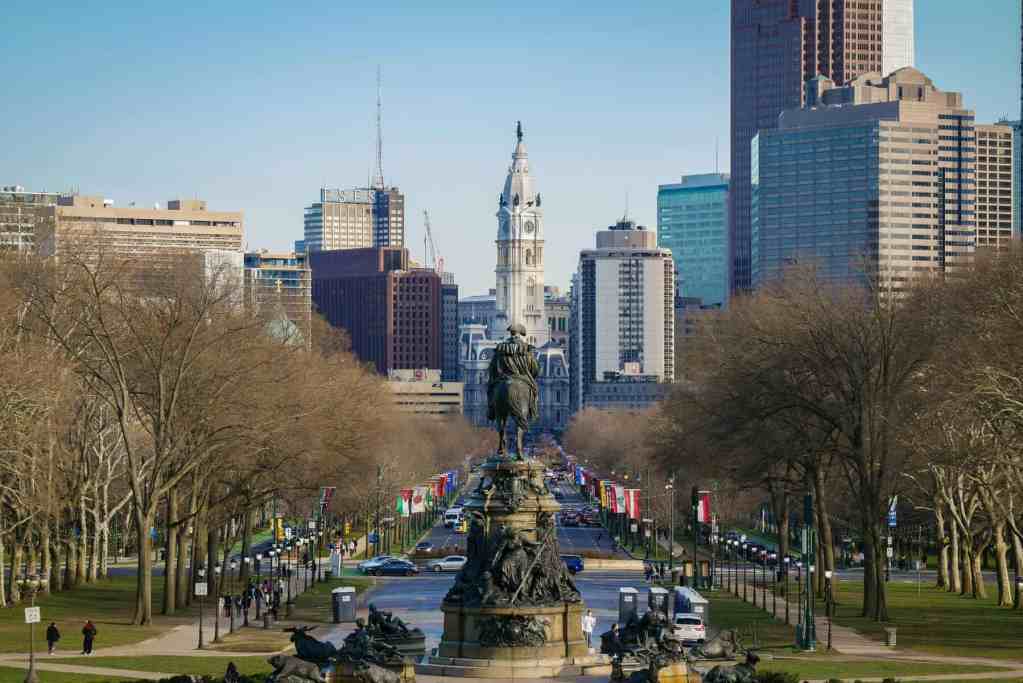
South Philadelphia is a working residential neighborhood, not a hotel district — you get three real options within walking distance and a much deeper bench in Center City fifteen minutes up the subway. The Broad Street Line makes that trade easy: stay somewhere more interesting and still be at the arena in twenty minutes door to door. Book early for a big concert weekend or a Flyers-Penguins date.
Best Areas to Stay
The stadium complex puts you walking distance from the arena and next to Stateside Live! Convenient, not scenic — it’s a parking district, and there’s nothing to do afterward beyond what’s on the grounds. Right call for a one-night, in-and-out trip.
The Navy Yard, southeast of the complex, is a redeveloped waterfront campus that’s quieter and greener than anything nearby, fifteen minutes on foot to the arena.
Center City — Rittenhouse and Washington Square — is where you stay if the trip is about Philadelphia and not only the game. Direct Broad Street Line ride to NRG, walking distance to the historic district, hundreds of restaurants instead of four. What I’d tell most out-of-towners.
Where to Stay for a Flyers, Sixers, or Concert Night
Live! Casino & Hotel Philadelphia is the splurge and the pick if you want the whole night contained in one place. Opened 2021 at the north edge of the complex, casino floor, five restaurants including a serious steakhouse. The tradeoff is that it behaves like a casino hotel — busy and bright at all hours. Walk to the arena rather than moving your car.
Courtyard Philadelphia South at The Navy Yard is the comfortable middle and the best-located conventional hotel around. Only hotel on the Navy Yard campus, roughly fifteen minutes’ walk to the arena, and calm in a way nothing else within a mile is. Little walkable dining, so plan on eating at the complex or in town.
Holiday Inn Philadelphia Airport-Stadium Area on Penrose Avenue is the value pick — six minutes from the arena by car with a complimentary 24-hour airport shuttle. A straightforward airport-corridor hotel that doesn’t pretend otherwise, but PHL is eight minutes away and the complex is barely further.
In Center City, look at the Rittenhouse Square cluster and walk to City Hall Station. Costs more, gives you an actual city between events.
Budget Options
The Holiday Inn on Penrose is the honest budget answer nearby — cheaper than anything at the complex, with a shuttle that saves you a rideshare each way, and you’re on an airport access road with nothing around it. Push further out and the Bartram Avenue hotels drop lower still at fifteen to twenty minutes by car. You give up any sense of being in Philadelphia; you save real money on a concert weekend when Center City rates spike.
Why You Should Go
This arena spent thirty years living in the shadow of the building it replaced, and it’s about to be replaced itself — on the Spectrum’s old footprint, no less, sometime around 2030. That gives it a strange, borrowed-time quality that’s worth experiencing while it lasts. What it offers right now is a heavily renovated bowl with genuinely good sightlines, food that punches well above arena standard, a scoreboard that’s still one of a kind, and a crowd that treats a Tuesday in February like it matters. Pair it with a walk down East Passyunk and a subway ride that costs less than a beer, and it’s one of the easier great sports nights in the country to put together.
Check out all of our arena guides as well as these Philadelphia staples:
Citizens Bank Park and Lincoln Financial Field
Written by Brad Richards. Founder of Gameday Guides. This guide includes insights from personal visits as well as updated info from team sources, fan forums, and stadium policies. We aim to help you plan with confidence — enjoy your gameday. If you have any tips, if we missed anything or you have a question, don’t hesitate to shoot us an email.