

| Category | Details |
|---|---|
| Home Team(s) | Utah Jazz (NBA), Utah Mammoth (NHL, starting 2024–25 season) |
| Opened | October 9, 1991 (originally Delta Center); renamed EnergySolutions Arena, Vivint Arena, then back to Delta Center in 2023 |
| Capacity | Basketball: ~18,175; Hockey: ~11,131 (increasing to ~17,000 after renovations); Concerts: ~20,000 |
| Best Value Seats | Upper-level corners & loge areas—budget-friendly with solid sightlines |
| Premium Seating | 56 suites and 668 club seats; multiple premium lounges (Delta Sky360®, Toyota Club, Gallagher Club) |
| Top Arena Foods | Mix of local-favorite vendors and standard concessions with mobile ordering |
| Nearby Bars/Eats | Restaurants & bars downtown, near Temple Square and convention area |
| Closest Hotels | Numerous downtown options within walking distance |
| Transit Access | TRAX light-rail (Arena station), bus lines, ample parking & bike options |
| Unique Highlights | LEED-certified; solar roof & LED video boards; named for hosting 2002 Olympic skating; acoustically revered “Decibel Center” for Jazz fans (110+ dB) |
🔍 Need a custom plan for your Jazz or Mammoth gameday?
Use our Gameday Guides Expert Tool for personalized tips on seating, food, transit, and nearby attractions at Delta Center.
Best Seats At the Delta Center
Delta Center is in the middle of something genuinely unique. Starting April 2025, they’re installing a revolutionary retractable seating system—the first-and-only one in any dual-sport arena. The system accommodates a nearly 12-foot variance in elevation between rink and court endlines to offer optimal sightlines for both NBA and NHL.
Here’s what matters for you: Every seat in the lower bowl will have a complete view of the ice at the start of the 2025-26 season, eliminating obstructed-view seats. When renovations are complete, hockey capacity increases to approximately 17,000 and Jazz capacity to nearly 19,000.
The catch? Construction continues through October 2027, but Phase 1 is mostly done for the 2025 through 26 season. You’ll notice some ongoing work, but the major seating improvements are already in place.
Jazz Games
Best Seats: Lower Bowl Sideline, Section (6 to 8 and 17-19): These are your primo seats. You’re along the sideline, center court, with unobstructed views of the entire floor. The retractable riser system keeps the steep slope that makes Delta Center famous for atmosphere—you’re still incredibly close to the action, just repositioned slightly by the new 12-foot-extended baseline seating.
The steepness of the new lower bowl means there’s significantly more leg room, especially behind the baskets where previously unusable space is now active seating.
What to expect: The best angles on plays, clear view of bench interactions, and genuinely close proximity to the court. Front rows (1-5) put you right on the sideline. Rows 10-18 maintain the view while giving you slightly more personal space.
Real talk: Jazz tickets on the secondary market range from $49 get-in price for Lakers games to $727 for premium seats. Weeknight games against non-marquee opponents run significantly cheaper. Jazz season ticket prices saw increases of 3-6% for most fans, which affects secondary pricing.
Tradeoff: Center sideline pricing is higher. If budget matters, corners (3-4, 9-11, 14-16, 20-22) deliver solid views at better prices.
Best Value: Lower Bowl Corner Sections (3 and 4, 9 to 11, 14 to 16, 20 to 22): Corner seats offer legitimate floor views without the center-court premium. You see the entire court, the corners give you unique angles on off-ball action, and the atmosphere is still electric.
The newly extended baseline seating doesn’t compromise corner sightlines—if anything, the elevated floor improves angles from the corners.
Real value: These run 20-30% cheaper than center sideline while still being in the thick of it. Tickets for non-marquee games can start as low as $1-5 on resale markets, though that’s rare. Realistic budget: $15-45 for regular season games.
Tradeoff: You’re slightly removed from the sideline/bench energy, but honestly, the view is excellent and the savings are real.
Upper Bowl (Sections 101 through 140): Upper bowl seating hasn’t dramatically changed from the baseline renovation—the elevated playing surface provides some improvement, but upper bowl views remain similar to previous seasons. Future renovations will address this in 2026-27 and 2027-28 offseasons.
Central upper sections (around 120-125 on sidelines) are your safest bet. You get full court view and decent proximity despite the height.
Budget play: Upper bowl season ticket prices remained unchanged for the 2025-26 season, meaning resale prices on upper bowl tickets tend to be more stable and affordable. Realistic range: $10-40 depending on opponent.
Tradeoff: You’re removed from the action, but if you’re watching basketball and just want the experience, upper bowl works fine.
Utah Mammoth Hockey Seating
Best Seats: LOWER BOWL CENTER ICE (SECTIONS 6-8, 17-19): This is where the renovation really pays off. Every seat in the lower bowl now has a complete, unobstructed view of the ice. This is genuinely revolutionary—most NHL arenas have significant obstructed-view sections, especially for hockey.
Center-ice positioning gives you the best angle on plays, line changes, and the flow of the game. The steep slope maintained for basketball means you’re still close to the action even in the upper rows.
What to expect: Clear sightlines of both ends of the ice, ability to track the puck easily, and the feeling of actually being part of the game rather than watching from a distance.
Ticket talk: Mammoth offer value ticket packages for just $15 with a Smith’s Rewards Card, including a single-goal view seat, hot dog, and water. On resale, tickets start from $23 depending on opponent and date. Average pricing likely runs $40-120 for regular season, significantly cheaper than NHL averages because Mammoth are new and still building fanbase. Keep in mind, these can change due to numerous factors. Think of this as ballpark
Tradeoff: Best ice-view seats still command premium pricing, but it’s significantly less than you’d pay at original-six or established NHL markets.
Best Value: LOWER BOWL ATTACK ZONE (SECTIONS 1-5, 12-16): Attack zone seating gives you focused views of offensive play and the goal. You’ll see scoring chances develop up close, penalty shots from excellent angles, and the energy of the bench area during momentum shifts.
The newly added lower bowl capacity includes seats behind the goals—formerly obstructed zones. These new seats actually have excellent sightlines now and are priced aggressively to fill them.
Real value: These sections represent the best value in the lower bowl. You get genuine hockey experience, clear views, and significantly better pricing than center-ice. Expect $25-60 depending on opponent.
Tradeoff: You’re not seeing the full ice at once—you’re focused on one end. But for the actual game action and atmosphere, this is genuinely solid.
Upper Bowl (SECTIONS 201-240): Similar to bball, Upper bowl hockey seating is still adjusting post-renovation. Upper bowl sightlines haven’t changed dramatically yet, with plans to tackle upper bowl improvements over the next two offseasons.
That said, upper bowl seats still offer full, unobstructed views of the ice. You’re just farther away than lower bowl, and some angle nuances are lost.
Budget play: Upper bowl is genuinely affordable for Mammoth games. Value packages exist, and tickets routinely appear on resale in the $20-50 range.
Tradeoff: Distance from the ice, less atmospheric intensity. But if you want to experience Utah Mammoth hockey without premium pricing, upper bowl works.
Premium Seating Options
The Delta Center sets the standard for premium arena experiences with multiple exclusive clubs and luxury suites designed for both sports and entertainment events. This info may be fluid with the renovations but ill try to keep it updated.
Exclusive Club Experiences
Entrata Club (Event Level): Located on Level 1 exclusively for courtside ticket holders. Features 240 club seats with upscale food and beverage options, halftime snacks, and premium access. Available to Row A baseline and Rows A-B sideline courtside seats.
Toyota Club (Premium Lower Bowl): The arena’s flagship club experience with 1,500 seats in sections 5-9 and 16-20 (rows A-12 sideline), plus sections 1-2 and 12-13 (rows A-2 baseline). Includes:
- All-inclusive food and beverages during Jazz games
- VIP parking for season ticket holders
- Private Toyota Club Lounge with dining tables, full-service bar, and private restrooms
- Access through Arena Doors 2, 5, or 8 (wristbands required)
Delta Sky360® Club (Suite Level): Ultra-exclusive with only 48 club seats offering panoramic arena views and luxury amenities on the LVT Suite Level.
Black Desert Club (Level 2): Exclusive 180-seat lounge with elevated food and beverages, halftime snacks, and full bar service through the third quarter. Available to Row C opposite sideline courtside seats.
Delta 360 Club: Premium club access for Row C player’s sideline courtside seats with upscale dining and beverage service.
Additional Premium Clubs
- Gallagher Club: Suite-level premium experience
- Interform Club: LVT Suite Level with beer, wine, soft drinks, and upscale buffets
- Aptive Lofts: New premium seating area in the upper bowl
Luxury Suites
The Delta Center offers 56 luxury suites across multiple levels with options for:
- Private Suites: Exclusive spaces for 12-20 guests
- Shared Suites: Premium experience with smaller groups
- Courtside Suites: Ultimate luxury at court/ice level
Suite Amenities:
- Comfortable seating and high-end décor
- Optional five-star catering (additional cost)
- VIP parking and private reception entrance
- Dedicated suite attendant service
- Climate-controlled environment
Pricing Notes:
- Premium seating prices vary significantly by opponent, day of week, and event type
- Jazz games: Club seats typically range from premium lower bowl ($200-800+) to courtside ($600-4,500+)
- Mammoth games: Currently more affordable as the market develops
- Suites: Contact Delta Center directly for custom packages and group rates
Renovation Impact: The 2025-27 renovation will add new premium spaces and enhanced amenities, with all improvements designed to maintain the intimate atmosphere while dramatically improving sightlines for hockey.

Tickets To Utah Jazz and Mammoth Games
- Get Utah Jazz and Utah Mammoth Tickets Here! Through our partners at Vivid Seats you can get tickets to any concert, event or Jazz, or Mammoth game at the Delta Center. Or any event in Utah from the Utes to BYU!
- Official Team Website: Visit the Utah Jazz official website and navigate to the “Tickets” section. There, you can purchase tickets directly from the team.
- NBA Ticket Exchange: The NBA has its own official ticket exchange platform where fans can buy and sell tickets securely. Visit the NBA website and look for the “Tickets” section.
- Secondary Market: Check out secondary marketplaces like Craigslist or Facebook Marketplace. However, exercise caution and ensure you’re purchasing from a reputable seller to avoid scams.
- Box Office: You can also visit the box office of the arena where the Utah Jazz play, the Delta Center, in person to purchase tickets directly.
- Season Tickets: If you plan to attend multiple games, consider purchasing season tickets directly from the team. This can sometimes offer better deals and additional perks.
- Group Tickets: If you’re attending the game with a large group, you may be eligible for group discounts. Contact the Utah Jazz ticketing office for more information on group ticket packages.
Delta Center Renovations
A revolutionary $525 million renovation began in April 2025 that will transform the Delta Center into the first-ever dual-sport arena with retractable seating, increasing hockey capacity from 11,131 to 17,000 seats.
Delta Center Seating Chart
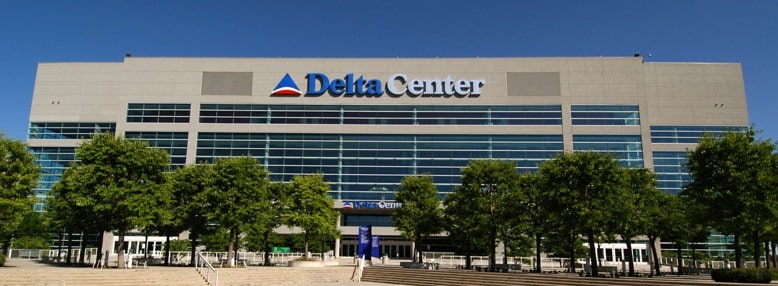
The capacity for basketball games at the Delta Center is 18,306 for Utah Jazz games. The arena can hold over 20,000 for concerts and other events where a stage takes up seating space on the arena floor. Here is the updated Seating Map to the Delta Center.
Regardless of the method you choose, it’s always a good idea to purchase tickets well in advance, especially for popular games or matchups, as they can sell out quickly.
Delta Center Policies
Like all arenas, please be aware that security measures, including bag checks and metal detectors, are in place upon entry to the Delta Center. Additionally, guests are encouraged to familiarize themselves with the arena’s parking options and utilize public transportation, such as TRAX light rail or UTA buses, for convenient access to events. For a full list of all updated policies check the arena website. Here is an overview and some tips:
Delta Center Bag Policy
- Bags that are clear plastic, vinyl or PVC and do not exceed 12″ x 6″ x 12″ are allowed after inspection. This includes clear one-gallon re-sealable storage bags.
- Small clutches (4.5′′ x 6.5′′) do not need to be clear, but are subject to search.
- No backpacks, large purses or bags of any kind are allowed. Exceptions may be made for medically necessary items after proper inspection at a gate designated for this purpose.
- No food or beverages from outside the arena are permitted. Unopened plastic water bottles up to 1 liter are allowed.
So in summary, small clear plastic bags, small clutches or medically necessary bags are allowed after being searched at the entrance gates. Larger purses, backpacks, food, drinks etc. are prohibited inside Vivint Arena. They have a clear bag policy to speed up entry and enhance security.
Additional Policies
Based on additional information from the Vivint Arena website, here is an overview of some of the main policies for the venue:
- Cashless arena: The Delta Center is a completely cashless venue, only accepting credit cards, debit cards and mobile payments (Apple Pay, Google Pay etc.). ATMs are available inside if needed.
- Prohibited items: Outside food and drink, weapons, controlled substances, noisemakers, bottles/cans, sticks/poles, masks, laser pointers are prohibited. Signs also have restrictions on size.
- Smoking: Vivint Arena is a smoke-free facility, including for vaping and e-cigarettes. Designated smoking areas outside the venue are provided.
- Ticket policies: Printed tickets or Mobile Entry via smartphone is required for entry. Strict ticket transfer and resale restrictions apply, including prohibiting sales above face value.
- Accessibility: Wheelchair and accessible seating options available. Service animals are allowed to accompany patrons. Elevators, accessible seating and restrooms also provided.
Parking At Delta Center
The Delta Center offers over 5,500 convenient parking spaces in surrounding surface lots and attached parking garages, with options ranging from $15 event parking rates in the lots to $25 event rates in the connected garages that provide direct indoor access to the arena.
- There are over 5,500 parking spots in parking lots surrounding the Delta Center. The main lots are Lot A, Lot B, Lot C, and Lot D.
- These lots are within a 5-10 minute walk of arena entrances. Lots B, C and D offer event parking rates ranging from $15-$20 per vehicle.
Parking Garages
- Two parking garages are connected to the arena – the Gateway East Garage and Gateway West Garage.
- The garages offer event parking rates, typically $25 per vehicle. The garages provide closest access into the Delta Center
City Creek Center Parking
- City Creek Center, the shopping mall attached to the Delta Center, offers parking rates in their garages. Rates are around $2 for the first 2 hours, then $2 per hour after that.
- So if attending a shorter event, you may be able park economically here. Access involves a short outdoor walk to arena entrances.
Nearby Lots & Street Parking
- There are various small private & public parking lots in the blocks surrounding Vivint Arena. Rates can be hit or miss in terms of value.
- Street parking is also available nearby, though much of it becomes metered or time restricted specifically for arena events. Check signs closely.
I’d recommend the parking garages for easiest access, but they come at a premium cost. Arrive early if you want to get one of the closer surface lots. Prepaying and taking light rail are other options to consider for convenience.

Public Transportation To The Delta Center
Besides driving yourself and parking onsite, The Delta Center stays easily accessible through TRAX light rail trains, multiple UTA bus routes, and the FrontRunner commuter rail, all converging downtown with stops located only short blocks or a TRAX station away from arena entrances.
TRAX Light Rail
- The Delta Center has its own stop at the “Arena” station on the Green Line. This line connects directly from Salt Lake International Airport.
- The S-Line Streetcar and the Red, Blue lines also meet the Green line downtown making multiple transfer options available. Fares ranging $1.50-$2.50 one-way.
- Check the link for Trax Light Rail Schedules.
UTA Bus Routes
- Several key bus routes stop adjacent to the arena: Routes 200, 205, 220, and 513 all stop near 300 W & S Temple Street.
- One-way local bus fares are $1.50-$2.50 depending on route. Day, month and annual passes are available.
- You can find Bus Schedules and Routes Here.
FrontRunner
- FrontRunner is UTA’s commuter rail providing service from Ogden to Provo. Trains arrive at Union station 3.5 blocks from Vivint Arena.
- Connecting with above TRAX lines is possible alongside bus routes there.
Tips
- Check schedules ahead for best transit connections
- Purchase fares via app, at stations or using Farepay card
- Parking lots at stations available for further destinations
In summary – the Green Line TRAX offers the most direct light rail route with enhanced service for events. Multiple bus routes stop on the block of the arena. Connections from FrontRunner trains are also feasible using the greater transit network.
Rideshare to the Delta Center
For those getting dropped off or using rideshare services like taxis or Uber/Lyft, the Delta Center provides a designated pick-up and drop-off zone located on 300 West Street right in front of the main entrance for easy passenger loading and unloading access.
Delta Center Insider Tips
The Delta Center is one of those buildings that looks pretty standard from the outside but has a bunch of little quirks once you’ve actually gone a few times. These are the non‑seating, non‑parking things that actually change your experience.
Use the Mountain Menu Like a Local Hack
For Jazz and Utah Hockey Club games, hunt down the “Mountain Menu” signs. You can get $2 bottled water and $3 hot dogs, nachos, popcorn, and Farr’s ice cream bowls at select stands, which is insanely cheap by arena standards. It’s available at core concession brands like Craft Shops, Tenders, Summit Snacks, and Farr’s Ice Cream on the main and upper concourses.
The catch: that fan‑friendly pricing is game‑only. Concerts and other events usually go back to “normal” arena pricing, so don’t be shocked when your total jumps for a tour show instead of a Tuesday Jazz game.
Timing Your Arrival
For team events, doors typically open about 90 minutes before game time, and that extra window is where you actually feel the arena at its best—short food lines, plenty of room to roam, warm‑ups on the court/ice, and a calmer vibe.
If you only show up 20–30 minutes before tipoff, you’re basically signing up for:
- Shoulder‑to‑shoulder concourses
- Long bathroom lines
- Having to choose between seeing introductions or grabbing food
Rolling in early once or twice will probably convert you.
Accessibility & Guest Services
If anyone in your group needs wheelchair assistance or accessible seating fixes, deal with it as soon as doors open. Wheelchairs are limited and handled through Guest Services once you’re inside; they can also help swap tickets into accessible locations if you didn’t purchase them originally.
The arena has a dedicated Guest Services line and on‑site desks; snapping a photo of the phone number or desk location the first time you go makes it much easier to solve problems quickly on future visits.
Drinking Culture, Utah Version
Because it’s Utah, the alcohol setup can feel a little different if you’re used to bigger markets. Expect:
- Beer and seltzers at most stands, with cocktails concentrated at bar‑style kiosks.
- Higher prices and tighter pour rules than your neighborhood bar.
A lot of locals pre‑game at Flanker or other bars in The Gateway, then grab a single drink or two inside just to keep the vibe going. If you’re being budget‑minded, that outside‑then‑inside rhythm is the move.
Hotels Near The Delta Center
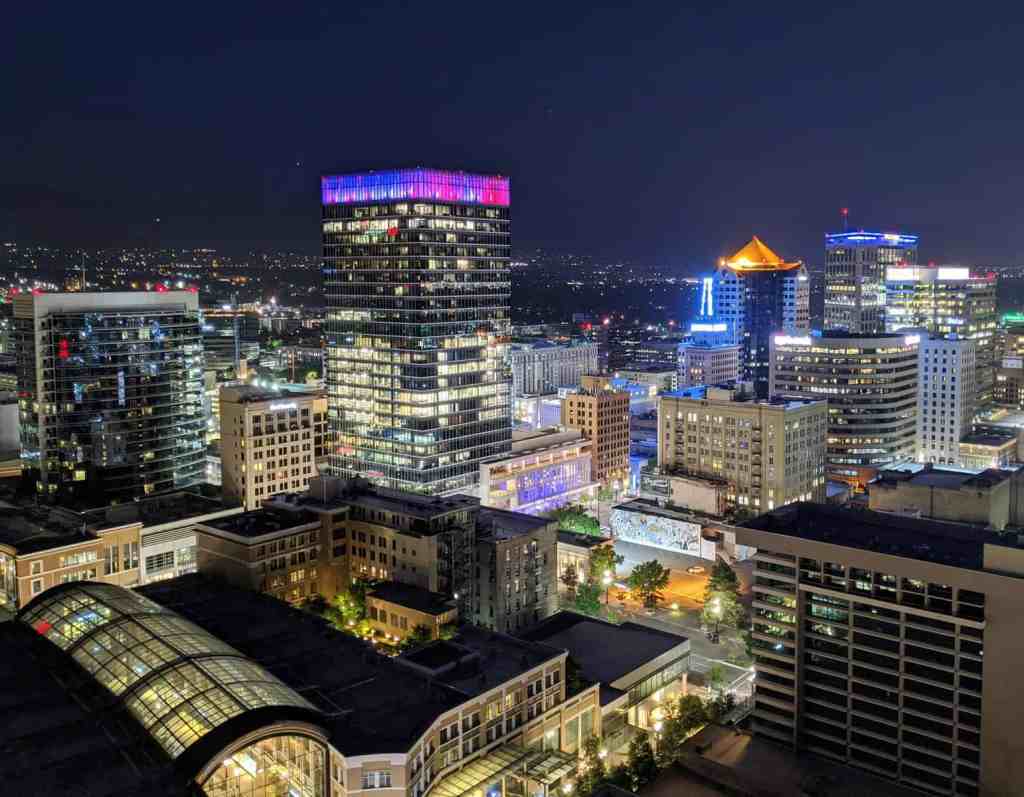
Directly connected to the arena via a private skybridge, The Westin Salt Lake City offers modern accommodations in the heart of downtown with views of the venue and proximity that can’t be beat, making it a top option for travelers in town catching events at Vivint. Additionally, conveniently located choices like the nearby Radisson Salt Lake City Downtown, the Salt Lake Marriott City Center, and the historic, European-style Grand America Hotel place guests within safe, easy walking distance to arena entrances.
- Radisson Salt Lake City Downtown: Just half a block away from the Delta Center the Radisson Salt Lake City Downtown offers another excellent accommodation choice for arena visitors. Featuring a restaurant, bar, pool, and hot tub, along with its own shuttle service for downtown transportation.
- Salt Lake Marriott City Center: Positioned two blocks from the Delta Center, the Salt Lake Marriott City Center is a top-rated 4-star hotel. Guests can enjoy upscale dining options, city-view rooms, and amenities such as spa services and a fitness center.
- Grand America Hotel: Just a ten minute walk to the arena, the Grand America Hotel impresses with its rich European aesthetic and five-star luxury accommodations. Indulge in complete spa services, exquisite dining options overseen by a master chef, and unmatched amenities, including mall-style shopping. With rates commonly exceeding $399 per night, experience elite comfort and convenience near Salt Lake City’s largest indoor event grounds.
- Courtyard by Marriott Salt Lake City Downtown: This hotel offers modern accommodations, a fitness center, and a restaurant. It’s located near the arena and downtown attractions.
- Element Salt Lake City Downtown: Featuring eco-friendly rooms, a complimentary breakfast, and a fitness center, this hotel offers a comfortable stay near the arena and other downtown destinations.
- Kimpton Hotel Monaco Salt Lake City: Known for its stylish decor and excellent service, this boutique hotel offers spacious rooms, a complimentary wine hour, and an onsite restaurant.
- Salt Lake Marriott Downtown at City Cree: Located near the arena and City Creek Center, this Marriott hotel features modern rooms, a fitness center, and a restaurant.
- AC Hotel by Marriott Salt Lake City Downtown: With a sleek design and contemporary atmosphere, this Marriott property offers comfortable rooms, a rooftop bar, and a fitness center.
- Hyatt Place Salt Lake City/Downtown/The Gateway: Situated in The Gateway shopping and entertainment district, this hotel offers spacious rooms, a 24/7 fitness center, and complimentary breakfast.
- Hotel RL Salt Lake City: A stylish hotel with comfortable rooms, an onsite restaurant, and a convenient location near the arena and downtown attractions.
- DoubleTree Suites by Hilton Hotel Salt Lake City Downtown: This hotel offers spacious suites with separate living areas, a rooftop pool, and a restaurant. It’s conveniently located within walking distance of the arena.
Budget Options:
- Hampton Inn Salt Lake City-Downtown: This budget-friendly hotel offers comfortable rooms, complimentary breakfast, and a fitness center. It’s located a short drive or walk from the Delta Center..
- Holiday Inn Express Salt Lake City Downtown: With modern rooms, a complimentary breakfast buffet, and a fitness center, this hotel provides good value for budget-conscious travelers.
- Comfort Inn Downtown Salt Lake City: Situated near downtown attractions and the arena, this hotel offers clean and comfortable rooms, complimentary breakfast, and an indoor pool.
These hotels offer a range of options to suit different budgets and preferences while providing convenient access to the Vivint Arena and other attractions in downtown Salt Lake City.

Restaurants & Bars Near Delta Center
Salt Lake’s food scene around the Delta Center punches way above what you’d expect for a smaller market. Most of the good stuff clusters at The Gateway and in the few downtown blocks you’ll naturally walk through on your way to the arena. Here are spots that actually make sense pre- or post-game.
- Mr. Shabu (Gateway): Japanese shabu-shabu hot pot with thin-sliced meats and veggies you cook tableside in bubbling broth. Great if you’ve got time to linger and want an interactive meal before a night game.
- HallPass Food Hall (Gateway): A big, buzzy food hall with multiple vendors under one roof: burgers, ramen, tacos, fried chicken, and more. Perfect when your group can’t agree on one cuisine or you’re trying to feed picky kids fast.
- Flanker Kitchen & Sporting Club (faces Delta Center) – High-energy sports bar right across from the arena with big screens, a solid cocktail program, and a menu built for sharing (wings, sliders, house-smoked BBQ, etc.). This is the closest “pregame hub” for Jazz and concert crowds.
These are somewhat nearby, but a bit further away from the arena so keep that in mind.
- Chile-Tepin: Sit‑down Mexican spot that works if you want a proper meal, chips and salsa, and margaritas before walking or ridesharing to the game.
- Crown Burgers: Local institution known for char‑grilled burgers stacked with pastrami; very Utah, very filling.
- White Horse: Cocktail‑forward gastropub downtown with legit drinks and upscale bar bites, better for adults’ night out than family pregame. A little further walk from the arena
- J Dawgs: If you know Utah, you know J Dawgs—it started as a BYU student’s hot dog cart in 2004 and became a local institution. Their Polish dogs with “special sauce” and all the fixings are legitimately good, not just “good for arena food.” I grab one every time.
Quick tip: For big games and weekend shows, plan to eat 90+ minutes before doors. Popular spots at The Gateway and around the arena get slammed with pre‑event crowds, and walk‑ins can see 45–60 minute waits if you show up right before tipoff. Reservations where possible plus a little buffer time will save your night

Fun Things To Do In Salt Lake City:
- Visit Temple Square: This iconic attraction is home to the stunning Salt Lake Temple, as well as other historic buildings and gardens. It’s a center of religious and cultural significance for the Latter-day Saints (Mormon) community.
- Explore the Utah State Capitol: The state capitol building features impressive architecture and beautiful views of the city and surrounding mountains. Guided tours provide insights into Utah’s history and government.
- Hike (or drive) in Big Cottonwood Canyon: Just outside the city, this canyon offers numerous hiking trails suitable for all skill levels. The scenery is breathtaking, especially during the fall when the leaves change color.
- Visit the Natural History Museum of Utah: This museum features a wide range of exhibits that showcase the natural wonders of the region, including dinosaur fossils, Native American artifacts, and interactive displays.
- Discover Red Butte Garden and Arboretum: This botanical garden and outdoor concert venue is a great place to explore lush gardens, diverse plant collections, and enjoy live music performances during the warmer months.
- Take a Day Trip to Park City: About 30 minutes from Salt Lake City, Park City offers fantastic skiing in the winter and a charming mountain town atmosphere year-round. You can also enjoy shopping, dining, and outdoor activities.
- Explore the Hogle Zoo: This well-maintained zoo features a wide variety of animals from around the world and offers educational opportunities for visitors of all ages.
- Enjoy Skiing and Snowboarding: In the winter, Salt Lake City is a gateway to numerous world-class ski resorts such as Snowbird, Alta, Brighton, and Solitude. These resorts offer excellent downhill and cross-country skiing.
- Hike in Mill Creek Canyon: Enjoy the outdoors by hiking in Mill Creek Canyon, which offers a variety of trails for different skill levels. The scenery is especially stunning during the fall when the leaves change colors.
- Explore Antelope Island State Park: This park, located in the Great Salt Lake, is home to a diverse range of wildlife, including bison, pronghorn antelope, and various bird species. You can hike, bike, or simply enjoy the natural beauty.
Whats old is new again! The Delta Center is back and is once again the home of the Utah Jazz and a hub for premier entertainment, recapturing the arena’s illustrious history and its significance as a sporting and cultural landmark in Salt Lake City. From its inception in the early 1990s, the arena has been synonymous with the Jazz’s legacy, witnessing iconic moments and serving as a formidable home court advantage for the team. We hope our guide serves as a comprehensive resource for visitors whether you’re attending a concert, show or a Jazz game, serving as a guide to this great city and arena. Go Jazz!
If you’re looking for other great sports journeys in Utah. Check out our guides to Utah and BYU football games as they become conference partners and kick the rivalry into high gear. Also some great arenas for you Jazz fans traveling or out of state.
Mortgage Matchup Center In Phoenix
Crypto.com Arena in LA and the Chase Center in SF.
Thanks for reading!
Written by Brad Richards, Founder of Gameday Guides. This guide includes insights from personal visits as well as updated info from team sources, fan forums, and stadium policies. We aim to help you plan with confidence — enjoy your gameday.