


Save the sheet above to your phone and don’t forget to explore all of our MLB Ballpark Guides!
Best Seats at Dodger Stadium
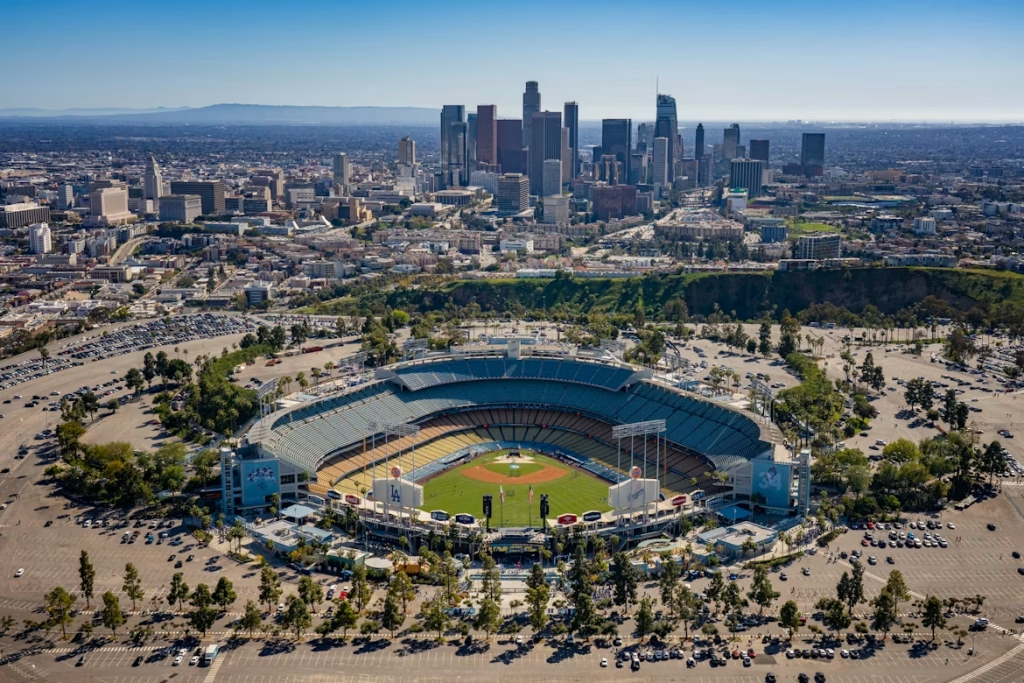
Dodger Stadium is the biggest ballpark in baseball, and right now it’s home to the best team in it. It opened in 1962 on a hilltop in Chavez Ravine just north of downtown Los Angeles, and at 56,000 seats it still holds more people than any park in the majors: a mid-century concrete bowl with palm trees on the ridgeline, the San Gabriel Mountains beyond the outfield and a hexagonal scoreboard over each pavilion. Only Fenway and Wrigley are older, and the team inside won back-to-back World Series in 2024 and 2025 with Shohei Ohtani at the top of the order, drawing more than four million fans in a season for the first time in franchise history.
The honest reality is that this is a 1962 building on a hillside ringed by freeways, and the sun on one side of the bowl and the crawl out of the lots punish anyone who wings it. But on the right night, this place is still magic. Here’s how to do it right.
Seating & Ballpark Overview
Dodger Stadium stacks its levels straight up the hill: Field, Loge, the Club and suite level, Reserve and Top Deck, with the two outfield Pavilions beyond the fences. The terraced lots are cut at the height of each deck, so you usually park and walk in at roughly the level of your seat. The letters after a section number tell you the tier (FD Field, BL Baseline, LG Loge, RS Reserve, TD Top Deck), and the number tells you the side: even sections are on the first-base side, odd sections on the third-base side, where the Dodgers’ dugout sits. That one detail decides your shade at a day game, and the steepness of the upper levels decides how far away you’ll feel.
Best Non-Premium Seats
Field Level infield, roughly 1FD–10FD, the first dozen rows. The closest regular seats in the building, low enough to read a pitcher’s grip and close enough that foul balls arrive faster than you expect. On big nights they price like premium, and the first-base half sits in full sun for day games.
Loge behind the plate and around the infield, the low 100s into the 130s. This is where longtime season-ticket holders sit: high enough to see the whole field and defensive positioning develop, close enough to hear the ball off the bat. The back rows tuck under the overhang of the level above, which matters from April through September.
Best Value Seats
Loge down the lines, the 130s and 140s, back half of the section. You give up the head-on angle for a noticeably lower price, and the overhang still covers the back rows. Stick to odd numbers for day games.
Reserve around the infield, roughly the 20s and 30s. Higher and farther back, but the whole field and both scoreboards sit in front of you, and the back rows are covered by the Top Deck. Third-base-side Reserve is the best sun-to-price ratio in the park.
Cheapest Seats at Dodger Stadium
Top Deck behind home plate, low rows. The cheapest seats with a straight-on view of the game, plus the best skyline and mountain view in the building. They’re exposed on a hot afternoon and breezy after dark, so bring sunscreen for day games and a layer for night games, and don’t expect bargain prices on marquee dates.
The outfield Pavilions. Bench seating in home-run territory with a younger, louder crowd and no shade at all. The angle on balls and strikes is poor, so treat it as a night-game atmosphere play.
Our Pick
Odd-numbered Loge sections from behind the plate toward third base (roughly 101–137), back half of the section. It’s the best mix of sightline, shade and price in Dodger Stadium, and the seat that makes first-timers say the view was better than they expected.
Dodger Stadium Shade: Where to Sit for Day Games
The third-base side is the shade side. Home plate faces roughly north, so the afternoon sun tracks across the first-base side and right field and sets behind the third-base side. For a 1:10 start, your safest bets are the back rows of the odd Loge sections, the back rows of Reserve under the Top Deck, and the back rows of the odd Field Level sections behind the Dodgers’ dugout, which pick up cover as the afternoon goes. Skip first-base Field Level and the right-field Pavilion for summer day games entirely.
At a 7:10 start, shade stops mattering by the second or third inning, but the first-base side and right field look straight into the setting sun early. Sunglasses, not sunscreen.
What to Avoid (and What’s Worth Trying Once)
The right-field Pavilion and outfield corners at a summer day game. Four hours of direct sun on a bench, with a flat angle that makes pitch-by-pitch hard to follow.
Back rows of the Field Level baseline corners. You’re paying a Field Level price for an outfield-corner angle, you’re still in the sun, and you get none of the elevation of a similarly priced Loge seat.
The highest outfield corners of Reserve and Top Deck. Cheap for a reason: a sharp angle back to home plate and a long way from anything happening in the infield.
Worth it once: the Pavilion on a fireworks night. The view of the pitching isn’t the point. The crowd, the shot at a home-run ball and the walk onto the outfield grass after the game are.

Premium Seating at Dodger Stadium
Premium seating here runs from field-level clubs behind the plate to suites on the Club level, and most of it is sold in multi-game packages rather than single games, so single seats usually surface on the resale market.
The Best Premium Experience
The club seats behind home plate between the dugouts, currently the Yaamava’ Dugout Club. These are the closest seats to the plate in the building, with complimentary food and non-alcoholic drinks, a full bar, in-seat service, private restrooms and restaurant-style seating in the lounge. Packages start at 20 games, so single seats that hit resale on a big night cost serious money. Splurge-once territory, and the famous faces in the front rows come with it.
Best Value Premium
The field-level baseline clubs, currently the Lexus Baseline Club: Sections 26BL–44BL on the first-base side and 27BL–45BL on the third-base side. The widest, most comfortable seats in the park come with the same all-inclusive food and non-alcoholic drinks, a full bar, in-seat service and private restrooms, for a fraction of Dugout Club money. Two caveats: alcohol is on your tab, and the view slides toward the corner as the section numbers climb, so target the low end of each range. Officially it’s a package product too, so look for single seats on resale.
Other Premium Options
Stadium Club Boxes sit on the balcony of the members-only Stadium Club at the end of the right-field line; they’re sold game-to-game to groups, with complimentary food and drinks available for purchase. The Home Run Seats sit just beyond the outfield wall in left and right field, the closest thing to a field-level outfield angle anyone gets. The Champions Lounge is the largest private event space in the stadium, with its own bar and an outdoor seating deck, built for company outings.
Suites & Group Options
The Bank of America Suites on the Club level give a group a private indoor space, an outdoor seating deck over the field, and catering ordered in. Pricing swings hard with the opponent and the day of the week, so a weeknight against a low-draw team pencils out far better than a Giants weekend; book through Dodgers Premium Sales, and go through group sales for parties of 15 or more.
Dodger Stadium Capacity and Seating Chart
Dodger Stadium’s capacity is 56,000, the largest in Major League Baseball, and it can’t get bigger. A conditional-use permit caps the stadium at that number, so every time the Dodgers added premium seats down low, they took seats out elsewhere to stay under it. The park was originally designed to expand to 85,000 by extending the upper decks over the pavilions; it never happened.
The field measures 330 feet down both lines, 375 to the alleys and 395 posted to center, the only symmetrical outfield left in the National League. Where do the Dodgers play? At 1000 Vin Scully Avenue, in Elysian Park just north of downtown and Chinatown. For section-by-section views, use the Dodgers’ official 3D Seating Map.
Getting Dodgers Tickets
Demand here tracks the opponent and the giveaway more than the calendar. The Giants, Padres, Yankees and the Freeway Series against the Angels price like events, and so do bobblehead nights, where some items are tied to special-event ticket packages, so read the listing before assuming the giveaway comes with any seat. The deals live on spring weeknights against low-draw opponents, when season-ticket holders flood the resale market and prices soften in the final day or two.
For a marquee game, buy early on the official site, where dynamic pricing only climbs; for a flexible weeknight, compare resale through our partner Vivid Seats and buy late. Southern California drivers should also watch for 76’s spring promotion in the Fuel Forward app, which has turned an eight-gallon fill-up at a participating station into a two-for-one Dodgers ticket code.

Dodger Stadium Bag Policy
Clear plastic bags up to 12″ x 12″ x 6″ and non-clear wristlets or clutches up to 5″ x 8″ x 2″ are allowed, along with diaper bags accompanying an infant. Backpacks, large purses, beach bags and hard or soft coolers are not permitted.
Outside food is allowed in that clear bag as long as it isn’t in glass, cans or thermoses, and you can bring factory-sealed non-alcoholic drinks in plastic bottles up to 1 liter plus an empty refillable bottle up to 1 liter. Umbrellas, noisemakers and camera lenses longer than 6 inches stay home.
Other Key Policies
Cashless. Cards and mobile wallets only; five cash-to-card kiosks around the stadium convert cash to a prepaid card with no fee.
No re-entry. Once you scan out, you’re done for the night.
No tailgating. Eating, drinking or congregating in the parking lots is prohibited before, during and after games.
Accessibility: accessible seating is on every level, accessible parking is in Lots B, D, G, I, L, N and P, and a courtesy shuttle runs from the lots to the gates; call the Dodger Hotline at 323-224-2611 once you’ve parked.
Fir a full list check out the handy Dodgers Policy Guide.

Getting To Dodger Stadium
For most visitors, the Dodger Stadium Express is the best way in: it’s free with a game ticket and runs in its own lane up Sunset Boulevard. Driving works fine if you pre-buy parking and plan your exit before you arrive.
Dodger Stadium Parking
Parking gates open 2.5 hours before first pitch. General parking is cheaper bought online in advance than at the gate, the gates don’t take cash, and for full-capacity games general and preferred parking can sell out, so pre-buying isn’t optional on a Giants weekend. Every parking gate connects to every freeway, so plan to leave by the gate nearest your lot rather than following the line of taillights; preferred parking puts you closer and lets you exit through any gate. You can get Dodger Parking Passes through our partner at Vivid Seats.
The hack: Exterior Lots 13 and 14 on Stadium Way. These first-come lots between Vin Scully Avenue and the 110 cost a fraction of general parking on the game days they’re open, and because they sit outside the stadium’s internal lot traffic, you’re on the street almost immediately after the final out. The price is a 10- to 15-minute uphill walk in. Here is a link to the Dodger Stadium Parking Map and overview on their website.
Dodger Stadium Express & Public Transit
From Union Station: buses board on the west side of the station, in front of the Fred Harvey building off Alameda Street, and run every 10 minutes starting 2.5 hours before first pitch. You’re dropped at the center-field gates, and return buses run until 45 minutes after the final out (or 20 minutes after a postgame show). Union Station connects to Metro’s A, B, D and J lines plus Metrolink and Amtrak, and there’s inexpensive parking at the station if you want to drive partway.
From the South Bay: buses leave Slauson, Manchester, Harbor Freeway, Rosecrans and Harbor Gateway Transit Center (Bay 9) every 30 minutes starting 2.5 hours out, with the last departure at game time. Return service starts after the 7th inning.
Metro buses 2 and 4 stop at Sunset Boulevard and Vin Scully Avenue, at the foot of the stadium road.
Rideshare to Dodger Stadium
Uber is the team’s preferred rideshare and can drop off at any auto gate; other car services use Gate B into Lot 1, and taxis drop on the first-base side of Lot I. After the game, rideshare pickups are consolidated in Lot 1 through Gate B, which means every car in the city is converging on one gate. Either wait 30 minutes out the surge or walk down to Sunset and request from there.
Walking From Chinatown
Chinatown station on the Metro A Line is the closest rail stop, a little over a mile away, with a pedestrian bridge over the 110 at the north end of Yale Street. It’s a real climb on the way in and an easy stroll down afterward, which makes it a smart way to skip the postgame parking crawl if you’re staying downtown.

Dodger Stadium Insider Tips
A good day at Dodger Stadium starts early and ends on your terms. Most of what separates regulars from everyone else is timing: when you walk in, when you eat and when you leave.
Dodger Stadium History: From Chavez Ravine to Blue Heaven
It went up in under three years on private money. Ground was broken on September 17, 1959, and the park opened on April 10, 1962, for about $23 million, the first MLB stadium built entirely with private financing since the original Yankee Stadium. The Dodgers had moved from Brooklyn in 1958 and played four seasons at the LA Coliseum while it was built.
The land carries a harder story. Chavez Ravine was home to a largely Mexican-American community that the city cleared through eminent domain for a public housing project that was never built, and the last holdouts were forcibly removed as the stadium plans moved forward. It remains part of how many Angelenos talk about the ballpark.
The design still works 60-plus years later. Engineer Emil Praeger’s plan moved 8 million cubic yards of earth to terrace the parking lots at the level of each deck, so fans drive up and walk in at the height of their seats. The zig-zag roofs over the pavilions, the hexagonal scoreboards and the pastel seat colors are all original ideas that survived every renovation.
Plenty of baseball history happened on this field. Sandy Koufax threw his 1965 perfect game here, Kirk Gibson limped around the bases after his Game 1 home run in the 1988 World Series, and the park hosted the 1980 and 2022 All-Star Games. Tommy Lasorda called it “Blue Heaven on Earth,” and the nickname stuck.
Dodger Stadium Renovations: What’s Changed
Janet Marie Smith has run the modernization since 2012. The architect behind Camden Yards and Fenway Park’s modern overhaul was hired after the 2012 ownership change, and the brief was to modernize everything without touching the look.
2013–14 fixed what you can’t see. New hexagonal HD video boards (the first 10mm 1080p boards in MLB), a new sound system, stadium Wi-Fi and a new power grid with seven substations came first, followed by wider pavilion concourses, bullpen overlook bars and new field-level entries.
2020 built the Centerfield Plaza. The $100 million project created a nearly two-acre plaza behind center field with the Jackie Robinson and Sandy Koufax statues, the Legends of Dodger Baseball plaques, a kids’ play area and the Home Run Seats, plus bridges and elevators that finally let fans walk a full 360-degree loop around the park. Fans got their first real look when crowds returned in 2021.
The steady upgrades since. The Japanese stone lantern moved to the Top Deck in 2024, the home clubhouse was expanded before 2025, and 2026 added a new team store on the Right Field Reserve level and The Habit Burger in right-center.
Uniqlo Field at Dodger Stadium: The New Name
The stadium is still Dodger Stadium; the field is Uniqlo Field. In March 2026, the Dodgers sold naming rights to the playing surface, the first corporate name in the ballpark’s history, in a five-year deal reported at more than $125 million. The official name is Uniqlo Field at Dodger Stadium, and nobody in LA calls it that.
Look above the batter’s eye. The biggest sign is the red Uniqlo Field lettering over the center-field batter’s eye, visible from the seats and from the Centerfield Plaza behind it, with more on the facade below the press box.
Getting In: Gates, Timing & Batting Practice
Stadium gates open two hours before first pitch. There’s no early entry for games starting before 1:30 p.m.
Use the MLB Ballpark app, because screenshots won’t scan. Tickets are digital only and the barcode has to be live. Register a photo for Go-Ahead Entry and you can walk through the Left Centerfield, Left Field Field Level, Right Field Field Level or Left Field Loge gates hands-free.
Want the bobblehead? Be early, or book the Pregame Tour. Giveaways usually run about 40,000 items for crowds that often top 50,000, handed out from gates-open until an hour after first pitch while supplies last. The Dodgers’ Pregame Tour starts about 3.5 hours before first pitch, guarantees the giveaway on applicable nights and includes watching the Dodgers take batting practice from the Pavilions. You need a game ticket and a tour ticket, and you enter through Gate E, the Downtown Gate.
Batting practice rewards the earliest entry. Season-ticket members get in three hours before first pitch through the Left Field Field Level entry, and the Pregame Tour gets you in earlier still. Everyone else should head straight to the outfield when the gates open to catch what’s left.
Dodger Stadium Food & Drink
Bring Philippe’s. Outside food is allowed in a clear bag, so the classic local move is a double-dipped French dip from Philippe the Original, the 1908 Chinatown institution at the bottom of the hill, carried right through the gates. It’s the best meal at Dodger Stadium, and they don’t sell it there.
If you want a Dodger Dog, find a grill. The steamed version is the one people complain about; the grilled one is why the Dodger Dog is famous.
Eat around the LA-leaning menu. The concession lineup turns over every season, but recent additions like the lomo saltado fry helmet and the cochinita pibil bone-marrow tacos that debuted during the 2025 World Series run are the ones worth hunting, and The Habit has a stand in right-center. The official food directory lists every stand by section.
Eat between the 2nd and 5th innings. Lines peak right after gates open and again around the 7th-inning stretch, and alcohol sales end after the 7th inning with a two-drink limit per purchase, so the last-call rush is real.
Drink with a bullpen view. The overlook bars in the outfield plazas put you at eye level with relievers warming up, and they’re open to every ticket holder. The Speakeasy, also called Tommy’s Bar, is a separate members-only room for season-ticket holders.
Dodgers Traditions & Stadium Culture
Listen to the organ. Dieter Ruehle, only the third Dodgers organist since 1971, needles visiting hitters with his song choices, and figuring out the joke is a game within the game.
Stay for “I Love L.A.” after a win. The lights, the song and 50,000 people singing along as the visitors walk off is the defining sound of the place.
Buy your 50/50 raffle tickets early. Sales run from gates-open to the end of the 7th inning, with half the jackpot going to one winner and half to the Los Angeles Dodgers Foundation.
Find the retired numbers down the left-field line. They’re mounted on the Club level facade near the left-field foul pole, alongside tributes to broadcasters Vin Scully and Jaime Jarrín.
Best Photo Spots at Dodger Stadium
Top of the Park at golden hour. The Top Deck behind home plate takes in the whole bowl, downtown, the San Gabriel Mountains, and on a clear evening the Hollywood Sign and Griffith Observatory. Ride the elevator up late in a night game even if your seats are on Field Level.
The statues and trophies in the Centerfield Plaza. The Jackie Robinson and Sandy Koufax statues are a first-visit must, and since the back-to-back titles the plaza has displayed oversized World Series trophy and ring replicas for photos.
The stone lantern at the Top Deck entrance. The eight-foot, 3,921-pound Kasuga lantern was a 1965 gift from Japanese sportswriter Sotaro Suzuki, who helped organize the Brooklyn Dodgers’ 1956 tour of Japan; the team moved it from a hillside garden to the Top Deck in 2024.
Bringing Kids to a Dodgers Game
Kids 3 and under get in free on a lap, but they aren’t eligible for giveaway items without a ticket.
Sunday day games end with Kids Run the Bases. Kids 5 to 14 can run the bases after most Sunday day games; line up outside the center-field gates as the game ends.
Fireworks and drone-show nights put families on the outfield grass. Fans can watch from the field after select games, as long as the game ends before 10:45 p.m.; there are no fireworks at all if it runs past 10:59.
Stop at a Fan Services Station first. They hand out free “1st Dodger Game” buttons, seat-location wristbands for kids and free sensory bags; stations are at Field Level Sections 3, 52 and 53, Loge 152 and 153, Reserve 31 and 32, and Top Deck Section 3. A sensory room sits on the first level of the Right Field Pavilion.
Strollers are allowed but can’t sit in the aisles. Check them at the Left or Right Field plazas on Field Level, or behind home plate on any level. Nursing lounges are in the Centerfield Plaza and on the Reserve Level.
Autographs & Player Access
Your window is batting practice and warmups at the field-level rail. Post up near either dugout or down the lines with a ball and your own pen from the moment gates open. The biggest stars rarely stop, and 50,000-plus fans means real competition; kids and visiting players are the better odds.
The VIP Tour is the guaranteed version. It puts you on the field during pregame warmups and batting practice, runs about two hours on game days, and is the closest a fan gets without a credential.
Dodger Stadium Tours & Off-Season Visits
Stadium tours run year-round, including the off-season. The 75-minute tour runs daily in English, in Japanese on Mondays, Wednesdays, Fridays and Sundays, and in Spanish on Saturdays, covering Top of the Park, the Vin Scully Press Box, the Club level museum with its 1962 lockers and old bullpen cart, the trophy gallery, and the dugout and warning track.
Book the Clubhouse Tour on a non-game weekend. It adds the home clubhouse, runs about two hours, and is only offered on non-game Fridays, Saturdays, Sundays and Mondays.
The garden tour is the sleeper. The Dodgers bill the grounds as the only stadium in the country recognized as an official botanic garden, and the Botanic Garden Tour on select Fridays walks the agave and succulent plantings around the lots.
Dodger Stadium Concerts & Events
It’s one of LA’s great concert stages. The Beatles, Elton John’s two famous 1975 shows and his final North American farewell dates, and Lady Gaga have all played here; the field becomes a floor section and the seating chart changes by tour, so check the event-specific map before buying.
Olympic baseball is coming back. Dodger Stadium hosted baseball at the 1984 Olympics and is set to host it again at the LA28 Games.
Leaving Dodger Stadium
Take the Express home. The buses use a dedicated lane down Sunset, so they slide past the car traffic while the lots are still crawling.
Pick your exit gate before the game, not after. Every gate reaches every freeway, and the gate nearest your lot is almost always faster than the one your GPS picks.
If you drove, don’t sprint to the car. The first half hour after the final out is the worst of it; a lap of the concourse or a stop at the team store costs you nothing.
Dodgers Team Store & Merch
Top of the Park is open without a game ticket. The flagship store behind home plate on the Top Deck is open daily from 10 a.m. to 5 p.m. on non-game days, as well as during games.
Customize a cap in the Right Field Plaza. The New Era Championship Store sells exclusive patches to add to your hat on the spot.
Skip the concourse crowd with the merch truck. A merchandise truck parks on Vin Scully Avenue before games, then moves to the rideshare lot during the game.
Dodger Stadium Quirks Worth Knowing
No signs or banners, period. The ban covers the seats, the concourses and the parking lots, and nothing can hang over the railings.
Refill your water in center field or the Loge. Filling stations are in the Centerfield Plaza and at Loge Sections 152 and 153.
The 76 ball still spins. The historic 76 station in the lots, a nod to a sponsorship dating to 1962, now houses public restrooms outside the gates (closed on fireworks nights), and the orange ball is visible from inside the stadium.
Text LADFAN to 69050 for help at your seat. It reaches Fan Services for anything from a broken seat to an unruly neighbor.
Things to Do Nearby
Got a full LA weekend around the game? Elysian Park wraps around the stadium, LA’s oldest public park, with trails and skyline views that make a good pregame morning. Chinatown and Olvera Street sit at the bottom of the hill for food and a walk through the city’s oldest block. Little Tokyo, a short hop from Union Station, is a fitting stop in the Ohtani and Yamamoto era.

Hotels Near Dodger Stadium
Stay downtown or near Union Station if you want to ride the Express; stay in Pasadena if you want quiet and don’t mind a 20-minute drive down the 110. Avoid the Westside, where the evening drive to Chavez Ravine is its own endurance event.
Best Areas to Stay
Downtown’s Bunker Hill puts you closest to the stadium and a short hop to Union Station. Little Tokyo and the Arts District are walkable to Union Station and full of places to eat after the game. Old Town Pasadena trades proximity for a calmer, walkable base with its own restaurant scene.
Hotel Recommendations: Downtown to Pasadena
Omni Los Angeles Hotel at California Plaza. The closest major hotel to the ballpark, on Bunker Hill about a mile and a half away, with polished service and a house car for short downtown hops. The comfortable splurge.
Conrad Los Angeles. Frank Gehry designed it, it faces Walt Disney Concert Hall on Grand Avenue, and the rooms and views are the best of this group. The true splurge.
The Hoxton, Downtown LA. A restored 1920s building on South Broadway with a rooftop pool and a lively bar. It’s farther south, so figure a rideshare or Metro ride to Union Station, and parking is a hassle.
DoubleTree by Hilton Los Angeles Downtown. In Little Tokyo with a Japanese garden terrace, and walkable to Union Station and the Express. Rooms are dated, but the location earns it.
Courtyard by Marriott Los Angeles Pasadena/Old Town. I stayed here when I went to a Dodger game, and I thought it was a solid hotel — Old Town’s restaurants and shops are a walk away, the pool is a nice pregame hangout, and the drive down the 110 is straightforward.
Budget Options
Freehand Los Angeles. An affordable, well-kept historic building downtown with a rooftop pool and a good bar. The surrounding blocks get rough late at night.
citizenM Los Angeles Downtown. Small but smart rooms, tablet controls and a lively lobby. The location near Skid Row is the tradeoff.

Bars/Restaurants Near Dodger Stadium
There’s no tailgating at Dodger Stadium, so where you pregame depends on how you’re getting up the hill. Express riders start at Union Station and Little Tokyo. Anyone walking or taking a rideshare in from the east side drinks on Sunset Boulevard in Echo Park. Fans staying in Pasadena watch the early innings of road games and do their postgame in Old Town. Chinatown, at the foot of the hill, is where everyone eats.
Best Bars Near Dodger Stadium
Imperial Western Beer Company at Union Station is brewed in-house and sits inside the old Harvey House restaurant, the same building the Express boards in front of, so you can finish your pint and walk straight to the bus line. The Streamliner next door is the smaller, darker cocktail bar in the same building. Far Bar in Little Tokyo is a local’s bar with good food, a happy hour and a Dodgers crowd, a short walk from Union Station.
El Compadre in Echo Park is the flaming-margarita, mariachi-band institution on Sunset, packed before and after games. The 35er and Barney’s Beanery (my fave) on Colorado Boulevard are Old Town Pasadena’s Dodgers bars if you’re driving in from the 110 side.
Best Restaurants Near Dodger Stadium
LaSorted’s in Chinatown is a New York-style slice shop wall-to-wall with Dodgers memorabilia, named as a nod to Tommy Lasorda. Amboy in Chinatown’s Far East Plaza makes some of the city’s most talked-about smash burgers. Little Fish in Echo Park does a fried fish sandwich worth planning around, but it closes at 4 p.m. and is shut Mondays and Tuesdays, so it’s strictly a day-game move.

Why You Should Go
Come for the view that hasn’t changed since 1962: the mountains going purple beyond the outfield, the downtown skyline lighting up past left field, the palm trees turning black against the last of the sun, and 50,000 people in blue watching the best team in baseball in the biggest ballpark it has. Few places in sports carry this much history and this much of the present at the same time. Dodger Stadium still has that magic.
Go to a summer night game, if you can swing it a playoff game, get there when the gates open, and ride the elevator to Top of the Park before first pitch — that’s the picture you’ll keep.
Explore all of our MLB Guides and these great stadiums and arenas in Southern California:
Angel Stadium in Anaheim and Petco Park In San Diego
The Rose Bowl and The Coliseum
Crypto.com Arena and Intuit Dome
Written by Brad Richards. Founder of Gameday Guides. This guide includes insights from personal visits as well as updated info from team sources, fan forums, and stadium policies. We aim to help you plan with confidence — enjoy your gameday. If you have any tips, if we missed anything or you have a question, don’t hesitate to shoot us an email.