
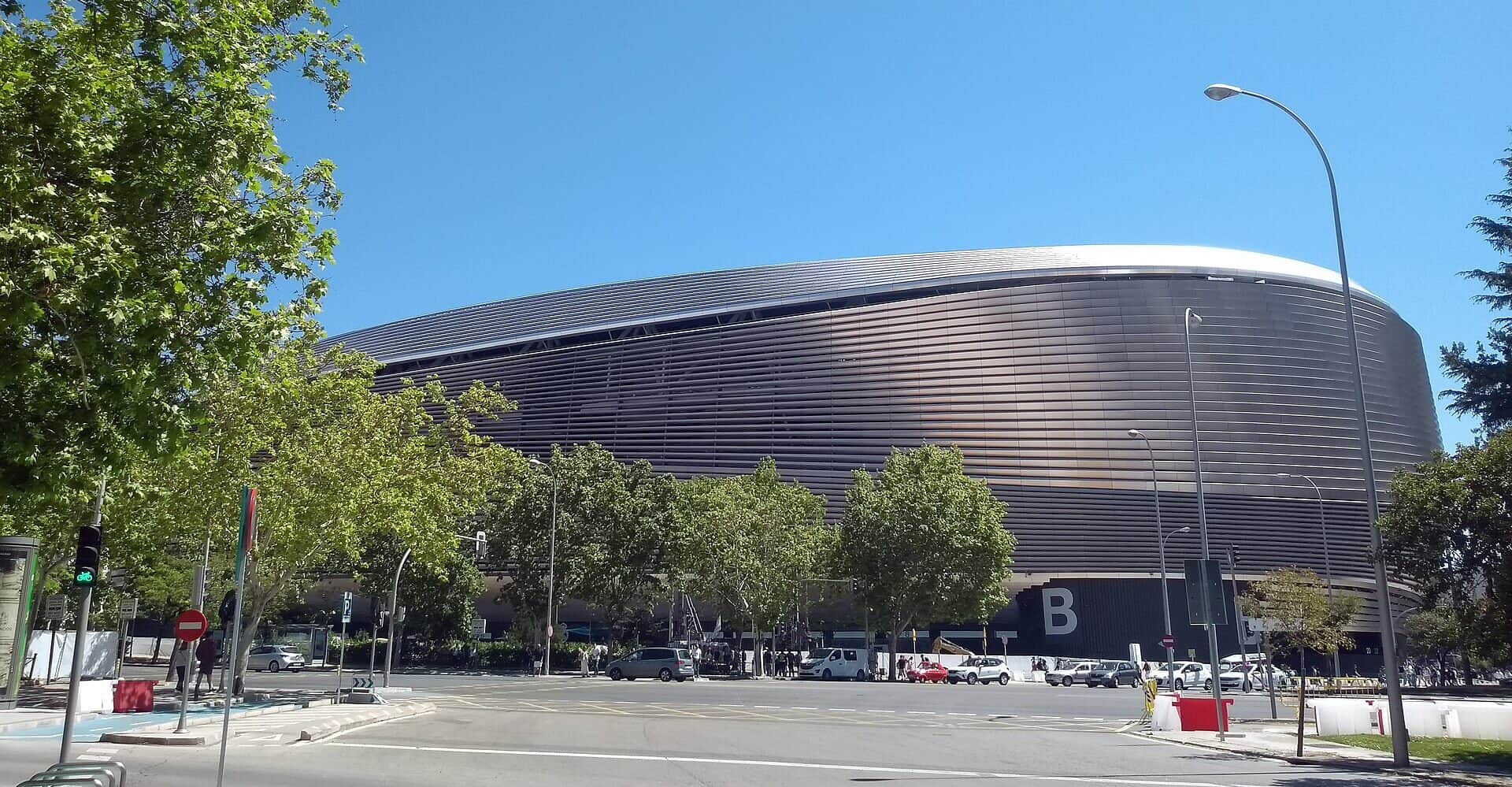

There is no building in world football quite like it. The Santiago Bernabéu has been Real Madrid’s home since 1947, when it opened as the Nuevo Estadio Chamartín; it took its current name in 1955, after the club president who built it, Santiago Bernabéu. The stadium you walk up to today, though, is barely three years out of a billion-euro reinvention — wrapped in roughly 7,500 curving stainless-steel slats, topped with a retractable roof, and built over a pitch that can sink into an underground chamber so the stadium can host almost anything. It is the home of 15 European Cups and the most decorated club in the game, and it now receives more daily visitors than the Prado Museum.
Here is the honest reality before you go: the Bernabéu serves four very different visitors, and most guides only speak to one of them. Some of you are coming for a match. Many more are coming for the tour, which is one of Madrid’s top attractions whether or not you support Real Madrid. A growing number are coming for an NFL game or a one-off event. And around Christmas, the whole place becomes something else entirely. This guide covers all of it — starting, as it should, with where to sit when Real Madrid play.
Match, Tour, or Event? Start Here
If you are attending a Real Madrid match, continue to the seating guide below — that is the heart of this guide. If you are visiting for the Bernabéu Tour (the self-guided walk through the museum, trophy room, dressing room and out to the pitch), go to the tour section; you do not need a match ticket, and it runs almost every day of the year. If you have tickets to an American Football (NFL) game, a concert or another event, the seating logic is different, and there is a dedicated section for you. And if you are here in late December, the Mavidad section is the one you want. Madrid searches this place in Spanish as much as in English, so you will see it written as estadio Bernabéu, el Bernabéu, or simply Real Madrid stadium — it is all the same cathedral.
Seating Guide
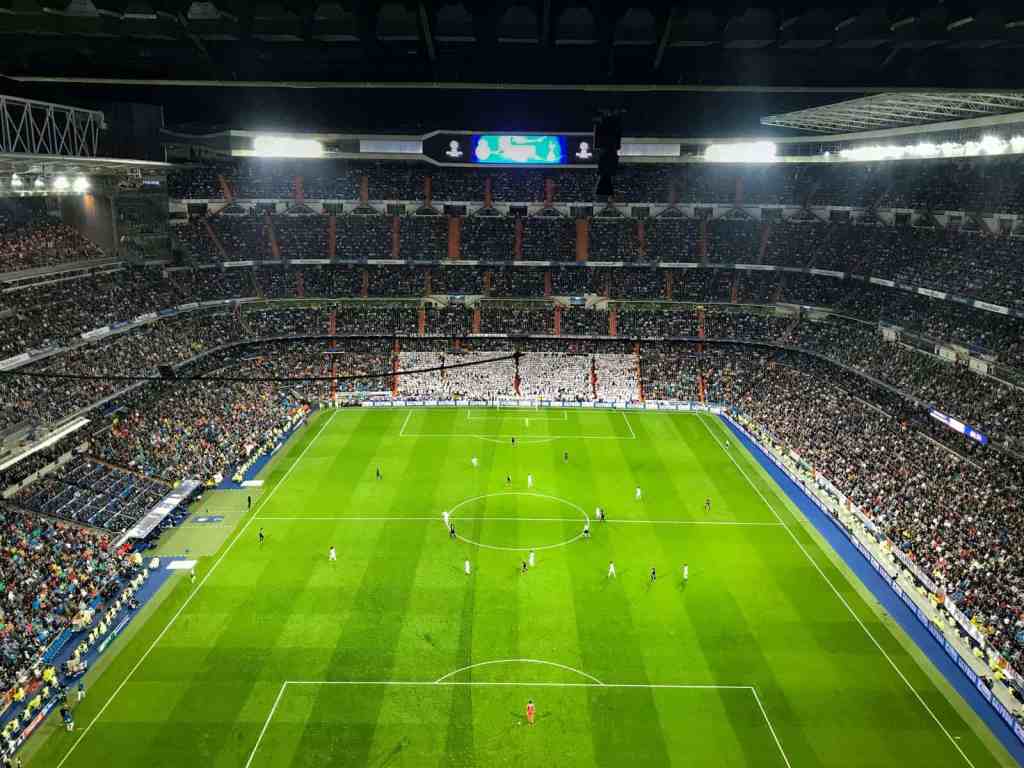
The Bernabéu is a steep, four-sided bowl that holds a touch under 80,000 for football — you’ll see figures quoted anywhere from about 78,000 to 83,000 depending on the source and the configuration, because the renovation added premium space and the ends can now be reconfigured for events. The four stands are named by compass point: Lateral Este (east) and Lateral Oeste (west) run the length of the pitch, while Fondo Sur (south) and Fondo Norte (north) sit behind each goal. Stacked above each other are the tiers — the lower Grada/Tribuna, then the Anfiteatros (amphitheatres) rising to the fourth.
The whole game here comes down to one trade-off: a tactical view from the sides, or raw atmosphere behind the goals. The sides give you the sweep of play; the ends give you the noise. And because this is a properly tall, steep stadium, how high you sit matters as much as which stand you choose.
Best Non-Premium Seats
For the best view in the house without paying for hospitality, you want the Lateral Oeste (west side), low-to-middle tiers, as close to the halfway line as you can get. This is the long side opposite the dugouts, and the sightlines down the pitch are superb — you read the game the way a coach does, with both penalty areas laid out in front of you. It’s the sweet spot most experienced visitors point newcomers towards.
The Lateral Este (east side) is the other long side, home to the dugouts, the tunnel and most of the premium and hospitality areas. The lower-to-middle sections here give you a similar quality of view to the west, with the bonus of watching the managers work the touchline directly below you. You’ll often pay a little more for the privilege.
If you care more about feeling the match than analysing it, aim for the Fondo Sur (south end). This has been the loud end since the 1950s, and today it’s anchored by the Grada Fans RMCF, the organised supporters’ group in the lower tier who lead the singing and put on the occasional tifo display. A seat in the first amphitheatre directly above them gives you the noise without being buried in the standing crowd.
Best Value Seats
The reliable value choice at any tall three- or four-tier stadium is the bottom few rows of a middle tier — high enough for a clean, elevated read of the pitch, low enough that you do not feel far away. At the Bernabéu, that means the lower rows of the first or second amphitheatre on either lateral. You give up a little proximity and pay a fraction of what the lower bowl costs.
Budget Option
For the cheapest way in, look behind the goals (the Fondos) or high in the upper amphitheatres, especially for lower-profile league fixtures. The view is honest — distant and high, but complete — and against smaller opponents these seats can be genuinely cheap. Just know what you are buying: up in the Cuarto Anfiteatro (fourth amphitheatre), the rake is famously severe.
Our Pick
If you are visiting for the first time and you want the seat I would actually recommend to a friend, take the Lateral Oeste, lower bowl or first amphitheatre, near the halfway line. It is the cleanest view of the best players in the world on that famous pitch, it is not behind glass, and it is the version of the Bernabéu you picture in your head. Pay for one tier lower if the budget allows; the lower bowl here is special.
Weather & the Roof
The old Bernabéu was open to the Madrid sky; the new one has a retractable roof, which changes the old “sit in the shade” advice completely. For many matches and events the roof can be closed, sheltering the entire bowl from sun or rain. For open-roof daytime fixtures, the high western and eastern flanks catch the most sun, but with the roof in use it is rarely the deciding factor it once was. The bigger weather reality is simply Madrid: very hot in high summer, genuinely cold on winter nights, so dress for the season either way.
What to Avoid (and What’s Worth Trying Once)
The very top of the Cuarto Anfiteatro: the fourth amphitheatre is so steep that locals only half-joke about vertigo. You watch the match almost from directly above, like a chessboard, and the climb is not for anyone uneasy with heights. The view is complete but distant, and the seats are a workout to reach. For a marquee match you’re paying premium prices even up here now, which is the part that stings.
Restricted-view edges: as in any rebuilt bowl, a handful of seats sit behind a rail, a screen support or under a low overhang. On resale sites these are usually flagged — read the seller’s notes before you buy and don’t assume every “cheap” seat in a good section is a clean one.
Worth it once — the Fondo Sur: behind the south goal you won’t get the tidiest tactical view, and you may spend long stretches on your feet. But if you want to feel why people fall in love with this club — the songs, the flags, the surge when Real score — stand with the Grada Fans end at least once. It’s the emotional core of the ground, and the sightline is a fair price for it.

Premium Seating & Clubs
The renovation invested heavily in hospitality, and most of the premium product sits in the Lateral Este, with some across in the Lateral Oeste as well. Because lounge and club names change with sponsorship deals, the clearest way to think about it is by level of experience rather than this month’s branding. Real Madrid sells these through the club’s official hospitality channels, and they go on sale earlier than ordinary match tickets.
The matchday-premium level typically pairs a good seat with an off-site lounge near the stadium — a drink and a buffet before kick-off, then your seat for the match — and tends to start around €300 per person. In-stadium hospitality, where you have a lounge a few steps from your seat with food and an open bar before, during and after the game, starts from roughly €990 and rises depending on the fixture. Both put you in the laterals with the best views in the building.
Suites and group options exist for those who want a private box; these are booked through the club’s hospitality team and priced to match. Expect a smart-casual dress code across hospitality — no sportswear, no away colours — with service generally running from a couple of hours before kick-off until thirty minutes after the final whistle.
Santiago Bernabéu Seating Map
After the renovation finished in late 2024, the Santiago Bernabéu seats an official 83,186, making it one of the largest stadiums in Europe. That is the full football figure; for NFL games and other events the lower ends are reconfigured with temporary structures, so the capacity for those drops to roughly 78,000.
Reading the official chart is simple once you know the names. The two long sides that run the length of the pitch are the Lateral Oeste (west) and Lateral Este (east); the two ends behind the goals are the Fondo Norte (north) and Fondo Sur (south). Each of those is then stacked vertically, from the lower Tribuna / Grada Baja up through the Anfiteatros — the first, second, third and fourth amphitheatres — which rise and grow steeper as you climb. The pitch itself is a standard 105 by 68 metres.
Every section is numbered around the bowl on the club’s interactive map, so the easiest way to picture exactly where a seat sits is to hover over it on the official interactive seating map at the Real Madrid website.
Getting the Best Tickets
Real Madrid prices by category — tied to the opponent, the competition, and where you sit, with the laterals (sides) costing more than the fondos (goal ends) and the lower tiers ranking higher. The key thing for a visitor is the sales order: season-ticket holders and members (socios and Madridistas) get first choice, and only the leftovers reach the general public — for El Clásico against Barcelona, the derby against Atlético, or a Champions League knockout, that can be almost nothing. So buy early, since prices tend to be lower a few weeks out and smaller league or Copa del Rey games are often easy to get as a non-member.
If you mainly want the Bernabéu experience, target a midweek game against a smaller side — a fraction of the price and far easier than a glamour night. One quirk to plan around: LaLiga confirms exact kick-off dates and times only about a week ahead, so booking flights months out means committing before the schedule is fixed — allow some flexibility.
Is the Madridista Card Worth It?
For non-members chasing face-value league seats, often yes. Around €35 a year, the Premium card unlocks a priority buying window ahead of the public sale and includes 20% off the Bernabéu Tour — for a single big match, that can be the difference between face value and paying double on resale, so many visitors treat it as a reasonable cost of entry. And know that the official realmadrid.com portal is glitchy: “invalid session” messages, timeouts, and foreign cards declining right at checkout are all common. Before you give up, clear your browser cache or switch browsers, refresh patiently for ten to fifteen minutes during a busy on-sale, and keep a second card ready — many visitors get through on the second or third attempt.
For most international visitors, the site will read “sold out” long before you arrive, and the realistic route to a guaranteed seat is a reputable resale marketplace. Prices there sit above face value for big games but often fall in the final 24 to 48 hours as sellers release stock, so track a fixture rather than buying on impulse. Whatever you do, never buy from the touts outside the ground — fakes are common, and the club runs checks.

Santiago Bernabéu Bag Policy
Keep it small. Anything larger than roughly A4 size — backpacks, holdalls, suitcases — is not allowed inside, and importantly there is no cloakroom or locker service in the stadium. Bring a small handbag, clutch or clear bag to move quickly through the security check, and if you arrive with luggage, use one of the paid left-luggage points near the ground or elsewhere in the city rather than turning up and being refused at the gate.
Key Venue Policies
A few things that catch people out. You can bring a small plastic water bottle (up to 50cl) but only with the cap removed — they’ll make you take it off at security. No alcohol may be brought in, and it’ll be confiscated. No pets, and the stadium enforces a strict ban on political or offensive flags and symbols. Smoking is prohibited inside, with designated areas outside only. For big matches and European nights the security screening is thorough, so give yourself time (see arrival, below).
Cashless: Treat the Bernabéu as a card-and-contactless venue — payment inside the modern concourses, shops and food points runs on cards and phones, so carry a contactless card or have your phone set up rather than relying on cash. It’s the same story at most of the surrounding bars and restaurants in this business district.
Accessibility: The renovation improved step-free access considerably, with designated wheelchair positions, companion seating, ramps and lifts, and accessible entrances. Wheelchair users must hold the correct tickets for the adapted areas. One honest caveat that applies to the tour as well as matches: the very top tier (Cuarto Anfiteatro) has no lift access, and the tour route itself includes several flights of stairs, so it isn’t suitable for everyone with mobility needs.
Full policy details: the official access regulations are published on realmadrid.com.
Getting to the Santiago Bernabéu
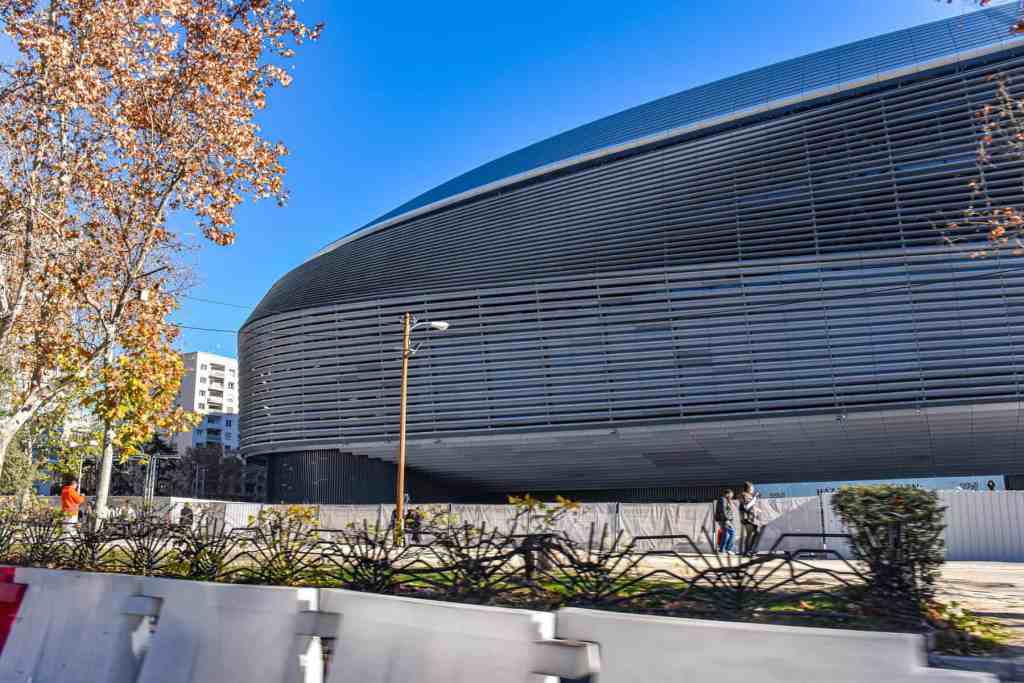
The stadium sits on the Paseo de la Castellana in the Chamartín district, and public transport is by far the best way in. The address is Avenida de Concha Espina, 1, 28036 Madrid.
Metro. The simplest route is Line 10 (the dark-blue line) to the Santiago Bernabéu station, which surfaces right at the ground. From the centre — Sol or Gran Vía — it takes about 15 to 20 minutes. One current note: the Bernabéu stop has been subject to closures during station-improvement works, so if it is shut, Cuzco (the next stop north on the same Line 10) is roughly a five-minute walk and a dependable backup.
Arriving from the airport at night. If you are coming straight from a flight to an evening match, take Metro Line 8 (the pink line) from the airport to Nuevos Ministerios, then change to Line 10 (dark blue) and ride one stop north to the stadium. On matchday this is faster and cheaper than a taxi or rideshare, which get caught in the gridlock around the ground — avoid the road if the clock is tight.
Bus and rail. Several city buses pass the stadium (lines including 14, 27, 40, 43, 120, 147 and 150). If you are coming from out of town, take a train to Chamartín station and change onto Line 10.
Taxi and rideshare. A taxi from the centre costs around €10 to €12 in normal traffic. On matchdays, expect drop-offs and pick-ups to be pushed a few streets back from the ground, with higher prices afterwards — walking a couple of blocks before you order a car saves both time and money.
Driving and parking. There are several public car parks around the Castellana and the surrounding streets, but spaces are limited and the area becomes very congested on matchdays. Unless you have a specific reason to drive, the Metro is the better choice
The Bernabéu Tour, Christmas and Events
The Bernabéu Tour, a self-guided walk through the club’s world — the trophy museum (all those European Cups in one room), panoramic views over the bowl, the players’ tunnel, the pitch-level benches, and the first-team dressing room, now layered with the renovation’s immersive screens and projections. It takes about 90 minutes and runs daily except 25 December and 1 January. The standard Classic ticket starts around €30 for adults (reduced for children and seniors, free for the very young, and 20% off for Madridista holders) — book on the official Real Madrid site to avoid resale mark-ups, and check the live price, as it shifts around events.
The self-guided tour is usually easy to get on the day; the guided and VIP tours sell out days ahead, so book those early. One rule overrides everything: on match days and the day before, the route is cut back to the museum and panoramic view only, with the dressing room and benches closed. If walking out to the dugouts is the part you care about, go on a non-match day. The entrance is on Avenida de Concha Espina, and it can sell out on big-match and Champions League weekends.
NFL & Non-Football Events
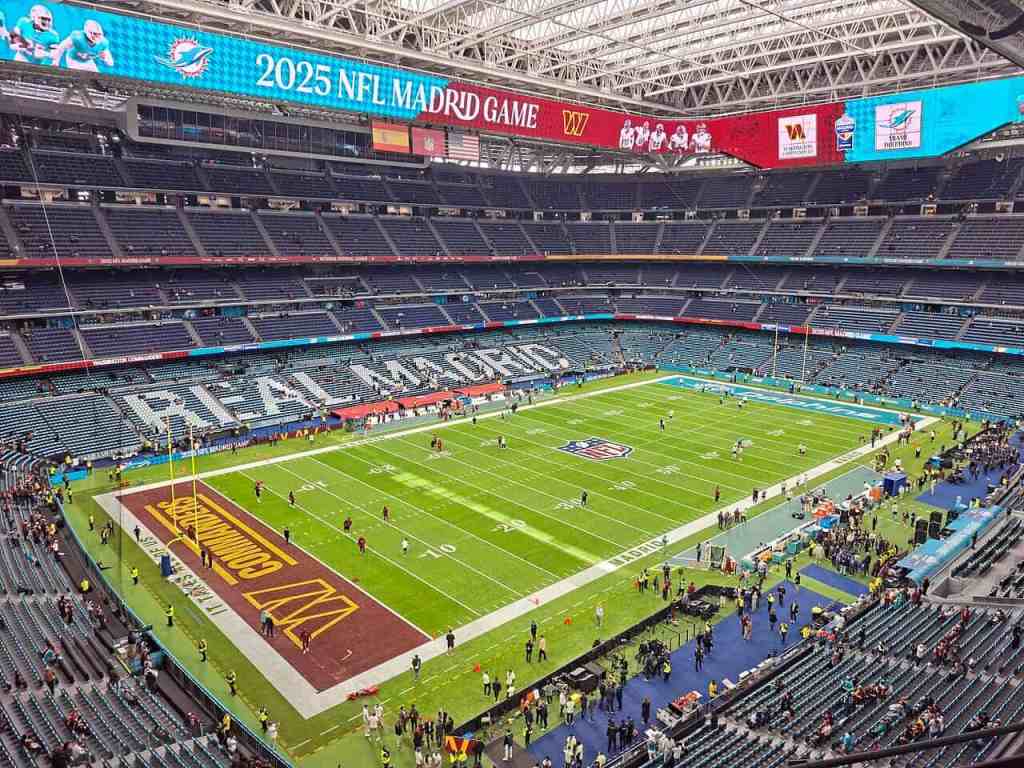
The retractable pitch turned the Bernabéu into a true multi-event venue, and the NFL has been the headline act. Madrid hosted Spain’s first NFL regular-season game in November 2025, and the league returns on 8 November 2026 with the Atlanta Falcons hosting the Cincinnati Bengals — the second regular-season game held in Spain.
For any non-football event, set aside the football seating logic: the field is reconfigured, the lower ends are rebuilt with temporary structures, and tickets are sold through the event’s own channels (the NFL’s international ticketing for the Madrid game, not Real Madrid’s match portal). Sightlines depend entirely on the layout, so buy from the official event seating map.
One note on concerts: the stadium is built for them (Taylor Swift played here in 2024), but live music is paused after noise complaints from neighbouring residents while the club works on soundproofing — don’t plan a trip around a Bernabéu concert until the club confirms they’ve returned.
The Bernabéu at Christmas (Mavidad)
In late December the club turns the entire pitch into a snow-covered village — “Mavidad Bernabéu,” a pun on Navidad — with ice-skating, ice bumper cars, a carousel, a food market, and a giant slide that sends riders down from the stands onto the field. It runs the days around Christmas (roughly 23–31 December), it’s ticketed, and in its 2025 debut it sold out within hours.
Treat it as a recurring annual event and watch for tickets in early November. There’s also a free companion: on December evenings the club projects a Christmas light-and-music show onto the façade every half-hour, facing the Plaza de los Sagrados Corazones, with no ticket required — so even if Mavidad sells out, you can still watch the building light up.
Food, Restaurants & Retail
The Bernabéu is now somewhere you can eat, drink, and shop without a match ticket most days of the year. The headline is Spain’s first Starbucks flagship, a two-floor, 900-square-metre space built into the stadium. Alongside it are proper restaurants with pitch views — Realcafé Bernabéu, Puerta 57, a tenth-floor Japanese izakaya with a terrace, and the Madrid gastro-brand Arzábal — plus Plaza Mahou, billed as the first brewery inside a football stadium.
For something more casual, the Bernabéu Market food hall runs around 17 stalls from well-known city kitchens. The tour ends, as these things do, in a large official store where you can have a shirt printed with a name and number.

Bernabéu Top Tips for Real Madrid Matchday
The Bernabéu sits in a business district, not a pub neighbourhood, so the matchday build-up looks a little different from an English ground — but the streets near the stadium still fill with a sea of white shirts before kick-off. Here’s what experienced visitors actually do.
The New Bernabéu, Explained
Know you’re walking into a rebuilt stadium — this isn’t the ground older fans picture. Real Madrid spent close to five years and around €1.3 billion (2019–2024) on it, adding a 360-degree video screen that rings the roofline, a skywalk terrace over the city, and a pitch that drops into a climate-controlled chamber beneath the stands within hours.
Understand why they spent it: a football ground only fills around 25 days a year. The club turned the Bernabéu into a year-round venue earning from NFL games, events, tours, restaurants, and the Christmas takeover — the rebuild helped push Real Madrid past €1 billion in annual revenue, a first for any club.
Getting In & Out: Gates, Tickets & Your Phone
Arrive 60 to 90 minutes early. Security is genuinely thorough for big matches and the contactless gate readers can slow the queue, so the earlier you clear, the more pre-match atmosphere you get. Travel light — there’s no cloakroom, so anything larger than a small bag is a problem.
Save your ticket to your phone’s wallet before you reach the gates. Tickets are fully digital and screenshots don’t work — load the pass through the official Real Madrid app in advance, and arrive charged, because a dead battery means no entry.
Leave the power bank at the hotel. It’s not in the official rules, but visitors regularly report portable chargers being removed at security — charge up before you travel instead.
Don’t panic over “separate” seats. The system auto-assigns, and a “no consecutive seats” warning usually still puts you near enough to talk at half-time. (Seeing the same section number twice on the concourse doesn’t mean identical seat numbers — a layout point that trips up first-timers.)
Plan your exit. The whole stadium heads for the same Metro stop at full-time, so either walk a few minutes to the next station along the line or wait out twenty minutes in a nearby bar and let the crush clear.
Food, Drink & the Beer Hall
Get the premium view without a premium ticket. The brewery hall Plaza Mahou near Gate 54 has pour-your-own taps and lounge seating overlooking the pitch — an easy upgrade on a standard concourse kiosk.
Time your queues. Concession and toilet lines spike right before kick-off and at half-time, so buy well before kick-off or a few minutes into each half and skip the worst of it.
Atmosphere & Traditions
Know the soundtrack. The anthem is “Hala Madrid y nada más,” and the relentless singing comes from the Grada Fans in the Fondo Sur. The rest of the crowd’s energy rises and falls with the match — this is a discerning, demanding Madridista audience that expects to win.
Understand the white-handkerchief wave. If the crowd waves white handkerchiefs (pañuelos), that’s not celebration — it’s how Madrid fans show displeasure with their own team or the referee. It’s one of the most Spanish things you’ll witness in a stadium.
Greet the team coach. Die-hard supporters gather near the ground before kick-off to welcome the team’s arrival — get there early if you want that side of the experience.
Best Photo Spots at the Bernabéu
Shoot the new façade — it’s the signature. The curving steel slats catch the light, and in December the Christmas projections make it spectacular at night.
Inside, the panoramic view across the bowl from the upper stands is the postcard. For matches, the upper tiers around the halfway line give you the grand, full-bowl wide angle.
First-Timer Must-Do
Be in your seat for the anthem with a full house. Watching the teams come out to “Hala Madrid” with the bowl packed is the moment most people come for. No match ticket? The tour equivalent is the walk out to the pitch-side benches — standing where Zidane and Ancelotti have stood, with the empty bowl rising around you.
Bringing Kids to the Bernabéu
Choose the lateral family areas with restricted alcohol for a calmer matchday with children.
Lean on the tour and the Christmas event. The tour is genuinely family-friendly — interactive screens, the trophy room, and the pitch walk all land well with kids — and the Mavidad Christmas takeover is built squarely for families. Remember the no-lift point for the very top tier if you’re managing a buggy.
Spotting the Players
Matchday is your realistic chance to see the galácticos. This isn’t a sport with warm-up autographs — players arrive by coach into a secured area, with no public access to training, so seeing Mbappé, Vinícius Júnior, Bellingham and company means watching them take the pitch. (The women’s team play their home games at the Estadio Alfredo Di Stéfano on the training campus, not the Bernabéu.)
2030 World Cup at Bernabéu
Don’t book on 2030 rumours yet. You’ll hear the Bernabéu linked to the 2030 World Cup, where it’s angling to host the final — but no announcement has been made.
Where to Stay Near Bernabéu
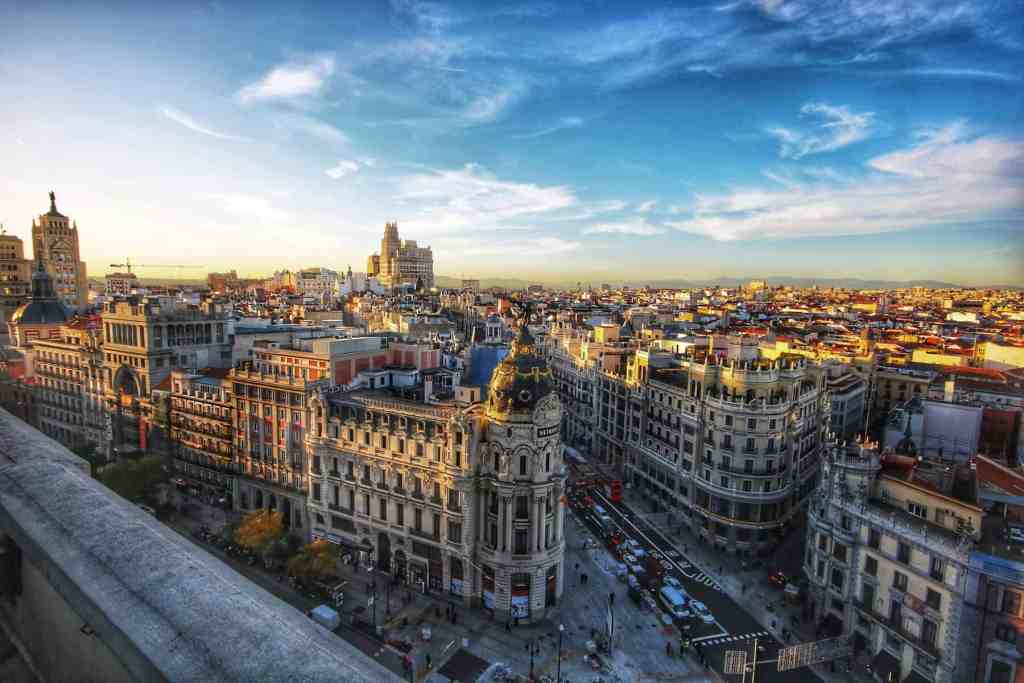
Madrid is a big, well-connected city, so the real question is whether you want to be next to the stadium or in the thick of the sights — both work, because the Metro stitches them together in 15–20 minutes. Gameday weekends and big European nights tighten hotel availability, so book a few weeks out for those.
Best Areas to Stay
By the stadium (Chamartín / Castellana / AZCA): this is the business-and-finance quarter right around the ground — modern hotels, El Corte Inglés at Plaza de Cuzco, easy walking distance to kick-off, and quieter at night since it empties of office workers. Ideal if the match (or the tour) is your main event and you value rolling out of bed and strolling over. Salamanca: Madrid’s elegant district just south, built around the Serrano shopping streets — refined, safe, well-served by the Metro, and a lovely base if you want a smarter stay with the stadium a short ride away. Chamberí: characterful and residential, sitting between the centre and the stadium, with some of the city’s best neighbourhood food. City centre (Sol / Gran Vía / Malasaña): the move if it’s your first time in Madrid and you want the Prado, the Royal Palace and the old town on your doorstep, with the Bernabéu a straightforward Metro hop north.
Castellana Comforts (near the ground)
Reliable, well-located options strung along or just off the Castellana include the Hyatt Regency Hesperia Madrid and NH Collection Madrid Eurobuilding at the upper end, Meliá Castilla, The Westin Madrid and Hotel Miguel Ángel in the upscale tier, and the recently refreshed Canopy by Hilton Madrid Castellana and NYX Hotel Madrid (with its rooftop terrace) for something a little more design-led. All put you within an easy walk or one Metro stop of the stadium.
Salamanca Smart Stays
For an elegant base a short ride south, Barceló Emperatriz, Meliá Madrid Serrano and the smaller boutique hotels around the Serrano shopping streets give you Madrid’s most polished neighbourhood with quick links to the ground.
Mid-Range & Reliable
AC Hotel Aitana, H10 Tribeca, NH Madrid Paseo de la Habana and Hotel Luze Castellana all sit a comfortable walk from the stadium at a sensible price point and rate well with football visitors.
Budget Options
The Chamartín and Tetuán streets just north of the ground are dotted with clean, no-frills hostales and apart-hotels — places like the apartment-style Sercotel Togumar (about 15 minutes’ walk) — where you trade a bit of polish and a slightly less central location for a much friendlier price. For football fans who only need a bed near the turnstiles, they do the job.
Matchday Scene in Madrid
The pre-match culture here isn’t a wall of dedicated football pubs — it’s Madrid being Madrid. Fans gather in the cervecerías and tapas bars on the streets immediately around the ground, then push toward the stadium as kick-off nears; afterwards, the celebration (or the post-mortem) spills back out into the same bars and along the Castellana. On a big night the energy in those side streets, a sea of white shirts and scarves under the stadium’s glow, is the part people remember almost as much as the match.
Best Pre- and Post-Match Pubs
Birra Bernabéu (Avenida de Concha Espina) is the go-to sports pub steps from the ground, with big screens and room for groups. Bar La Saeta is about the closest bar to the stadium — small, packed, and pure matchday atmosphere. The Irish Rover and Luas Irish Tavern offer the familiar pub format with screens and a terrace a few minutes’ walk away, while NYX Sky and Castellana 113 give you a more polished cocktail-and-rooftop vibe nearby.
Best Restaurants in the Area
For a proper meal close to the action, Restaurante El Enfriador and Ochenta Grados Castellana sit along the Paseo de la Castellana and handle pre-match dinners well. For a more traditional Madrid tasca experience, places like Tasca La Farmacia near the ground do classic Spanish plates made for sharing. And while you’re in the city, it’s worth straying beyond the stadium — the Salamanca and Chamberí districts hold some of Madrid’s best eating, from old-school tabernas to the markets, all a short Metro ride away.

Why You Should Go
Plenty of stadiums are bigger or louder on a given night, but few carry what this one does: 15 European Cups in a single trophy room, the most successful club in the sport, and a building that just reinvented itself without losing the weight of its history. Whether you catch a match under that retractable roof, walk the pitch on the tour, or wander in on a December evening to watch the façade light up, the Bernabéu rewards the trip. If you only do one football thing in Madrid, do this — and if you can swing a ticket to a Champions League night, that’s the version you’ll be telling people about for years.
Enjoy this guide? Explore the rest of our football stadium guides including Camp Nou in Barcelona, Wembley in London and Old Trafford in Manchester and Parc de Princes in Paris. You can find all of our football guides here.
Written by Brad Richards. Founder of Gameday Guides. This guide includes insights from personal visits as well as updated info from team sources, fan forums, and stadium policies. We aim to help you plan with confidence — enjoy your gameday. If you have any tips, if we missed anything or you have a question, don’t hesitate to shoot us an email.