
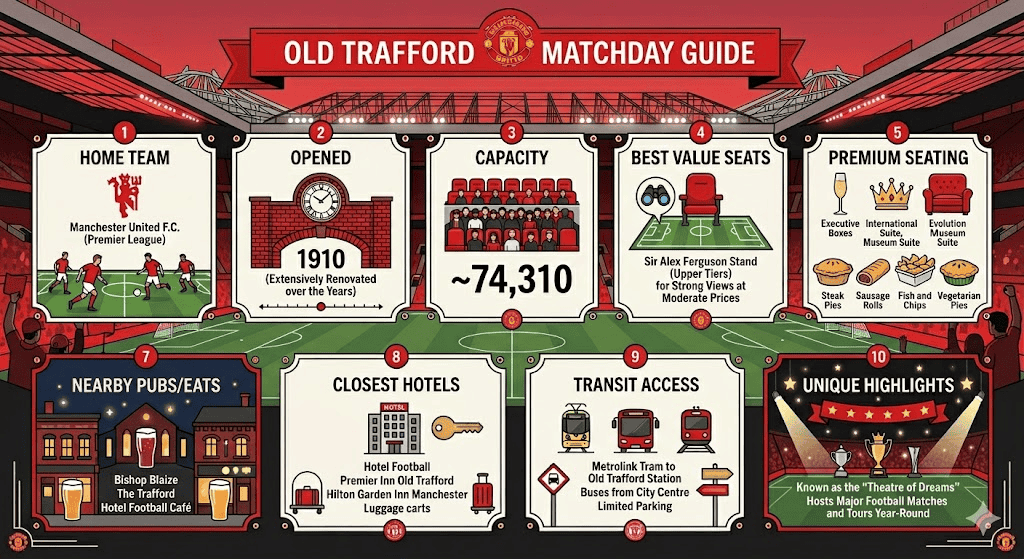
Best Seats at Old Trafford
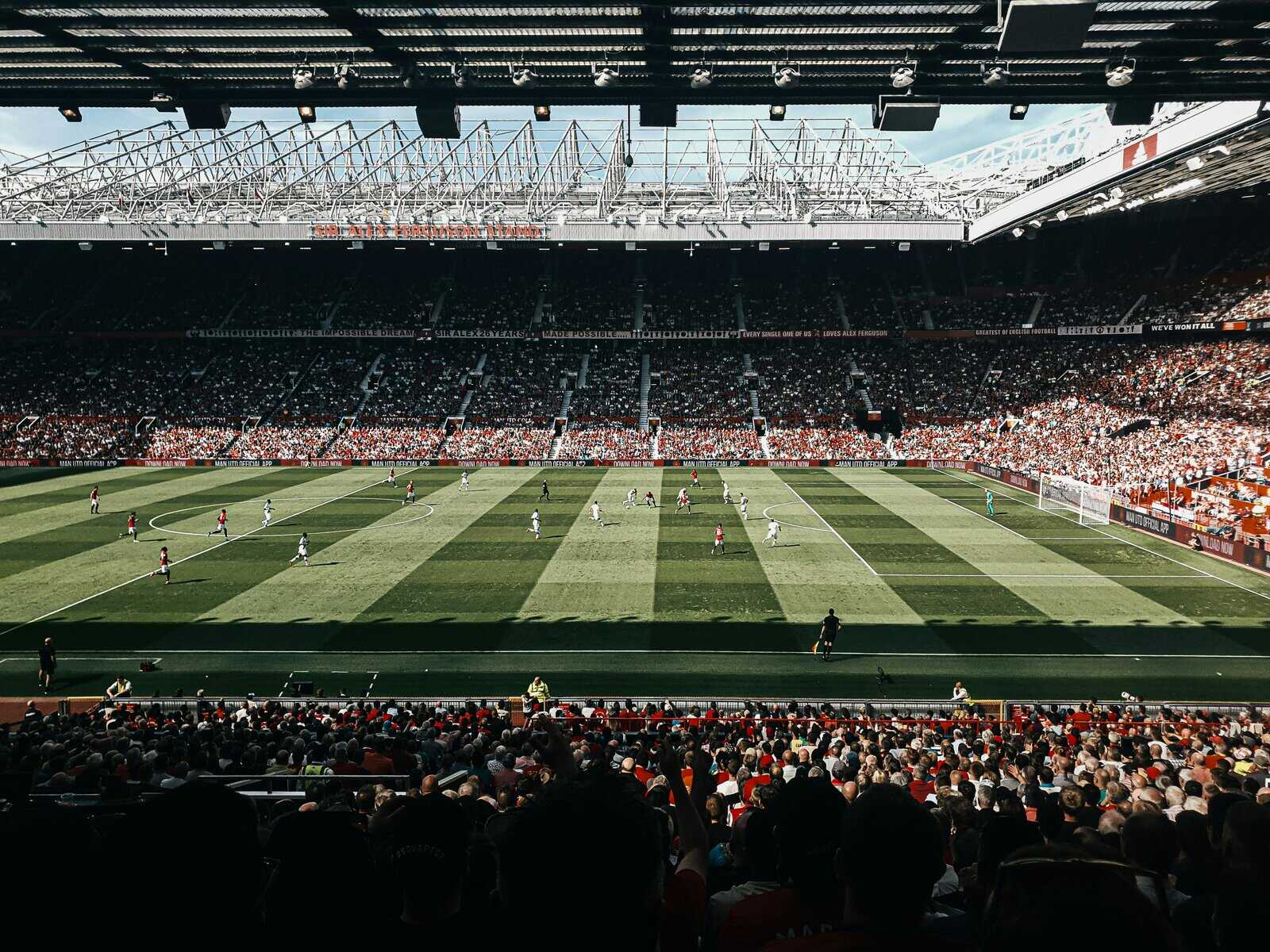
Known as the Theatre of Dreams, Old Trafford is where Sir Matt Busby built dynasties, where the Busby Babes played before tragedy struck, and where Sir Alex Ferguson won 13 Premier League titles. The ground sits in Trafford, a couple of miles southwest of central Manchester, hemmed in by terraced houses, the Bridgewater Canal and industrial estates — not the glossy city-centre setting you might expect, and better for it. I’ve been here a handful of times, and the walk from the tram with thousands of fans streaming toward those towering red stands never gets old. When “Glory Glory Man United” rolls out of the Stretford End before kick-off, it’s genuinely spine-tingling even if you’re not a United supporter. And there’s now a clock ticking on all of it: with a new 100,000-seat stadium planned next door, the seasons left at the real Old Trafford are numbered. Here’s everything you need — the seating plan, the best seats stand by stand, and how a matchday here actually works.
Seating Overview
What separates a great seat from a poor one here isn’t price — it’s understanding that each stand offers a fundamentally different afternoon. The Sir Alex Ferguson Stand gives you the panoramic television view, the Stretford End gives you the noise, the Sir Bobby Charlton Stand gives you history and the tunnel, and the corners give you compromises. Decide what you’re here for first, then buy accordingly.
Best Non-Premium Seats
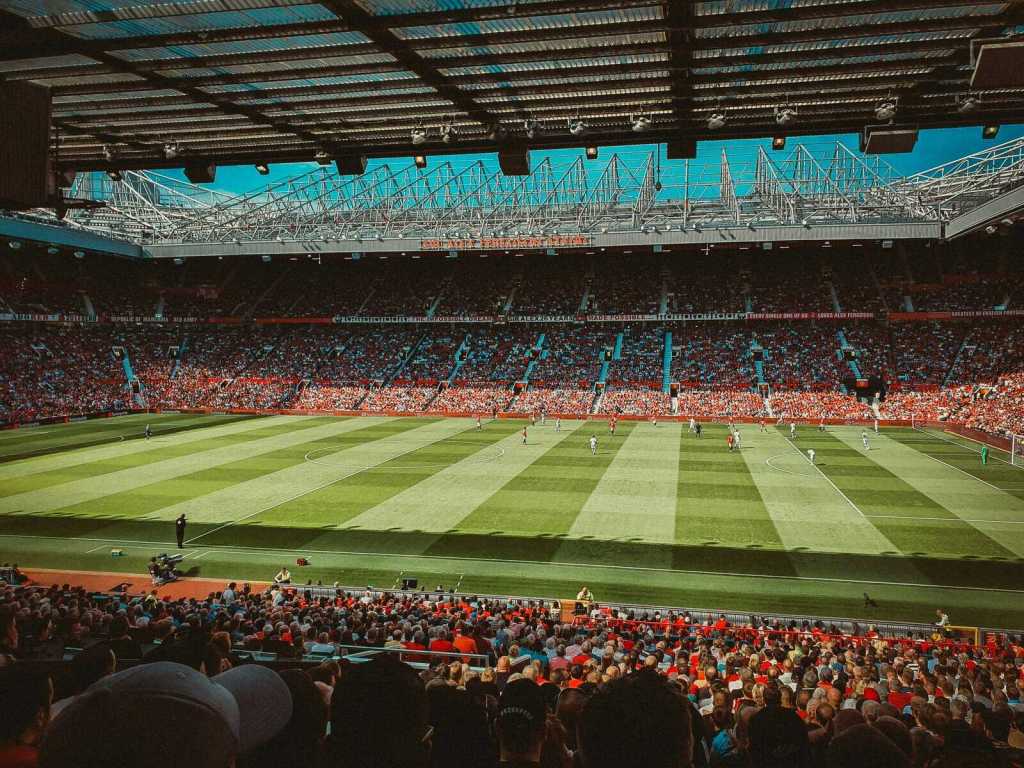
Sir Alex Ferguson Stand, lower tier, central blocks: The best conventional view in the ground. This stand runs the full length of the pitch, and the lower-tier blocks between the edges of the two penalty areas put you close enough to hear the players and read the tactics while keeping the whole pitch in frame. It’s the most expensive non-hospitality territory at Old Trafford and worth it. The tradeoff is atmosphere — this is an appreciative crowd rather than a singing one.
Stretford End, lower tier, central blocks behind the goal: The other correct answer, for a completely different reason. This is the home of United’s most committed support — on their feet, singing from kick-off, and now backed by one of the largest safe-standing sections in the Premier League in the tier above. The behind-the-goal view means you’ll lose the far end of the pitch, and you will be standing most of the match whether you planned to or not. I sat in W16 once for a Europa League match, and the noise when United equalised late was deafening — grown men screaming, beer flying, pure chaos. It’s not for everyone. It might be exactly for you.
East Stand, upper tier: The quieter, calmer option behind the opposite goal, with the Stretford End in full view across the pitch — which means you watch the atmosphere as well as the match. Good facilities, easier concourses, and a natural fit for families or anyone who’d rather sit for 90 minutes without apology.
Best Value Seats
Sir Alex Ferguson Stand, upper tiers: The smart-money play. Old Trafford’s stands are steep, so even the top tier of the north side keeps a clean, elevated, full-pitch view — the kind of vantage that makes the game easier to read, not harder. You give up proximity and some noise; you keep everything that matters about watching football, at a fraction of the lower-tier price. On a first visit with a normal budget, this is where I’d point most people.
Cheapest Way In
Upper-tier corner blocks: The lowest-priced tickets in the ground live where the stands meet, high up. The view is angled and the far goalmouth gets hard to judge, but you’re inside Old Trafford on a matchday for the least money the club will take. For a lower-demand fixture — an early-round cup tie, a midweek game against a struggling side — this is a perfectly honest way to tick the ground off. For a marquee fixture, spend up; a bad seat at a big game is the worst of both worlds.
Our Pick
Sir Alex Ferguson Stand, lower tier, as central as your budget allows. It’s the seat that shows you why this ground has the reputation it does — the full sweep of the place, the Stretford End roaring to your right, the tunnel and dugouts opposite — and it’s the one I’d hand a friend making a first and possibly only visit before the wrecking ball swings.
Where Away Fans Sit
Covered in the seating plan section above, but the practical version: you’re in the southeast corner with a low roof that makes 3,000 travelling fans sound like three times that, some of the best away-end acoustics in England, and a concourse so tight that eating a pie at half-time is a contact sport. Get your food before you come in.
What to Avoid (and What’s Worth Trying Once)
Deep upper-tier corners at premium prices: Fine when they’re cheap, poor when big-match pricing drags them toward what a proper sideline seat costs at a lesser fixture. The angled view plus the distance is a bad combination to pay real money for.
Sir Bobby Charlton Stand lower tier if you’re tall: This is the oldest surviving structure at Old Trafford and the seat pitch shows it — anyone over six foot will spend the match with their knees in the row in front. The upper reaches of the ground can also clip the edge of the roof into your eyeline in places, though views stay technically unrestricted.
Worth it once — the Stretford End, standing: If your image of English football is a wall of noise behind the goal, one match here recalibrates everything you’ll accept from a stadium afterwards. Sightlines are honest-to-poor for the far end and you won’t sit down. Do it once anyway.
Premium Seating Options at Old Trafford
Old Trafford runs one of the deepest hospitality operations in football — around 140 private boxes and over 20 lounges and suites, most clustered along the two sideline stands and in the northeast and northwest quadrants. Names and packages get reshuffled between seasons, so anchor on location and tier when you’re comparing, and treat the current branding as secondary.
The Best Premium Experience
The glass-fronted suite in the northeast quadrant — currently the Evolution Suite — is the signature option: the only glass-fronted facility inside the ground that looks directly over the pitch, split across two levels, with padded executive seats in the quadrant’s middle tier. You get the pre-match theatre of watching the stadium fill from behind glass, then step out to some of the best-positioned seats in the building. If someone else is paying, this is the one.
Best Value Premium
The casual lounges with East Stand or quadrant seating — the sports-bar and club-tier packages — are the insider call. You’re trading the white-tablecloth dinner for grazing food and an inclusive bar, but the seats are often only a tier or a few blocks away from what the flagship suites provide, at a fraction of the price. If the point is comfort, a guaranteed decent seat and skipping the concourse crush rather than fine dining, this tier over-delivers. It’s also the sane way for a small group to do hospitality without corporate money.
Other Premium Options
The rest of the landscape, briefly: the No.7 Suite in the heart of the Sir Bobby Charlton Stand honours the shirt of Best, Cantona, Beckham and Ronaldo, entered through the Directors’ Entrance with seats near the Directors’ Box — it’s the nostalgia-heavy choice. The Treble Suite sits directly above the Munich Tunnel with sideline seats in the South Stand.
Champions Club packages put you in middle-tier seats on the halfway line with access to refurbished private lounges. And a rotating cast of themed lounges — celebrating the club’s knights, its captains, its 500-appearance players — fill out the mid-tier, most with three-course dining and a complimentary bar. Note the dress code: smart casual is enforced across hospitality, and football shirts, tracksuits and caps are refused in most lounges.
Suites & Boxes
Private boxes host groups from roughly ten to twenty guests with dedicated service, inclusive dining and drinks, and outdoor seating attached to the box. They’re corporate-entertainment territory, priced accordingly and steeply tiered by fixture — a Liverpool or City box costs a multiple of a routine one. Book through the club’s official hospitality channels, and book months out for the marquee games.
Old Trafford Stadium Seating Plan and Capacity
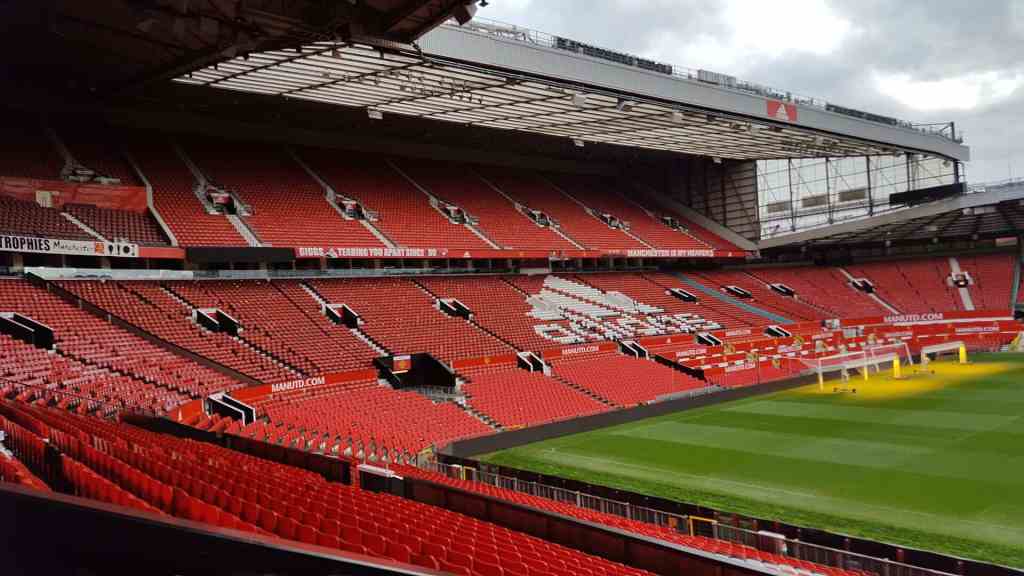
Old Trafford’s capacity is around 74,500, making it the largest club football stadium in the United Kingdom and the second-largest football ground overall behind Wembley. The exact figure shifts slightly season to season as the club converts sections to rail seating — the latest addition was a 6,000-capacity safe-standing area in the Stretford End’s second tier, taking total safe standing at Old Trafford past 13,500, one of the largest allocations in the Premier League.
The seating plan is built around four stands. The Sir Alex Ferguson Stand (north) is the big one — a three-tiered cantilever running the length of the pitch that holds roughly a third of the entire crowd. Opposite it sits the Sir Bobby Charlton Stand (south), the oldest surviving part of the ground, single-tiered and home to the dugouts, the Directors’ Box, the tunnel and the TV gantry.
Behind the goals you have the Stretford End (west), the famous home of United’s loudest support, and the East Stand, sometimes still called the Scoreboard End, which houses the Megastore and the away section. The two quadrants linking the Sir Alex Ferguson Stand to the East and West Stands were the final pieces added in 2006, and they’re where much of the hospitality lives.
Where do away fans sit at Old Trafford? Visiting supporters are housed in the southeast corner, where the Sir Bobby Charlton Stand meets the East Stand — around 3,000 for league fixtures, expandable to as many as 9,000 for cup ties when part of the East Stand upper is handed over. It’s regarded as one of the better away ends in the country: the low roof overhead traps the noise, and the view across to the Stretford End takes in the whole ground. The concourse behind it, though, is famously cramped — more on that in the tips.
You can find the official Old Trafford seating plan on the Manchester United website, with an interactive view from every block.. You can find the Old Trafford Seating Plan here.
Manchester United Football Tickets
The honest starting point: demand exceeds supply for nearly every home fixture, and general sale is a lottery for the big ones. The reliable path is official membership — United sell several tiers of it, and members get priority windows before any remaining tickets reach general sale, typically a few weeks before each match. For a planned trip, buy a membership the moment you commit to the idea; it costs less than the mark-up you’d otherwise pay on the secondary market.
Fixture choice is the whole game. Liverpool, City, Arsenal and European nights are the hardest and most expensive tickets in English football. A midweek League Cup tie or a home game against a lower-table side is a different sport entirely — realistic availability, gentler pricing, same stadium. If your goal is seeing Old Trafford, target the unglamorous fixture and buy the better seat with the savings.
Two traps to know. First, your ticket is digital and a screenshot of the QR code will not scan — it has to live in your Apple or Google Wallet, and mobile signal collapses near the ground on matchdays, so load it before you leave the hotel. Second, buy only through official channels or the club’s authorised resale; United are aggressive about cancelling tickets that surface on unauthorised platforms.
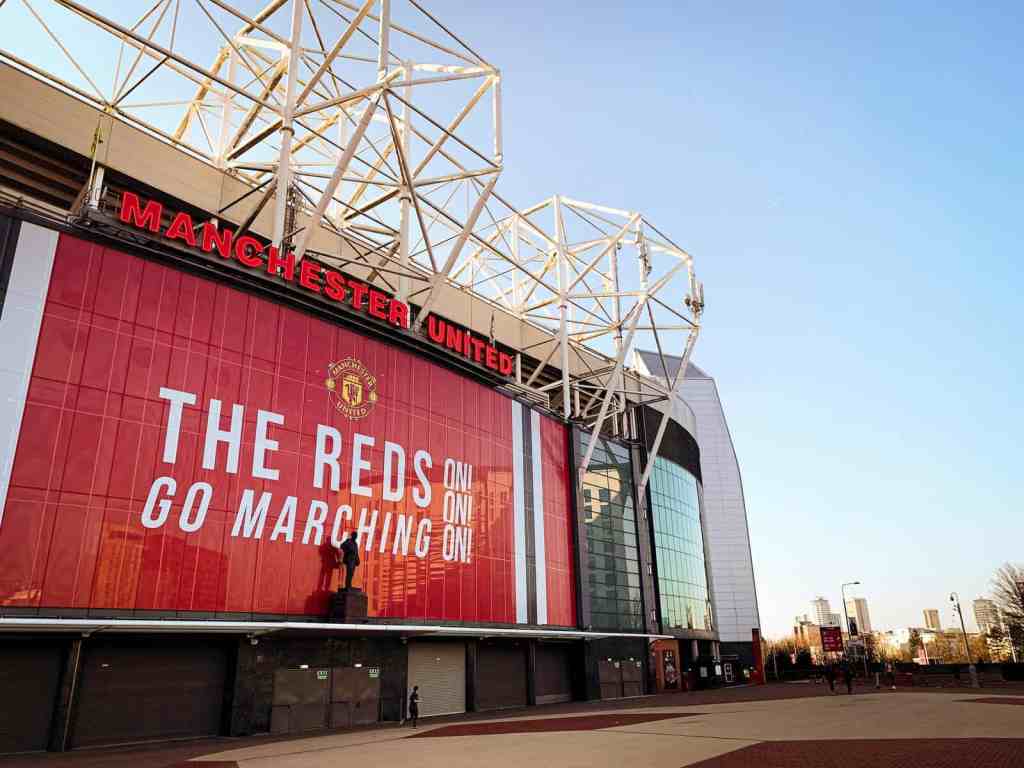
Old Trafford Bag Policy
The rule is strict and strictly enforced: nothing larger than 20cm x 15cm x 5cm (8″ x 6″ x 2″) — a small handbag, essentially — comes onto the stadium footprint. Exceptions exist only for essential medical equipment and baby-changing supplies. Anything bigger goes to a bag drop (£5 per item, proceeds to the Manchester United Foundation) located in the E2, N2 and W2 Cosgrove car parks plus the Foundation car park off Railway Road; the drops open four hours before kick-off, and if you’re using one the club recommends arriving two hours early because the queues are real. Every bag that does come in gets physically or visually searched at the turnstile.
Key Venue Policies
There is no re-entry. Leave the stadium during the match and your ticket will not get you back in — this catches out more visitors than any other rule here. Old Trafford is fully cashless, with all major cards and contactless accepted. The whole ground is no-smoking, vapes included, covering concourses and car parks.
Children under 14 must be accompanied by an adult aged 16 or over, and under-16 tickets can’t be bought without an adult in the booking. Flags larger than 2m x 1m, flags on poles, national flags (except those of competing national teams), laptops, tablets and large cameras are all prohibited. The club’s website carries the full and current list.
Accessibility: Old Trafford provides 278 wheelchair positions and 278 designated amenity seats across the ground, including a purpose-built accessible concourse at the back of the Stretford End, along with lift access, Blue Badge parking and dedicated Access Stewards on matchdays. For larger medical equipment or specific seating needs, email the club’s accessibility team in advance — they’re responsive and it smooths the turnstile process considerably. The full accessibility guide is on the Manchester United website.
Check out the full Old Trafford policies guide for a list of all policies to know.
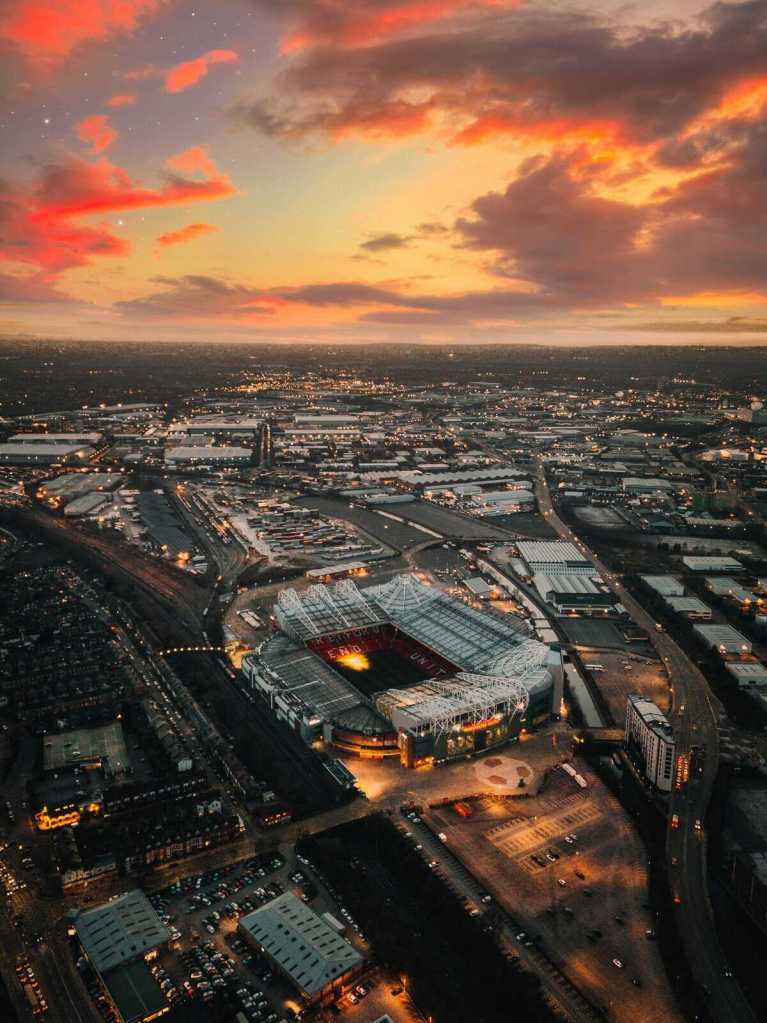
Getting To Old Trafford
The short version: take the tram, know which stop, and have an exit plan. The roads around the ground effectively stop working in the hour before kick-off — Sir Matt Busby Way itself closes to traffic — so public transport wins for almost everyone.
Metrolink (Tram)
Here’s the trap to flag before anything else: the tram stop called “Old Trafford” is not at the football ground — it’s at the cricket ground, a ten-minute walk away down Sir Matt Busby Way. The nearest stop to the football is Wharfside, about seven minutes’ walk, on the Trafford Park line. Old Trafford (cricket) and Trafford Bar on the Altrincham line, and Exchange Quay on the Eccles line, all also work within a 10–15 minute walk. Trams run from Piccadilly and Victoria through the city centre and the journey takes about 15 minutes; plan your specific route with Transport for Greater Manchester before matchday, because service patterns shift.
Bus
Bee Network buses serve the Chester Road corridor past the ground from Piccadilly Gardens every 12 to 20 minutes, and you can tap on and off with contactless. Slower than the tram in matchday traffic, but a useful fallback when the platforms are heaving.
Train & From the Airport
Long-distance trains land at Manchester Piccadilly; from there it’s a simple tram connection toward the ground. From Manchester Airport, the Metrolink runs direct to Trafford Bar — about a 15-minute walk from the stadium — or you can change for a closer stop. A taxi from the airport takes 20–30 minutes outside match traffic.
Taxi & Rideshare
From the city centre expect a 15–20 minute run in normal traffic. The catch is post-match: with road closures and 74,000 people moving at once, pickups near the ground are miserable. Walk ten minutes away from the stadium — toward Trafford Bar or the Quays — before you order one.
Old Trafford Parking
Use M16 0RA for matchday sat-nav (the club lists a separate non-matchday postcode on its site) and allow far more time than the map suggests. Official club car parks are bookable through manutd.com and sell out for big fixtures; booked private driveways through platforms like JustPark or Stashbee around the cricket ground are the local’s alternative, usually cheaper, with a 15–20 minute walk that beats sitting in the car-park exit queue anyway.
One warning that’s grown teeth lately: enforcement around the residential streets has tightened, and Greater Manchester Police advise avoiding any cash-in-hand street “attendant” who can’t show official ID.
By Boat
For something different, Manchester River Cruises runs a matchday boat to Old Trafford — roughly a 30-minute sail with a licensed bar aboard, returning from Trafford Wharf about twenty minutes after the final whistle, sidestepping both the roads and the tram crush. One caveat: the city-centre departure point has been in flux, with some sailings running from Salford Quays instead, so confirm the current departure point directly with the operator before you build your day around it.

Top Tips for Old Trafford
Few days out in sport match a trip to Old Trafford, and the ones who get the most from it are the ones who turn up knowing how the place actually works — where the queues build, which seats have the legroom, and which tram stop everyone else hasn’t twigged. You’re also catching the old ground in a transitional era: in March 2025 the club confirmed plans for a new 100,000-seat stadium next door, pencilled in for around 2030/31, so the current Theatre of Dreams has a finite shelf life. In the meantime, expect steady upgrades to the matchday experience, including new self-service and quick-pay kiosks rolling out from the 2026/27 season. Here’s everything worth knowing before you go.
A Short History of Old Trafford
This is one of the most legendary stadiums in the world, so a quick history is warranted to fully take in what you are seeing.
The name is the neighbourhood, not the stadium. Old Trafford is simply the area of Greater Manchester the ground sits in, land historically tied to the de Trafford family — which is also why there’s an Old Trafford cricket ground half a mile away and a tram stop that confuses visiting fans every single week (a trap covered in Getting There). Nobody named the stadium; the stadium borrowed its postcode.
Built in 1910 by “Moneybags United.” After winning the First Division and FA Cup out of a smog-choked ground in Clayton, United’s chairman John Henry Davies bankrolled a new home beside the Bridgewater Canal, designed by Archibald Leitch, the great stadium architect of the age. The final bill of £90,000 was so outrageous for the era that rival fans christened the club “Moneybags United.” Liverpool spoiled the opening party on 19 February 1910, winning 4–3. The all-time record crowd came in 1939, when 76,962 watched an FA Cup semi-final between Wolves and Grimsby — a match with no United involvement at all.
Bombed, rebuilt, and reborn. German air raids in 1941 destroyed the main stand, and United spent eight years playing home games at Maine Road — the home of Manchester City — before Old Trafford reopened in 1949. The Munich air disaster of 1958, which killed eight of the Busby Babes, is memorialised throughout the ground: the Munich Clock on the corner of the East and Sir Bobby Charlton Stands, the memorial plaque, and the Munich Tunnel beneath the South Stand. Bobby Charlton, a survivor of the crash, later gave the ground its nickname: the Theatre of Dreams.
The modern giant took shape in stages. The Taylor Report’s all-seater requirement cut capacity to around 44,000 in the early 1990s — the old Stretford End terrace among the casualties — before United’s 90s dominance funded the rebuild: the vast North Stand in 1995, second tiers on the East and West Stands around the turn of the millennium, and the quadrant infills in 2006 that pushed capacity back past 74,000, roughly where it stands today. Since then the story has been one of atmosphere restored piece by piece — rail seating returning safe standing to the Stretford End for the first time since the terraces came down.
Old Trafford Renovation & the New Stadium
The headline: Old Trafford is being replaced, not renovated. In March 2025 the club announced plans for a new 100,000-seat stadium designed by Foster + Partners, to be built roughly 350 metres from the current ground as the centrepiece of a huge regeneration of the surrounding area — the concept images show a vast canopy sheltering a public plaza said to be twice the size of Trafalgar Square. United continue to play at Old Trafford throughout construction, and the club’s stated aim has been to move in for the 2030/31 season.
Where the project actually stands. The land question was largely settled in June 2026, when the club secured most of the site it needs from the industrial landowner Indurent, and a masterplan for the surrounding district followed in July 2026. But the honest picture is messier than the renders: reports through 2026 have put the potential cost beyond £3 billion (against the original £2 billion figure), the signature tent-like roof — estimated at around £200 million on its own — is under review and may be simplified or cut, and financing is not yet fully secured. Construction is expected to take about five years once it properly starts, which means the 2030/31 target has real slippage risk. Treat any completion date you read as pencil, not ink.
What it means for your visit. Two things. First, the current Old Trafford has a finite shelf life, and “I saw United at the actual Old Trafford” is about to become a thing older fans say to younger ones — if it’s on your list, the window is open now and closing. Second, don’t expect a gleaming modern venue in the meantime: with a replacement coming, major investment in the old ground has understandably slowed, and parts of it show their age. The upgrades still arriving are matchday-experience ones — expanded safe standing, and new self-service and quick-pay concession kiosks rolling out from the 2026/27 season. The rust is part of the story now. Go anyway. Especially go because of it.
Meeting the Players & Autographs
Get to the end of the Munich Tunnel three to four hours before kick-off if you want to watch the players arrive. This is the spot where the squad walks in, and early is the only way to get a place at the barrier.
Stand on the Stretford End / West Stand side of the barriers, not the other side. This is the detail that separates fans who get the photos from fans who don’t: the team coach pulls up on the opposite side, and when the players step off it blocks the view completely for anyone standing there. The Stretford End side keeps your sightline clear.
When to Arrive at Old Trafford
Arrive 60–90 minutes before kick-off for a relaxed entry — time for the statues, the forecourt buzz and the turnstiles before the queues peak in the final half hour.
Add two hours if you’re using a bag drop. The drops open four hours out and the queues are real; the club itself recommends arriving two hours early if you need one, and there are no refunds for late entry.
Food & Drink Inside Old Trafford
Eat before you go in. The pubs and takeaways along Chester Road do the pre-match trade properly, and the in-ground concourses are functional rather than memorable — this goes double in the cramped away end.
Cash in on the early-bird discount. To pull fans through the turnstiles early and ease congestion, the stadium routinely runs 25% off concourse food and drink up until an hour before kick-off — a genuine reason to get in ahead of the rush rather than fight it.
Look for the new self-service and quick-pay kiosks rolling out from the 2026/27 season. They move the queues faster than the old tills, which matters when you’ve got 15 minutes of half-time and a concourse full of people.
Don’t press the little disc on the bottom of the newer pint glasses in the Main Stand. It froths the beer everywhere — a small piece of Old Trafford wisdom learned by many in front of witnesses.
Beating the Matchday Gridlock
Park-and-ride instead of driving to the ground. Locals heavily recommend leaving the car at the Trafford Centre or a Parkway park-and-ride and taking the tram in — it sidesteps the worst of the gridlock both before and after, which around Old Trafford is no small thing.
If the weather’s decent, walk the Bridgewater Canal. From Castlefield / Deansgate in the city centre it’s a 30–40 minute towpath walk to the ground, past a few pubs along the way, and it skips the packed city-centre trams entirely. One of the best-kept approaches on a dry day.
Leaving Old Trafford: The Great Escape
Walk on to Trafford Bar rather than piling onto the nearest stop. When 74,000 people leave at once, Wharfside, Exchange Quay and the cricket-ground Old Trafford stop clog for the better part of an hour. Fifteen minutes’ walk to Trafford Bar, where two lines merge just before the stop, means trams often arrive nearly empty — regulars have timed whistle-to-Piccadilly at roughly 50 minutes this way.
Don’t expect a rideshare at the final whistle. The roads immediately around the stadium are locked down for pedestrian safety, so Uber and taxis physically can’t reach you for a solid 45–60 minutes after the match ends. Ordering one at full time just strands you.
Wait it out in Hotel Football instead. Right outside the northeast corner, it’s the experienced fan’s move: grab a pint, rake over the game, and let the 70,000-person transport crush thin out for an hour before you head back to the city. You’ll get home faster by leaving later.
Use the loos five minutes before half-time, not at the whistle, and you skip the scrum entirely. Same logic at full time in reverse — leave two minutes early or settle in and soak up the post-match scene rather than shuffling in a stationary crowd.
Where to Meet After the Match
Don’t agree to meet “by the Holy Trinity statue” or “by the Munich memorial.” Those are the two most congested pinch points outside the ground and you’ll never find your group. Pick somewhere quieter and specific — a corner of Wharfside Way, a named car park entrance, or a pub a few streets back.
The Munich Tunnel & Matchday Traditions
Give the Munich Tunnel ten minutes. Beneath the Sir Bobby Charlton Stand, it carries the memorial to the Busby Babes lost in the 1958 air disaster — sombre, powerful, and the emotional centre of the whole ground.
Sing along to “Glory Glory Man United.” It plays before kick-off and the entire stadium joins in; even as a neutral, it’s a moment that lands.
The Best Photo Spots at Old Trafford
The Holy Trinity statue — Best, Law and Charlton — faces the Sir Alex Ferguson statue across the forecourt, and between them they’re the signature Old Trafford shots. Get them early before the crowds build, or in the emptying-out hour after full time; midday matchday means queuing behind fifty other people for the same frame.
Your Phone, Ticket & Battery
Load your digital ticket into Apple or Google Wallet back at the hotel. Mobile signal collapses within half a mile of the ground once the crowds gather, and a screenshot of the QR code will not scan at the turnstile.
Bring a power bank. Between the digital ticket, contactless payments and your camera, a cold afternoon flattens a phone battery fast — and a dead phone is a dead ticket.
Memorise your entrance before you arrive. It’s a letter-and-number code like E4, printed on your ticket, and hunting for the right turnstile in a crowd of thousands is a miserable way to start the day.
The Megastore
Shop before the match or well after, never at half-time. The Megastore in the East Stand — the largest football store of its kind — closes during the game and reopens about an hour after the final whistle. It’s calmest in the early pre-match window, and there’s a shirt-printing kiosk on matchdays if you’re buying a name and number.
Families & Kids
Children under 14 must be accompanied by an adult aged 16 or over, and under-16 tickets can’t be booked without an adult in the booking.
Aim for the East Stand upper or the Sir Alex Ferguson Stand family areas. They’re the calmer parts of the ground; the Stretford End’s standing-and-singing culture makes it the wrong call with small children whatever the seat map allows.
Leave the buggy at the hotel — prams and pushchairs aren’t permitted into the stadium, so plan the day around that.
Make a lower-key cup tie the first match, and consider the tour and museum as an even gentler first Old Trafford experience for young kids than a high-intensity fixture.
Safety & Help
Text HELP with your stand, row and seat to 84222 rather than flagging down a steward mid-match — the response comes to you.
Leave the detection dogs alone. You’ll spot them working the approaches; they’re on duty, so resist the urge to pet or feed them.
Remember there’s no re-entry — step outside during the match and that ticket won’t get you back in.
Old Trafford Stadium Tour & Museum
The tour runs on non-matchdays and takes you down the players’ tunnel, pitchside past the dugouts and around the ground over roughly 70 minutes, with departures about every half hour. The three-floor museum — over a century of trophies, the Munich memorial and the club’s history — is worth another hour on top, and there’s an accessible viewing platform on the tour route.
Book the day before a match, not the day after. Day-after tours sometimes restrict access to pitchside areas or the players’ tunnel because of post-match cleanup and operations — so if the tunnel walk is the reason you’re going, the day before is the safer booking.
It closes on home matchdays (matchday hospitality guests excepted), and the day before and day after a fixture are both fine. Booking online is cheaper than walking up, official members get a significant discount, and you can book through the Manchester United website or on 0161 676 7770. With the new stadium moving from renders to land deals, the tour has quietly become a piece of history preservation — do it on this trip, not the next one.
Good Manners & Local Quirks
Buy your United Review programme inside the dry concourse, not from a street vendor on the walk in. This is Manchester — plan for rain — and a programme bought outside is a soggy ruin before you find your seat, while the indoor booths often move quicker anyway.
Know the Bishop Blaize door rule before you head there. The most famous pre-match pub for home fans doesn’t do walk-ins on matchdays: you show a valid match ticket at the door, and there’s a £1 entry fee. Turn up without a ticket and you’re not getting in.
Give yourself a moment on the forecourt afterwards. The atmosphere spilling onto the streets is part of what makes the place — and with the ground’s days numbered, it’s a scene worth standing still for.
Things to Do in Manchester
If you’ve got a day either side of the match: the National Football Museum in the city centre is the obvious pairing and genuinely good; the Northern Quarter is the neighbourhood for record shops, street art and independent bars; Castlefield’s canal-side pubs make the best lazy pre-match afternoon in the city; and MediaCityUK at Salford Quays, ten minutes from the ground, has the waterfront, the Lowry and the BBC studios. Manchester rewards the extra night.

Hotels Near Old Trafford
Manchester is one of England’s great football cities, and where you base yourself shapes the entire trip. The immediate Old Trafford area is convenient for matchdays but quiet once the final whistle blows — if you want the full Manchester experience, you’ll need to venture further. The good news is you don’t have to choose between proximity and atmosphere: Salford Quays sits 10–15 minutes from the stadium and has transformed from post-industrial docklands into a lively waterfront district around MediaCityUK, with a strong run of bars, restaurants and modern hotels.
The city centre is a 20-minute tram from the ground and offers everything from world-class restaurants to the nightlife that makes a midweek fixture worth extending. For major fixtures — Liverpool, Arsenal, European nights — book as early as you possibly can; prices surge dramatically and rooms near the stadium disappear first.
Best Areas to Stay
Immediate Old Trafford / Trafford Bar area: Walking distance to the ground, which matters more than you’d think when 74,000 fans descend on the Metrolink at once. Limited for evening dining and nightlife, but ideal if the match is the sole reason you’re there, and it works well for away fans who want a simple, uncomplicated base.
Salford Quays / MediaCity: The best middle ground. A short tram ride or 15-minute walk from Old Trafford, with waterfront restaurants, modern hotels and genuine evening energy. The Metrolink connects you to the stadium in a couple of stops and the city centre in under ten minutes.
Manchester City Centre: The full Manchester experience — the Northern Quarter for independent bars and food, Deansgate for cocktails, St Peter’s Square for the grand hotels. You’re 20 minutes from Old Trafford by tram, which is fine. Stay here if you’re making a weekend of it and the football is one part of a broader trip.
Trafford Centre area: Good for families and those who want easier parking, with retail on the doorstep. A bus or short drive to the ground rather than walkable, but a quieter base if the city-centre buzz isn’t what you’re after.
Hotel Recommendations
Hotel Football, Old Trafford is the obvious choice for United supporters — and for good reason. Directly opposite the stadium on Sir Matt Busby Way, owned by members of the Class of ’92, with 133 football-themed rooms (many with direct stadium views), a rooftop five-a-side pitch and Café Football on the ground floor. It’s pricier than a standard hotel with similar facilities, but you’re paying for the experience — and on a matchday weekend, the experience is worth it. Book the moment fixtures are confirmed.
The Stock Exchange Hotel (City Centre) is Manchester’s finest — a converted Victorian exchange building with just 40 rooms, a Michelin-recommended restaurant and the kind of considered service that justifies the top-tier rate. An Autograph Collection property, so Marriott Bonvoy members benefit. About 15 minutes from the ground by tram, and the base if Manchester matters as much as the match.
The Midland Hotel (City Centre) has been a Manchester landmark since 1903, Grade II* listed Edwardian Baroque on St Peter’s Square, freshly refurbished throughout and sitting in the cultural heart of the city. A 20-minute tram to Old Trafford, ideal for a premium city-centre stay.
AC Hotel Manchester Salford Quays is a sleek Marriott property on the waterfront with contemporary rooms, direct Metrolink access, and even a matchday hospitality package run in partnership with the club — a polished mid-range pick with real transport logic.
Hilton Garden Inn Manchester Emirates Old Trafford sits inside the Lancashire Cricket Club complex, an 11-minute walk from the football ground, many rooms overlooking the cricket pitch, with on-site parking and dependable Hilton standards. The no-fuss choice.
Copthorne Hotel Manchester Salford Quays is an older waterfront property on Clippers Quay, competitively priced with on-site parking and the Quays’ bars and restaurants in walking distance. Good honest value for a matchday base.
Budget Options
Premier Inn Manchester Old Trafford is about half a mile from the stadium and as close to the ground as a budget price point gets — simple, reliable, and the famous mattress guarantee is no joke. Expect rates to spike hard for top fixtures. Holiday Inn Express Manchester – Salford Quays is the value pick fans on Reddit consistently recommend: two tram stops or a 25-minute walk from the ground, free breakfast, clean modern rooms. Travelodge Manchester Central Riverside works if you don’t need to be near the stadium — ultra-budget rates, a quick tram to the match, and the city centre on your doorstep for the evening. For groups or longer stays, serviced apartments around Salford Quays deliver far more space than a hotel room at comparable money, often with parking and a kitchen — search Aparthotel Adagio and similar for that area specifically.
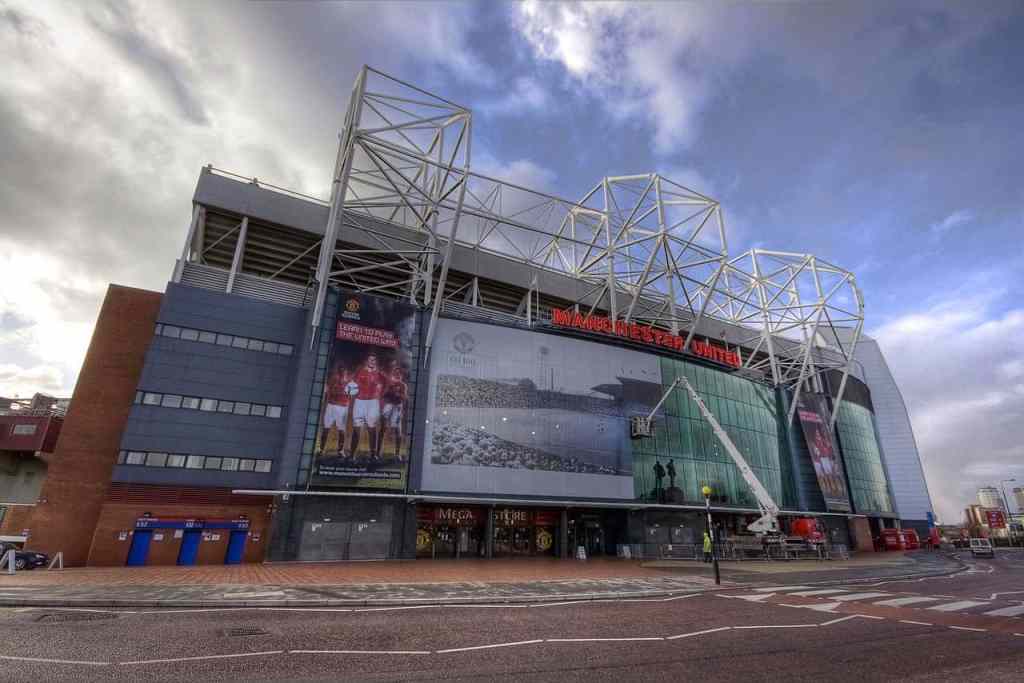
Matchday at Old Trafford: Atmosphere, Pubs & Pre-Match Scene
Matchday around Old Trafford is a sea of red moving down two or three streets, and the pre-match ritual is as much the day as the football. The heartland is Sir Matt Busby Way and Chester Road — generations-deep United pubs, chip shops, programme sellers and merchandise stalls, everything walkable and everything heaving from about three hours before kick-off. Salford Quays offers the modern alternative: waterfront bars and restaurants a couple of tram stops away, better for a proper sit-down meal before walking or tramming in.
Castlefield’s canal-side pubs split the difference for anyone coming from the centre, and the city centre itself is where you finish the night regardless of the result. The move most first-timers get wrong is trying to drink at the stadium-adjacent pubs and eat well — pick one: pints on Chester Road with a pie, or a real meal at the Quays or in town with a calmer walk-up.
What the Atmosphere Is Actually Like
Old Trafford has taken stick for being quieter than its reputation in recent years — corporate seating, tourism and steep prices have all flattened the mid-table midweek games, and you’ll hear the ground go through long silent stretches on an ordinary afternoon. But on the big nights — Liverpool, City, a European tie under the lights — the place still genuinely roars, with the Stretford End setting the tempo and all four stands rising together when United score. The rail seating has already sharpened the noise behind that goal. Pitch your expectations to the opponent and you won’t be disappointed.
Best Pubs for Matchday
The Trafford on Chester Road is the closest traditional pub to the stadium — every surface covered in United memorabilia, rammed by early afternoon on matchdays, beer garden open when the weather allows. The quintessential pre-match pint, if you can get to the bar.
The Bishop Blaize is the singing pub — the famous one where the chants start hours before kick-off. It’s not the venue for a quiet catch-up, and there’s a matchday door rule worth knowing before you go (covered in the tips above).
The Quadrant, a five-minute walk from the ground, is the balanced option: a proper Joseph Holt pub with a beer garden, live sport on the screens and a crowd that’s lively without being crushing.
Tollgate, beside Trafford Bar tram stop, is the smart bookend pub — a calmer pint on arrival and, crucially, positioned exactly where the post-match escape route runs, with a solid beer and IPA range.
Café Football, inside Hotel Football opposite the ground, is the family-friendly non-pub: football-themed dining, dishes named after United legends, and the closest you’ll get to the stadium with a table booked.
For visiting supporters: the Chester Road strongholds — the Trafford and the Bishop Blaize especially — are firmly home-fan territory, and away colours aren’t the move there. The smarter play is to drink in the city centre around Deansgate or Castlefield, where the crowd is mixed and nobody cares who you support, then tram or walk in closer to kick-off. Hotel Football and Café Football by the ground are tourist-and-neutral friendly too. Failing that, the away concourse has a bar — just brace for the crush.
Best Restaurants in the Area
Akbar’s on Liverpool Road is a Manchester institution — vibrant, loud, brilliant-value Indian cooking with naans the size of a sail served on a skewer; the pre-match meal locals actually book. Hawksmoor Manchester in the city centre is the occasion play: the city’s premier steakhouse, worth the splurge when the match is the centrepiece of a special trip. The Wharf in Castlefield does elevated British pub food on the canal — the scenic, unhurried pre-match lunch, about 30 minutes’ walk or an easy tram from the ground.
The Dockyard at MediaCity is the Salford Quays all-rounder: a modern gastropub with a big outdoor space, easy tram access to the stadium, and a menu broad enough for a mixed group. Between those four you’ve covered curry, steak, canal-side and waterfront — the full Manchester pre-match spread.
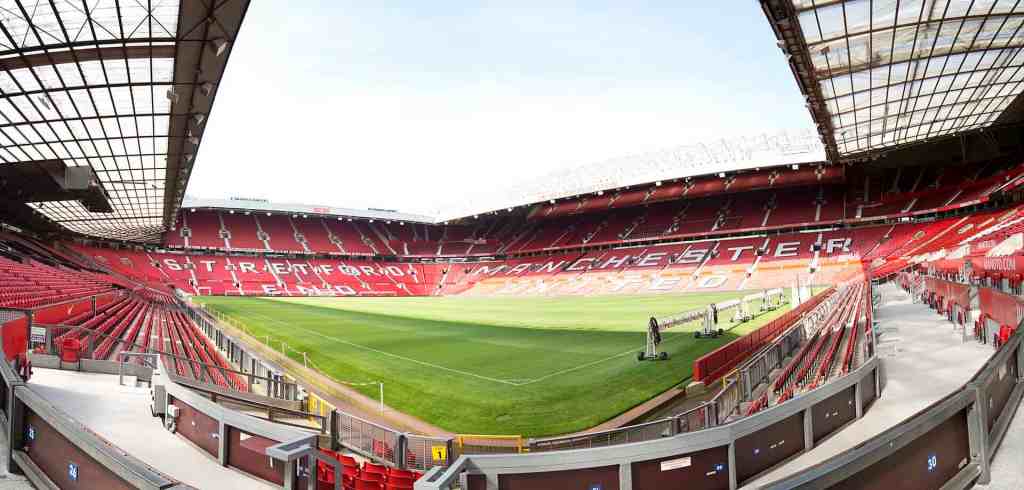
Why You Should Go
Old Trafford is the biggest club ground in England and the most storied, and for all the talk of a quieter modern atmosphere, walking up Sir Matt Busby Way toward a stadium that’s stood since 1910 still does something to you. The history isn’t decorative here — the Munich memorial, the Busby Babes, the Treble, a century of it soaked into the brickwork — and on a derby or a European night the Stretford End reminds everyone why Bobby Charlton called it the Theatre of Dreams. If you want to see this historic ground before its gone, the clock is now ticking.
Here are some other matchday guides and our Football Guides page as well:
Written by Brad Richards, Founder of Gameday Guides. This guide includes insights from personal visits as well as updated info from team sources, fan forums, and stadium policies. We aim to help you plan with confidence — enjoy your matchday.