
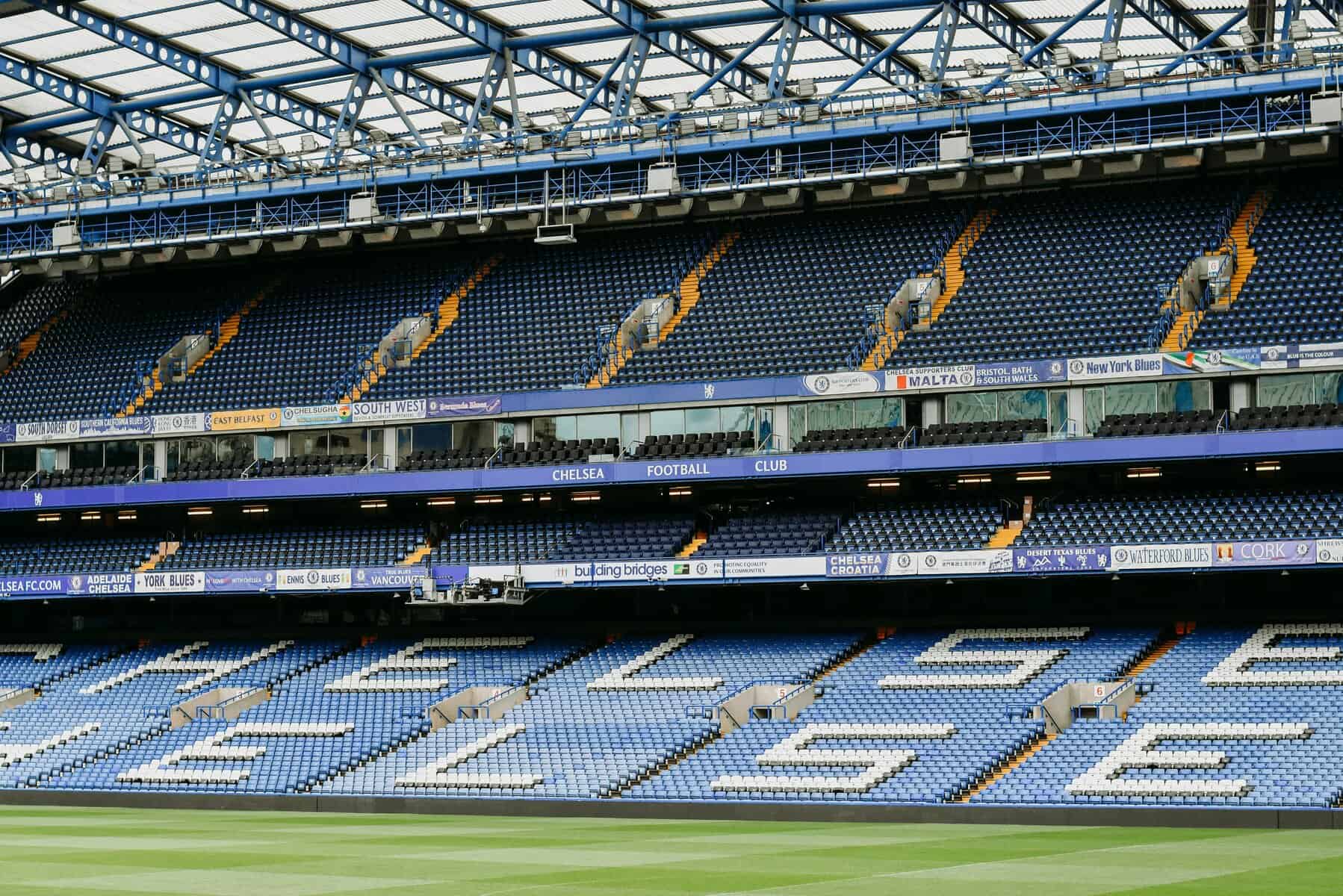

Best Seats at Stamford Bridge
Stamford Bridge is the rare big-club ground that still feels like a proper football stadium rather than a corporate bowl. Chelsea have been European champions twice and spend like a superpower, yet they play in a 40,341-seat ground wedged between Fulham residential streets and a railway line — one of the most compact in the Premier League, and all the better for it. You’re close to the pitch from almost everywhere, the noise builds fast, and even a midweek game against mid-table opposition carries an edge.
The club has owned the ground since 1905 but doesn’t own the freehold — the Chelsea Pitch Owners do — which is part of why the long-promised 60,000-seat rebuild keeps stalling and why “the Bridge,” for now, stays small and characterful. Picking a seat here is less about avoiding a bad view and more about deciding what kind of day you want.
Seating Overview
The compact footprint means there’s no genuinely terrible seat in the lower tiers — sightlines are close and steep enough that you’re rarely marooned. So the real question at Stamford Bridge isn’t “where can I see,” it’s whether you’ve come to watch the match or to feel it. The West Stand along the touchline gives you the tactician’s view; the two ends behind the goals are where the songs live. Get that decision right and the rest follows.
Best Non-Premium Seats
West Stand Lower, central, around the halfway line: The best place in the ground to actually read a game. You’re level with the action, close to the touchline, with clean sightlines into both penalty areas — you can track runs off the ball without craning. It’s also the most expensive stand in the ground, so you pay for the privilege, but if watching the football properly is the point, this is the seat.
Matthew Harding Lower (North End): This is the home singing section, full stop. The Matthew Harding holds a high concentration of long-standing season-ticket holders, it’s home fans only, and the lower tier is where chants start and spread. The view to the far goal isn’t as clean as a halfway-line seat — you’re behind the net — but you came here for atmosphere, and on a good night nowhere in the ground beats it.
Matthew Harding Upper (North End): The compromise pick if you want the noise and a better view of the pitch’s full shape. You’re elevated and sitting directly above the most vocal section, so you still hear and feel everything, but you can see the play develop in a way you can’t from behind the net at ground level. Good value relative to the experience.
Best Value Seats
East Stand (longside, lower or middle): The East Stand is the smart-money longside option. It runs cheaper than the West Stand opposite while giving you the same touchline geometry and a perfectly good view. It’s the oldest part of the ground — the only three-tiered stand — and it houses the press and the family section, so the atmosphere is more measured than the ends. Not where you go to sing, but a sensible, well-priced seat with a real view of the game.
Cheapest Way In
Upper tiers behind the goals and the upper corners: The lowest face-value seats are up in the gods at either end and in the upper-tier corners. The angle to the far goal isn’t ideal and there are stairs involved, but Stamford Bridge’s small footprint means even the back rows aren’t a hike from the pitch the way they are in a 60,000-seat bowl. For a budget first visit, the trade is honest: less view, full atmosphere.
Cup ties are the genuine cheap route in. FA Cup and Carabao Cup early rounds at Stamford Bridge are markedly cheaper and far easier to get than a Premier League fixture — same ground, same atmosphere, just lower-league opposition in an early round instead of Arsenal in a title run-in. If you want the Bridge experience for the least money and stress, a third-round cup tie is the answer most people overlook.
Our Pick
West Stand Lower, central, around the halfway line — if you can stretch to it and you’re visiting for the first time, this is the seat that explains why people fly across the world for this. Book early; the central blocks go quickly and prices climb on the secondary market for the big fixtures. If it’s the feeling you’re chasing rather than the view, take the Matthew Harding instead and don’t look back.
Weather, Wind & What to Wear
All four stands are roofed, so you’re unlikely to get soaked in your seat — but this is West London between November and February, and the cold bites. Evening kick-offs in deep winter are genuinely cold, and the upper tiers feel the wind most once the sun’s gone. The practical advice is dull but correct: dress in proper layers for any night game from late autumn on, and don’t assume a roof over your head means warmth. Afternoon kick-offs in the shoulder months are fine in a jacket.
What to Avoid (and What’s Worth Trying Once)
Upper-tier corner seats: The one place the compact rectangular layout works against you. From a corner you watch a chunk of the match happening diagonally away from you, with one end of the pitch feeling distant. It’s not a write-off, but if a central seat is available at a similar price, take it instead.
Worth it once — the Shed End: The Shed End (South) is where Chelsea’s supporter culture was forged, back when it was terracing. A quarter to half of it is now given over to away fans depending on the fixture, so it’s a different animal from the all-home Matthew Harding — but that’s part of the appeal, because the back-and-forth with the visiting end happens right in front of you. The view from the upper corners isn’t the best in the house. The experience is. For a serious football fan, standing (well, sitting) in the Shed once is worth doing even when the result doesn’t go your way.
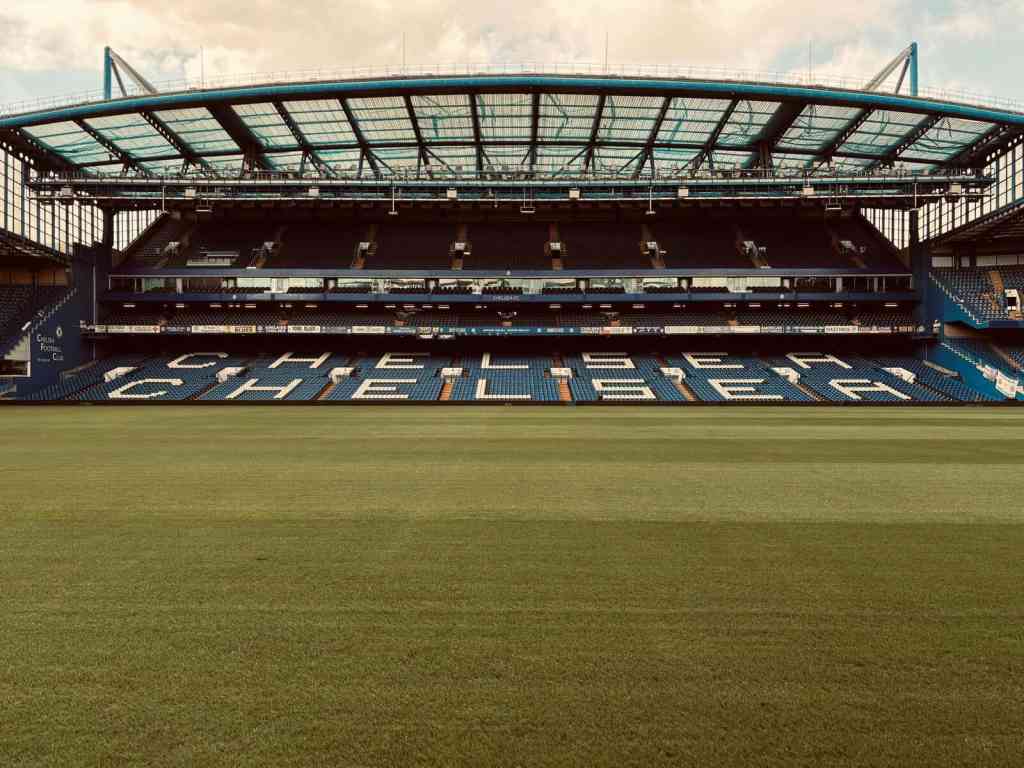
Premium Seating & Clubs
Chelsea run one of the deepest hospitality operations in English football — somewhere around fifteen lounges and suites, from casual sports-bar setups to fine dining and private boxes, most named after club legends. Prices swing enormously by fixture, with European nights and London derbies carrying a heavy premium over a routine league game. The whole thing sits under the “Club Chelsea” brand, and the genuinely useful thing to know is that you’re choosing as much by vibe as by price tier.
The Best Premium Experience
The Museum package is the one that’s special because of this building specifically. You dine inside the Chelsea museum, take a behind-the-scenes mini-tour, then watch from padded seats in the upper West Stand. For a club whose identity is wrapped up in its history — two Champions Leagues, the 1905 origin story, the legends the suites are named after — eating surrounded by that history beats a generic corporate box every time. It’s the premium experience that only makes sense at Stamford Bridge.
For the money-no-object end, the Dugout Club and Diamond Suite put you pitchside by the players’ tunnel with a pre-match tunnel tour — as close to the team as a paying guest gets here.
Best Value Premium
Westview (upper West Stand) is the honest best-value entry into premium. It’s effectively an elevated general-admission experience: padded seats, two large 360-degree bars with faster service, a proper food hall, and extended opening hours either side of the match — without the full sit-down fine-dining price. If you want a noticeably better matchday than a standard ticket but don’t want to commit to a multi-course suite, this is where the value is.
The step up from there is the Tambling Suite (named after Bobby Tambling, the club’s record scorer until recently) — a relaxed, informal hospitality restaurant with West Stand middle-tier seats along the side. It’s the friendliest of the proper suites and the easiest sell for a mixed group.
Other Premium Options
The Champions’ Club mirrors the Tambling on the East side — informal dining, East Stand middle-tier seats overlooking the eighteen-yard line. The Under the Bridge Sports Lounge is the casual sports-bar option, open three hours before kick-off with a chef’s table and an inclusive bar — good for people who’d rather watch the early game with a pint than sit through a tasting menu. Blues Dining serves the pre-match meal at the 55 Restaurant inside the on-site Copthorne Hotel, paired with West Stand lower seats and a visit from a Chelsea legend. A brand-new Platinum lounge is due to launch for the 2026/27 season as a reimagined premium space.
Suites & Group Options
Private Club Boxes sit in the West and East middle tiers, seating small corporate or celebration groups with dedicated catering and the best enclosed views in the ground. Most can be booked match-by-match as well as on a seasonal Club Chelsea membership. Pricing varies dramatically by opponent — a Category AA derby costs a different universe from a low-category league game — so the move is to enquire through Chelsea’s official hospitality team for the specific fixture rather than assume a flat rate.
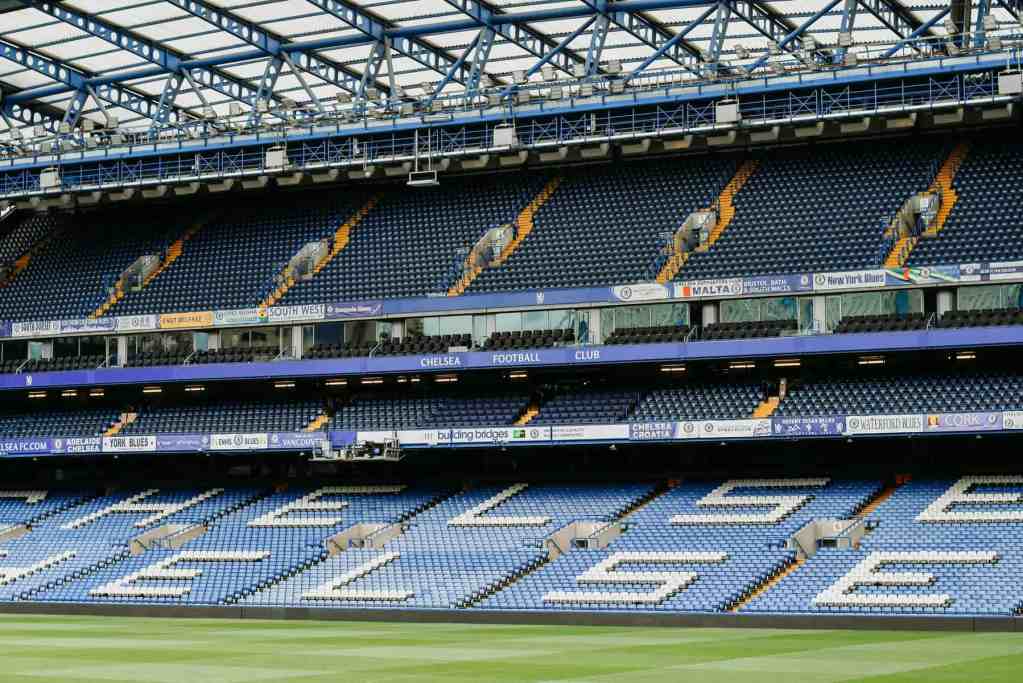
Stamford Bridge Seating Plan
Stamford Bridge holds 40,341, which makes it one of the smaller Premier League grounds — only around the ninth-largest in the league — and that’s the whole point of how it feels. It’s also one of the oldest football grounds in England, opened in 1877, and it shows in the Victorian-era bones beneath the modern fittings. There are four stands around a rectangular pitch: the West Stand (the newest and most expensive, completed in 2001), the East Stand (the oldest, a three-tier cantilever housing the dressing rooms, tunnel and press), the Matthew Harding Stand at the north end, and the Shed End to the south.
Each stand has lower and upper tiers (the East has three). Plans to expand to 60,000 have been approved and shelved more than once, and with the Chelsea Pitch Owners holding the freehold, the ground’s long-term future remains unresolved — for now it stays at 40,341.
You can find the Stamford Bridge Seating Plan here.
Chelsea Football Tickets
Tickets, not transport or hotels, are the hard part of a Stamford Bridge trip — small capacity plus a huge global fanbase means most league games sell out. Membership is close to non-negotiable for regular attendance. Chelsea’s tiers run True Blue (top priority, around £60), CFC Blue (around £45), and Junior Blue for under-16s (around £20), and your tier sets your purchase window; for high-demand fixtures, general sale is often gone before non-members get a look. If you’re going to more than one game, True Blue pays for itself.
Time the secondary market. Resale prices soften in the week before a match when Chelsea are out of form, and spike for derbies and European knockout nights. For mid-table league opponents, patient buyers find fair prices; for Arsenal, Liverpool or Manchester United, expect to pay market rate or use membership priority to skip resale entirely. The official club site is the only place to buy with membership priority applied — for non-members, reputable resale platforms are the realistic route, and it’s worth checking the platform is one Chelsea recognise so you don’t hit a problem at the turnstile.

Stamford Bridge Bag Policy
Bags must be no larger than A4 — 30cm × 20cm × 10cm — about the size of a standard handbag. This is enforced strictly, with no exceptions on matchdays beyond essential medical and infant items. Crucially, there is no bag drop or storage at the stadium anymore — Chelsea discontinued it, so an oversized bag means you’re stuck. If you’re arriving from a station or airport with luggage, sort third-party storage (services like Stasher or Radical Storage operate near Fulham Broadway) before you come. The cleanest fix, as ever, is to bring no bag at all — a jacket with decent pockets gets you through the turnstile in half the time.
Key Venue Policies to Know
No re-entry. Once your ticket is scanned you’re in for the duration; leave and you can’t come back, and entry generally isn’t permitted after the 60th minute. Smoking and vaping are banned everywhere inside the ground, and because of the no-re-entry rule, stepping out for a cigarette ends your matchday. Flags and banners are capped at 250cm × 80cm, must carry a safety certificate, and can’t obstruct views or carry abusive or political content. Non-folding umbrellas, professional cameras with detachable lenses, selfie sticks, flares and rattles are all refused at the turnstile — don’t chance it.
Cashless Only: Stamford Bridge operates as a fully cashless venue. All major debit and credit cards are accepted throughout. Make sure your contactless payment is functional before arrival — this catches visitors off-guard more than any other policy, particularly those using foreign-issued cards. Test it somewhere on the approach.
Stamford Bridge has accessible seating across the ground with an Access department based behind the Shed End, accessible toilets with RADAR-key access, and an accessible drop-off point at the Stamford Gate main entrance. There’s a sensory room for supporters with autism or sensory-processing needs, plus audio commentary headsets from the ticket office. Accessible spaces and parking are limited and should be pre-booked through the club well ahead of the fixture.
Full current details are on Chelsea’s matchday information guide.
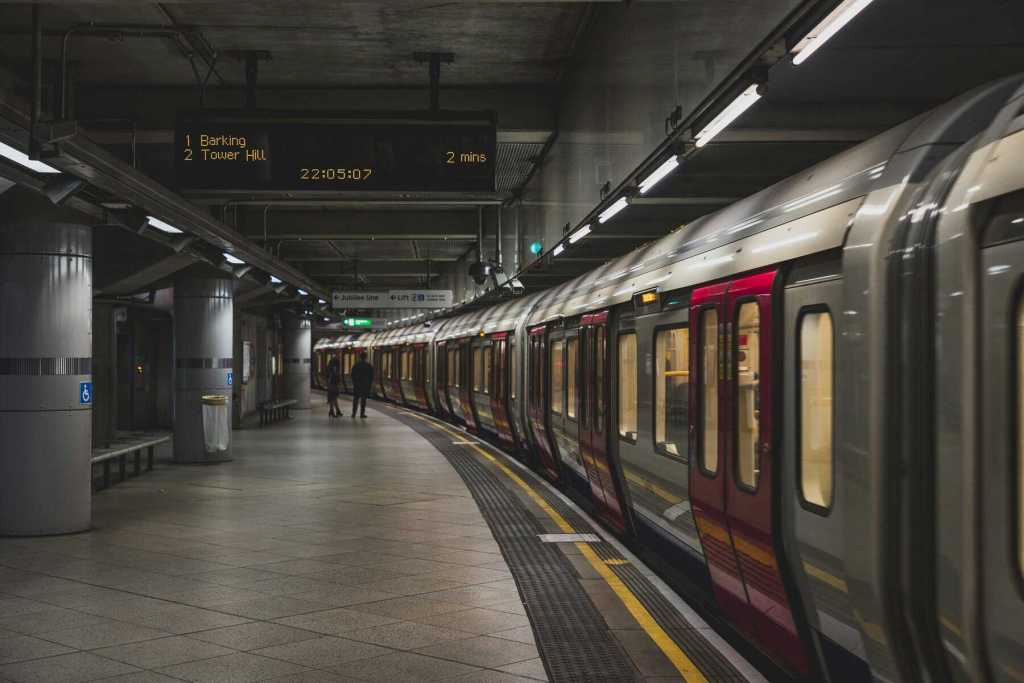
Getting to Stamford Bridge
The ground sits in Fulham, SW6 1HS — dense, residential West London where the Underground is the right answer for almost everyone and driving is a mistake. Plan your timing around the security queue and you’ll have an easy day.
Underground (District Line)
Fulham Broadway, on the District Line, is a five-to-seven-minute walk and the default route for most visitors. The District Line (green) connects cleanly to major interchanges — Earl’s Court, Victoria, Paddington — so it’s reachable from across the city. Use contactless or an Oyster card; both are cheaper than a paper ticket and cap your daily spend, with a single from central London running a few pounds. The same line takes you out afterwards, though the platform fills fast post-match (see the exit tip below).
Bus
Routes 14, 211 and 414 stop on Fulham Road within sight of the ground. Useful if you’re already on the right side of town and want to skip the post-match Tube crush. Contactless only — no cash, no paper tickets.
Rideshare & Taxi
Works well before the match from a fixed pickup point. Afterwards, surge pricing and matchday road closures make it slow and pricey — Fulham Road itself shuts roughly ninety minutes before kick-off and reopens about an hour after full time, so your driver can’t get close anyway. If you must, walk a few streets out and meet the car away from the cordon.
From the Airports
Heathrow: take the Piccadilly Line and change at Earl’s Court onto a Wimbledon-bound District Line train to Fulham Broadway — roughly an hour all in. Note it’s the Piccadilly Line from Heathrow, not the District directly. Gatwick and Stansted: train to a central terminus (Victoria or Liverpool Street), then the District Line across. Allow two hours from any airport on a matchday to be safe.
Driving & Parking
Don’t, if you can avoid it. There’s no public parking at the stadium, surrounding streets are permit-only with aggressive enforcement, and the road closures box the area in. If you genuinely must drive, park at an outer District Line station — Wimbledon, Richmond or Ealing Broadway — and Tube in. It’s reliably faster than hunting for a space in Fulham.

Top Tips for Stamford Bridge
The ground is small, the walk in from Fulham Broadway is short, and almost everything that goes wrong on a Stamford Bridge matchday traces back to the same three mistakes: driving, arriving late or bringing a bag. Get those right and the rest of the day runs itself. What follows is the stuff that isn’t printed on your ticket.
Stamford Bridge History Worth Knowing
Chelsea was founded to fill this ground, not the other way round. The Mears brothers bought Stamford Bridge in 1904 and offered it to Fulham FC first — Fulham said no, so the Mears started their own club to play in it. They took the name of the neighbouring borough because Fulham already had theirs, which is why the club is called Chelsea and the stadium sits in Fulham.
The Shed End’s famous roof was built for greyhound bookmakers. Archibald Leitch designed the asymmetrical canopy over the old south terrace in the 1930s at the request of the Greyhound Racing Association, who wanted their bookies and punters kept dry at the dog track that circled the pitch. It covered about a fifth of the terrace, and the nickname it produced outlived the greyhounds by ninety years.
Look for the original Shed wall behind the south end. It stands opposite the Megastore and ticket office and it’s the one surviving piece of the pre-1994 ground — the last physical trace of the terrace that gave Chelsea’s support its identity.
The record attendance here is 82,905. Chelsea against Arsenal, 12 October 1935, back when the terraces held double what the seats do now. Standing in a 40,000-capacity ground and picturing twice that many people in it is the quickest way to understand how much English football has changed.
Who Owns Stamford Bridge?
Not Chelsea. The freehold belongs to Chelsea Pitch Owners plc, a non-profit set up in 1993 that bought the ground, the turnstiles, the pitch and the “Chelsea Football Club” name in 1997, then leased it all back to the club for 199 years at a peppercorn rent.
The name and the ground are legally tied together. If the club ever leaves Stamford Bridge, it forfeits the right to call itself Chelsea — which is precisely why the long-promised rebuild has been so hard to get moving.
No shareholder can outvote the room. Nobody holds more than 100 votes regardless of how many shares they own, CPO directors are barred from being club directors, and any move needs 75% backing. Chelsea put exactly that proposal to a vote in October 2011 and lost it.
Is This the Stamford Bridge from 1066?
No. Harold Godwinson’s victory over the Norwegian invasion force happened at Stamford Bridge in East Yorkshire, a village roughly 200 miles north of Fulham. The London name comes from a bridge over Stanford Creek, a Thames tributary that ran along what is now the railway line behind the East Stand; the two share an Old English root and nothing else.
Matchday Traditions & Supporter Culture
Be in your seat before “The Liquidator” starts. The Harry J Allstars instrumental plays as the teams come out and the whole ground claps through it — it’s the moment the atmosphere switches on, and missing it because you were still queuing for a pint is the most common first-timer regret here.
Peter Osgood’s ashes are buried under the penalty spot at the Shed End. They were interred there in October 2006, months after he died, and nobody has moved them since. Every penalty struck at that end goes over the club’s greatest centre-forward.
Touch the Osgood statue on the way in. It stands outside the West Stand by the Britannia Entrance and it’s the ground’s only statue — supporters rub it or touch the badge on their shirt as they pass, and it doubles as the easiest meeting point on the site.
Don’t bring celery. Chelsea fans threw it for decades until Arsenal complained to the FA after the 2007 Carling Cup final, and the club now treats possession of a celery stalk inside the ground as a bannable offence. It sounds like a joke until a steward takes it seriously.
Expect “the bouncy” in cold weather. It started as a way of keeping warm through winter fixtures and stuck — a section of the ground jumping in unison, usually the Shed or the Matthew Harding, usually when Chelsea are winning.
Standing, Singing & the Away End
Book a rail-seating block if you want to stand for the full ninety. Licensed safe standing operates in the Matthew Harding lower tier and both Shed End tiers, where rail seating replaced the flip-up seats — you’re still allocated a seat, you just have a barrier to stand behind instead of a steward asking you to sit down.
Stamford Bridge hosted the first licensed safe standing match in Premier League history. Chelsea against Liverpool, 2 January 2022, as one of five early adopters. Worth knowing if you’ve been away from English football for a decade and remember the constant standing arguments.
Check the block code before you buy resale in the Shed End. Away allocations sit in Shed Lower SL1–SL3 and Shed Upper SU1–SU3, sometimes spilling into SL4 and SU4 depending on the fixture. Home supporters end up in there occasionally and it is not where you want to be celebrating a Chelsea goal.
Arrival Strategy
Arrive 50–60 minutes before kick-off. Security is thorough and the queues build fast, and this isn’t advice for the big games only — it applies to a Tuesday night league fixture as much as to Arsenal. Getting boxed into a queue as the whistle goes is entirely avoidable.
Cache your ticket before you leave for the ground. Mobile signal collapses when thirty thousand people reach for their phones at once, so download it into the Chelsea app or take a screenshot while you’ve still got signal.
Check your gate on the ticket before you set off. The ground is compact but the stands don’t connect on the outside the way they do in a modern bowl, and turning up at the wrong one means walking most of the way round the perimeter against the crowd.
Food & Drink Inside the Ground
Work the smaller kiosks, not the main concourse counters. Outlets are spread through all four stands and the queues at the secondary ones are consistently shorter, which matters more here than at a bigger ground because the concourses are narrow.
Go to the toilets two minutes before half-time, not at half-time. The instant the whistle goes every concourse in the ground jams simultaneously. Leaving early costs you nothing and saves ten minutes.
Exit Strategy
Walk to West Brompton instead of Fulham Broadway. It’s about ten minutes on foot, it’s served by both the District line and the Overground, and it clears far faster after the final whistle — away fans are routinely steered there for exactly that reason.
Or just wait fifteen minutes. The streets and Fulham Broadway jam solid the moment full time hits. Staying in your seat or finding a post-match pint lets the first wave clear and costs you almost nothing.
Head north up Fulham Road rather than south. The northern approach is reliably less congested in both directions, and it puts you within reach of the King’s Road if you’re carrying on afterwards.
Stamford Bridge Photos & Best Photo Spots
The Osgood statue and the West Stand frontage is the shot everybody takes. Get there early — by an hour before kick-off there’s a queue of people waiting to stand in front of it.
Shoot down towards the Shed End from an elevated seat. It’s the angle that captures how tightly the four stands wrap the pitch, and it’s the thing that makes Stamford Bridge photograph differently from the newer bowls.
For atmosphere, point the camera at the Matthew Harding before kick-off. A full singing end with the scarves up does more than any posed picture outside the turnstiles.
Stamford Bridge Stadium Tour & Museum
Book a tour for the day before or after your match, not on the day itself. Tours run on non-matchdays and often either side of a fixture, and they get you into the players’ tunnel, the dugouts and both dressing rooms — the parts of the building a ticket doesn’t buy you.
Do the museum even if you skip the tour. It runs through the club’s history and both Champions League wins, and forty minutes in there makes the songs you hear in the Matthew Harding land differently.
The Megastore
Browse before the gates open or after the final whistle. The store sits behind the Shed End near the ticket office, opens several hours before kick-off and shuts during the match — there’s no nipping in at half-time.
On a non-matchday you can walk in without a ticket. Useful if you’re in London for a few days and the fixture you want is sold out.
Families & Kids
Base yourself in the East Stand. It holds the family section, it’s well stewarded, and the atmosphere is calmer than either end without being flat.
The small footprint genuinely helps with young children. You’re never a long walk from a toilet or a food outlet, and the noise grips children rather than swallowing them the way a 60,000-capacity bowl does.
Check the current concession bands before you buy. Younger children often qualify for reduced pricing and the categories change, and baby-changing facilities are spread around all four stands.
Autographs & Player Access
Set your expectations low. Chelsea train at Cobham in Surrey, not at the ground, and players arrive on matchdays through a secure entrance — casual autograph hunting here is far harder than at clubs with an open training ground.
The pitchside hospitality packages are the realistic route. The tunnel-side options put guests by the players’ arrival zone with a pre-match tunnel tour, which is as close as a paying visitor gets.
The Chelsea App
Use it for your ticket and not much else. It’s reliable for digital entry and club news, which is the job that matters on the day. Don’t turn up expecting in-seat ordering or a live seat-upgrade market — this isn’t a ground built around that kind of tech.
Odd Things Worth Knowing
Don’t try to pet the detection dogs. Working dogs are deployed at entry as standard. They look friendly and they are absolutely working.
Away supporters should use the toilets before kick-off. The concourse behind the Shed lower tier is the tightest space in the ground and it gets genuinely unpleasant at half-time.
Things to Do Nearby
The King’s Road runs past the ground and stays busy with supporters for hours after full time. A few stops east on the District line puts you in South Kensington for the Natural History Museum and the V&A, both free. If you want the opposite of matchday noise, the Thames path from Chelsea Harbour is a ten-minute walk west.
Hotels Near Stamford Bridge
Stamford Bridge sits in one of London’s most desirable residential areas, so accommodation nearby is pleasant but rarely cheap. The District Line puts most of central London within 30–40 minutes, so you’re not tied to Fulham — but for a football-focused trip, staying close pays off. Book well ahead for the big fixtures — Arsenal, Liverpool, Manchester United and European knockout nights push demand across the whole borough.
Best Areas to Stay
Fulham / Stamford Bridge (SW6): Walking distance to the ground, quiet and residential, premium-priced — ideal if the trip is built entirely around the football. Chelsea / King’s Road (SW3): Upscale and lively on matchdays, five to ten minutes on foot, the best base if pre-match atmosphere and dining matter. South Kensington (SW7): The sweet spot for most visitors — excellent hotels at varied price points, the big museums on your doorstep, and fifteen to twenty minutes to the ground on the District Line. Central London (Victoria / West End): Best if the football is one part of a wider London trip; 20–30 minutes in on the Tube with the whole city at hand.
Hotel Recommendations
The Copthorne and Millennium hotels at Chelsea FC are literally on the Stamford Bridge site — four-star, with the 55 Restaurant and Frankie’s sports bar on-site. Unbeatable for walkability; you’re at the turnstiles in two minutes. The Chelsea Harbour Hotel is the local luxury pick — five-star, marina views, a short way west near Imperial Wharf. DoubleTree by Hilton Imperial Wharf sits about half a mile out, reliable and well-reviewed. For South Kensington, The Pelham is a characterful boutique townhouse hotel, superbly placed for both the museums and the stadium. If you want full luxury and don’t mind a short Tube ride, The Berkeley in Knightsbridge is elegant and consistently excellent, about twenty minutes from the ground.
Budget Options
Premier Inn London Kensington (Earl’s Court) is the most practical non-luxury choice — under a mile out, dependable, and reasonably priced for the area. Travelodge and Ibis options around Earl’s Court are a step cheaper and still a quick Tube ride or walk in, a solid fallback when the closer rooms are gone.
Chelsea Matchday: Restaurants and Pubs
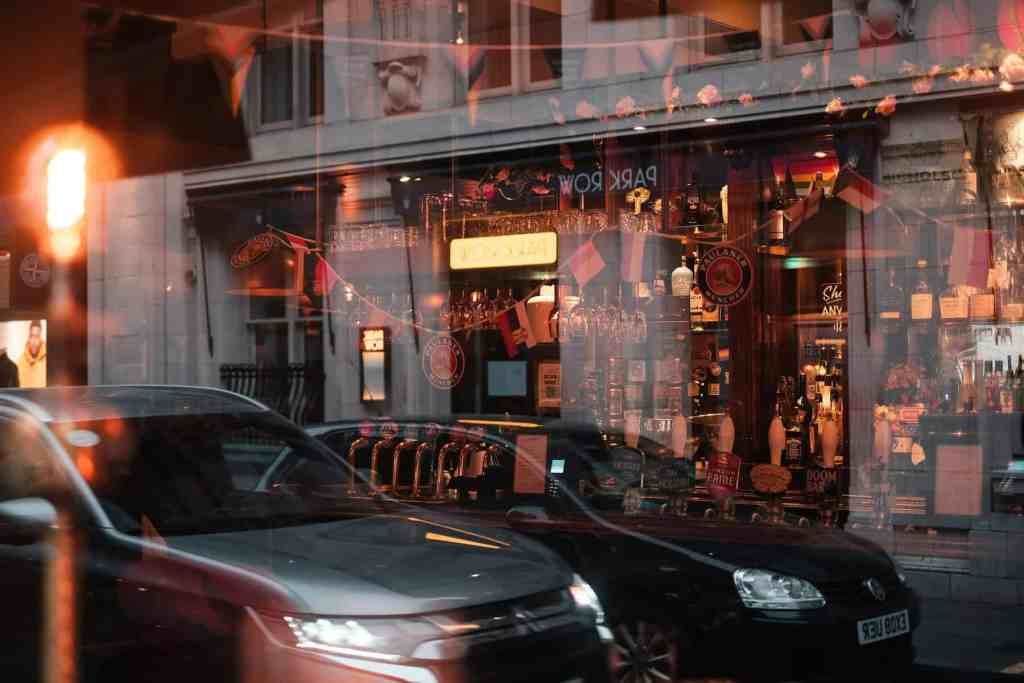
The pre-match scene runs along Fulham Road and the King’s Road, a stretch that’s been part of Chelsea’s matchday for generations. Pubs fill early for the big fixtures and the buzz on the street climbs in the hour before kick-off; afterwards, the King’s Road keeps hosting fans long after full time. Turn up early enough to be part of it rather than dashing straight to the turnstile.
Best Pregame & Postgame Pubs
The Butcher’s Hook (Fulham Road, opposite the ground) is the one with the real claim — it’s where Chelsea FC was reportedly founded and named in 1905, and it’s the closest proper pub to the turnstiles. Fills to capacity early on matchdays. The Imperial Arms on the King’s Road is a traditional, lively option a short walk down. The Fox & Pheasant, a tiny Chelsea backstreet pub dating to 1846, is the charming, low-key alternative when the big rooms are heaving.
The Cock on North End Road draws a local crowd a little off the main drag. Away fans are generally pointed toward the Sir Oswald Stoll on Fulham Road. Arrive early for any of them on a big matchday — they reach capacity well before kick-off.
Best Restaurants in the Area
The Harwood Arms (Walham Grove, Fulham) is the standout — London’s Michelin-starred gastropub, built around superb British game and produce, about ten minutes from the ground; book well ahead. Bluebird on the King’s Road is the iconic brasserie in a landmark building, better for a longer pre-match lunch than a quick bite.
Al Santo on Vanston Place is a well-liked Italian-Mediterranean spot very close to the stadium and easier on the wallet than the King’s Road names. Sixes Fulham near Fulham Broadway pairs casual food with social cricket — a fun, low-stakes option for a group with time to kill before kick-off.
Why You Should Go
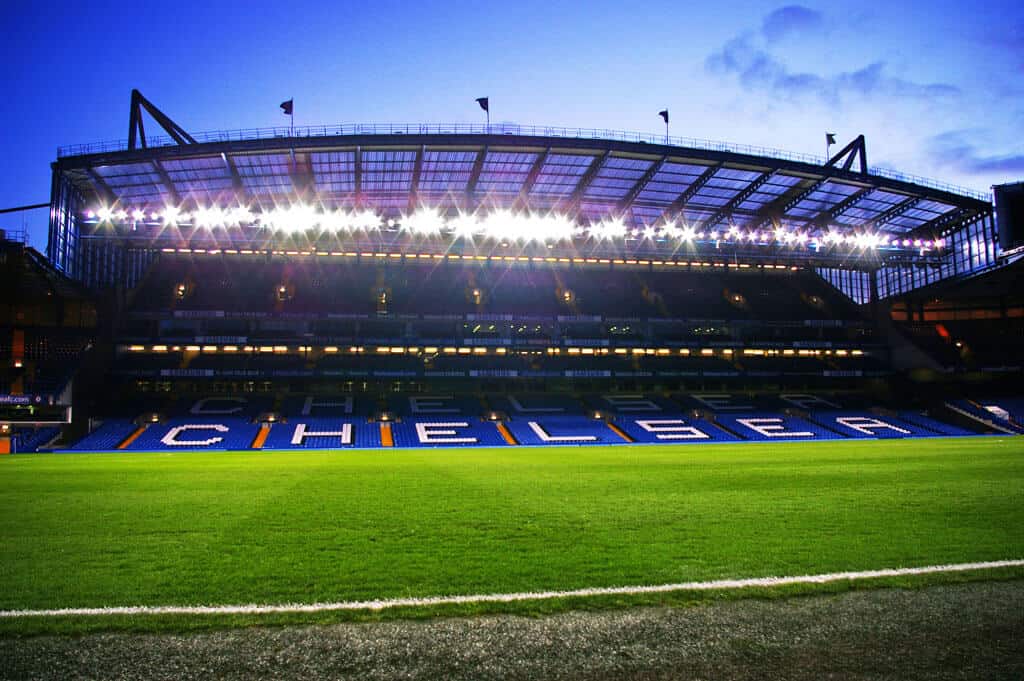
Stamford Bridge gives you something the new megastadiums can’t: a genuinely big, genuinely successful club playing in a small, old, tightly packed ground where the crowd is right on top of the pitch. The history is real, the atmosphere in the Matthew Harding and the Shed is real, and the surrounding slice of West London makes for an easy, enjoyable day either side of the ninety minutes. Go before the rebuild finally happens and the Bridge becomes something larger and smoother — the version that exists now, compact and a bit Victorian and loud, is the one worth seeing.
Here are some other Premier League guides in London and around the UK:
and check out our Wimbledon Guide
Written by Brad Richards, Founder of Gameday Guides. This guide includes insights from personal visits as well as updated info from team sources, fan forums, and stadium policies. We aim to help you plan with confidence — enjoy your gameday.