
Best Seats At Tottenham Hotspur Stadium
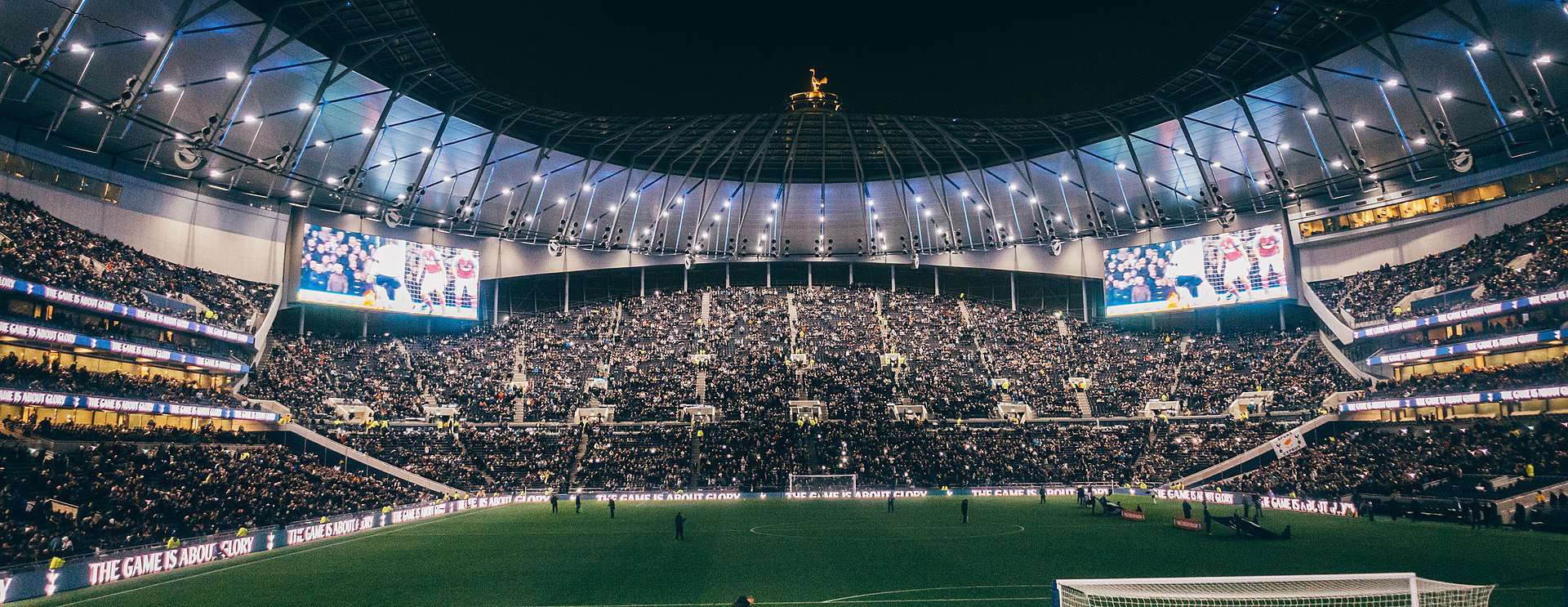
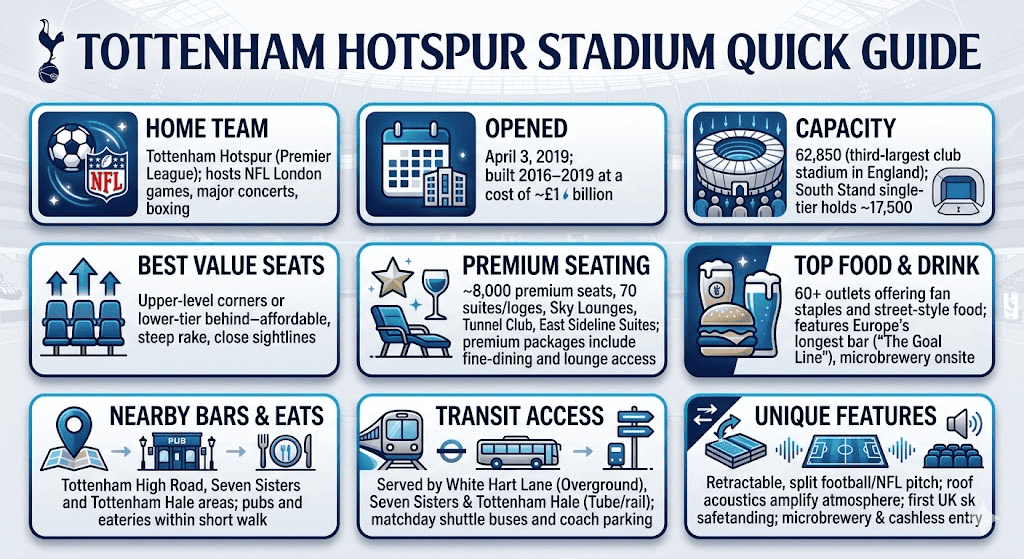
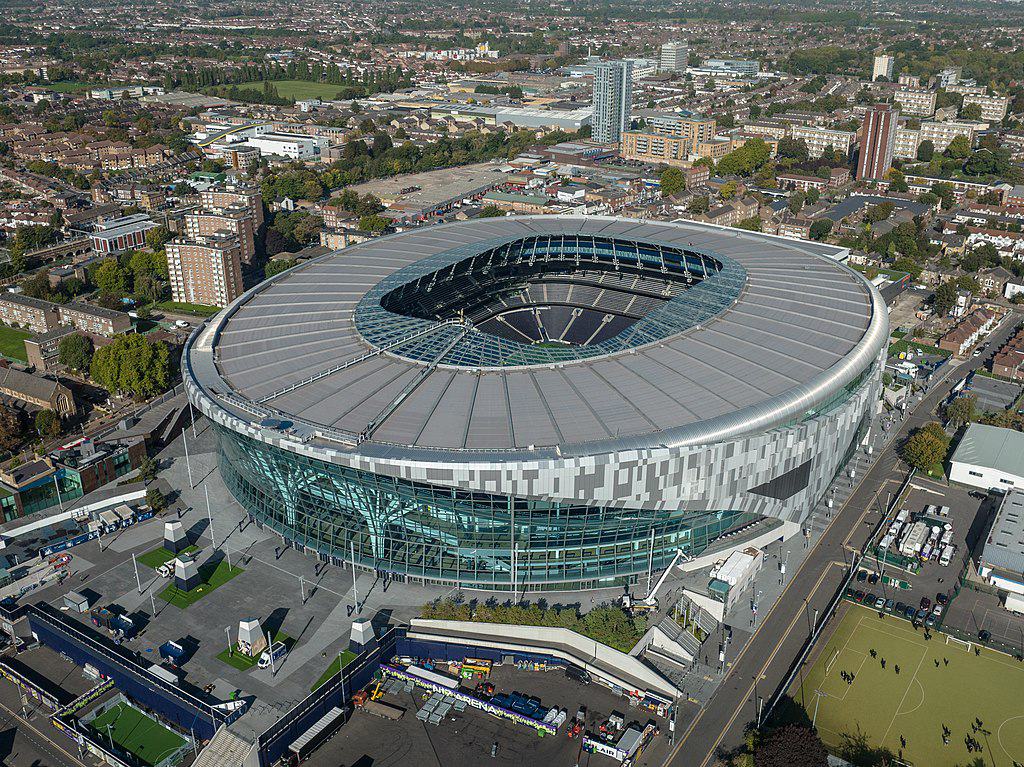
Tottenham Hotspur Stadium is one of the most advanced football grounds on the planet, opened in 2019 on the exact footprint of old White Hart Lane in North London. It holds 62,850, which makes it the largest club stadium in London and the third-biggest football ground in England — but the number undersells it, because the design pulls you closer to the pitch than almost anywhere in the UK, with the front rows sitting just five to eight metres off the touchline. The South Stand, a single-tier 17,500-seat wall inspired by Dortmund, is built to make noise, and on a European night or a North London derby it genuinely delivers. One honest reality before you plan anything: there’s no parking for regular fans, on purpose, so you’re getting here on public transport. Get that part right and the rest of the day takes care of itself.
Seating Overview
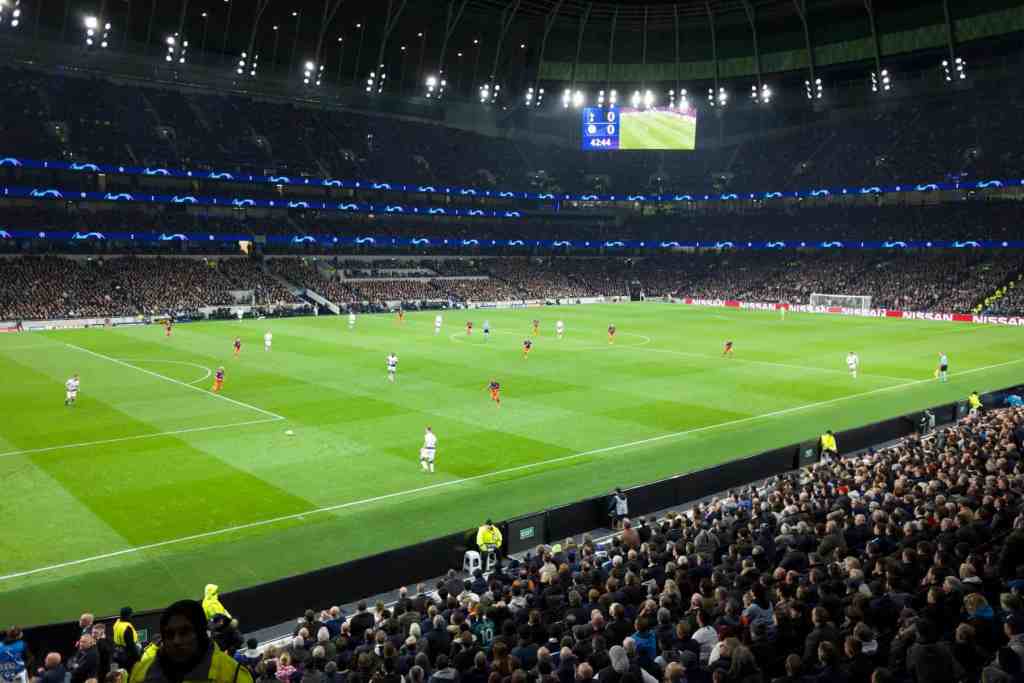
The bowl means there are no truly bad sightlines here — the steep 35-degree rake (the maximum UK guidelines allow) keeps the pitch clean from just about everywhere. So the real decision isn’t “can I see,” it’s what kind of afternoon you want: the raw intensity of the home end, the balanced perpendicular view from the sides, or the cheaper altitude of the upper corners. Since this is football, the axis that matters most is behind-the-goal atmosphere versus side-on match-watching, plus where the away support sits and which sections stand for ninety minutes.
Best Non-Premium Seats
The South Stand (the 400s behind the south goal) is the heartbeat and the reason people talk about this stadium. It’s the largest single-tier stand in the country, engineered to trap and amplify sound, and if you want the full tribal experience this is it. The view is direct but angled, since you’re behind the goal, and the lower rows put you in the thick of a section that stands and sings the whole match. On a big derby it’s electric; the tradeoff is that it’s warm in summer and it is not a sit-back-and-relax seat. Aim for the mid-rows if you want the atmosphere without being in the very front crush.
The East Stand lower tier (the 100s along the east touchline) is the classic side-on view — the whole width of the pitch, both goals, play developing in front of you in real time. This is where you go if you’re here to actually watch the football rather than be part of the choir, and it’s a favourite for families and neutrals. Rows roughly a third of the way up give you closeness without the front-row neck strain. Solid value for the quality of the view.
The West Stand lower tier (the opposite touchline) gives you nearly identical sightlines to the East side and often runs a touch cheaper, since more fans instinctively reach for the East. The experience is comparable — full width of play, involved but not overwhelmed — which makes it a smart pick for groups who want good seats without paying the premium the “better-known” side commands.
Best Value Seats
The lower North Stand is the quiet-money play. It sits directly opposite the South, gets clear views off the same steep angles, and runs noticeably calmer than the home end. Part of the North houses the away support in its corner, so as a home fan you’ll be in a more mixed, lower-key area — which is exactly the point if you want a good view without the sensory overload. Aim for the middle third of the stand; the very back rows lose the energy.
Cheapest Way In
The upper corners (the 300- and 400-level corner blocks) are where the genuine bargains live. You’re high and set back, but the rake means the view stays honest — no obstruction, you can read the whole shape of the game. What you give up is proximity and noise; it’s quieter up top and you’re a long way from the pitch. For a repeat visitor who cares more about seeing the tactics than feeling the crowd, and wants to save real money doing it, this is the answer.
Our Pick
For a first-timer, take the East Stand lower tier, a third of the way up. You get the definitive side-on view, you’re close enough to feel involved, and you can still hear the South Stand doing its thing across the pitch — the best of both without committing to ninety minutes on your feet.
The South Stand Is Worth It Once
If you only ever sit in the side stands, do one match in the South Stand lower tier anyway. The sightline is compromised and you won’t sit down, but standing inside the loudest single-tier stand in England for a big fixture is the thing this stadium was built to give you. Do it once for the story.
Premium Clubs At Tottenham Hotspur Stadium
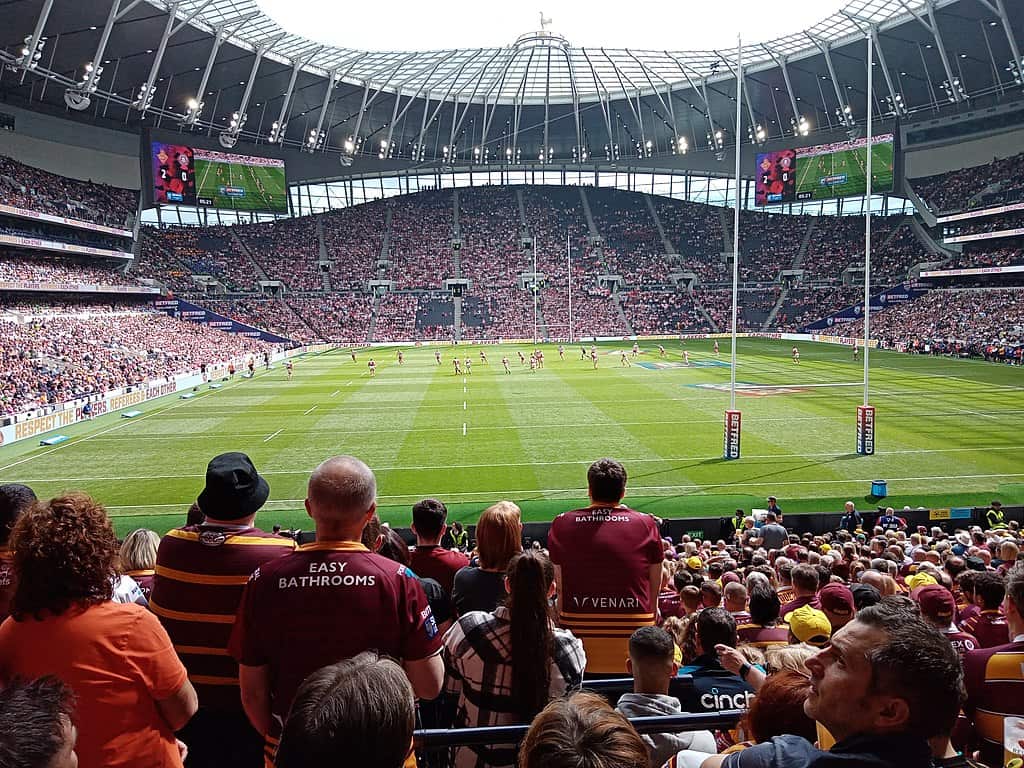
Premium here isn’t one bland corporate tier — it’s a genuine range, from casual lounges to fine dining to a tunnel-side experience you can’t get at most grounds. The premium seating clusters in the East and West stands across several levels, and the gap between tiers is real: it’s a different day out at each one. Names change with sponsors, so treat the current branding as secondary to the location and tier.
The Best Premium Experience
The Tunnel Club (pitchside, West Stand) is the standout, and not just marketing — it took the industry’s Best Overall Matchday Hospitality award. You’re seated in the lower west with a glass-walled view straight into the players’ tunnel and warm-up area, so you watch the teams emerge feet away before kick-off. It’s all-inclusive dining and a proper restaurant setting, and the tunnel access is the hook nothing else in the building matches. This is the “special occasion, spare no expense” pick.
Best Value Premium
The Premium Seats package (East Stand, around £299 per person) is the one I’d actually steer most people toward. You get a luxury padded seat on the east touchline with direct access to a pitch-facing private lounge, complimentary lounge food, and a fast-track entrance — the core of the hospitality experience without the fine-dining markup that pushes the top tiers past £449. For a one-off treat on a big fixture, it hits the sweet spot between “nicer than general admission” and “not remortgaging the house.” Prices climb for marquee games, so book early.
Other Premium Options
Stratus (Level 5, halfway line, around £449) is the sky-high option — panoramic seats at the very top with London laid out behind you, live entertainment, and a polished lounge; you trade crowd energy for the view and the calm. The Broadcast Booth (around £449) puts you in a novelty commentary-style setting. The Seat Unique Club and the various East and West premium lounges offer padded seats with lounge access at a range of price points. And the H Club is the most opulent, fine-dining-led space, used mainly for concerts and marquee events.
Suites & Group Options
The stadium runs private Sideline Suites across West Levels 2 and 4 and East Level 4, sized for roughly 12, 18, or 21 guests, with direct access from lounge to seats and food and drink available throughout. They’re aimed at corporate hosting and large celebration groups and run well into the thousands per match. Book through the club’s premium team directly or through official hospitality resellers — worth comparing, since resellers occasionally have availability or packages the club’s own site doesn’t show.
Tottenham Hotspur Stadium Seating Plan and Capacity
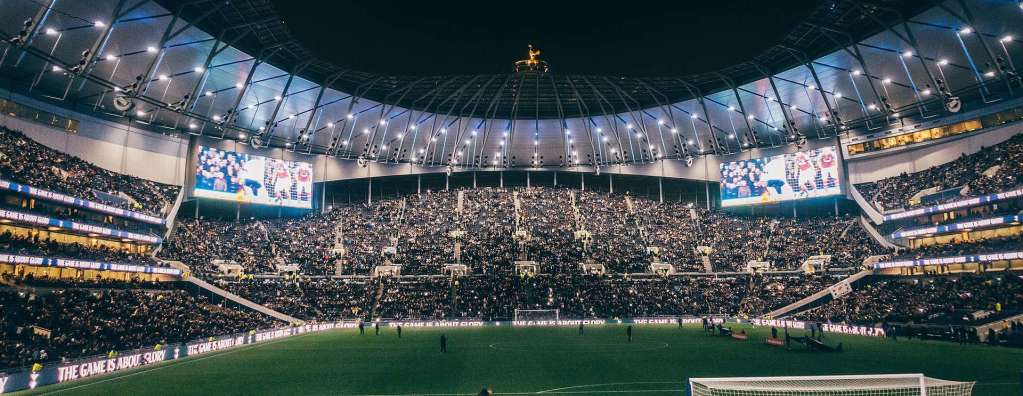
Capacity is 62,850, arranged as a continuous four-stand bowl: the single-tier South Stand behind one goal, the three-tier North Stand opposite, and the East and West stands running the length of each touchline. Most of the bowl is general admission; the premium and hospitality seating sits in the mid-tiers of the East and West stands and at the tunnel level.
Away supporters are housed in the lower tier of the northeast corner, with an allocation of up to 3,000 for Premier League matches — that’s the answer to the “away end capacity” question that comes up a lot — expanding to as many as 9,000 across all three tiers for domestic cup ties. For exact blocks, rows, and seat views before you commit, pull up the official interactive seating map on the club’s ticketing site — it’s the single best way to avoid buying blind.
Tickets to Tottenham Matches
Face value is the goal, and there are a few routes. One Hotspur Membership (from roughly £35 a year) is the real key — it gets you into member-only sale windows before games hit general sale, plus access to the official Ticket Exchange, where season-ticket holders resell tickets at face value when they can’t attend. That Exchange is the smartest place to look once a fixture sells out; availability is thin but prices don’t balloon, and last-minute listings appear constantly, so check back often.
Big fixtures — the Arsenal derby, Chelsea, City, United, Liverpool — routinely sell out inside the member windows, while a midweek fixture against a mid-table side can reach general sale. If you’re not a member, the licensed secondary market is your path, but expect to pay above face on anything high-demand and steer toward the quieter fixtures if price matters. Overseas fans compete in the same system as everyone else, so a membership is still your best single move even if you only make one match a year.
Tottenham Hotspur Bag Policy
Security is strict and consistently enforced, so travel light. Any bag must be A4 size or smaller — 21cm by 30cm — or a clear carrier bag no larger than 30cm by 30cm. The club also permits its own PVC drawstring bag (buy it from the Spurs Shop, or a £1 bag-for-life from the Tottenham Experience) and laptop sleeves up to 37cm by 31cm. Umbrellas are allowed only if under a metre and kept folded inside.
Backpacks and anything over A4 are refused, full stop — and critically, there’s no bag drop or left-luggage service at the stadium, so a too-big bag means an off-site storage detour that eats your afternoon. If a medical condition means you need a larger bag, request an exemption certificate from the club’s access team well in advance.
Other Key Policies
No outside food or drink, and no liquids of any kind — including water. This is the one that catches people out, so don’t pack a water bottle expecting to bring it in; there are free water fountains throughout the concourses instead. No re-entry once you’re through the turnstiles, so sort your food, drink, and loo stops before the whistle.
No opposition kit in home areas — you won’t be confronted over it in general admission, but wearing away colours in premium sections can get you asked to cover up. Flags are allowed within size limits, but the club prohibits political or religious messaging.
The stadium is completely cashless — no exceptions, anywhere. Card, mobile wallet, or wearable only, and Apple Pay and Google Pay both work for higher-value contactless. Have your payment ready before you reach the counter; it genuinely speeds the queues.
Accessibility here is award-winning and among the best in English football — wheelchair platforms in every stand, accessible toilets and lifts throughout, sensory rooms, and audio-descriptive commentary. Blue Badge parking exists in the stadium basement but is limited and must be pre-booked through the club, and you’ll wait up to an hour after the whistle to exit because of the matchday road closures. Full details live on the club’s dedicated accessibility page.
For the most updated policies here is the Tottenham Hotspur Stadium Policies page.
Getting To Tottenham Hotspur Stadium
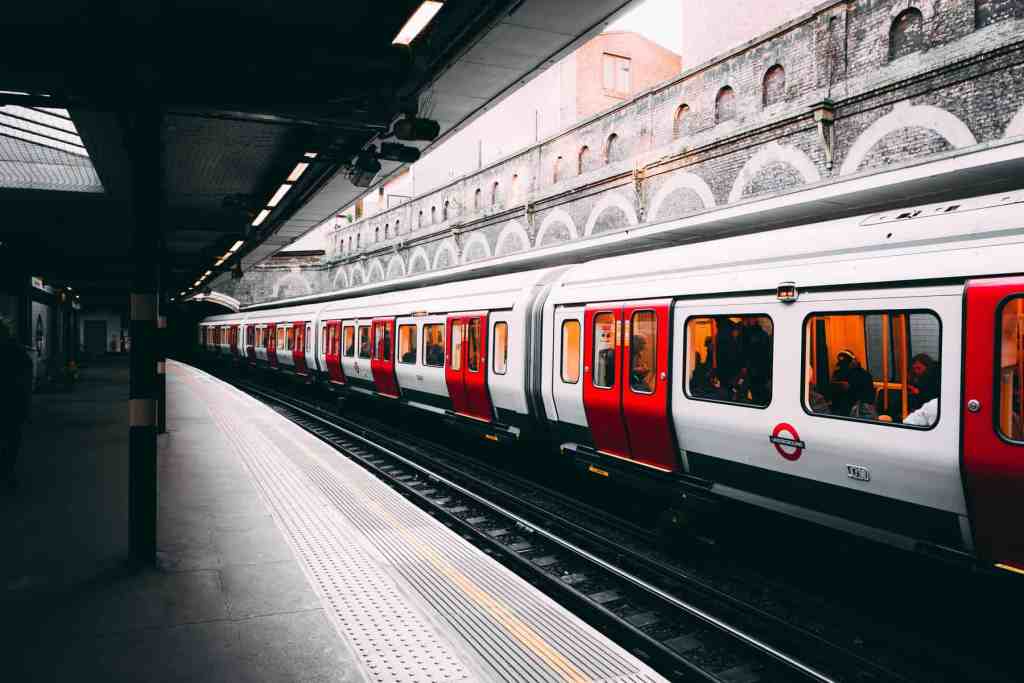
Public transport is genuinely the right call here, not a fallback — the stadium was designed around it, there’s no fan parking, and road closures mean any car drops you a fifteen-minute walk out anyway. Here’s how the options actually stack up.
Public Transit
White Hart Lane (London Overground) is the closest station, roughly a five-minute walk, and the smoothest arrival if you’re early. The catch is the exit: post-match queues here are long and slow, so the move is to hang back in the stadium for twenty or thirty minutes and let it clear rather than stand in it. Northumberland Park is about ten minutes out and often less mobbed after the whistle, handy if you’re coming from the east or northeast. Tottenham Hale (Victoria line plus National Rail) is a longer walk, around 25 minutes, but the Victoria line is frequently the fastest route from the West End or South London. Seven Sisters (Victoria line) is the furthest walk at about 30 minutes and mainly useful for spreading out the crowd if the closer stations are overwhelmed. Whatever you pick, the last half-hour before kick-off is the crush — arrive 75-plus minutes out and the whole journey is calmer.
Rideshare
Uber and the like can drop and collect on the stadium’s east side, but road closures mean you’ll still be dropped roughly ten to fifteen minutes’ walk away, which undercuts the point. Post-match surge is real — often two to three times normal — so unless you’ve got mobility needs or a group splitting the fare, the train is faster and cheaper. If you do rideshare out, walk a few minutes clear of the cordon first and, ideally, wait out the initial rush before booking.
Tottenham Stadium Parking
Short version: don’t, unless you really have to. There’s no general-admission parking at the stadium itself, and a strict Controlled Parking Zone blankets the surrounding streets on event days, with residential bays suspended. Chance it on a yellow line or a permit street and you’re looking at a fine north of £130, or a tow — enforcement is heavy right around the ground.
If you must drive, pre-book an off-street space rather than turning up hopeful. Aggregators like Footy Parking, JustPark, and YourParkingSpace list private and school car parks near the ground; the closest tend to be the managed school car parks a few minutes’ walk out (St Paul’s & All Hallows and Duke’s Aldridge Academy are among the nearest verified options), which open a few hours before the match and are marshalled and secure. Sainsbury’s on Northumberland Park is another option and handy for the Tottenham Experience and ticket office, but mind the tight event-day time limits so you don’t pick up a penalty.
Whatever you book, plan around the road closures: arrive at least two hours before kick-off, and expect to wait up to an hour after full-time before you can drive out. One more clarification, since it trips people up — the official on-site basement car park with its colour-coded Yellow, White, and Grey zones is not general parking; it’s reserved for Blue Badge holders (booked through the club’s Disability Access Scheme) along with staff and some hospitality, with a 2.1-metre height limit and no re-entry once you’re in.
Cycling & Shuttle
The stadium is well set up for cycling, with hundreds of bike parking spaces across nearby locations and Cycle Superhighway 1 running right past toward Liverpool Street — fast, free, and stress-free if you’re within reach. On big fixtures the club also runs an event-day shuttle bus service from outer stations like Wood Green, high-capacity and timed to the crowds, which is a solid way to dodge the worst of the queues.
Tottenham Hotspur Stadium Top Tips
This place is still pretty new — it’s huge, the food is a genuine highlight rather than an afterthought, and a few small moves save you a lot of queuing. Here’s what regulars actually do, and what a first-timer walking into N17 should know before the turnstiles.
Know the Building First
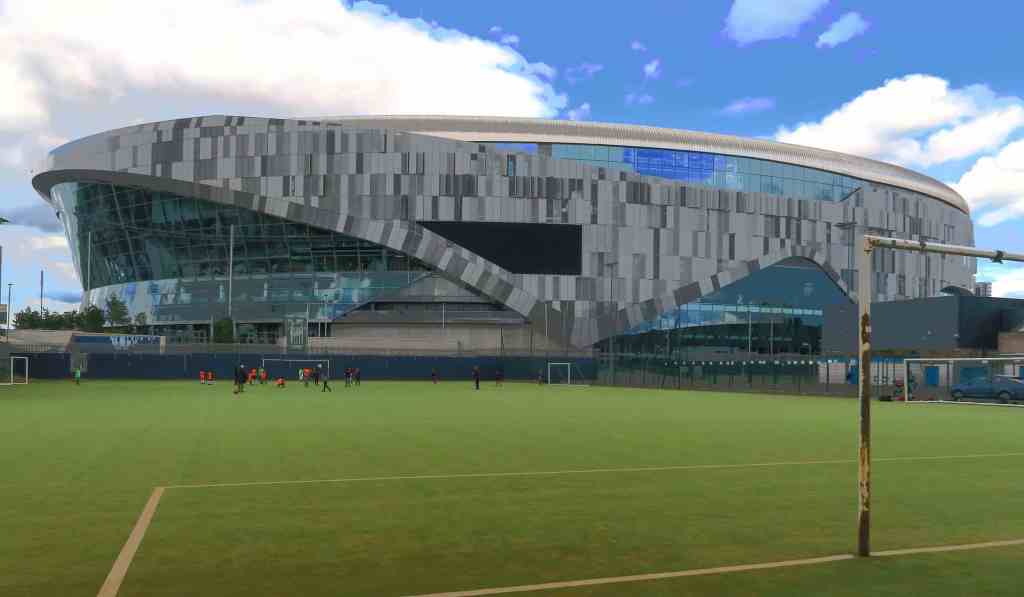
A little context makes the whole day read better. Designed by Populous on the exact footprint of old White Hart Lane, this is an asymmetric bowl built around one idea: intimacy at scale. The stands are raked at 35 degrees — the steepest UK guidelines allow — which is why the front rows sit just five to eight metres off the touchline and even the upper tiers feel close. The asymmetry comes from that vast single-tier South Stand, 17,500 seats modelled on Borussia Dortmund’s Yellow Wall and Anfield’s Kop to manufacture a wall of noise the older London grounds can’t match.
The other half of the brief was flexibility. The pitch is a world-first dividing, retractable grass surface that slides away in about 25 minutes to reveal synthetic turf underneath — purpose-built as the NFL’s first permanent home outside the United States, and the reason the venue can host American football, concerts, and boxing without chewing up the Premier League surface. Add over 60 food outlets, Europe’s longest bar, and an on-site brewery, and the design logic is clear: a ground engineered equally for atmosphere and for keeping the turnstiles busy 12 months a year.
The Signature Feature
The golden cockerel and the South Stand are the stadium’s calling card. That single-tier home end is the tallest, largest of its kind in the UK, topped by the club’s famous cockerel emblem catching the light above the roofline. Even if your seats are elsewhere, walk over to the South Stand atrium before kick-off just to take in the scale of it — that’s the moment the building’s ambition clicks.
Arrival Strategy
Gates open two hours before kick-off for General Admission, three hours for Premium. For a standard fixture, rolling in around 60 to 75 minutes out clears the worst of the security queue and still leaves time to explore.
Your entrance is fixed to your ticket, so don’t plan on picking a quieter gate. The stadium assigns a specific numbered entrance on your digital ticket and you’ll only be admitted there — the “sneak in a side gate” trick that works at some grounds doesn’t apply here. Away fans, for what it’s worth, all funnel through Gate 11.
The West Stand side off the High Road is the busy one. It’s the first stand most arriving fans hit and a popular meeting point, so its concourse fills early — if your entrance is over there, the last half-hour before kick-off is the crush to avoid.
For the marquee games, give yourself two hours. Arsenal, City, and European nights mean slower security and packed concourses well before kick-off, and there’s genuinely no way around it.
Food & Drink Strategy
This is one of the best food stadiums in England, with over 60 outlets, so skip the generic burger stand and put in a little planning.
Head for The Market Place in the South Stand. It’s the concentration of the good stuff — Seoul Bird for Korean fried chicken and proper fish and chips are the standouts, with quality burgers, pizza, and street food alongside. Prices are fair for the quality.
Pre-order at the Goal Line Bar through the app. At 65 metres it’s the longest bar in Europe and a genuine spectacle, but it’s a zoo at half-time. Order your drink on the official stadium app during the first half and collect it at the express lane the second the whistle blows.
Try the Beavertown microbrewery. There’s a brewery producing craft beer on-site — a real world-first inside a football ground — if you’d rather a proper pint than standard lager.
Buy food mid-half, not at the break. Queues evaporate in the first twenty minutes of each half; queue at half-time and you’ll miss the restart.
Exit Strategy
The bottleneck isn’t the stadium, it’s the stations — White Hart Lane and Seven Sisters both back up hard the second the final whistle goes. The smart play is to not join it: The Market Place stays open post-match with food and, on some events, live music, so buy yourself twenty or thirty minutes inside and walk out into a station queue that’s already melting away. If you’d rather move, Northumberland Park tends to clear faster than White Hart Lane.
Instagrammable Spots & Photo Ops
A few shots are worth going out of your way for, and they’re the images that actually sell the day when someone searches Tottenham Hotspur Stadium photos.
The golden cockerel on the South Stand is the signature. Shoot it from the south podium exterior roughly 90 minutes before an afternoon kick-off, when the light is best.
The 65-metre Goal Line Bar photographs far better empty than packed, so grab it early before the crowd builds.
The Bill Nicholson Gates, the wrought-iron gates from old White Hart Lane, were reinstated in 2025 near the ticket office at the north end — a proper heritage photo spot for anyone who knows their Spurs history.
The Centre Spot marker in the southeast corner concourse marks where the centre circle of old White Hart Lane sat, since the new stadium overlaps the footprint. A quiet one most visitors walk straight past.
The Tottenham Experience on the High Road has striking modern architecture worth a frame on your way in.
Traditions & Culture
Learn the anthems before you go. “Glory Glory Tottenham Hotspur” is the club’s signature song, belted out to the tune of the Battle Hymn of the Republic — it dates back to the great European nights of the early 1960s and still lifts the roof on a big occasion. The other one you’ll hear roll around the bowl is “Oh When the Spurs Go Marching In,” the classic terrace singalong. You don’t need to know every word; joining in on the choruses is half the fun.
The South Stand is the engine. There’s no single set-piece ritual so much as sheer collective volume — the single-tier home end builds a wall of sound through the match, and it’s genuinely something on a European night or against Arsenal.
It’s a modern crowd that still cares. You’re not surrounded by corporate types glued to their phones here. Spurs also put on a proper pre-match production, so getting in early buys you the full build-up rather than just the football.
First-Timer Must-Do
Stand in the South Stand atrium before kick-off at least once. Even from side-stand seats, walk over and feel the scale and the noise of the single-tier end gathering — it’s the one thing you shouldn’t leave without experiencing, and it costs you nothing but ten minutes.
The Venue Apps
There are two, and both are worth having. The Spurs App holds your digital tickets and club news. The Official Tottenham Hotspur Stadium App is the useful one on the day — wayfinding around a genuinely large building, food and drink mobile ordering, and the Goal Line Bar pre-order that saves you the half-time scrum. Download both before you travel; the ticket one especially, since you’ll need it to get in.
Merch & the Club Shop
The Tottenham Experience is the largest club shop in Europe and an attraction in its own right, with an integrated museum. It’s also mobbed after the whistle, so the move is to browse it on arrival or, better, on a non-matchday when you can actually take your time. It sits on the High Road at the southwest corner of the stadium and is accessible without a match ticket.
Venue Quirks
Know the standing rules before you buy. The South Stand is the vocal end and there’s rail (safe-standing) seating in parts of the home and away ends, but outside those areas the club enforces a no-persistent-standing rule — stand too long in a regular seated block and a steward may ask you to sit. Check what kind of section you’re buying if it matters to you.
The upper tiers run cold even on mild days thanks to the airflow and roof overhang, so pack a layer for evening matches up top.
The pitch retracts in about 25 minutes. The natural grass slides under the South Stand to reveal a synthetic surface for NFL games and concerts — a genuine engineering marvel, though you’ll only catch it in action at a non-football event.
Families & Kids
The family area is in the northwest corner, spread across Levels 1, 4, and 5 (blocks 109 and 110 low down, plus 416, 417, and the 510-512 range higher up) — a calmer stretch of the ground away from the intensity of the South Stand, with dedicated buggy storage at certain entry points.
Arrive early for the pre-match production. The mascot appearances and build-up are a real show that younger fans tend to love, and getting in early beats the turnstile crush with kids in tow.
The accessibility setup helps here too. Sensory rooms and the stadium’s wider accessible design make it one of the more manageable big grounds for families with additional needs.
Autographs & Player Access
Your best window is around the players’ entrance a couple of hours before kick-off, when the team coaches arrive and a crowd gathers to catch players heading in. Security is tight and there are no guarantees — this is the Premier League, not an open training session — but arriving early and positioning near the players’ arrival area is the realistic play. Post-match access is harder and less predictable, so front-load your chances before the game.
NFL, Concerts & Events at Tottenham Hotspur Stadium
The stadium is the NFL’s official UK home. It’s the first venue purpose-built for the NFL outside the United States, hosting a minimum of two regular-season London Games each October, with dedicated locker rooms and the synthetic surface waiting under the grass. NFL tickets are usually easier to land than a Spurs match, and the production and scale are worth seeing at least once.
The concert résumé is genuinely elite. The retractable pitch has let the venue host some of the biggest live acts on the planet — Beyoncé, whose 2023 Renaissance run and 2025 Cowboy Carter residency set the stadium’s all-time attendance record; Lady Gaga; Guns N’ Roses; and Bruce Springsteen, alongside major heavyweight boxing nights. For who’s actually playing when you’re visiting, the What’s On page carries the live schedule, since the lineup turns over constantly.
Bag and entry rules differ for events. Policies for NFL games and concerts don’t always match football fixtures, so check the specific event page before you travel.
For the current season’s fixtures, and upcoming events from concerts to the NFL to the Skywalk and Tour. Check out Tottenham’s event calendar.
The Dare Skywalk & Tottenham Stadium Tour
You don’t need a match ticket to get inside — the two visitor attractions are a proper day out on their own.
The Dare Skywalk takes you onto the stadium roof and out onto a glass apex 46.8 metres directly above the pitch, right up to the golden cockerel at the summit. Book the first climb slot of the day for the quietest experience and the best clear-morning light over the London skyline. Wear comfortable, flat-soled shoes — you’ll climb 100 internal steps before you reach the open walkway. And if heights make you nervous, say so during the safety briefing; the climb guides are trained to talk people through it. One heads-up the club doesn’t shout about: cameras and GoPros aren’t permitted on the climb, and your phone stays with your guide until you’re up on the viewing platform, so you can still get the shot, just not on the way up.
The Stadium Tour is self-guided with a multimedia device, so you set your own pace — most people find 90 minutes is plenty. Don’t rush the NFL locker rooms; they’re unique to this stadium and easy to breeze past, but they’re one of the highlights. The route ends at the M Café, where your wristband gets you a seat and a drink to wind down, so leave a little extra time rather than dashing off. The whole tour route is step-free and wheelchair accessible, with lifts in the Tottenham Experience and West Atrium and seating along the way, so mobility shouldn’t hold anyone back.

Pubs Near Tottenham Hotspur Stadium
On Matchday, for a few hours the whole of N17 tilts toward the ground. Fans pour out of the stations and up the High Road, scarves on, and the pubs start filling from roughly two hours before kick-off — by an hour out the good ones are heaving. There’s a rhythm to it: the hardcore drink close to the ground in the traditional supporters’ pubs, the more casual crowd spreads into the beer gardens and the newer spots, and everyone converges on the walk down the High Road past the Tottenham Experience with the golden cockerel looming over the South Stand. Post-match the pubs refill fast as fans wait out the station queues over a pint. It’s a proper English matchday — loud, friendly, and best enjoyed early rather than sprinted through.
The area has genuinely transformed over the last decade, and where you head depends on who you are: a Spurs supporter wanting the full-throated fan pub, a visitor after somewhere welcoming that won’t feel tribal, or someone who’d rather sidestep the crush altogether.
Best Pregame & Postgame Pubs
The Bricklayers Arms (about 100 yards from the ground) is the historic heart of Spurs fan culture — walls covered in decades of scarves and memorabilia, packed and vocal, and home-fans-only on the big ones. If you’re a Spurs supporter it’s essentially unmissable, but get there early; it’s heaving 90 minutes out.
No.8 Tottenham sits practically at the stadium entrance with three bars, a beer garden, and a full kitchen. Energetic without the full tribal intensity — a good middle ground for a visitor who still wants the buzz.
The Coach and Horses has the biggest covered beer garden near the ground, known for the singing and the atmosphere with actual room to move. Get there early on the big fixtures because it fills.
The Antwerp Arms is the one for away fans and neutrals — a Grade II-listed pub from 1822, saved from closure and now community-owned, and the designated away pub. It welcomes both sets of supporters in a way the home strongholds don’t, so it’s the friendly choice if you’re not in Spurs colours.
The Elmhurst, recently reopened and more spacious, is the reliable second choice for a relaxed pre-match pint if the Antwerp is rammed.
Finsbury Park, one stop south on the Victoria line, is your escape hatch — proper pubs and restaurants well away from the stadium circus. A genuinely viable base if you find the immediate matchday crush a bit much.
Best Restaurants in the Area
Mother Hubbard’s, right opposite the stadium, does quality traditional fish and chips — just know matchday prices jump noticeably, so take it as the price of convenience. Blighty Tottenham is the spot for a proper pre-match breakfast if you’re in early for a lunchtime kick-off — full English, good coffee, somewhere to settle rather than a pub. The Bluecoats brings genuine Caribbean cooking — jerk chicken, curry mutton, ackee and saltfish — for flavour beyond standard pub fare.
Inside the ground, the Beavertown taproom overlooking its own microbrewery is worth a stop for a craft beer brewed metres away. For anything more ambitious, the smart move is to eat well before you head to N17 — central London’s full range is a short tube ride south, and the immediate area is about convenience and character rather than fine dining.
Hotels Near Tottenham Hotspur Stadium
You don’t need to be walking distance — transport links matter more than proximity here, and the tube network means anywhere near a good station puts you 30 minutes from the ground. Matchday weekends around big fixtures do tighten up, so book a few weeks out for a derby or a concert.
Best Areas to Stay
Tottenham Hale, about 25 minutes’ walk or a short hop from the stadium, sits directly on the Victoria line and Overground — the most convenient base for pure matchday logistics. Wood Green, a couple of miles out on the Piccadilly line, gives you a busy high street of shops and food with an easy connection in. And if you’re combining the match with a broader London trip, basing yourself somewhere central and simply riding the Victoria line up on the day works fine — you trade proximity for being in the middle of everything.
Hotel Recommendations
The Convenient Bet — Premier Inn London Tottenham Hale sits basically on top of Tottenham Hale station, which makes it the closest reliable option for getting to and from the ground quickly; rooms are clean, functional, mid-range, exactly what you’d expect from Premier Inn, with a retail park across the road for supplies. The Value Pick — Travelodge London Wood Green is above the shopping centre on the Piccadilly line, budget-friendly and surprisingly well soundproofed given the location, and often cheaper than the Tottenham Hale option if you don’t mind being slightly further out.
The Design Splurge — The Stratford is a genuinely stylish upmarket property in Stratford, roughly 20 minutes to the ground by Overground, with a rooftop bar and proper dining — the pick if the match is one part of a bigger London weekend rather than the whole point. The Central Base — Park Plaza Westminster Bridge puts you on the Thames by Parliament with a spa and pool, around 40 to 45 minutes to the stadium; great if you’re splitting time with sightseeing, overkill if the game is your only reason to be here.
Budget Options
Travelodge London Edmonton is a no-frills budget room a short ride from the ground via Edmonton’s Overground station — same reliable formula as Wood Green in a quieter area. Further out, Chumleigh Lodge in Finchley is a small family-run B&B with breakfast included and free parking, connected via the Northern line; you’re well away from the action but saving real money, which suits a fan who just needs a bed.
Is Tottenham Hotspur Stadium Worth Visiting?
Yes — and it’s not close. The sightlines are excellent from top to bottom, the food is arguably the best in English football, the atmosphere on a big night is genuinely electric, and the design makes you feel part of it even 50 rows up. It’s modern without feeling sterile and intimate despite holding nearly 63,000. If you want a top-tier Premier League experience that doesn’t demand a fortune, this is one of the easiest recommendations in the country — and the South Stand alone is worth the trip.
If you’re headed over to Arsenal for the Derby. Don’t forget to check out our Emirates Stadium Guide. Or Anfield legendary home of Liverpool. London Stadium and of course, Wembley.
Written by Brad Richards. Founder of Gameday Guides. This guide includes insights from personal visits as well as updated info from team sources, fan forums, and stadium policies. We aim to help you plan with confidence — enjoy your gameday. If you have any tips, if we missed anything or you have a question, don’t hesitate to shoot us an email.