

If you’re looking for other grounds in London, explore our Football Guides.
Best Seats at London Stadium
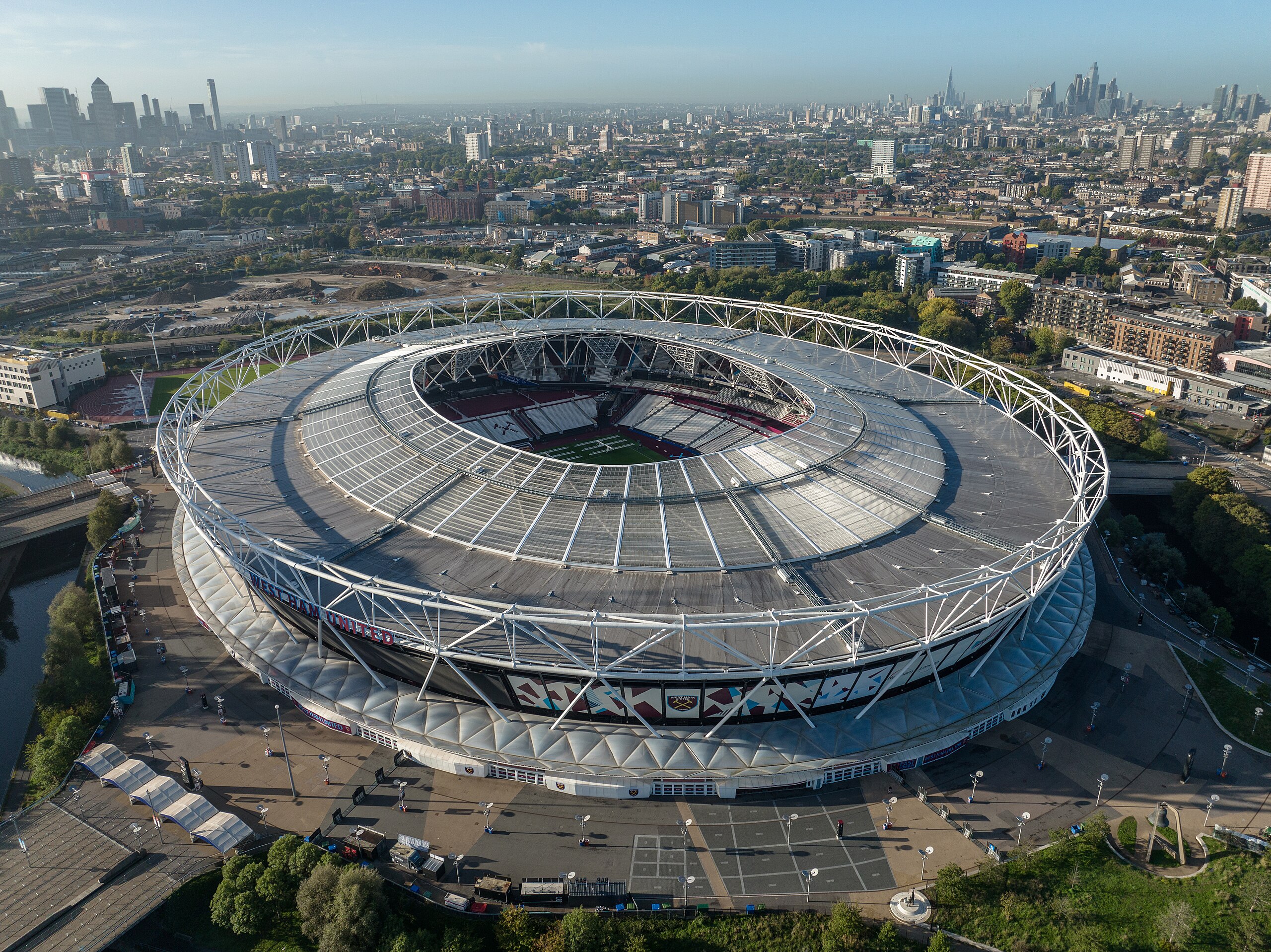
London Stadium sits in Stratford, East London—originally built for the 2012 Olympics and converted for football, which means you’re sitting further from the pitch than traditional English grounds like Upton Park. The atmosphere splits between die-hard West Ham fans who miss the intimacy of the old Boleyn Ground and newer supporters who appreciate the modern facilities and Olympic legacy venue. The reality: this is a multi-purpose stadium designed for athletics first and football second, so sightlines aren’t perfect, the distance from pitch to seats is noticeable, and some longtime supporters still resent the move from Upton Park.
Seating Guide
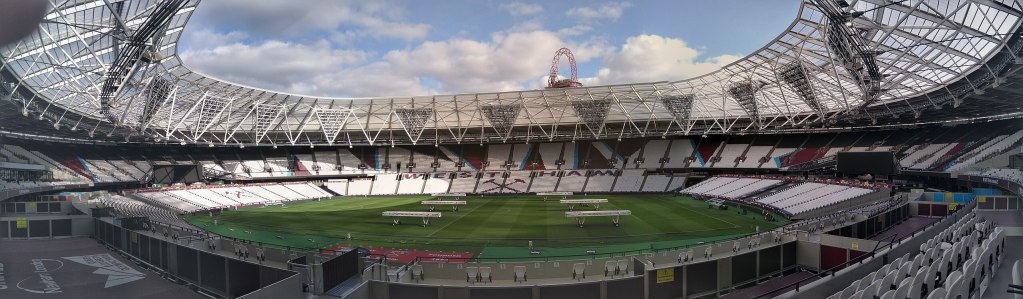
London Stadium holds 62,500 for West Ham matches across four main stands: the Betway Stand (West), Billy Bonds Stand (East), Bobby Moore Stand (North), and Sir Trevor Brooking Stand (South). Because it was built for the 2012 Olympics, the bowl wraps around an athletics track. This means even the front rows sit significantly further back from the pitch than at traditional English grounds.
The Sweet Spots: Best Overall Views
Betway Stand (West Stand) Lower Tier, Blocks 110-116 (Midfield): This is the consensus best overall viewing experience at London Stadium. You get central positioning along the touchline, placing you directly behind the dugouts and parallel to the play. The absolute sweet spot is Rows 20-30—these give you enough elevation to see over the pitch-side advertising boards while keeping you close enough to read tactical formations.
The Catch: London Stadium’s bowl was built for the 2012 Olympics, not football. Because it wraps around a former athletics track, even these “premium” lower-tier seats sit significantly further back from the pitch than at purpose-built grounds. You are getting the best sightlines available, but the distance is noticeable. Prices run £40-£100+ depending on the opponent.
The Atmosphere: Behind the Goals
Bobby Moore Lower (North) & Sir Trevor Brooking Lower (South): If you want the traditional, rowdy West Ham atmosphere, this is where you go. The Bobby Moore Lower is where the most vocal home supporters congregate, meaning you will be standing and singing for all 90 minutes. The Sir Trevor Brooking Lower (specifically Blocks 114 and 124) is equally intense because it sits directly adjacent to the away fans, creating loud, constant banter.
The Tradeoff: You are sitting behind the goal and across a running track. Your depth perception for action at the far end of the pitch will be poor, and you are watching most plays develop from 50–80 yards away. You sit here for the electric energy, not perfect tactical sightlines.
Best Value / Budget Option
Upper Tier Midfield (Billy Bonds Stand, Blocks 235-237): These are the value sweet spots at London Stadium, often priced around £60 for Premier League matches. The front rows (Rows 1-10) deliver surprisingly excellent sightlines for the price. As a bonus, many of these seats feature padded “premium” style cushions despite being sold as standard tickets. You are elevated enough to see the entire pitch clearly, and these blocks sit centrally on the East Side, offering quick exits to Stratford station post-match.
What to Avoid: You are high up, so proximity to the players is non-existent. Make sure you avoid the extreme upper corners (Blocks 242-246 and 226-230) where the viewing angle becomes warped and you end up watching the big screens more than the pitch.
Weather & Shade Reality
London Stadium is open-air, but it features a massive cantilevered roof (the largest of its kind in the world) that protects most seats from the rain. However, if the wind is swirling—which is common in East London from October through March—the front rows of the lower tier can still get wet. The upper tiers (200-level) offer much better, consistent roof coverage.
Sun Exposure: The stadium runs roughly north-south. For afternoon matches, the Betway Stand (West) gets shade first, while the Billy Bonds Stand (East) catches the afternoon sun right in the face. While London sun isn’t usually brutal, it’s highly recommended to bring a hat and sunglasses if you’re on the East side for an early-season or late-season fixture.
What to Avoid
Upper Tier Corners (Blocks 201-202, 211-216, 226-230, 242-246): You’re far from the pitch with extreme angles that make following play difficult, especially given the stadium’s athletics track creating extra distance. These are the cheapest seats for a reason—you’re watching on the big screen more than watching the actual pitch.
Back rows of any section: The stadium’s athletics track legacy means even “good” sections have you sitting further from the pitch than traditional football stadiums. Going to the very back rows of upper tiers puts you genuinely far from the action.
Lower tier behind the goals (Bobby Moore Lower, Sir Trevor Brooking Lower) if you want to sit: These sections are standing areas where supporters stand and sing the entire match. If you want to sit and watch football comfortably, avoid these—you’ll be asked to stand or won’t see anything.
Premium Seating
Because London Stadium was originally built to host global VIPs for the 2012 Olympics, its premium footprint is massive. West Ham operates all of its hospitality under the banner of Club London, located entirely within the Betway Stand (West Stand).
The premium experience here is distinctly modern—you get massive, climate-controlled lounges with floor-to-ceiling windows, which is a massive upgrade in comfort compared to the cramped hospitality spaces at older, traditional English grounds.
The Fine Dining Tier (Highest Level)
If you want the ultimate VIP treatment, look for packages in Arnold Hills, Royal East, or The Forge. These are the flagship, glass-fronted lounges located right on the halfway line.
Price Range: £250–£400+ per person for West Ham matches, depending on the opponent (Arsenal/Spurs/Chelsea will push this much higher).
What’s Included: A three-course à la carte or premium buffet meal, complimentary drinks (beer, wine, and soft drinks), halftime refreshments, and padded VIP seats in the middle tier directly behind the dugouts. You also get appearances by West Ham legends.
The Reality Check: You are paying 4x to 5x the cost of a standard ticket. The actual view of the pitch is fantastic, but you are paying for the unlimited food, booze, and escaping the English weather. Best for corporate entertaining or a major bucket-list trip.
The Sports Bar Tier (The “Sweet Spot”)
If you don’t want a stuffy, sit-down corporate meal but still want to escape the chaotic concourses, look for packages in The Boleyn, The Londoner, or BM6.
Price Range: £150–£250+ per match.
What’s Included: Guaranteed access to a private, uncrowded sports bar/lounge for 2.5 hours before kickoff. You get premium padded seats in the West Stand.
The Vibe: This is the best mid-tier value. You pay for your own drinks and street-food style meals at the private bar, which keeps the upfront ticket package much cheaper than the fine-dining tier. It feels like a high-end pub filled with actual supporters rather than a corporate networking event.
The “Secret Premium” Value Hack
Sections 235-237 in the Upper Tier (Billy Bonds Stand / East Side) are sold as Standard Admission tickets, but they have a massive secret: the seats are padded.
The Deal: Because of how the Olympic seating was configured, the first 5-10 rows of these specific upper-tier blocks feature padded cushions and extra legroom. You pay standard Premier League prices (roughly £60–£80) but get a comfort upgrade.
Note: You do not get access to the Club London lounges with these tickets. You use the standard concourse, but you get a phenomenally comfortable seat with a central, tactical view of the pitch.
Executive Boxes
London Stadium offers traditional private suites holding 10 to 15 guests. These wrap around the West Stand and include five-star catering options, a dedicated host, and a private balcony with padded seats. These are almost exclusively leased by corporations on a seasonal basis, though they can be rented on a match-by-match basis directly through the club’s hospitality team for major events.

London Stadium Seating Chart
London Stadium has a seating capacity of 60,000 for West Ham United matches. Understanding the London Stadium seating chart helps you strategically choose your seats for optimal sightlines—particularly important given the stadium’s conversion from Olympic athletics venue to football ground.
Plan ahead for matches against top-six Premier League opponents (Arsenal, Chelsea, Tottenham, Liverpool, Manchester clubs) as these sell out quickly to season ticket holders. Here is a link to the London Stadium Seating Chart from the great View from my seat blog.
West Ham United Tickets
Securing tickets to West Ham matches at London Stadium depends heavily on the opponent. Here are the best ways to acquire tickets for West Ham United games:
Secondary Market Platforms: StubHub UK, Viagogo, and SeatPick offer tickets for sold-out matches, though prices run above face value for high-demand fixtures. These platforms provide buyer protection and verified tickets, making them safer than purchasing from individuals.
Official West Ham Website: The West Ham United official website is the primary source for purchasing tickets directly. They release tickets to club members first, then general sale for less popular fixtures. Priority booking windows benefit members, so consider joining the club database for better access.
Twickets: The UK’s most trusted face-value ticket resale platform where fans sell tickets they can’t use at original price. This is safer than general resale sites and ensures you’re not paying inflated prices. Particularly useful for sold-out matches against top opponents.
Official Hospitality Packages: If standard tickets sell out, hospitality packages through London Stadium often have better availability. These include premium seating with lounge access and are ideal for special occasions or corporate entertainment, with prices ranging from £150-400+ depending on opponent and package level.
London Stadium Bag Policy
Nothing larger than an A4 sheet of paper (about 21cm x 30cm) gets through, and bags are 100% searched on the bridges before you reach the turnstiles. Show up with a day-trip backpack and you’ll be turned away at the checkpoint.
There’s no storage at the stadium — but there is at Westfield. London Stadium has no left-luggage facility on site, which is where a lot of out-of-towners get stuck. The fix: secure bag storage is available at Westfield Stratford City, a short walk away. Drop your bag there before the match rather than hauling it to a gate that won’t let you in.
Other Key Policies
The stadium is cashless—card or mobile payment only throughout. Some external concession stands may accept cash, but assume you need cards for everything
No re-entry: This is Standard across UK football stadiums.
No alcohol in view of pitch: You can buy beer at concessions and drink in concourse areas, but cannot bring it to your seat. FA regulation across English football.
The Water Bottle Rule: You can bring your own water, but there’s a massive catch. If you bring a standard plastic water or soda bottle, the lid must be thrown away before you reach the turnstiles. This is a strict stadium safety rule — a dropped, sealed bottle acts like a roller and becomes a dangerous trip hazard in a crowd, whereas an uncapped one simply crushes when stepped on.
Bring an empty reusable water bottle instead. Metal and hard plastic bottles are 100% permitted. There are dozens of free refill stations located both around the external stadium island and inside the concourses. Glass bottles and cans of any kind are strictly banned and will be tossed at the security checkpoint.
For certain events, some policies may be adjusted. Check the London Stadium website to confirm.
Getting to London Stadium
Stratford station is one of London’s best-connected transport hubs, making the stadium exceptionally accessible by public transit from anywhere in London or Southeast England. Driving and parking are genuinely terrible options due to limited parking and East London traffic—take public transport.
Tube (London Underground): Stratford station serves Jubilee Line and Central Line with step-free access via lifts to all platforms. From central London (Leicester Square, Oxford Circus, Bond Street), take Central Line directly to Stratford (about 20 to 25 minutes). From Westminster, Waterloo, or London Bridge, take Jubilee Line to Stratford (25 to 30 minutes). Stratford Station can be a nightmare so Pudding Mill Station can be an option as well.
The stadium sits 10-15 minute walk from Stratford station through Westfield Stratford City shopping centre and across Olympic Park—well signposted and easy to follow crowds. Stratford International station (closer to the stadium) serves Southeastern trains and DLR.
Cost: Standard Tube fare with Oyster Card or contactless payment (£2.50-3.50 depending on zones and time of travel).
The Hackney Wick Pre-Match Strategy: Instead of arriving at Stratford station with 50,000 other fans 90 minutes before kickoff and fighting through crowds at Westfield or standing in expensive stadium concession queues, walk 10-15 minutes to Hackney Wick. This neighborhood sits just northwest of Olympic Park with multiple pubs (Crate Brewery, White Post Lane, etc.) that fill with West Ham fans pre-match but remain far less crowded than Stratford-area options
DLR (Docklands Light Railway): DLR serves both Stratford and Stratford International stations connecting East London, Canary Wharf, and Greenwich. Particularly useful if you’re staying in Docklands or East London. Same Oyster/contactless pricing as Tube.
National Rail: Stratford is a major National Rail hub serving Greater Anglia, C2C, TfL Rail (Elizabeth Line), and London Overground. Trains from Liverpool Street (7 minutes), Cambridge, Chelmsford, and Essex all terminate or stop at Stratford. Elizabeth Line provides fast connections from Heathrow Airport, Paddington, and West London directly to Stratford.
Walking/Cycling: Olympic Park has excellent walking and cycling paths if you’re staying in East London. Santander Cycle hire stations scatter throughout the area—rent a bike, cycle to the stadium area, dock it, and walk the final stretch.
Driving & Parking: Don’t drive unless absolutely necessary. Limited parking exists at Westfield Stratford City (expensive, fills early for matches). Blue badge holders can access designated drop-off areas at Westfield entrances. Black cab rank operates at Stratford North Bus Station on Montfichet Road outside Northern Ticket Hall, with temporary post-match rank on Pool Street.
Uber/taxi drop-off works at Westfield or nearby streets, but post-match pickup is chaos with 60,000 people requesting rides simultaneously. Walk 15-20 minutes away from the stadium before requesting pickup to avoid surge pricing and delays.
London Stadium Insider Tips
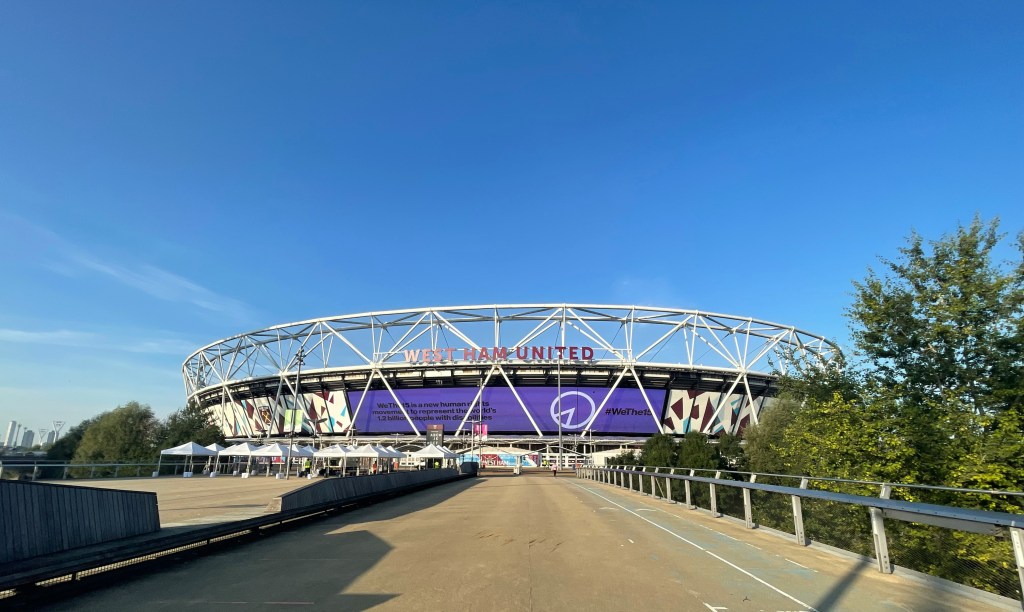
London Stadium isn’t a football ground that was built for football, and you feel it from the moment you cross one of the footbridges into Queen Elizabeth Olympic Park. It started life as the 2012 Olympic athletics stadium, and it still moonlights as a multi-use venue.
What that Olympic DNA means for you as a fan is a stadium with quirks no purpose-built ground has: a long walk in through a park, sightlines that sit further back than you’d expect, ruthless bag rules, and an exit crush at Stratford that locals have quietly learned to dodge. The tips below are built around those quirks — the things experienced Hammers tell first-timers so they don’t learn the hard way.
Getting There and Getting Out
The Pudding Mill Lane escape route. When the final whistle goes, the crowd instinctively herds toward Stratford or Hackney Wick — and Stratford in particular turns into a 30-to-45-minute scrum. Head south instead to Pudding Mill Lane DLR, roughly a 10-minute walk and the shortest of any station to the ground. The queues are a fraction of the size, regulars on the fan forums swear by it (“never been too busy”), and it’s also the station West Ham officially recommend for away fans heading to Entrance D. One caveat: it’s DLR-only, so it’s the smart move when the DLR lines up with your route home — change at Stratford or Bow Church if you need the Tube.
Use the right bridge, not just the right station. From Stratford, the two main approaches are Bridge 1 (next to the Aquatics Centre) and Bridge 5 (next to the ArcelorMittal Orbit). Check which entrance your seat uses before you set off — picking the bridge that lines up with your turnstile saves you a lap of the stadium perimeter through the crowd.
Arrive earlier than you think. Gates open about 90 minutes before a Premier League kickoff. Stratford station gets genuinely mobbed 60–90 minutes out as the crowd converges, so if you want to soak up the pre-match atmosphere instead of shuffling through a bottleneck, get there early. There’s no public parking anywhere at the stadium, so don’t plan around driving in — rail and Tube are the only realistic options.
Don’t fight the managed egress. After big or late kickoffs the stadium runs a hold-and-release crowd-management system on the way out, so you may get paused at points heading to the stations. It clears within about an hour. The Pudding Mill Lane route or a post-match pint (below) are the two ways to skip the worst of it.
Food, Drink and the Matchday Pub Run
You’re allowed to bring your own food — within reason. Unlike most North American venues, West Ham permit personal quantities of food and drink inside the ground (it has to fit your A4 bag and pass a search). The hard limits: no cans, no glass bottles, and no alcohol. A wrapped sandwich and a packet of crisps is fine; a six-pack is not.
The Rib Man is the move. Skip the overpriced, underwhelming stadium pies. Take the Overground to Hackney Wick, where Mark — the legendary “Rib Man” — sets up outside the station on matchdays. His pulled-pork rib rolls drenched in his homemade hot sauce are widely rated the best matchday food in London.
Pick your pre-match pub by the experience you want. The Cow inside Westfield Stratford City is the convenient, lively option if you’re coming via Stratford — packed with Hammers fans, easy burgers and pints, a 10-minute walk to the gates. For something more authentic, the Carpenters Arms on Carpenters Road is a proper West Ham stronghold that made the move from Upton Park; arrive early because it fills fast. Just remember there’s no re-entry once you’re inside the stadium, so finish your drinks before you head for the turnstiles.
Traditions and Atmosphere
The bubbles are real, and they’re the whole point. Before kickoff, West Ham sing “I’m Forever Blowing Bubbles” — their anthem for over a century — while bubble machines pump actual bubbles out across the pitch. It’s one of the most recognizable pre-match rituals in English football and it photographs beautifully. The on-pitch bubble machines were the idea of a season-ticket holder nicknamed “Micky Bubbles,” and no West Ham owner would dare scrap them.
Sit near the singing if you want the noise. The loudest, most atmospheric sections are the Bobby Moore Lower (north end) and the Sir Trevor Brooking Lower (south end, nearest the away fans). Be aware the atmosphere swings hard with the opponent and kickoff time — a weeknight game against a mid-table side can feel flat, while a London derby brings the proper old-school noise.
First-timer must-do: be in your seat for the bubbles. Skip the concourse beer run in the final minutes before kickoff and watch the anthem and the bubbles from your seat. It’s the one moment that tells you this is West Ham and nowhere else.
Sightlines: Mind the Olympic Gap
You’re sitting further from the pitch than you expect. Because the stadium was built for Olympic athletics, even with the retractable seating pulled forward for football, the seats — especially in the upper tiers — sit noticeably further back than at a traditional, purpose-built English ground. If you’re in the upper bowl and you like to read the game closely, a small pair of binoculars genuinely earns its place in your (A4-sized) bag.
Cashless Campus and the Phone Trap
Everything is cashless — carry a backup card. From the external food trucks to the programme kiosks and the club shop, London Stadium takes no cash at all. Mobile wallets work fine, but a dead phone battery or a glitchy Apple Pay tap leaves you stuck, so keep a physical contactless card on you as a fallback.
Download your ticket to your wallet before you leave home. Mobile tickets load into Apple Wallet or Google Wallet, and once a pass is saved there it works at the turnstile with no internet connection needed. Do this before you travel, not in the queue with 60,000 people hammering the same cell towers. There’s also free stadium WiFi (LSFreeWIFI) once you’re inside if you need it.
Merch and the Team Store
There’s an outdoor store you don’t need a ticket for. The West Ham Stadium Store is the club’s flagship, sitting right next to the ground on Queen Elizabeth Olympic Park — a short walk from Westfield via The Street and Stratford Walk. Full Umbro kit range, personalization station, and the West Ham United Coffee Co. café attached. You can shop it without a match ticket.
Time it right on matchdays. The store gets slammed before kickoff and again at the final whistle. Fans report the smart play is going in well before the game or waiting until the post-match rush thins out, rather than fighting the immediate full-time crowd.
The Venue App: Honest Take
The West Ham United app is genuinely useful for the essentials, less so for extras. It handles mobile ticketing, the online store, breaking club news, and a live matchday hub with audio and stats, and it’s reasonably well-rated. Use it for your tickets and the match centre. It won’t do in-seat food ordering, and the live audio piggybacks on a general radio feed rather than club commentary — fine, not special. Bottom line: download it for tickets, don’t expect a full concierge.
Families and Kids
West Ham run a designated family area with concession pricing. Tickets carry Under-16 and Under-21 concessions, and the club operates a family section — book through the official channel (eticketing.co.uk/whufc) and ask for the family enclosure when you do, since exact allocation varies by fixture. Westfield Stratford City next door is a genuinely handy pre- and post-match base with food, toilets and space for restless kids, and the club mascots Hammerhead and Bubbles are around for photos. Plan around the no-re-entry rule: load up on snacks and bathroom trips before you go through the turnstile.
Autographs and Player Access
Set expectations low — this is the Premier League. Unlike American pro sports, casual player access at PL grounds is limited and inconsistent. Your realistic windows are arrival at the players’ entrance well before kickoff and, occasionally, players coming over to the lower Bobby Moore or Trevor Brooking stands after the warmup or final whistle. Position yourself low and early near those ends, but treat any signature as a bonus rather than a plan.
One More for the Road
Walk to Hackney Wick for a post-match pint. While everyone else jams Stratford, head to Hackney Wick (a 15–20 minute walk), grab a beer and let the game settle, then catch the Overground back to central London once the crowds have cleared. It’s the move locals use constantly — they’re relaxing with a drink while the tourists are still queuing.

Hotels Near London Stadium
Whether you’re in town to watch your side play West Ham, catching a concert, or here for a one-off like an athletics meet or the MLB London Series, Stratford is the obvious place to base yourself. It sits right beside London Stadium and Queen Elizabeth Olympic Park, and its transport is genuinely exceptional — the Tube (Central and Jubilee lines), DLR, London Overground, the Elizabeth Line and National Rail all converge at Stratford station. You’re a 10-to-15-minute walk from the stadium through the park or Westfield, surrounded by restaurants and pubs, and the Elizabeth Line drops you in the West End in around 15 minutes, so you can do a match and a full day of central-London sightseeing from the same bed.
The main alternatives are Canary Wharf or Shoreditch (both roughly 3–5km away with good DLR, Overground and Elizabeth Line links), but Stratford generally wins on value and walk-up proximity while keeping the rest of London easy to reach. One honest caveat before you book: Stratford hotel prices spike hard on event days — big matches, concerts, anything at the stadium or the nearby ABBA Arena — so lock in early, and note that none of these hotels solve stadium parking (there’s no public parking at the ground; most rely on the paid Westfield car parks).
The Design-Led Splurge
The Stratford (20 International Way) is the standout if you want a destination hotel rather than just a place to sleep. Set across the lower floors of a striking tower overlooking the Olympic Park, it’s a genuine design hotel — Space Copenhagen interiors, a dramatic triple-height lobby, a highline sky terrace with skyline views, and 145 rooms ranging from compact standards to loft-style studios with floor-to-ceiling windows. Dining runs from the all-day Kitchen E20 and its terrace to a seventh-floor omakase Japanese restaurant. It’s adjacent to Stratford International and about a 7-minute walk to Stratford Underground, with the stadium roughly a 12–15 minute stroll through the park.
The Gantry London, Curio Collection by Hilton (40 Celebration Avenue, East Village) is the other upscale pick, a 291-room design hotel about a 10-minute walk from the stadium. The draw is the rooftop bar — the highest in the area — plus a restaurant, market deli, gym and bike hire. You’re a couple of minutes from Stratford International and a short walk from Westfield, so it’s well placed for both the match and onward travel.
Inside Westfield: Hyatt Regency and Hyatt House
Hyatt Regency London Stratford (Chestnut Plaza) is the full-service option, literally built into the Westfield Stratford City complex — a refurbished 225-room hotel (the former Holiday Inn) with the Elondi restaurant and bar, a 24-hour gym and park or city views. You’re inside a massive shopping-and-dining centre with a cinema, a few minutes from Stratford International and around a 10–12 minute walk to the ground.
Hyatt House London Stratford shares the same building and facilities but offers apartment-style rooms with kitchenettes — the smarter choice if you want self-catering, a suite at a lower price, or you’re staying several nights. Be warned the building is genuinely confusing to navigate from inside the mall; aim for the outdoor street that bisects Westfield and connects the station to the Olympic Park.
Reliable Mid-Range
Holiday Inn Express London – Stratford is the predictable-quality, lower-cost pick, sitting on the Stratford town-centre side near Stratford station and Stratford High Street DLR, roughly a 15–20 minute walk to the stadium. Free Express Start breakfast is included, there’s an on-site bar and restaurant, and it’s a solid base for travellers who want chain reliability without boutique pricing — just know it’s a touch further from the ground than the Westfield and East Village hotels.
Stay in a Buzzier Neighbourhood
Mama Shelter London – Shoreditch (437 Hackney Road) trades stadium proximity for atmosphere. It’s a hip, design-forward hotel between Shoreditch and Bethnal Green with a lively French restaurant, a courtyard garden bar and private karaoke rooms, dropped right into one of East London’s best areas for nightlife, bars and markets. You’re about 5km out, so factor in a 25–30 minute hop via the Overground (toward Hackney Wick and on to Stratford) or a quick Tube ride on matchday — worth it if you’d rather wake up in a proper neighbourhood than next to a shopping centre.

Where to Eat and Drink Near London Stadium
Pre-match drinking around London Stadium splits into three distinct worlds, and which one you pick says a lot about what kind of day you want. Hackney Wick, the regenerated warehouse district just northwest of the ground, is where the craft-beer crowd and a lot of younger Hammers go — breweries and taprooms packed into a few converted yards, a 10-to-15-minute walk through Olympic Park to the turnstiles. Stratford and the Westfield shopping centre offer convenience and big-screen pubs right on the doorstep. And a handful of traditional West Ham strongholds carry the old Upton Park spirit for fans who want claret-and-blue on the walls and history in the room. Here’s how to navigate all three.
Hackney Wick: The Locals’ Craft-Beer Move
This is the move if you want quality food and beer without Westfield’s corporate polish, and the walk back through the park afterwards is well-trodden and easy. The action centres on Queens Yard on White Post Lane, a cluster of converted industrial units that fills with fans before kickoff.
Crate Brewery (Unit 7, Queens Yard) is the anchor — stone-baked pizza and a solid range of its own craft beer in a relaxed, communal-table setting. The heated outdoor tables go fast on matchdays, so get there early if you want to sit. It’s also a smart spot to circle back to afterwards while the station queues thin out.
Howling Hops Tank Bar (Unit 9a, Queens Yard) is the beer enthusiast’s pick: ten big tanks pouring ten different beers straight from the source, fresh as it gets, with rotating styles and reasonable prices (you can order in thirds). Food comes from the on-site Billy Smokes BBQ kitchen and rotating residents, so you won’t go hungry.
Fabwick (Queens Yard) leans more restaurant-bar than traditional pub — burgers, BBQ, beer and cocktails — and is the one to hit if you want something more substantial than a packet of crisps, or a cocktail instead of the standard lager-before-football routine.
Queens Yard also hosts organised pre-match fan gatherings on some matchdays (events have run at venues like Colour Factory), so it’s worth a quick check of the West Ham supporters’ channels before you travel if you want to find the crowd.
Stratford and Westfield: Convenience on the Doorstep
The Cow sits in Chestnut Plaza on the outer edge of Westfield Stratford City and literally overlooks the London Stadium — a Young’s pub across two-plus levels serving pub classics, dry-aged steaks and a wide drinks range, with big screens showing the sport. It’s unpretentious, close, and packs out with Hammers fans pre-match. If you don’t have a ticket, it’s a reliable place to watch the game; just remember there’s no re-entry to the stadium once you’ve gone in, so it’s a before-or-after stop, not a halftime one.
Tap East, at the north end of Westfield opposite the Stratford International entrance, is a proper brewpub that brews on site — look for its No. 6 Blonde Ale, named after Bobby Moore. Expect a wide keg and bottle range plus guest cask ales that tend to appear on matchdays, when it gets busy. Note it’s card-payment only, which fits the cashless theme of the whole campus. This is the easy choice if you’re staying at a Westfield hotel or want to eat, drink and walk straight to the ground.
Traditional West Ham Strongholds
The Carpenter’s Arms (17 Carpenters Road, about 0.7 miles / a 14-minute walk) is the closest thing the new stadium has to a proper old-school home pub. Dark wood, West Ham memorabilia on the walls including a Bobby Moore mural, a decent beer garden, and a genuine matchday atmosphere when the regulars and fans pack in. It’s a no-frills locals’ boozer rather than a gastropub — mainstream taps, fast service, real claret-and-blue character. It also happens to sit on the away-fans’ walking route back to Stratford.
The Queen’s Head (5 West Ham Lane, about 1.2 miles / a 23-minute walk) is the other authentic pick, its walls covered in West Ham scarves and its rooms full of the quintessential English matchday pub atmosphere. It fills with supporters meeting up before they head to the ground, so arrive early.
If You’re Supporting the Away Team
A practical heads-up: the West Ham strongholds above are home pubs, and travelling fans are better off elsewhere. Many away supporters drink in central London and ride in — Hamilton Hall, the cavernous Wetherspoons inside Liverpool Street station, is a popular, straightforward staging point. Closer to the ground, the Green Goose is one of the more reliable spots known to welcome away fans. The Westfield and Hackney Wick venues are mixed and generally relaxed, which makes them safer neutral ground than the dedicated home pubs.
For Authentic East London Food
If you want the genuine local article rather than stadium concessions, a short DLR hop to Poplar puts you near a couple of classic pie-and-mash shops — Maureen’s Pie & Mash is among the highest-rated in the city, with proper liquor and no-frills service, and Eastenders Pie & Mash nearby is a strong backup. It’s the most authentic East End meal you’ll get on a matchday.
Optional: A Pilgrimage to the Old Boleyn Ground
Worth knowing what this isn’t — the famous Boleyn Tavern is not near London Stadium. It sits on the corner of Green Street and Barking Road in East Ham, by the site of West Ham’s old Boleyn Ground (Upton Park), which closed in 2016, roughly 5km away and a separate Tube trip via Upton Park station. But if you’re a West Ham fan with time to spare, it’s a stunning Grade II-listed Victorian gin palace, beautifully restored, with subtle nods to club legends throughout — and opposite it stands the World Cup Sculpture of Moore, Hurst and Peters. Treat it as a heritage detour, not a pre-match drink.
Why You Should Go
London Stadium offers football in the heart of Olympic Park with exceptional public transport access and the opportunity to experience West Ham’s passionate fanbase singing “Bubbles” before kickoff. The stadium itself is controversial among football purists due to athletics-track sightlines that keep fans farther from the pitch than traditional grounds, but for visitors combining London tourism with a match, the Stratford location makes it easily accessible and the atmosphere during big matches is genuinely electric.
You’re watching top-tier English football in a venue with Olympic legacy and architectural interest—just manage expectations around sightlines and arrive early to experience proper pub culture in Hackney Wick before kickoff.
If you’re looking for other football guides, here are some places to start:
Tottenham and Emirates Stadium
Stamford Bridge and our Wimbledon Guide along with the O2 Arena
Written by Brad Richards, Founder of Gameday Guides. This guide includes insights from personal visits as well as updated info from team sources, fan forums, and stadium policies. We aim to help you plan with confidence — enjoy your gameday.