

Best Seats At Michigan Stadium
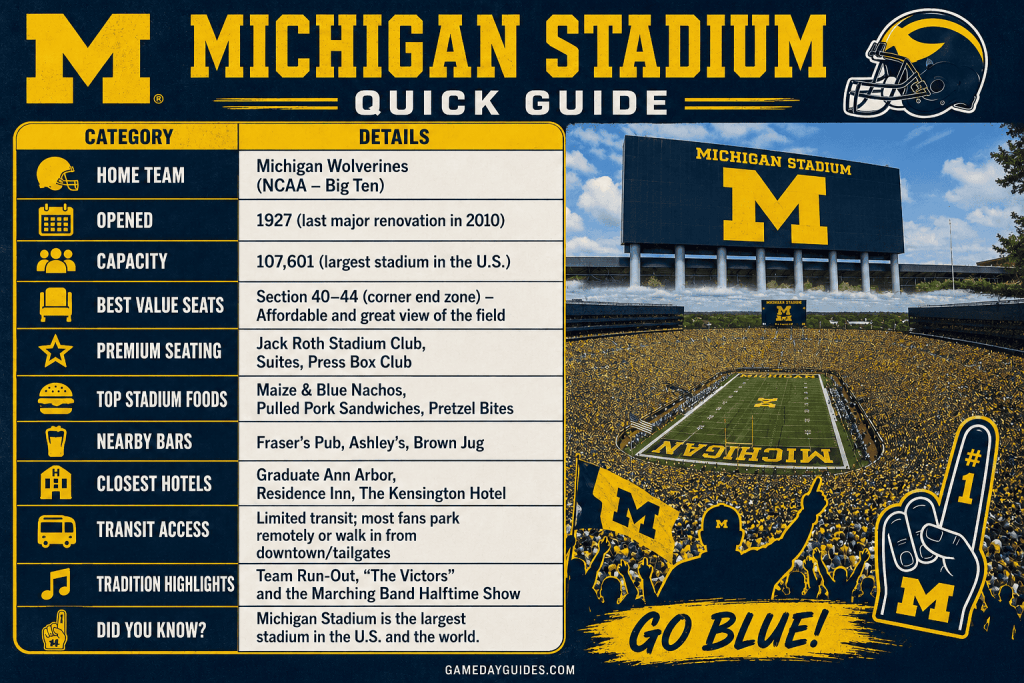
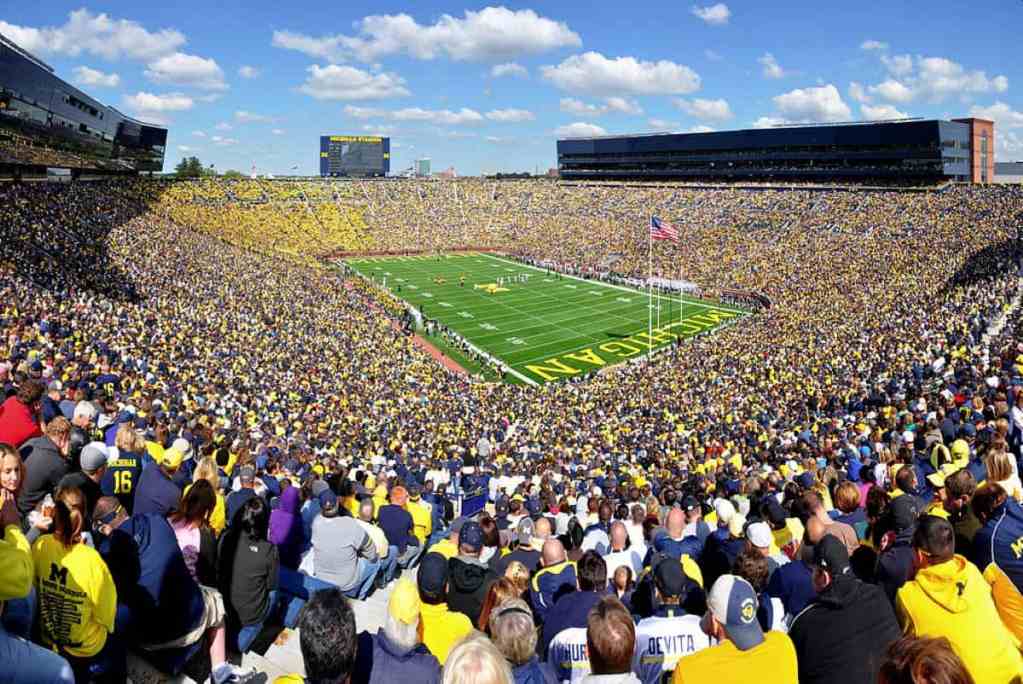
There’s big, and then there’s the Big House. Michigan Stadium seats 107,601 — the largest stadium in the United States, the largest in the Western Hemisphere, and the third-largest on the planet — and when all of those people stand up at once for a third-down stop, you feel the bleachers move under your feet. It opened in 1927, sunk deep into swampy Ann Arbor soil and modeled after the Yale Bowl, which is why even the top rows sit closer to the field than the sheer headcount suggests.
Here’s a reality to set against the legend of this place: it’s a bowl of metal bleachers with no roof, no cup holders for most fans, and a no-bag policy that’s stricter than almost anywhere in college sports. Get the seat and the your overall day right, though, and a Saturday here is as good as game day gets in America.
Seating Guide to the Big House
The bowl runs north to south, holds 107,601, and is laid out as a single continuous ring of sections numbered 1 through 44, with premium club and suite levels stacked above both sidelines. Almost everything in the bowl is aluminum bleacher seating — no seat backs, no arm rests — and rows climb from A-B at the front all the way into the 90s at the top. Because the original architect dug the bowl below ground level, sightlines are genuinely good from everywhere; the thing that actually separates a great seat from a mediocre one here isn’t the section, it’s the row and which sideline you’re on.
The two long sidelines are where you want to be. The west sideline (Sections 20-26) is Michigan’s home side, sits under the press box, and is the shade side. The east sideline (Sections 1-4 and 42-44) is the visitors’ bench side and the sunny side. The end zones wrap around the north (Sections roughly 27-41) and south (roughly 5-18), with the marching band and student section anchoring the northwest.
Best Non-Premium Seats
West sideline, Sections 22-24 (home side, midfield): This is the sweet spot of the whole bowl. You’re at midfield on Michigan’s sideline, the sun is at your back for afternoon games, and you’re close enough to the band to actually hear it drive the crowd. Aim for rows in the 25-45 range — high enough to see plays develop across the whole field, low enough that you’re not making the long climb to the top. The tradeoff is price and availability: these are among the most coveted season-ticket seats in the building, so single-game inventory is thin and not cheap.
East sideline, Sections 1-2 and 44 (visitor side, midfield): The east sideline gets unfairly overlooked because it’s the “away” side and it bakes in the sun, but the view is excellent and the seats are usually a bit easier to get than the west. From Section 1 — a popular search for good reason, since it sits near the team tunnel toward the south end — you get a clean look at the field and a great angle on the northwest student section across the way. Bring a hat and sunglasses and this is a strong value play, especially for cooler late-season games when that sun is a gift rather than a punishment.
North end zone, Sections near the students (27-33): If you want atmosphere over a perfect sightline, the north end puts you next to the loudest 20,000 people in the building. The end-zone angle means you’ll lose a little depth perception on plays at the far end, but you’ll be inside the noise, close to the band, and these tend to be reasonably priced.
Best Value Seats
East sideline corners and Sections 3-4 / 42-43, rows 20-50: You give up the dead-center angle and you’re in the sun, but you keep a true sideline view of the field for noticeably less than midfield. For most non-rivalry games this is the best dollar-for-view ratio in the stadium.
Budget Option
Upper end zone, or any seat at a “buy-low” game: The cheapest tickets are the high end-zone rows and the corners up top. The view is honestly fine — the bowl’s geometry is forgiving — but you’ll watch the far end of the field develop on the videoboard, and the top rows can get windy and cold late in the year. The smarter budget move is often picking your game rather than your section: a high seat at Western Michigan, UTEP, or UCLA can be had for very little.
Our Pick
If a friend were visiting the Big House for the first time and wanted one recommendation, I’d put them in Section 23, rows 30-40, on the west sideline. Midfield, home side, sun at your back, band in your ears, and a straight-on view of every play. It’s the seat that makes you understand why people get emotional about this place.
Weather & Shade Reality
Michigan Stadium is open to the sky — no canopies, no roofs over the bowl — and it’s oriented north to south, which makes the shade math simple once you know it. The sun tracks over the southeast and west sides through the afternoon and eventually sets behind the west (home) side, so the west sideline is the shade side and the east sideline is the sun-soaked one.
For a noon kickoff, almost the entire bowl is in full sun; your only real shade is the highest rows tucked under the west structure, or covered premium seating. For a 3:30 or later kickoff, the west side starts falling into shade — top rows first, working down — while the east side stays sunny until the sun finally drops behind the stadium. The actionable tip: for a hot early-season game, get on the west side or go high, and never underestimate September in Ann Arbor — fans get cooked at noon games every single year.
What to Avoid and the Bleachers
Rows below about 15: This is the most common first-timer mistake. Low rows feel like they should be premium because they’re close, but in a bowl this big you sit nearly at field level and lose the ability to see plays unfold on the far half of the field. People in Row 8 spend a lot of the game watching the videoboard.
The top corners (rows 75+ in the end-zone corners): These are the farthest seats from the field in the entire stadium despite being “only” 90-ish rows up, and they catch the wind. Fine in warm weather and great for taking in the full spectacle, rough in November.
East sideline, low rows, hot noon game: You’ll get the sun directly in your face for hours with nowhere to hide. If you’re heat-sensitive and it’s an early-season noon kickoff, this is the combination to skip.
Worth it once — the bleachers at a packed rivalry or Maize Out: Yes, the bleachers are cramped and backless and you’ll be shoulder-to-shoulder with strangers. But experiencing 107,000 people stand and roar in unison, with the whole bowl shaking, is something you should do at least once before you start chasing chairbacks and clubs. For a marquee game, the discomfort is part of the story.
Premium Seating & Clubs
If the bleacher life isn’t for you, the Big House has real premium options — and they’re genuinely good. A quick, honest overview: the marquee club is on the east side, the comfort upgrade for purists is on the west, and there’s a single-game premium tent that most fans don’t know about.
The Best Club — Jack Roth Stadium Club (east sideline): This is the headline premium experience, with more than 3,000 chairback seats across two levels (the 300 and 400 levels) above the visitors’ sideline. The club opens 2.5 hours before kickoff, has a climate-controlled interior lounge, private restrooms, no-line premium concessions, and a bar. The second level even has a stretch of indoor, glass-enclosed theater seats for when the weather turns. As one longtime patron put it, these seats change the game if you’d rather not stand in a 20-minute bathroom line in the bleachers.
Best Value Comfort — West Side Chairbacks (home sideline): Here’s the under-the-radar pick. The west sideline has actual chairback seats in the upper rows (roughly rows 85 and up in Sections 21-25), below the suite level. You get a seat with a back, the home side, and the shade side — without paying full club-level prices. For fans who mostly want a backrest and to be out of the sun, this is the value sweet spot.
Single-Game Premium — UMCU All-Star Lounge at Mortenson Plaza: Most people assume premium at Michigan means a season commitment, but this furnished, tented hospitality area just off the main concourse (with private restrooms inside Crisler Center) is available on a per-game basis. It’s the easiest way to add a premium layer to a one-off visit.
Suites & Group Options: Private suites sit on both sidelines — the east towers and the west tower (Ross Tower, 400 level) — typically seating 12-16 with barstools, climate control, TVs, and catering. They’re booked through Michigan Athletic Development and have limited availability; per-person cost can run similar to club seating once you fill the suite, which makes them worth a look for groups celebrating something.
Michigan Stadium Seating Chart
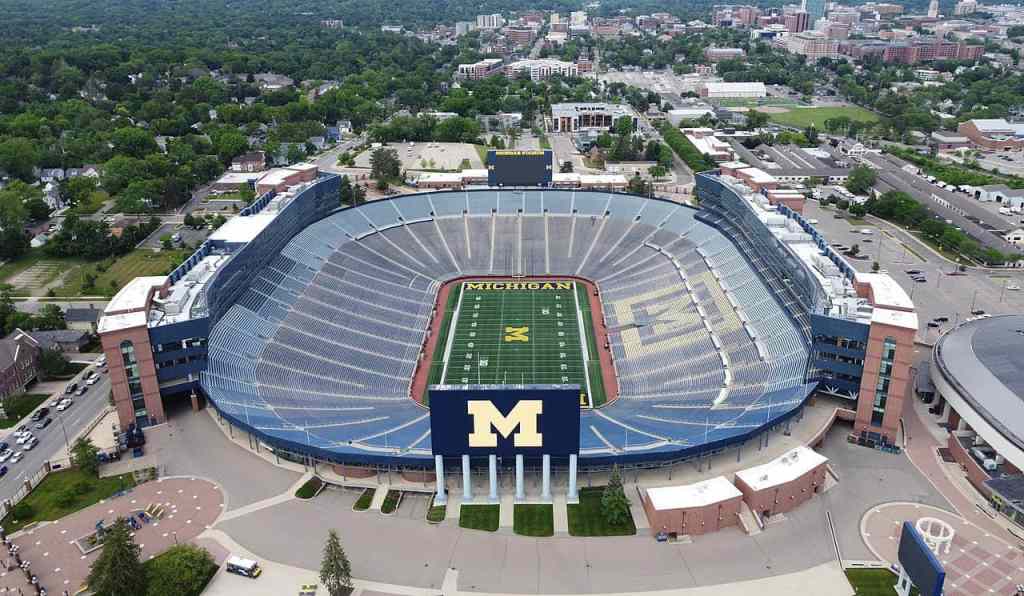
Michigan Stadium, also known as the “The Big House,” serves as the football stadium for the University of Michigan in Ann Arbor, Michigan. With an official capacity of 107,601, it stands as the largest stadium in the United States and the Western Hemisphere. Additionally, it holds the distinction of being the third-largest stadium globally.
The stadium usually has remarkable attendance, surpassing its official capacity, with a notable record of 115,109 spectators during a game between Michigan and Notre Dame on September 7, 2013.
For a detailed view of Michigan Stadium’s seating layout and sections, you can explore the seating chart here: Michigan Stadium Seating Chart.
Tickets To Michigan Football Games
Michigan ticket demand is wildly game-dependent, and 2026 has a specific shape worth understanding before you buy. It’s the first season under new head coach Kyle Whittingham, and — importantly for your wallet — The Game against Ohio State is in Columbus this year, not Ann Arbor. That removes the single biggest home-demand spike from the calendar.
The priciest home tickets in 2026 will be Oklahoma (Sept. 12), the Michigan State rivalry (Nov. 7, for the Paul Bunyan Trophy), and Penn State on Homecoming (Oct. 17), with Indiana (Oct. 24, the defending national champion) close behind. The buy-low games are the non-conference dates — Western Michigan (Sept. 5), UTEP (Sept. 19) — and UCLA (Nov. 21). For those softer games, secondary-market prices usually sag in the week leading up to kickoff as season-ticket holders dump inventory, so waiting pays off. For the rivalry and marquee games, it rarely does — those hold or climb, so buy early if you have a date you can’t miss.
A few market quirks: the student section isn’t an option for the general public (those seats are non-transferable and only sold to enrolled students), and a new coaching staff adds genuine uncertainty to early-season demand, which can mean softer prices than usual for the September slate.
When you’re ready to buy, comparing the secondary market with our partner Vivid Seats against face value is the move — for non-rivalry games the resale price often beats the box office once the week-of slide kicks in.
Michigan Stadium Bag Policy
The most important thing to know about the Big House is that no bags are allowed. This includes backpacks, purses, fanny packs, and even clear bags — Michigan has a strict no-bag policy. The only exceptions are for medical or childcare needs, which must be in a clear plastic bag and entered through designated gates: Gate 3 at the south end or Gate 9 West at the north end for inspection.
If you arrive with a prohibited bag, there’s a bag check at the south entrance of Crisler Center off Stadium Way, but the lines are long. The best advice is to leave bags at home or in your car and bring only your phone, wallet, and keys.
Key Venue Policies
No bottles of any kind — including empty and reusable water bottles. Free water is available at fountains throughout the concourses, and any concession stand with a soda machine will give you a free cup of water, so you won’t go thirsty.
Alcohol is now sold — and this surprises people who remember the old dry Big House. Michigan began selling beer, wine, seltzers, and canned cocktails in 2024. It’s available at stands around the outer perimeter of the concourse (not in the student section), sold in cans up to 16 oz, from one hour before kickoff until the end of the third quarter. You’ll need to show ID at every purchase, you’ll get a wristband, and there’s a two-drink-per-purchase limit. Alcohol can’t leave the stadium.
No re-entry. Once you leave, your ticket won’t get you back in except in a genuine emergency cleared by the gate supervisor. Plan accordingly.
Cashless:The Big House is fully cashless and contactless. Bring a credit or debit card, or use Apple Pay or Google Pay — dollar bills won’t buy you a hot dog. There are ATMs at the north end of the stadium if you need cash for parking or tailgate purchases outside, but inside, leave the cash in your pocket.
Accessibility: Michigan Stadium has 14 elevators for premium ticket holders and guests with accessibility needs, with wheelchair-accessible and companion seating in most sections. Accessible parking is available with a permit in the Blue Lot and Champions North, and first-come in the Green Lot (about $55 per game) with a state-issued placard. Service animals are allowed, assistive listening devices are provided, and changing tables are in gender-inclusive and most public restrooms. Guests with medical needs can enter through the exception gates in the bag policy.
Here is a link to their Game Day Guide.
Getting to the Big House
Over 100,000 people descend on a residential corner of Ann Arbor for every home game, so the honest truth is that how you arrive matters as much as where you sit. The move that locals swear by is to not drive at all — take the shuttle — but here’s the full rundown so you can pick what fits your day.
Public Transit — FootballRide (the smart play)
TheRide, Ann Arbor’s transit authority, operates FootballRide, a game-day shuttle system that offers a stress-free journey to the stadium. Five route groups — North, South, East, West, and Downtown — connect hotels and park-and-ride lots to the stadium, dropping you by Gate 2 next to Crisler Center. It costs $1.50 each way, $3.00 round trip, with contactless mobile ticketing preferred; cash is allowed but bring exact fare as drivers don’t make change. Shuttles run every 20 minutes starting two hours before kickoff, with return shuttles starting in the fourth quarter and running for about an hour after the game.
Michigan Stadium Parking
If you’d rather drive, go in with a plan, because this is where the day gets hard. Most lots near the stadium are permit-only, and genuine public, non-permit parking is limited and fills early. Official university lots require permits bought in advance through the athletics site, open roughly five hours before kickoff (somewhere between 6 a.m. and noon depending on game time), and run about $40-60 depending on the lot and the opponent.
The golf-course tailgate — and the two courses people confuse. Directly across from the stadium sit two adjacent golf courses that both sell game-day parking. The University of Michigan Golf Course (the historic MacKenzie design) takes cash sales, but only through its Stadium Boulevard entrance on game day — and here’s the caveat fans learn the hard way: if it rains hard the Thursday or Friday before a game, the course closes to public parking to protect the greens, and even when it’s open they only let you park on the rough.
Next door, the separate Ann Arbor Golf & Outing Club (AAGOC) sells first-come general-admission parking (cash or card at the gate, roughly $75, and more for Ohio State), opens at 7:30 a.m., and you enter off Stadium Blvd across from Crisler or off South Main across from Pioneer.
The wet-weather backup. If the forecast is ugly, don’t gamble on the golf course — head straight to Pioneer High School (601 W. Stadium Blvd), a paved, walkable, public lot that opens at 6 a.m. for day games, or park out by the highway and take the FootballRide in. Circling a closed golf course as kickoff approaches is exactly how people end up parking a mile away and missing the band.
The local’s hack. Skip the Stadium Boulevard and State Street gridlock by taking back roads — Industrial Highway or Packard — and cutting over to State Street on a quieter side street, then paying $20-30 to park in a resident’s yard in the neighborhoods near the field hockey stadium. You’ll see locals waving cars in. It’s easy in, easy out, a five-minute walk to the gate, and it beats sitting in traffic for 90 minutes.
Getting back out. After the game, South Main Street runs one-way southbound toward I-94 with pedestrian-controlled signals, so the grid clears slowly. If you parked north or east, exiting via State Street or Hill Street avoids the worst of it. RV parking is available in the Brown, Blue, and Maize lots with a pass bought in advance. For real-time availability, check the university’s parking inventory page and the DPSS lot-status map.
Rideshare
Uber and Lyft get you there cleanly enough — figure $15-25 from most points in Ann Arbor — but post-game is a different animal. With 100,000 people requesting rides at once, surge pricing can triple your fare and the designated pickup zones turn chaotic. The veteran hack: don’t request from the stadium. Walk 10-15 minutes away toward downtown or a quieter side street first, then pull up the app; you’ll get matched faster and skip the worst of the surge and the gridlock.
If You Can, Just Walk
If you’re staying downtown, just walk. It’s a pleasant 20-25 minutes through campus, you skip every parking and traffic headache, and you finish the night already in the Main Street bar district — which doubles as the Ann Arbor Social District, where you can legally carry an open drink in a designated cup between participating bars.
Ann Arbor is also bike-friendly if that’s your thing. And for fans coming from out of town without a car, the Amtrak station sits about 1.5 miles from the stadium, roughly a 10-minute drive or a short rideshare from the action.
Michigan Gameday Insider Tips
A Michigan game day runs on tradition, and the fans who love it most say the same thing: get there early, travel light, and let the pageantry wash over you.
Michigan Stadium History
Fielding Yost wanted 150,000 seats; the Regents gave him 72,000 and a promise it could grow. Because the site sat over an underground spring, engineer Bernard Green sank three-quarters of the bowl below ground level, which is why the largest stadium in America stays hidden until you reach the rim.
Michigan beat Ohio Wesleyan here on October 1, 1927, and the program has spent the century since becoming the winningest in college football: the first to 1,000 victories, home to Heismans for Tom Harmon, Desmond Howard and Charles Woodson, to Bo Schembechler’s 21 seasons on the sideline, and to a national title in 2023. Fritz Crisler put the winged design on the helmets in 1938, and nothing about a fall Saturday here has felt small since.
Is Michigan Stadium the Largest Stadium in the World?
No — it’s third. Narendra Modi Stadium in Ahmedabad, India seats 132,000 and Rungrado 1st of May Stadium in Pyongyang lists around 113,000, though that figure is disputed and the place has no regular tenant to fill it. What Michigan Stadium is, unambiguously, is the largest stadium in the United States and the Western Hemisphere at 107,601, and the largest American football stadium anywhere. It also actually fills, seven or eight Saturdays a year — every home game since November 8, 1975 has drawn more than 100,000 people. The record is 115,109 against Notre Dame on September 7, 2013
Why they call it the Big House. Longtime ABC broadcaster Keith Jackson is credited with the nickname, which he started using on air in the late 1980s. It stuck because it’s true, and because the name works as an understatement — the stadium doesn’t look enormous from the street. Michigan trademarked it eventually. Nobody in Ann Arbor calls it anything else.
The Banner, the Band & the Revelli Hall Step Show
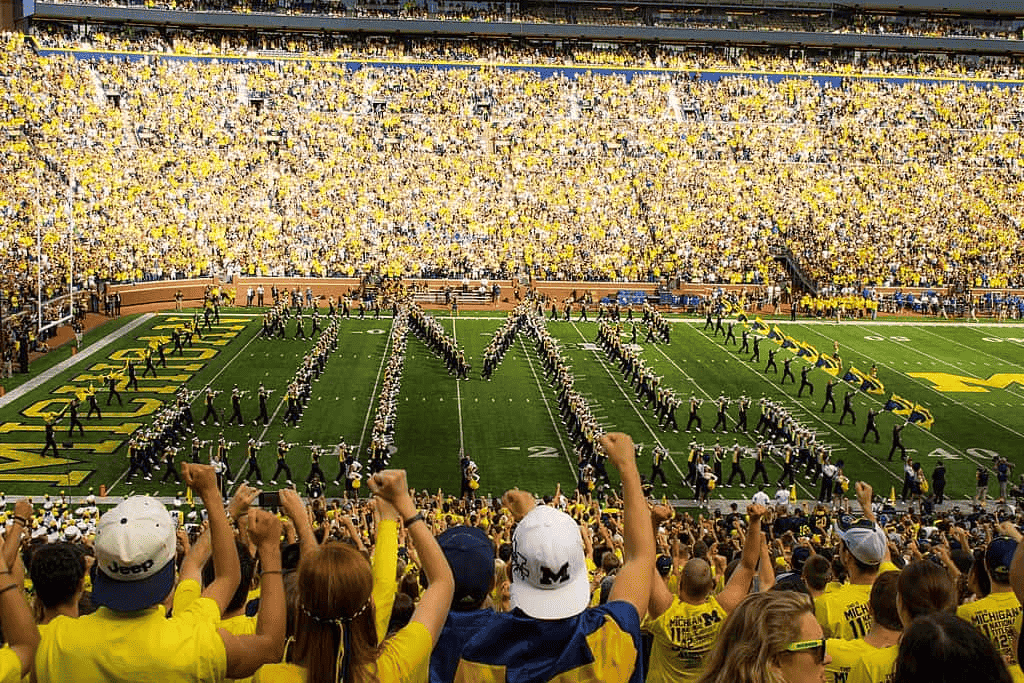
Be in your seat 20–30 minutes before kickoff for the banner. The team storms the tunnel and leaps to slap the “Go Blue, M Club Supports You” banner while the band plays “The Victors” — a tradition since 1962 and the best moment of the day. Roll in at kickoff and you miss the drum major’s backbend, the Block M, and the banner itself.
Catch the band’s Step Show at Revelli Hall. About 90 minutes before kickoff the Michigan Marching Band performs on the steps of Revelli Hall before marching down Hoover Street to the stadium; get to town early and you can watch the Elbel Field warmup first.
Claiming Your Seat: Gates, the Bleacher Squeeze & the Cell-Service Trap
Load your ticket into your phone’s wallet before you leave. 107,000 phones crush the local towers, and every game a wave of fans gets stranded at the turnstiles with zero bars. Apple or Google Wallet, done at the hotel — not the gate.
Arrive 30–40 minutes early to claim your bench space. Each fan gets about 16 inches of painted aluminum, and if you stroll in at kickoff your row has spread out and your spot has vanished. It’s tactical, not just for the pregame show.
Travel light and breeze through the gates. Gates open two hours before kickoff (2.5 for clubs and suites) at each corner and the east side; the no-bag policy means nothing to search, so light travelers walk right in.
Surviving the Bleachers: The Seatback Rental Hack
Rent an official stadium seatback once you’re inside. The bowl is bare aluminum with no backs — three-plus hours is genuinely rough, and this is the most physically uncomfortable famous stadium in America. The rental is the only real back support in the building, and by the fourth quarter you’ll get why regulars swear by them.
Bring a basic foam cushion — nothing fancy. Security pulls anything with a metal frame, pockets, zippers, or armrests, so leave the deluxe one at home.
Michigan Stadium Food & Drink
Hit concessions mid-first or mid-third quarter, not the breaks. You’ll skip the worst of the lines.
Grab your last beer before the third quarter ends. Alcohol sales cut off at the start of the fourth.
Go local on the food. Buddy’s Pizza, Olga’s Kitchen, Detroit Wing Co., and Bao Boys dumplings beat the usual dogs and nachos, with the bigger clusters at either end of the stadium.
Traditions to Know: Mr. Brightside & the Slippery Rock Score
Sing “Mr. Brightside” between the third and fourth quarters. The whole stadium belts the Killers song — a surreal, genuinely fun singalong from 100,000 people.
Listen for the Slippery Rock score. Around halftime the PA saves the tiny Division II school’s score for last, and the place roars like Michigan just scored. A beloved quirk since 1959, and watching first-timers wonder why is half the fun.
Know “The Victors” and the winged helmet. “The Victors” plays after every Michigan score, and the maize-and-blue winged helmet is one of the most recognizable symbols in sports.
What’s New at Michigan Stadium: The 2023 Renovation
The bowl stayed old-school; the tech didn’t. Michigan’s 2023 upgrade cost $41 million and left the bleachers untouched on purpose.
The twin end-zone boards are among college football’s biggest. Each measures 152 by 55 feet — third-largest by screen size, though Michigan runs two boards to most schools’ one.
New lighting and sound, same bad cell service. Musco LED brought music-synced light shows to night games and every concourse speaker was replaced, but connectivity wasn’t fixed — which is why the boards run a constant out-of-town scores feed your phone often won’t load.
The Lloyd Carr Tunnel & Stadium Quirks
Both teams share the Lloyd Carr Tunnel. Players emerge on the east side near Gate 1, and the shared tunnel has occasionally sparked pregame friction between rivals.
Don’t expect bells and whistles. Two big end boards and little else — fans consider the lack of distraction a feature, not a bug.
Best Photo Spots at Michigan Stadium
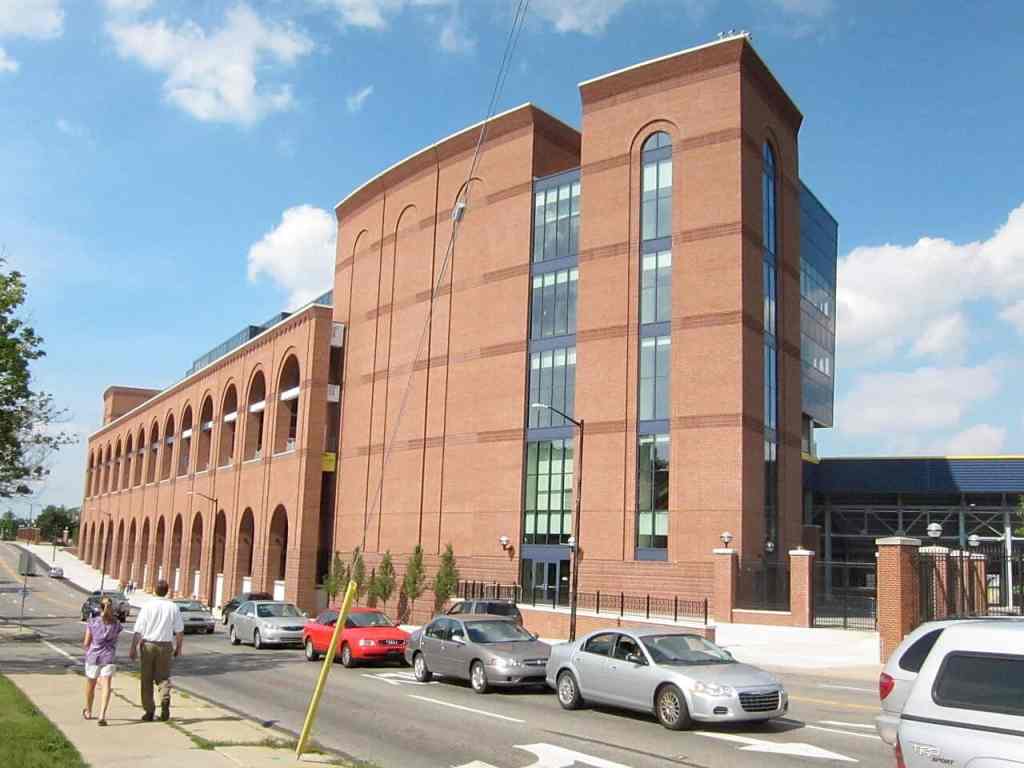
Shoot the brick facade outside the gates. The “Michigan Stadium” wall and block-M signage is the classic exterior shot.
Frame the full bowl from a high row. Best in warm afternoon light; if you take a tour, the 50-yard-line shot is the keeper.
Bringing Kids to a Michigan Game
Grab a free Child ID wristband at Guest Services. The Child and At-Risk Adult ID Wristband Program (Gates 2, 4, 8, 9, and 10) reunites a separated kid with you fast. Every child needs a ticket, regardless of age.
Sit the family in the 20s–40s sideline rows. The most comfortable choice — steer clear of the student section and lowest rows, and bring a cushion for kids.
Michigan Stadium Tailgating
Set up at the golf courses across from the stadium. The University of Michigan Golf Course (a historic Alister MacKenzie design) and the neighboring Ann Arbor Golf & Outing Club turn into a sea of maize-and-blue tents, grills, and RVs — separate operations with separate gates and prices, so don’t mix them up.
Skip the stadium-adjacent lots unless you’re a donor. The closest lots are reserved for season-ticket members and donors, so most visitors set up at the golf courses, Pioneer High, or the surrounding lots. Get there early and wander — the pregame is half the reason people make the trip.
Michigan Stadium Tours & Off-Season Visits
You can’t just walk in. The stadium isn’t open to the public for walk-in tours, photos, or exercising.
Book an official Big House Tour on a weekday. They run behind the scenes — the locker room, the Jack Roth Stadium Club, the Lloyd Carr Tunnel, and onto the field for that 50-yard-line photo.
M Den Team Store & Merch
Shop before kickoff or during the third quarter. The postgame crush is brutal; the northeast location off the Blue Lot near Crisler Center is usually the least mobbed.
Leaving After the Game
Wait out the crush 20–30 minutes if you can. All 107,000 leave at once and Stadium Boulevard becomes a parking lot, but the crowd thins considerably if you linger.
If you drove, exit via State Street or Hill Street. That’s how locals dodge the worst of it — or skip the drive entirely and take the FootballRide shuttle.
What to Wear to a Michigan Game
Dress in layers — there’s zero roof. September games can be t-shirt weather, but evenings cool down fast in a stadium completely open to the elements. Here is the NWS Forecast for Ann Arbor.
For late-fall games, bundle up. A hooded sweatshirt under your jersey, plus a jacket, knit beanie, gloves, and a maize-and-blue scarf.
Hotels Near Michigan Stadium
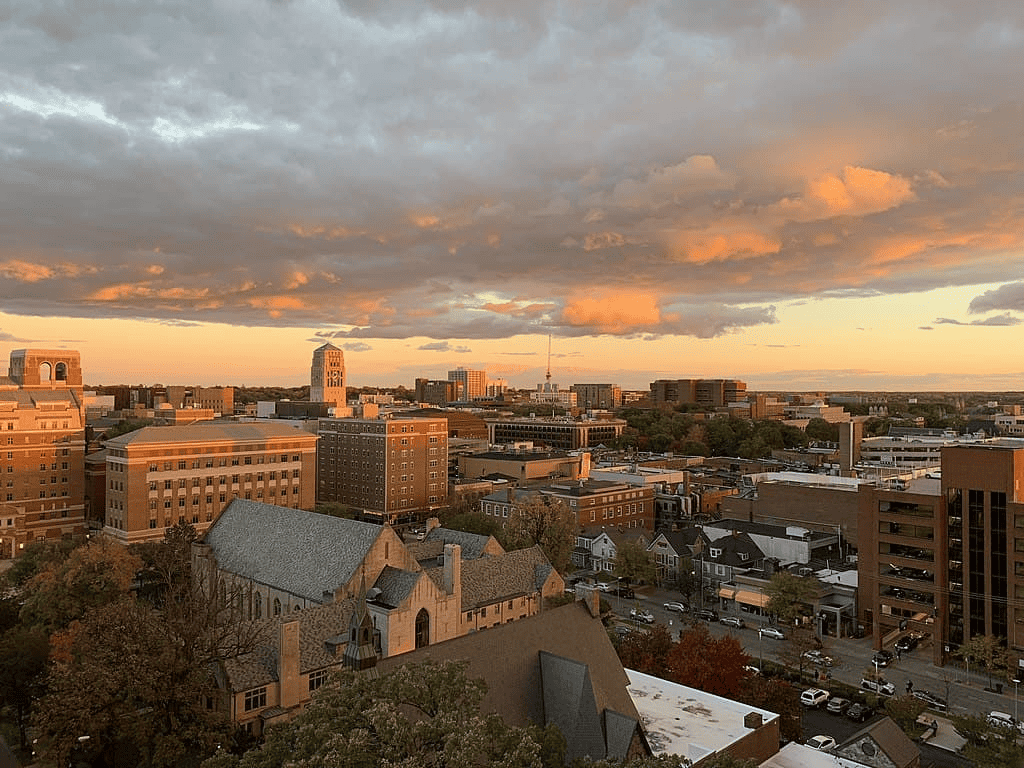
For game weekends, Ann Arbor offers a few areas to stay, each with unique advantages. Downtown Ann Arbor puts you in the heart of the action with walkable access to restaurants, bars, and campus. Near-campus hotels offer the closest proximity to Michigan Stadium and university facilities.
Highway corridor properties along I-94 provide easy access and often better value, while north Ann Arbor locations offer modern amenities with straightforward routes to downtown and the stadium.
Premium & Downtown Options
The Kensington Hotel – Located in the heart of downtown Ann Arbor, this 4-star hotel offers a rooftop pool, spa, and fitness center with stunning city views. Just a 7-minute drive or 2.3 miles from Michigan Stadium, you can use convenient Ann Arbor public shuttle buses to get there. While pricier, it provides luxury accommodations within uber/shuttle distance of the best restaurants and nightlife.
Weber’s Boutique Hotel – This family-owned property since 1937 has undergone extensive modern renovations while maintaining its classic hospitality. The hotel features contemporary exteriors with rooms that blend 20th-century modernist style, clean lines, and designer furniture. Unique amenities include an indoor saltwater pool in a stunning atrium setting, Bluetooth mirrors with Bose speakers, heated bidets, and luxury shower systems. The on-site restaurant is renowned for its prime rib and live piano music.
Graduate Ann Arbor – This hip, college-themed hotel on East Huron Street is surrounded by popular bars and restaurants. It provides a vibrant atmosphere perfect for the college game experience with complimentary breakfast and modern amenities that embrace the university spirit.
Bell Tower Hotel – A charming historic hotel nestled in downtown Ann Arbor, offering easy access to shops, restaurants, and attractions. Features a fitness center, business center, and sun terrace at a reasonable price point for its prime downtown location.
Best Value & Family-Friendly
Residence Inn Ann Arbor Downtown – Highly rated with a 4.8/5 traveler score, this suite-style hotel offers full kitchens in every room, making it ideal for families and extended stays. The downtown location provides walking access to campus and dining.
Homewood Suites by Hilton Ann Arbor – Guests consistently praise the spacious all-suite accommodations with large kitchenette islands and the convenience of free guest laundry facilities with new large front-loading washers and dryers. Perfect for families or groups needing extra space.
Hyatt Place Ann Arbor – Located 1.9 miles from the University of Michigan, this hotel offers free WiFi, an indoor pool, and modern amenities. The inviting lobby is designed as a versatile space for relaxation, work, or socializing, making it popular with both business and leisure travelers.
DoubleTree by Hilton Ann Arbor North – Just north of downtown and within walking distance of campus, this 4-star hotel provides excellent value with a fitness center, indoor pool, and business center. The location offers easy access to both downtown and the stadium.
Budget-Friendly Options
Holiday Inn & Suites Ann Arbor Univ Michigan Area – This IHG property offers solid amenities at competitive rates with inviting swimming pools and easy stadium access. The hotel provides good value for families with recreational facilities.
Comfort Inn & Suites University South – Located off I-94, this hotel offers affordability along with amenities such as a fitness center and indoor pool, making it ideal for budget-conscious travelers who still want comfort.
Red Roof Inn Ann Arbor – U of Michigan South – A budget-friendly option that caters to cost-conscious travelers while still providing basic amenities like fitness facilities and convenient highway access for easy travel to the stadium.
Extended Stay America Suites – Perfect for longer stays with kitchenette facilities and rooms designed for comfort without breaking the budget. The extended-stay format works well for multiple-game weekends or longer visits.
A final note: If you are priced out of Ann Arbor, stay in Canton or Livonia (25 mins east). It is half the price, and the drive in on game day isn’t terrible if you leave early and give yourself time. Also for big games alot of Ann Arbor hotels require 2 night minimums and can be well over normal prices.

Bars and Restaurants In Ann Arbor
Ann Arbor’s gameday scene revolves around four main districts, each with its own personality. Main Street District is filled with inventive restaurants, creative cocktail bars, beloved music venues, and art galleries. South University District is the classic “college town” neighborhood, perfect for strolling and has that authentic campus feel.
State Street District is perfect for those who love historic architecture, theater and music performances, world-class art, shopping, and fine dining. The Kerrytown District is home to the famous Zingerman’s Deli and eclectic shopping.
Most fans gather around South University and State Street before games as they are near campus and Michigan Stadium. Main Street provides a more upscale vibe, while South University has a true college bar feel. After games, crowds disperse to various areas, with many going to Main Street for dinner or returning to their favorite pregame bars.
Essential Gameday Bars
The Brown Jug – Named after the Michigan vs. Minnesota football trophy, this South University Avenue bar is located in the heart of the U-M campus and is a longtime favorite among the Ann Arbor community. All of their food is good and you don’t want to miss out on the pizza. The Brown Jug is also known for creative alcoholic drinks. It’s the quintessential Michigan gameday experience.
Fraser’s Pub: The go-to pregame meal spot with deep U-M athletics history, great food, staff, and atmosphere. Walls are covered in Michigan memorabilia, and you’ll see alumni and locals who’ve been coming here for decades.
Conor O’Neill’s: Irish pub with the best Guinness pour in the country and delicious food. Perfect for a post-game stop when you want to let traffic clear while celebrating a win or drowning your sorrows after a loss.
Ashley’s Restaurant & Bar – Located on State Street, Ashley’s is known for its old-time salon-like decor and intimate setting. While they do serve food, Ashley’s is primarily a bar experience. What sets it apart is its extensive beer selection and famous “Beer Tour” rewards program where you earn rewards for trying different beers.
Blue Leprechaun – Established in 2008, The Blue Leprechaun is located at the heart of the University of Michigan’s campus, just a short distance from the Big House, Crisler Center and campus libraries. This spot offers a great gameday atmosphere with special Michigan Football gameday menus and daily specials.
Good Time Charleys – A classic college bar that consistently ranks among the top sports bars in Ann Arbor. Known for its lively gameday atmosphere and getting packed on game days with enthusiastic fans.
Regents Field – Consistently mentioned as one of Ann Arbor’s top sports bars, offering a great place to watch games with good food and drinks in a vibrant atmosphere. Popular with both students and alumni.
Must-Try Restaurants
Zingerman’s Delicatessen – Located on Detroit Street just off Main Street, Zingerman’s Deli is world-famous. It has a relaxed vibe with most seating upstairs. Everything is excellent and it’s worth spending $20+ for a full-sized sandwich. The Reuben variation called “Jinny’s Fix” is legendary, and their lentil soup is fantastic. Expect to wait, but it’s worth it.
Blimpy Burger: Iconic Ann Arbor experience featured on “Diners, Drive-Ins, and Dives.” Get there early—lines get long on game days, but the burgers are worth it.
Frita Batidos – This Cuban-inspired restaurant offers traditional fritas (Cuban burgers) that can be made with chorizo, chicken, black bean, beef, or fish and includes a sunny-side-up egg, avocado spread, and bacon. It’s consistently recommended by locals and has that perfect street food vibe. Great for post-game dining.
Aventura – A Spanish tapas restaurant that locals consistently rank as one of Ann Arbor’s top dining options. The menu is filled with fresh, tangy, fragrant, and flavorful dishes. Their bacon-wrapped dates are a must-order, and everything pairs well with Spanish bread.
Grizzly Peak Brewing Company – A local brewery offering excellent craft beer and solid pub fare, making it perfect for post-game celebrations. Many visitors make this a must-stop every time they’re in Ann Arbor.
Sava’s – A local favorite known for consistently good American fare including burgers, soups, salads, and their famous Bang Bang shrimp. Offers a welcoming atmosphere and reliable quality.
Why You Should Go To The Big House
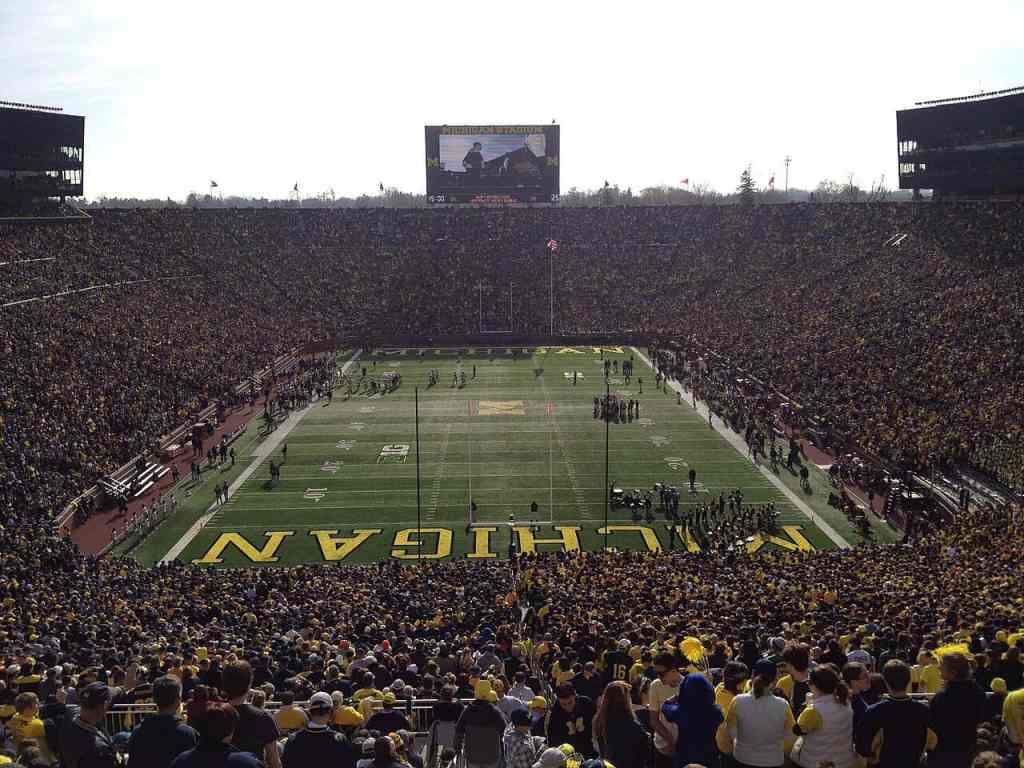
Michigan is the winningest program in college football history, and the Big House is its cathedral — the largest stadium in America, home of the winged helmet, “The Victors,” and a pregame that gives lifelong fans chills. When 107,000 people rise as one and the bowl starts to shake under your feet, you understand why a Saturday in Ann Arbor sits on so many bucket lists. The bleachers are bare and the rules are strict, but that’s a small toll for a day inside one of the great cathedrals of American sport.
Explore all of our college football travel guides and check out these other great college football trips and local gems.
And Closer to Home Ford Field, Little Caesars Arena and Michigan State
Written by Brad Richards. Founder of Gameday Guides. This guide includes insights from personal visits as well as updated info from team sources, fan forums, and stadium policies. We aim to help you plan with confidence — enjoy your gameday.