


Best Seats at Parc des Princes
The Parc des Princes is the home of Paris Saint-Germain, tucked into the smart, residential 16th arrondissement in the southwest of Paris. The name means “Park of the Princes” — the land was once a royal hunting ground for the king’s sons, the princes, on the edge of what’s now the Bois de Boulogne — and it’s pronounced roughly park day pranss. It’s the oldest stadium in the city, opened in 1897 as a velodrome, but the ground you see today is the dramatic concrete bowl designed by architect Roger Taillibert in 1972, its ribbed cantilever roof covering every seat without a single pillar to block your view.
PSG have played here since 1974, and these days that means Ligue 1 every fortnight plus the biggest nights in European football — the club are back-to-back Champions League winners (2025 and 2026), so the Parc is about as hot a ticket as football offers. One honest reality: this is genuinely one of the hardest grounds in Europe to get into, with more than 35,000 season-ticket holders and a sell-out streak stretching past 170 consecutive home matches. Entry is strict, the atmosphere is fierce, and the stands sit right on top of the pitch — which is exactly what makes a night here worth the effort. (Quick note if you’ve landed here by mistake: this isn’t the Stade de France, the national stadium up in Saint-Denis — the Parc is PSG’s own club ground.
Seating Overview
The Parc is a compact, steep, two-tier bowl with no running track, so you’re close to the pitch almost everywhere — there are no genuinely bad seats for actually watching the game. What changes wildly here is atmosphere, and that’s driven by which of the four stands you’re in. Get this right and you’re choosing the entire character of your night, not just the view.
The ground has four stands. Tribune Paris (east) and Tribune Borelli (west) are the long sides running the length of the pitch; Borelli is the grander, premium side with the presidential area. Tribune Auteuil (north) and Tribune Boulogne (south) are the ends behind the goals — and these two are the beating heart of PSG’s support, home to the club’s ultras. Seat blocks are numbered so that the 100s sit lowest and closest to the pitch, the 300s in the middle, and the 400s highest up.
Best Non-Premium Seats
The middle tier of Tribune Paris (the 300s), toward the halfway line. This is the sweet spot for most visitors: a proper side-on view of the whole pitch, high enough to read the game, and close enough that it never feels distant. You get the tactical picture and a full wall of noise from the ends without being inside the ultras’ territory. It’s the choice if you want the classic “watch a great match at a great ground” night.
The lower tier of Tribune Paris (the 100s), along the touchline. Right down on the pitch, this is where you feel the pace and physicality of a PSG side up close. The trade-off is the flattened view of the far side and less of the tactical shape — but for sheer proximity to world-class players, it delivers.
Tribune Borelli, middle tier. The west side sits opposite Paris and carries the presidential and premium areas, so the general-admission blocks here are pricier for a similar view. Pick it if the Paris side is sold out or if you want to be on the same side as the tunnel and the main camera angle.
Best Value Seats
The middle tier of Tribune Paris, a few blocks off the halfway line. You keep the elevated, side-on view that makes the central blocks so good, shift toward a corner, and the price eases. On most matchdays the difference in what you actually see is marginal. This is the smart-money pick.
The upper tier (the 400s) on a long side. Higher and further back, but the bowl is steep and compact enough that even the top tier keeps you connected to the game — and you’re looking down on the tifos in the ends, which is a show in itself. Good value for a big European night.
Cheapest Way In
The upper tier behind the goals, in Auteuil or Boulogne (the 400s). The lowest-cost real seats. You’re high and behind the net, so the far goal is a distance away, but you’re immersed in the loudest part of the ground for the least money. Just know what you’re buying — see the atmosphere note below, because these ends aren’t neutral territory.
Our Pick
If you only take one piece of advice: aim for the middle tier of Tribune Paris (the 300s), as near the halfway line as your budget allows. It’s the best balance of view, price and atmosphere in the ground, and it’s the seat you’d hand a friend seeing PSG for the first time.
The Ends, the Ultras & the Away Section
This is the single most important thing to understand before you buy at the Parc. Auteuil (north) and Boulogne (south) are the ultras ends. The Virage Auteuil, in particular, is home to the Collectif Ultras Paris — the group that drives the tifos, the chants and the choreography that make PSG nights famous. Standing (in practice) and singing for 90 minutes, it’s an incredible experience and a terrible place to casually watch a game; go in knowing that’s the deal.
Away fans are placed in a segregated section in an upper corner between the Auteuil end and the presidential side, with their own entry and searches. If you’re travelling with visiting supporters, follow the club’s routing to the letter — segregation here is taken seriously, and away fans are specifically advised to steer clear of the Auteuil area on matchday.
A Note on the Roof and Weather
Every seat at the Parc is under Taillibert’s cantilever roof, so rain in the stands isn’t a concern — the pitch is open, but you’re covered. Paris weather is mild and PSG matches are overwhelmingly evening kick-offs, so sun and heat rarely factor into picking a seat. Bring a layer for a cold winter or European night; that concrete bowl can hold the chill once the sun’s down.
Premium Seating & Clubs
Premium at the Parc is concentrated on the Tribune Borelli (west) side, where the presidential area and the club’s hospitality spaces sit along the halfway line. It serves far fewer fans than the general bowl, so here’s the short version.
The Best Premium Experience
The halfway-line hospitality on the Borelli side. PSG’s flagship matchday hospitality — the long-running Salon Concorde-style package is the recognised one — pairs a prime central seat with a private lounge, dinner, a VIP welcome and, typically, a reserved parking space. For a Champions League night with the full treatment, this is the standout, and it’s the option to describe by its halfway-line location and tier rather than whichever sponsor name is current.
Best Value Premium
The entry-level hospitality or premium seats on the Borelli side. If you want the lounge-and-comfort experience without top-tier prices, the cheaper hospitality tiers still get you an excellent central seat, indoor lounge access and catering for a fraction of the flagship package. For a couple or a small group who want the premium feel more than a private box, it over-delivers — this is the insider call.
Suites & Group Options
Private boxes and larger group hospitality are booked through PSG’s official hospitality channel and suit corporate days, milestone occasions and larger parties; pricing scales steeply with the fixture, and a marquee European night commands the highest rates. Book well ahead — like everything at this ground, premium sells out.
Parc des Princes Capacity & Seating Map
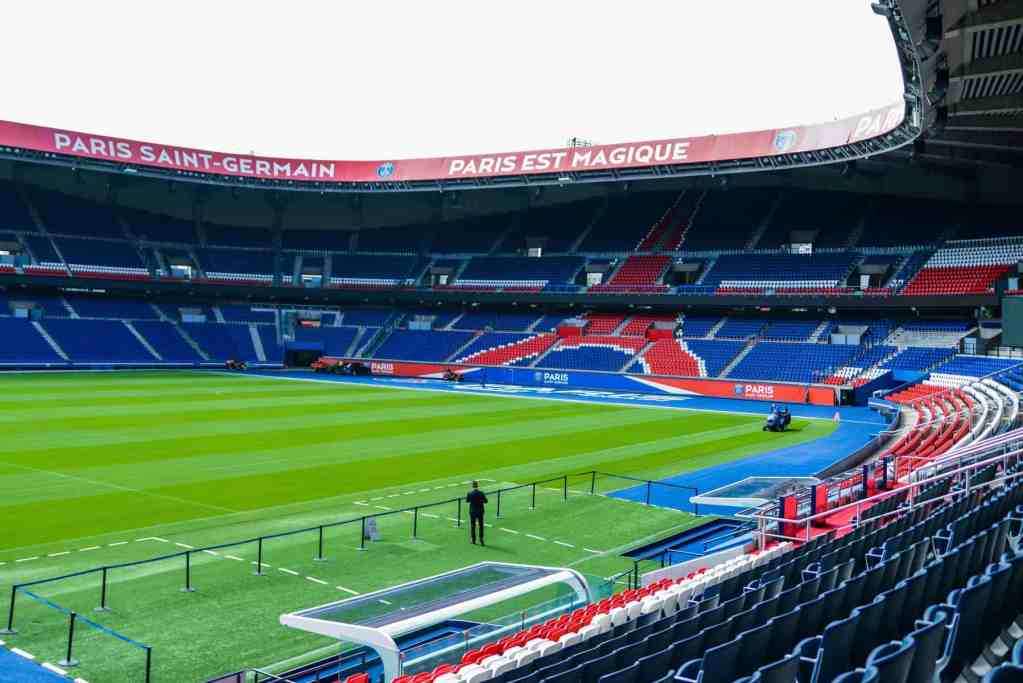
Parc des Princes capacity is just under 48,000 — the official all-seater figure is 47,929 — which makes it a compact ground by elite-club standards, and part of why demand so wildly outstrips supply. It’s an all-seater bowl with two main tiers wrapped tight around the pitch, no athletics track, and four stands: Tribune Paris and Tribune Borelli along the sides, Tribune Auteuil and Tribune Boulogne behind the goals.
For the seating plan, the block numbering is the key: 100-series blocks are lowest and closest to the pitch, 300-series are mid-height, and 400-series are highest, numbered around the bowl so the lowest and highest numbers in each stand meet at the corners. PSG’s official ticketing site has an interactive seating map and a “where’s my seat” view that’s worth checking before you buy.
On the renovation question — a live search topic — the Parc’s future has been debated for years. PSG long threatened to leave for a new-build in the suburbs (Massy or Poissy) after a standoff with the city, which owns the stadium. As of mid-2026, with a new Paris mayor in office, the city has reopened talks and PSG are now studying an expansion of the current ground toward roughly 60,000 seats rather than leaving. Nothing is finalised, and the listed Taillibert structure (with the city ring road running directly beneath it) makes any expansion complex — so for now, capacity stays just under 48,000.
Getting the Best Tickets
There’s no gentle way to say it: PSG tickets are hard. With a 170-plus-match sell-out streak, face-value seats through the official PSG ticketing site are the goal but go fast, typically released around three to four weeks before a match, and club membership improves your odds. Prices start around €40 for the most basic seats and climb by tier. For Champions League and big Ligue 1 nights, demand is brutal and the official resale platform or a reputable secondary marketplace is often the only route — expect to pay well above face.

Parc des Princes Bag Policy
The Parc des Princes bag policy is strict — noticeably stricter than many European grounds — and it has one trap worth flagging up front: there is no left-luggage at the stadium. If your bag is too big, you won’t be able to check it and you won’t get in, so sort storage before you travel. Keep bags small (a roughly 15-litre limit is the safe rule) and ideally leave them at your hotel.
Expect a thorough body search and an ID check at the turnstiles, on top of the bag check. Prohibited items include glass and plastic bottles, cans, knives, laser pointers, vuvuzelas, long (non-folding) umbrellas, and anything that could be used as a weapon, along with the usual ban on pyrotechnics, flares and smoke bombs. Outside food and drink are not allowed through the gates — PSG regulars are blunt that you’ll be made to bin that drink, so finish it beforehand. Portable phone chargers no larger than a phone are generally fine. Flags and banners need to be within size limits and pre-approved. If you need a medical exemption, arrange it with the club in advance.
Policies to Know Before You Go
Arrive early and expect a slow entry. Between the ID checks, body searches and bag checks, the queues build well before kick-off, so the turnstiles — not the concourse — are your bottleneck. No outside food or drink and, in practice, limited re-entry mean you should plan to be in and settled.
Cashless: Concessions inside run heavily on card and contactless — bring a tap-to-pay card or your phone wallet and you’ll move through the queues far faster. Cash is accepted in some areas (the away section, for instance, has taken both), but card is the reliable default.
Accessibility: The Parc provides accessible seating, companion places and dedicated entry for supporters with disabilities, bookable through the official ticketing rather than on the day. Given the ground’s age and steep, compact design, it’s worth arranging access needs and the right entrance in advance through the club so staff can point you to the step-free route. [Link: official accessibility information.]
Full policy details: link the official PSG practical-information and stadium-regulations pages here for the complete, current list.
Getting to Parc des Princes
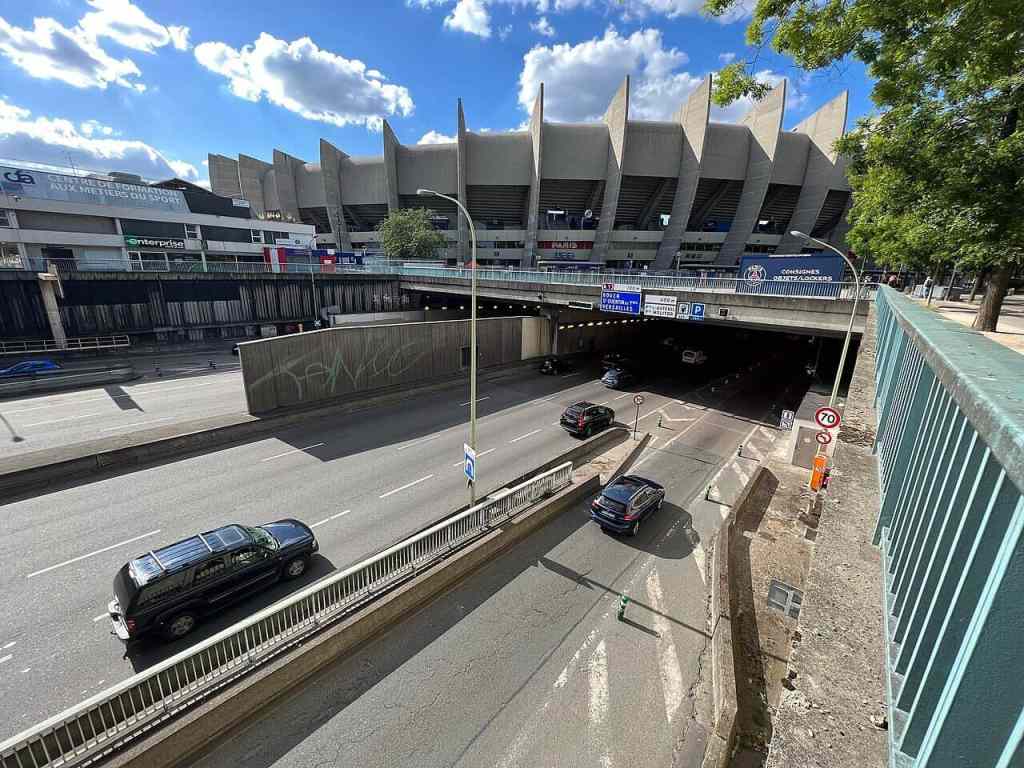
The Parc sits in the 16th, right by the Paris ring road, and — like the rest of the city — driving in is discouraged and parking is minimal. Public transport is the way, and you’re already inside Paris, so it’s quick.
One useful bit of admin first: Paris scrapped its fare-zone system in January 2025, so a single Metro-Train-RER ticket (around €2.55) covers you across the city with no zone maths. Paper tickets were phased out at the end of 2025, so load your journeys onto a Navigo Easy card or your phone (via the Île-de-France Mobilités or Bonjour RATP app) before you set off.
By Metro
Metro Line 9 to Porte de Saint-Cloud is the main route — the turnstiles are about a five-minute walk, and Line 9 runs straight through central Paris, so it’s a direct ride from much of the city. Exelmans (also Line 9) is another nearby option. Metro Line 10 to Porte d’Auteuil serves the north end, but a word of caution for away fans: the Auteuil side is home-ultras territory, and visiting supporters are specifically advised to use Porte de Saint-Cloud (Line 9) instead and avoid arriving through Auteuil.
By Bus & Bike
Several bus routes stop close by, including the PC1 on the ring-road orbital plus lines such as the 22, 62 and 72. There’s a secure bike, scooter and skateboard parking area at Place du Général Stefanik, near the Tribune Paris side, staffed from two hours before kick-off until an hour after — and Vélib’ cycle-hire stations ring the stadium.
By Car
If you must drive, know that parking around the ground is scarce and the area is residential, so a booked space or a car park a little further out is the only sensible plan. Most fans don’t bother — the metro is faster and there’s no post-match car-park gridlock to escape.
Top Tips for Visiting Parc des Princes
When going to the Parc, it’s good to know a few things in advance — it’s a tight, intense, strictly run ground in an upmarket district that doesn’t roll out the tourist welcome mat. Here’s what regulars know.
The Stadium (A Paris Landmark)
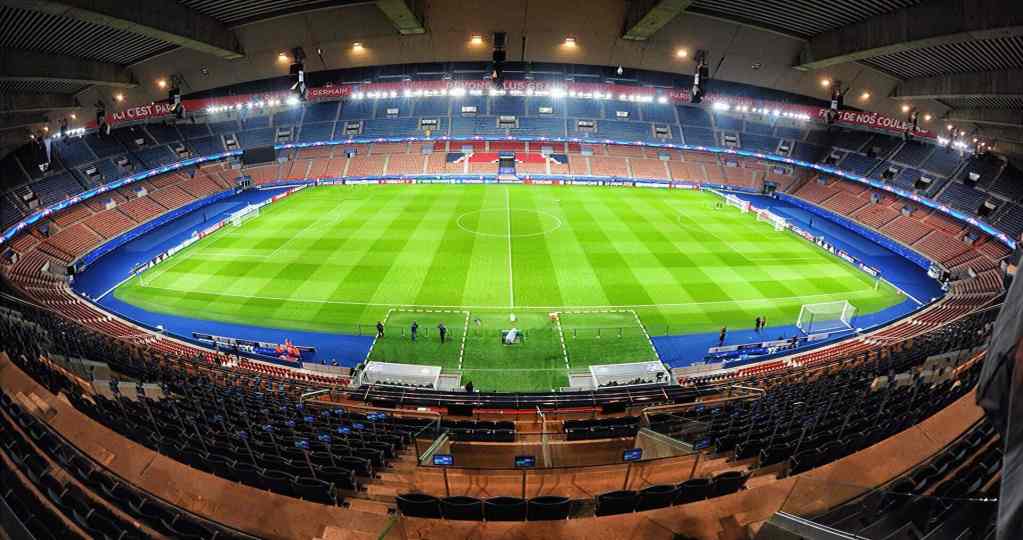
Taillibert’s roof is the signature. The 1972 design is a piece of Brutalist icon-making — a ring of pre-stressed concrete ribs cantilevering out to cover every seat with no internal pillars, all of it perched over the city ring road that runs beneath the pitch. It’s a listed Paris landmark, which is a large part of why the club can’t simply knock it down and rebuild. Look up at the ribs on your way in; there’s nothing else quite like it in football.
Ticket Scarcity & Strategy
This is one of the hardest grounds in Europe to get into, currently riding a 170-plus-match sell-out streak. Face-value tickets sell out in minutes; if you miss the official release, rely strictly on the official PSG resale platform or a highly reputable secondary marketplace.
The Seating “Sweet Spot”
If you want the best balance of view, atmosphere, and price, aim for the middle tier of Tribune Paris (the 300s blocks) near the halfway line. You get the tactical picture and the wall of noise from the ends without being caught inside the ultras’ territory.
The “Ends” Warning & Away Fans
The stands behind the goals (Auteuil and Boulogne) are the beating heart of PSG’s support and home to the ultras — they stand and sing for 90 minutes. It’s an incredible experience but a terrible place to casually watch a game. If you are an away fan, follow the club’s routing strictly: use Porte de Saint-Cloud (Metro Line 9) and actively avoid the home ultras’ Auteuil area (Porte d’Auteuil, Line 10) on matchday.
Transport Tech Update
As of 2025, Paris scrapped paper metro tickets and the old fare-zone system. A single €2.55 ticket now covers the whole city, but you must load it onto a physical Navigo Easy card or a transit app on your phone (like Bonjour RATP) before you travel.
The Stadium Tour
If you can’t get a match ticket, take the tour — it’s the best consolation in Paris football. The PSG stadium tour runs behind the scenes at Gate L (24 rue du Commandant Guilbaud): pitchside and the substitutes’ bench, the dressing rooms with the players’ lockers, the press room, the VIP areas, and a trophy room that now displays both of PSG’s recent Champions League trophies. It finishes with a zipline ride over the stands — a genuinely fun flourish. It’s multilingual and family-friendly, but note it doesn’t run on matchdays or the day before a Champions League match, so check the calendar.
Parc Arrival Strategy
Give yourself a full hour before kick-off. The entry process — ticket check, ID check, body search, bag check — is slow and thorough, and the crowds around Porte de Saint-Cloud are dense. Know your gate and stand letter from your ticket before you arrive so you’re not circling the perimeter through the crush.
Instagrammable Spots and Photos
The shot everyone wants is the concrete rib-work of the roofline framing the pitch from up in the stands — go high on a long side for it. On a European night, the tifo displays in the Auteuil end are the other must-capture, best shot from the opposite side or the upper tier looking across.
Traditions & Atmosphere
The Auteuil end is the engine. PSG’s organised support drives constant singing, flag-waving and choreographed tifos from there, and the noise bounces around that covered bowl in a way a first-timer won’t forget. Know that this is partisan, standing-and-singing support — thrilling to be near, intense to be inside.
Food, Drink & Going Cashless
Eat before you go in. No outside food or drink gets through the gates. Inside, prices are steep, the concession queues are notoriously long, and they run heavily cashless—bring a tap-to-pay card or your phone wallet to speed things up. The good news versus a suburban stadium: you’re in the 16th and next to Boulogne-Billancourt, so there are real cafés and brasseries within walking distance to sort you out beforehand.
PSG Stadium to the Eiffel Tower
A common visitor question: the Parc is about 5–6 km from the Eiffel Tower, in the same western swing of the city. The easy move is Metro Line 9 from Porte de Saint-Cloud toward central Paris, changing for Trocadéro, which hands you the single most famous view of the Tower — roughly 15 minutes, and a natural thing to pair with a matchday.
Families & Kids
The compact bowl gives clean sightlines from the family-friendlier long sides, which is where to plan around — well away from the ultras ends. Note the strict entry and searches, the no-prams reality of a packed old ground, and bring ear protection for young children; this is a loud room. The stadium tour is an excellent family option on a non-match day.

Hotels Near Parc des Princes
The good news versus the national stadium: the Parc is in Paris, in the desirable 16th, bordering leafy Boulogne-Billancourt and a short metro ride from the Eiffel Tower and Trocadéro. So “near the stadium” here also means “in a genuinely nice part of the city.” Book early — matchday and European nights tighten availability across the western districts.
Best Areas to Stay
Right by the ground (16th / Porte de Saint-Cloud): upscale, quiet and residential, with a five-to-fifteen-minute walk to the gates. Ideal if you want to stroll home after the match and stay close to Roland Garros and the Bois de Boulogne.
Boulogne-Billancourt (just west): calmer, better value, and packed with more restaurants and bars than the 16th itself, with quick metro access on Lines 9 and 10. A smart base that balances price, life and proximity.
Central Paris (via Line 9): because Line 9 runs directly from Porte de Saint-Cloud through the heart of the city, you can happily stay central — around Trocadéro for Eiffel views, or further in — and ride out to the game in 15–20 minutes.
Hotel Recommendations
By the stadium: the Molitor Hotel & Spa (MGallery) is the standout — a restored 1929 Art Deco swimming-pool complex turned luxury hotel, right by the ground and Roland Garros, and a destination in its own right. Hôtel Murat and the Holiday Inn Paris – Auteuil put you within a few minutes’ walk at more moderate prices, and the ibis Styles Paris 16 Boulogne is a reliable mid-range pick about seven minutes out.
Boulogne-Billancourt: Le Parchamp (a 4-star boutique in a former Banque de France building, with a rooftop bar for celebrating a win) is a strong choice roughly 15 minutes’ walk away, and the DoubleTree by Hilton Paris Boulogne near the Jean-Bouin stadium is a solid, well-connected option.
Central / for Eiffel views: any well-reviewed hotel around Trocadéro or the Line 9 corridor gives you the postcard Paris stay plus a direct train to the match. {{Booking.com affiliate link}}
Budget Options
The Holiday Inn Paris – Auteuil and the ibis / ibis budget properties around Boulogne and Porte de Saint-Cloud are the genuinely affordable-for-Paris picks close to the ground. The trade-off is standard chain rooms, but you’re minutes from the gates and a short metro from the whole city — exactly what you want if the match is the point of the trip.

Matchday Scene
Set your expectations correctly: the 16th is one of Paris’s most refined, residential districts, not a rowdy pre-match pub quarter. There’s no tailgating culture and no wall of stadium bars — but because you’re in Paris proper, with Boulogne-Billancourt next door, there’s still plenty within reach if you know where to point yourself.
Pubs and Cafes Near the Parc
Around Place de la Porte de Saint-Cloud you’ll find the cluster of brasseries and cafés that fill up before kick-off — the most convenient pre-match drinks near the gates. Boulogne-Billancourt, a few minutes west, has a livelier spread of bars and terraces, and several of the local hotels (Le Parchamp‘s rooftop among them) make a relaxed spot for a drink before or after. Inside the ground, the pitch-view All Bar is a premium option if your ticket includes it.
Best Restaurants in the Area
Boulogne-Billancourt is the better bet for a proper sit-down meal near the stadium, with a strong run of bistros, Italian spots and brasseries a short walk from the ground — reliably good and a notch cheaper than the tourist centre. For something more special, the 16th arrondissement itself trends upmarket, and the whole of western Paris — Trocadéro, Passy, the golden triangle beyond — is a short Line 9 ride away. As with any big-match night, book ahead; the closest places fill fast when 48,000 people are heading the same way.

Why You Should Go
The Parc des Princes isn’t a giant modern arena — it’s a tight, steep, atmospheric bowl in a beautiful corner of Paris, and that’s exactly the appeal. Catch PSG on a Champions League night, with the Auteuil end in full voice and the concrete roof trapping the noise, and you’re watching one of Europe’s best teams in one of its most intense grounds. If you can’t land a ticket, the stadium tour is the next best thing. Either way, pair it with the Eiffel Tower a few metro stops away and you’ve got a near-perfect football trip to Paris.
Explore all of our Football Guides as well as these:
Bernabéu (Real Madrid) and Camp Nou (Barca)
Written by Brad Richards. Founder of Gameday Guides. This guide includes insights from personal visits as well as updated info from team sources, fan forums, and stadium policies. We aim to help you plan with confidence — enjoy your gameday. If you have any tips, if we missed anything or you have a question, don’t hesitate to shoot us an email.