

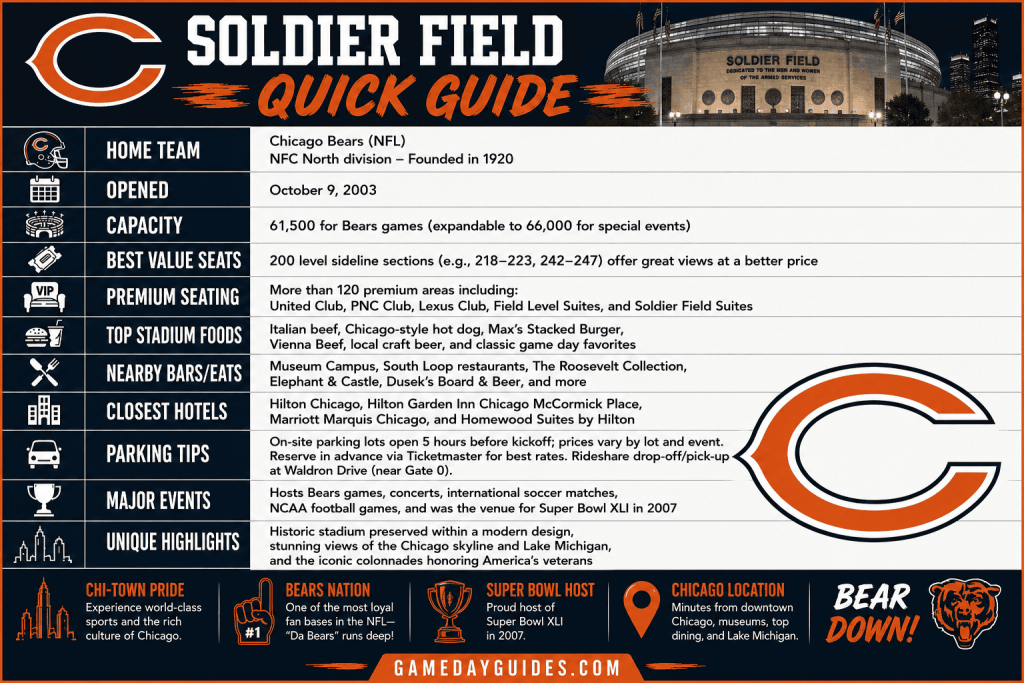
Best Seats At Soldier Field in Chicago
Soldier Field is the oldest stadium in the NFL and the smallest, and both facts shape the day you’ll have there. The 2003 rebuild dropped a modern bowl inside the 1924 colonnades, which cost the place its National Historic Landmark status and got it nicknamed everything from a spaceship to a toilet seat — but it also put 61,500 people closer to the field than almost any stadium in the league. What it did not do is close the roof, and Lake Michigan is 400 yards east of the east stands. Where you sit here is less about sightlines than about how much wind you’re willing to eat, so start with the map.
Seating Guide
Soldier Field is lopsided, and reading the chart correctly starts with knowing that. The east side is short and premium — lower bowl, then two levels of United Club (200s and 300s) and the suites, and nothing above. The west side is the tall one: lower bowl, the Media Deck 200s, the Colonnade level 300s, and a 400-level grandstand stacked on top. The Bears bench sits on the west side in front of roughly sections 133–141; the visiting bench is east, in front of 106–112.
Section numbers run clockwise from the north end. Lower bowl is 101–155 all the way around, with sidelines at 105–113 (east) and 132–142 (west), the south end zone at 115–130, and the north end at 144–155. Because the bowl is compact, height hurts you less here than at an 80,000-seat stadium — a 400-level seat at Soldier Field is closer to the action than a 300-level seat in most of the league. Exposure hurts you more.
Best Non-Premium Seats at Soldier Field
Sections 136–140, rows 15–30 (lower bowl, west sideline). You’re directly over the Bears bench with the full field in front of you and the videoboard at the far end. Rows below 10 put you behind coaches, ball boys and photographers on a sideline that’s already crowded, and the wall of the west deck above gives the back of this range a little more shelter than anything on the east side.
Sections 330–338 (Colonnade level, west sideline). The classic broadcast angle — high enough to watch route concepts develop, low enough that jersey numbers are readable without the board. Levy expanded the 300-level west concourse with cheesesteaks and barbecue, so the food behind these sections is now better than what’s behind the lower bowl.
Sections 108–112 (lower bowl, east sideline). The visiting-bench side, which means the opposing team warms up in front of you and the tunnel traffic is right there. The trade is that you’re on the lake side of the building with nothing between you and the water.
Best Value Seats at Soldier Field
Sections 434–440 (upper west grandstand, midfield). Top deck at midfield beats lower bowl at the goal line, and at Soldier Field’s footprint it isn’t close — you’re paying end-zone money for a centered view of the whole field. It’s a real climb, and the rows in the 30s are a genuine hike from the concourse.
Sections 318–326 (Colonnade level, south end zone). These sit above the south end and give you the skyline framed behind the north end of the field, which is the best in-stadium view in the building. Kicking-game angles are excellent; anything happening at the far 20 is a long way off.
Budget / Cheapest Way In
Sections 348–357 (Colonnade level, north end zone). Consistently the softest pricing in the building for a real seat, and the north end puts you behind the Bears’ preferred scoring end in the second half. You’ll be watching the far end of the field on the board.
Sections 427–447 (upper west grandstand, corners). The corner sections at the ends of the grandstand run cheaper than their midfield neighbors for a view that’s angled but complete. Sections 148 and 155 in the north end zone lower bowl are the designated alcohol-free sections, and they price accordingly — worth knowing whether you’re avoiding the drinking or specifically want to.
Our Pick
Sections 336–338, rows 10–25, Colonnade level. Midfield, on the Bears’ side, with the concourse and its food twenty steps behind you — and you’re up out of the worst of the ground-level wind funnel without paying club money.
Wind, Cold and Sun at Soldier Field
The wind is the whole story here and it is not exaggerated. The stadium sits on open lakefront with no windbreak in any direction, the bowl is open at both ends, and January playoff games have kicked off around 18°F with wind chills near 4°. The Bears themselves publish a top-ten coldest-games list, which tells you how the franchise thinks about its own building.
Exposure runs from bad to worse as you climb, and the corners and both end zones catch it hardest because there’s nothing upwind of them. If you’re going to a November or later game and want any shelter at all, the back rows of the Media Deck (sections 230–244) sit under the deck above — the only meaningful overhang in the non-premium bowl.
Sun is only a factor for the early-season and late-afternoon kicks. For evening events the west side has the sun at its back while the east side looks straight into it, which fans in the 230s and 240s point out every summer concert. By November it’s irrelevant; nobody at Soldier Field is chasing shade in December.
What to Avoid (and What’s Worth Trying Once)
Lower bowl end zones, sections 115–130 and 144–155, front rows. Sitting low behind an end zone at any football stadium means watching the far 60 yards as a rumor, and here you’re paying near-sideline prices for it because the lower bowl is small enough that everything in it holds value. If the price gap to sections 132–142 is under 30%, take the sideline.
Rows 1–8 anywhere on a sideline. The field is below street level and the benches are deep — you’ll be looking through personnel for a good share of the game.
Worth it once: the 400-level west grandstand in a late-season game. It’s cold, it’s a climb, the wind is unfiltered, and the Chicago skyline sitting behind the north end zone under stadium lights is the shot everyone takes home. Bring the layers and do it on purpose.
Premium Seating Options
Premium at Soldier Field is unusually stratified for a stadium this small — the entire east side is given over to it, with two full levels of club seating, four levels of suites above that, and a handful of newer social spaces bolted on elsewhere. In a stadium with no roof, indoor access isn’t a luxury purchase from October onward; it’s a different sport.
The Best Premium Experience: The United Club
The three-level lounge behind the east sideline is the premium anchor here, and it serves both the 200-level club seats (202–216) and the 300-level club seats (301–317) with identical access — same bars, same food, same climate control. Front-row seats in a few lower-bowl sections carry the same access, so check what you’re actually buying: Row A in sections 103–105 and Row 1 in 119–126 come with club entry.
Inside it, the City Room on the south end and the International Room on the north end of the United Club’s 100 level are the ceiling. Each caps at 75 guests, runs all-inclusive on food and drink, opens two hours before kickoff and stays open an hour after, and hands you a wristband so you can move in and out through the game. There’s no field view from either room — they’re lounges with televisions, which is exactly the point in a December game — and you need a United Club game ticket on top of the room pass.
Best Value Premium: 300-Level Club Seats
Buy the 300-level United Club (301–317) instead of the 200-level and you get the identical lounge for meaningfully less. The lounge is the product here, not the seat: the view from the 300s is fine at this stadium’s scale, and every dollar of the difference between the two levels buys you seat height, not amenity. If you’re coming for a cold-weather game, this is the smartest premium spend in the building.
Other Premium Options
The Miller Lite Midway is the one to know about if you want indoor warmth without club-seat pricing — a climate-controlled hall on the west Mezzanine behind sections 136 and 138 with four full-service bars, food stations and its own restrooms, open before, during and after the game. Season passes go to season ticket holders, but single-game passes are sold through the Bears app, which makes it the only genuinely buyable indoor refuge on the west side.
The Vivid Seats Skydeck sits above the north end zone as a standing-and-mingling space with bar-top tables, private concessions and tailgate games, aimed at people who’d rather roam than sit. The Skyline Suite on the east side is the all-inclusive shared suite option for smaller groups.
Suites & Group Options
Soldier Field has 133 executive suites across four levels (A–D) on the east side, opening two hours before kickoff and staying open about 90 minutes after. Catering is separate from the suite rental and runs through Levy, with food and beverage orders due four business days out. All suite guests get United Club lounge access, and suite parking runs through the North Garage, which connects directly into the club. Book through the Bears’ suite office or a broker like SuiteHop; single-game suites do come available on the C level.
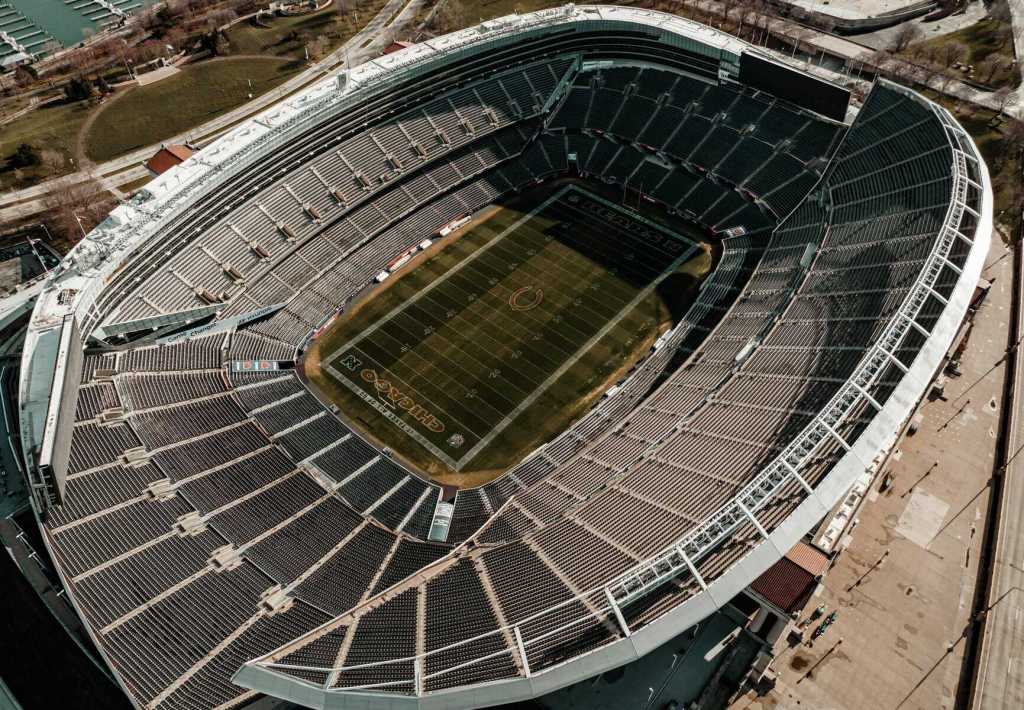
Soldier Field Seating Chart & Capacity
Soldier Field holds 61,500 for football, the smallest capacity in the NFL — the Bears themselves quote 62,500, and you’ll see both numbers on official material. It’s also the oldest stadium in both the NFL and MLS. The address is 1410 Special Olympics Drive, Chicago, IL 60605, on the Museum Campus.. Here is a look at Soldier Field Seating Chart.
Two things trip people up reading this chart. The numbering runs clockwise from the north end rather than starting at a corner, so 155 and 101 are neighbors. And the 200 and 300 levels are not continuous rings of the same product — sections 202–216 and 301–317 are club seats on the east, while the same-numbered tiers on the west and the ends are general admission. Check the side before you check the number. The Bears’ official interactive seating chart has the current section-by-section views.
Getting Chicago Bears Tickets
Single-game tickets go through Ticketmaster as the Bears’ official partner, and the season-ticket base is deep enough with a long PSL waiting list that face-value inventory is thin from the day the schedule drops. The resale market here behaves predictably: divisional home games against Green Bay, Minnesota and Detroit price like postseason games and never soften, while a non-conference game in a cold-weather window is where the discounts live — that’s the one to buy late in the week.
Since the Bears got competitive again, the floor across the whole slate has risen, and the old habit of walking up to a December game and naming your price is gone. Vivid Seats and the other secondary markets are usually the practical route for anything sideline-level; just price the same seats on Ticketmaster first, because the Bears release verified resale there too.
Get your Chicago Bears Tickets Here! If you’re looking for Bears tickets check out Vivid Seats (partner) where you can get the best seats for cheap right up until gametime.

Soldier Field Bag Policy
Soldier Field runs the NFL clear-bag standard and enforces it at a double checkpoint. You get one clear plastic, vinyl or PVC bag up to 12″ x 6″ x 12″ — clear backpacks, clear fanny packs, clear cross-body and clear cinch bags all count if they fit — or one one-gallon clear freezer bag. On top of that you can carry one non-clear bag no bigger than 4.5″ x 6.5″, which is the clutch or small purse exception.
Everything else is out, and the list is stricter than people expect: non-clear backpacks, diaper bags unless medically necessary, coolers, briefcases, computer bags, camera and binocular cases, luggage of any size, and seat cushions with pockets or zippers. Binoculars themselves are fine; the case isn’t. Umbrellas are prohibited outright, which matters in a stadium with no roof — bring a poncho.
If you turn up with the wrong bag, there are lockers rather than a bag check. Gameday lockers cost $10, credit card only, and sit at two spots: the Field Museum East Terrace off McFetridge Drive, inside the Miller Lite Ultimate Tailgate, and the 18th Street turnaround just west of DuSable Lake Shore Drive. Blankets are permitted and don’t count as a bag as long as you carry them in hand.
Soldier Field Rules and Key Policies
Cashless everywhere. Every concession, in-seat vendor and retail terminal at Soldier Field is cash-free — credit, debit and mobile wallet, so yes, Apple Pay works. If you show up with cash, PNC ATMs sit at the Dr Pepper Patio in the South Courtyard, section 128, section 350, outside Gate 10, and North Garage Level 4.
No re-entry, ever. Every guest passes a security checkpoint, and once you’re out, you’re out — which matters if you’re tailgating and thinking of ducking back to the car for a warmer coat.
Mobile ticket only, screenshots invalid. Tickets live in the Bears app or your account, and a screenshot won’t scan. Add them to your phone’s wallet before you leave, because cell service at the gates is congested and cold kills batteries fast.
For accessibility, the ADA drop-off is outside Gate 14 on the southeast side and requires a placard or plate registered to someone in the car; Gate 8 handles wheelchair-accessible seat exchanges and service animals. Fans without a stadium parking pass can park at the 31st Street McCormick Place Lot B and take the free accessible shuttle to the Gate 14 turnaround.
Check out the Soldier Field A to Z guide for a full list of all policies..

Getting To Soldier Field
Public transit wins here, and not narrowly — the stadium sits on a peninsula of parkland with a handful of roads in and out, most of the close lots need a pre-paid pass, and the postgame exit is genuinely slow. Two express buses drop you at the gate.
Soldier Field Parking
Most of the lots immediately around the stadium require a pre-paid pass bought in advance through SoldierFieldParking.com; they open four hours before kickoff and close two hours after the game, or immediately after night games. If you don’t have a pass, the practical answer is McCormick Place Lot B on 31st Street, $55 drive-up or $60 pre-paid, which includes the free shuttle to the 18th Street drop-off and runs until two hours postgame.
McCormick Lot C Lakeside is $50 with no shuttle, and Burnham Harbor drive-up runs $78. The Family Friendly alcohol-free lots — south of the Adler Planetarium at $68, and the 31st Street Beach Lot at $40 — are the cheapest sanctioned option and the calmest.
The parking hack most fans miss: Millennium Park and Grant Park South garages charge $20–30 on gamedays, roughly a third of what the campus lots cost, and it’s a 25-minute walk or a short bus hop down to the stadium. There’s no shuttle from either, which is exactly why nobody talks about them. Do not try street parking in the residential blocks — the whole zone from Roosevelt to Cermak between Clark and DuSable Lake Shore Drive is ticketed and towed on gamedays.
Public Transit to Soldier Field
Take the Red, Orange or Green Line to Roosevelt and transfer to the #146 Inner Lake Shore/Michigan Express, which runs to the stadium entrance on McFetridge for the same fare. The walk east from Roosevelt across Museum Campus is about three-quarters of a mile and completely unsheltered — fine in September, brutal in December.
The best-kept route is the #128 Soldier Field Express, which runs non-stop from Ogilvie Transportation Center and Union Station straight to the stadium. If you’re coming in on Metra or staying in the West Loop, it beats the Roosevelt transfer outright.
Metra Electric stops at Museum Campus/11th Street and 18th Street, both within walking distance, and the South Shore Line runs the same tracks from Indiana. Pace also runs Soldier Field Express buses from suburban park-and-rides with free parking at the departure lots — the single cheapest way in from the suburbs, with one catch: it’s regular season only and does not operate for playoff games.
Coming out, board the #128 and #146 eastbound on McFetridge at Special Olympics Drive, northeast of the stadium.
Rideshare
Pregame drop-offs work at the 18th Street turnaround just west of DuSable Lake Shore Drive and on Balbo at Columbus. Postgame is the part to plan: the only sanctioned pickup point is Balbo Drive at Columbus Drive, north of the stadium, which means a walk regardless of where you were sitting. Buses, taxis and limos are barred from the campus from 90 minutes after kickoff until an hour after the game, so the roads around the stadium are effectively closed to pickups.
Walk it deliberately. Head north through the Museum Campus toward Balbo rather than standing at the stadium waiting for a car that can’t reach you, and you’ll clear the surge zone at the same time you clear the crowd.

Soldier Field Insider Tips & Hacks
Soldier Field asks more of you than most NFL stadiums. It’s old, it’s exposed, it has no re-entry and no roof, and the things that make a day here go well are almost all decisions you make before you leave the house. Here’s what regulars know.
The Bears’ New Stadium: Where Things Stand
The Bears voted to leave Illinois in June 2026. The board of directors voted to advance a stadium development in Hammond, Indiana, near Wolf Lake — the first time the franchise’s board had ever voted on a site — days after the Illinois legislature adjourned without passing the property-tax bill the team wanted for Arlington Heights.
It isn’t a done deal, and Arlington Heights isn’t formally dead. The Bears still own 326 acres in Arlington Heights, bought for $197 million, and sources at the time of the vote were careful to say Illinois could still find a path. What the team has said plainly is that options inside Chicago city limits are exhausted, so a lakefront replacement is off the table either way.
Indiana is paying for it. Indiana lawmakers created the Northwest Indiana Stadium Authority, funded by taxes on admissions, hotels, restaurants and tolls; the Bears have committed $2 billion, keep all stadium revenue, and get an option to buy the building back in 40 years.
You have years, not months. The Soldier Field lease runs to 2033 at $6.48 million a year, with an early-termination penalty, and nothing has been built in Hammond yet. Nobody is playing football in Indiana this decade — but the century-long run on the lakefront now has an end date attached to it.
Both tenants are leaving. Chicago Fire FC broke ground in March 2026 on a privately funded 22,000-seat stadium at The 78, a mile northwest in the South Loop, opening ahead of the 2028 MLS season. By the end of the decade Soldier Field may be a war memorial with a concert calendar and no home team.
Why Is It Called Soldier Field?
It’s a war memorial that happens to hold football games. The stadium opened on October 9, 1924, as Municipal Grant Park Stadium, and was renamed Soldier Field on Armistice Day 1925 at the request of Chicago’s Gold Star Mothers, honoring Americans killed in the First World War. The formal dedication came in November 1926.
The colonnades are the original building. Holabird & Roche designed the Greek Revival exterior in 1919, and the paired double rows of Doric columns on the east and west facades are what survived the 2003 rebuild — everything inside them was demolished.
The 2003 renovation cost it landmark status. Wood + Zapata dropped a modern steel-and-glass bowl inside the 1924 shell for about $632 million, and the National Park Service revoked the stadium’s National Historic Landmark designation on February 17, 2006 — the only building ever delisted for that reason. Critics called the result a spaceship landing on a Greek temple, which is still the most accurate description anyone has managed.
The Bears are relative newcomers. They played at Wrigley Field from 1921 to 1970 and only moved here in 1971. Before that, Soldier Field hosted the Dempsey–Tunney “Long Count” fight, Army–Navy games in front of crowds north of 100,000, the first Special Olympics in 1968, and the 1994 World Cup opener.
Soldier Field Weather: How to Survive the Lakefront
Dress for the wind, not the temperature. Base layer, thermal mid-layer, insulated shell, and a face covering — the number on the forecast and the number you feel are routinely 10 to 15 degrees apart once the wind comes off the water. Here is the NWS Forecast for Chicago to help your preparet.
Skip cotton entirely. Chicago Park District staff give the same advice every playoff week: synthetics and wool, because cotton holds sweat and turns cold, and you will sweat walking in from Roosevelt.
Bring a blanket — they’re allowed. Blankets are explicitly permitted and don’t count against your bag allowance if you carry them in hand. Hand warmers, hot chocolate and chili are sold inside once it turns cold.
Know the warming spots. There are four places to get out of the wind without a club ticket: behind Section 146, the Service Level near the Dr Pepper Patio, the top of the stairs at Gate 31, and the south side of the colonnades.
Your phone will die. The stadium is mobile-ticket only and cold destroys batteries. Keep the phone in an inside pocket against a hand warmer until you scan, and note that there are eight ChargeFuze stations, including sections 128, 136, 314, 332 and 441.
Arrival Strategy & Gates
Gates open two hours before kickoff; lots open four. For a noon kickoff that’s a 10 a.m. gate and an 8 a.m. lot — and the lots for rivalry games fill two to three hours before kickoff.
Budget extra time for the double checkpoint. Security runs bag verification against the clear-bag policy and then a walk-through metal detector. You don’t need to remove your phone, keys, hat, belt or wallet — only large metal objects go on the table, and taking everything out of your pockets slows the whole line down.
Gate 0 at Ticketmaster Plaza is the full-service entrance. It’s where the Fan Services booth with sensory bags, assistive listening devices and the ticket-support desk sits, and it opens onto the Dr Pepper Patio activities.
Will Call opens two and a half hours before kickoff outside Gate 10 and closes at halftime. Bring photo ID.
Bears Tailgating at Soldier Field
The free public tailgate is the move if you don’t have a parking pass. The Miller Lite Chicago Bears Ultimate Tailgate runs on the Field Museum Terrace on the north side, opens two hours before kickoff, stays open an hour after the game, and is free and open to anyone with or without a ticket.
The Vizzy Bears Fan Zone is the family version. It sets up on Stadium Green outside Gate 0 for the first four regular-season home games with alumni appearances, games and giveaways, opening two and a half hours before kickoff and closing 30 minutes prior.
Where you can actually tailgate: all Museum Campus surface lots, the upper level of the Waldron Deck, and McCormick Place 31st Street Lots B, D and E. The 31st Street lots are where the big, social, all-morning setups end up.
Know the bans before you pack the car. No tents or canopies of any size, no fire pits or open flames, no deep fryers, no propane tanks over 19 pounds, and no grills in enclosed garages or on the lower level of the Waldron Deck. Tailgating is prohibited entirely after night games.
Soldier Field Food & Drink
Mr. Beef near section 134 is the one to hit. The Italian beef shop that inspired The Bear runs a stand on the Mezzanine concourse — and since the original on North Orleans is closed Sundays, the stadium location is the only way to get one on a game day.
Izzy’s Smokin’ Loaded Mac is the sleeper. Former Bear Israel Idonije’s loaded mac, with brisket or pulled pork, gets picked over the flashier items by most people who try the whole menu. He also owns The Staley down on South Michigan if you want the same food pregame.
Head west for the upgraded stands. Levy rebuilt the 300-level west concourse with cheesesteaks and barbecue, and it’s now better than the equivalent stands on the lower Mezzanine. Elsewhere: Connie’s pizza, GG’s chicken tenders from Boka, the Bear Claw pretzel, and a street taco stand built around Chicago’s 77 neighborhoods.
Use the self-checkout terminals. There are 60 automated checkout stations and grab-and-go markets around the concourse, and they move several times faster than a staffed register at halftime. Go at kickoff or midway through the first quarter and you’ll walk straight up to either.
Alcohol stops at the end of the third quarter, sales start two hours before kickoff, and you can carry two at a time.
Bears Traditions & Gameday Culture
Learn “Bear Down, Chicago Bears.” The 1941 fight song plays after every score and the building sings it. Knowing the first line is enough to not feel like a tourist.
Sections 148 and 155 are alcohol-free by rule, in the north end zone. Sitting there is a deliberate choice, not an accident, and enforcement is real.
Don’t wear green and gold. This is the single most repeated warning first-timers get about Soldier Field, and it isn’t about safety so much as it is about the hours of conversation you’re volunteering for.
Get to your seat 20 minutes early. Player introductions, anthem and flyover are the part of the presentation the Bears actually build around, and the concourse empties for it.
Best Photo Spots at Soldier Field
The colonnades are the shot. Double rows of Doric columns on the east and west facades, 1924 originals, unlike anything else in American sport. Walk the exterior before you go through security — you can’t come back out.
Golden hour on the west facade puts the columns against the sky with the lake behind you. Early morning before the crowds is the other window if you’re in town on a non-game day.
The skyline from the north end. From the upper west grandstand and the Colonnade-level south sections, the Chicago skyline stacks up behind the north end zone. Under lights on a clear night it’s the best city view from inside any NFL stadium.
Bringing Kids to a Bears Game
Children under 32 inches get in free on a lap pass, collected at the Gate 8 ticket office with the child present. One pass per adult ticket, and the child sits on a lap rather than a seat.
Get the “My First Bears Game” certificate. The Kids Club tent in the South Courtyard hands them out to anyone attending their first Bears game, any time before the third quarter. It costs nothing and it’s the thing kids remember.
Strollers can’t go to your seat. Check them outside Gate 10 through October, and at Gate 8 from October onward. No other prohibited item can be checked.
Plan the bag around the clear rule before you leave home. Diaper bags are prohibited unless medically necessary, which catches more families out at Soldier Field than any other policy. Pack the diapers in the clear tote.
The Museum Campus is the reason to come early. The Field Museum, Shedd Aquarium and Adler Planetarium are all a ten-minute walk, and building an hour of that into the morning turns a game into a full day out.
Autographs & Player Access
Warmups start roughly 90 minutes before kickoff, which is 30 minutes after gates open — get in early and go straight down.
Position at the rail near the tunnels. Lower-bowl sections closest to the tunnel entrances give you the best shot as players come off, and the visiting side (east, in front of 106–112) is usually less crowded than the Bears’ side.
Fire matches are far more accessible. MLS players interact with fans pregame in a way NFL players don’t, and Chicago Fire tickets in the same building cost a fraction of a Bears ticket.
Bears Pro Shop & Merch
There’s no store you can reach without a ticket. All three Pro Shops are inside: Gate 47 at the north entrance, the Dr Pepper Patio in the South Courtyard inside Gate 3, and a club-and-suite-only shop in the United Club.
Shop right after kickoff. The main shop is a scrum from gates-open through the anthem and empties the moment the ball is in the air.
Check out our partner Fanatics if you want to secure gear before you head to the Bears game.
Soldier Field Quirks Worth Knowing
The water fountains get shut off in cold weather to keep the pipes from freezing. If you’re counting on a free refill in late November, you’re going to be buying a bottle instead.
Umbrellas are banned in an open-air stadium. Bring a poncho; a rainy September game here is a genuinely wet experience with nowhere to hide.
Cell service crawls at capacity. Download tickets, maps and menus before you get inside — the Bears app caches tickets offline, and that’s the version you want at the gate.
Text security instead of flagging someone down. Send the issue and your location to 815-880-1920, staffed from three hours pregame to an hour postgame.
Exit Strategy
Leave from the north. The rideshare pickup is Balbo at Columbus, the express buses board on McFetridge at Special Olympics Drive, and both are north of the stadium — heading south at the final whistle means backtracking through the whole crowd.
If you drove, park nose-out toward the exit lane. In the North Garage in particular, the difference between the first row out and the back of the deck is 20 minutes of idling.
Postgame lot closure is fast after night games. The lots shut immediately following night games rather than two hours after, so a long postgame tailgate isn’t an option under the lights.
Soldier Field Events: Chicago Fire FC, Soccer, and Concerts
Fire matches are the cheapest way inside the building. Chicago Fire FC has played here since 2020, tickets run a fraction of Bears prices, and a summer evening match in an open bowl on the lakefront is a completely different — and considerably warmer — experience.
Watch for the supporters’ march before kickoff. The Fire’s supporters’ groups parade in together pregame, and the section behind the goal is loud, standing and European in feel.
Soldier Field also runs a heavy summer calendar of stadium concerts and international friendlies, when the lake breeze goes from adversary to feature.

Hotels Near Soldier Field
The South Loop is the answer, and it’s an easy one — the neighborhood runs from Grant Park down to McCormick Place, everything in it is a walk or one short bus ride from the stadium, and you get the Museum Campus on your doorstep. Bears weekends push rates up across the whole strip, especially when a big convention lands at McCormick Place at the same time, so book a month or more out for divisional games.
Best Areas to Stay
South Michigan Avenue between Balbo and 14th Street is the sweet spot: 10 to 20 minutes on foot to the stadium, lined with bars and restaurants, and a straight shot up to the Loop. The McCormick Place cluster around Cermak puts you a mile south with more room availability and lower rates on non-convention weekends — the walk up over the 18th Street bridge is about 15 minutes. Staying north in River North or the West Loop gets you better nightlife but adds a commute at exactly the hour when getting to the Museum Campus is hardest.
Where to Stay for a Bears Game
The Blackstone, Autograph Collection is the splurge with actual history — a 1910 Michigan Avenue hotel where presidents stayed, restored rather than gutted, about a mile from the gates. It’s the one to book if you want the trip to feel like an occasion rather than a logistics exercise; rooms are handsome but not enormous.
Le Méridien Essex Chicago sits across from Grant Park at 800 S Michigan with a rooftop bar and lake views from the upper floors, and it’s under a mile to Soldier Field on foot. Rooms are on the compact side, and hallway noise carries.
Marriott Marquis Chicago on South Prairie is the reliable big-box choice, connected to McCormick Place and about a 15-minute walk to the stadium over the 18th Street bridge. It’s built for conventions, which means competent gameday logistics and a neighborhood that goes quiet at night.
Hyatt Regency McCormick Place is the same trade with a better restaurant setup and a skybridge that keeps you indoors in January. Ask for a north-facing room and you’ll see the stadium.
The Wheeler Mansion on South Calumet is the wildcard — an 1870s mansion run as a small inn a few blocks from McCormick Place, with a proper breakfast and about a dozen rooms. It’s the anti-chain option and it’s genuinely close to the stadium; go in expecting a B&B, not a hotel with a front desk at 2 a.m.
Budget Options
Hilton Garden Inn Chicago Downtown South Loop on East 11th Street is the sensible value pick — free breakfast, an indoor pool, and a walkable mile to the gates. Service runs thin when the hotel is full.
Best Western Grant Park at 1100 S Michigan is the cheapest thing in the neighborhood that still puts you in the neighborhood. The building is dated and the elevators are a known frustration; if the room is somewhere to sleep between the museums and the game, it does the job for $50–100 a night less than the Michigan Avenue hotels.
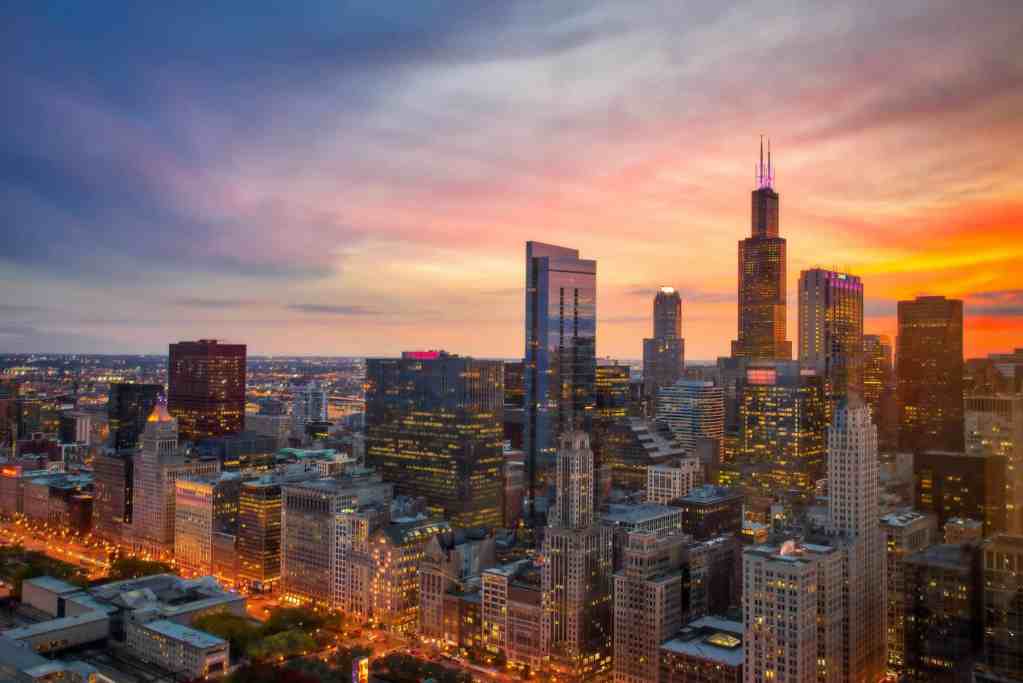
Where To Go On Bears Gameday
Chicago doesn’t have a stadium bar district, because Chicago doesn’t need one — Bears fandom is citywide and every neighborhood bar turns into a Bears bar at noon on Sunday. What’s actually near Soldier Field is a short strip of South Michigan Avenue plus one genuine surprise on the water. Most serious tailgaters skip bars entirely and set up in the lots; if that’s not you, here’s where to go.
Best Pregame & Postgame Bars
Boat Drinks Bar & Grill — the one nobody writes about. It’s on Waldron Drive right at Burnham Harbor, a five-minute walk from the stadium, with live music, barbecue and tables on the water. Summer Fire matches and September Bears games, this is the best pregame in the city that isn’t a parking lot.
Weather Mark Tavern — nautical-themed neighborhood bar at 1503 S Michigan, ten minutes’ walk to the gates, opening at 10 a.m. on weekends for brunch before noon kickoffs. Solid pub food, good for groups, and the closest real bar to the stadium.
The Staley — named for the Decatur Staleys and owned by former Bear Israel Idonije, whose food you’ll also eat inside the stadium. Big screens, proper Bears crowd, 1736 S Michigan.
Reggies — music club on South State that runs a game-day shuttle to Soldier Field with the cover including food and drinks. Cheapest beer in the South Loop and a far more social pregame than fighting campus traffic.
Best Restaurants Near Soldier Field
The Chicago Firehouse Restaurant — steaks and lobster bisque in an 1905 firehouse at 1401 S Michigan, with a courtyard that’s the best outdoor dining in the South Loop. The pre-game dinner spot if the game is a night kick.
Eleven City Diner — Jewish deli on South Wabash, open from breakfast, enormous portions, corned beef and Chicago-style cheesecake. The right answer before a noon kickoff.
Half Sour — South Loop neighborhood spot on South Clark with excellent burgers, a patio, and a menu that works for a group that can’t agree on anything.
Acadia — two Michelin stars on South Wabash, and the reason to plan a dinner around the trip rather than after it. Book well ahead.
Al’s #1 Italian Beef or Mr. Beef — if you want the original rather than the stadium version, both are up in River North. Mr. Beef closes Sundays, which is exactly when you’d want it, so make it a Saturday errand.

Why You Should Go
Soldier Field is the last stadium in the NFL that feels like it belongs to a city rather than to a development. It’s a 1924 war memorial with a football stadium inside it, on open lakefront, with 61,500 seats and no bad ones — and the wind, the cold and the cramped concourses are part of the deal rather than flaws someone forgot to fix. The Bears have voted to move to Indiana and the Fire are building their own place a mile away, which means the clock on a century of football on this lakefront is now running out loud. Go while there’s still a team playing here.
Check out our other Chicago and NFL guides:
Written by Brad Richards, Founder of Gameday Guides. This guide includes insights from personal visits as well as updated info from team sources, fan forums, and stadium policies. We aim to help you plan with confidence — enjoy your gameday.