

| Los Angeles Coliseum Quick Guide | Details |
|---|---|
| Home Team(s) | USC Trojans (NCAA – Big Ten); 2028 Olympic Track and Field, and event use |
| Opened | May 1, 1923 – celebrating over 100 years of sports and civic history |
| Capacity | ~77,500 (was over 93,000 before 2018–19 renovation) |
| Best Value Seats | Lower-level corners and upper sideline sections—good views with lower pricing |
| Premium Seating | Scholarship Club Tower (Suites, Loge Boxes, Club Seats) with private lounge, VIP entrance, and field views |
| Top Stadium Foods | Fusion tacos, loaded fries, BBQ brisket sandwiches, beer garden options |
| Nearby Bars/Eats | Exposition Park vendors, downtown LA restaurants, bars near Figueroa and USC Village |
| Closest Hotels | Downtown LA accommodations; USC Hotel is walkable |
| Transit Access | Metro E (Expo) Line – Expo Park/USC Station; rideshare and parking decks nearby |
| Unique Highlights | Only stadium to host two Olympics (1932 & 1984 – third coming in 2028); Hosted 1959 World Series; was site of Super Bowl I; home of the first ever Monday Night Football game; Famous Flame Cauldron |
🔍 Need a custom plan for your USC gameday or LA Coliseum event?
Use our Gameday Guides AI for personalized tips on seating, food, parking, and public transit at the Coliseum.

Best Seats At The L.A Coliseum
The Los Angeles Memorial Coliseum is a living piece of history—it’s hosted two Olympics, a World Series, two Super Bowls, and has been USC’s home since 1923. The stadium holds 77,500 fans after a major $300 million renovation that added premium clubs, field suites, and modernized the entire facility while preserving the iconic peristyle arches. Fair warning: this is still a massive concrete bowl with steep stairs, limited shade in certain sections, and parking that requires permits or savvy planning—but the sightlines are surprisingly good from most seats, and there’s nothing quite like watching college football in a stadium that’s been standing for over 100 years.
Seating Guide
The Coliseum seats 77,500 across multiple levels—lower bowl (100-level sections), club level (200-level), and upper bowl (300-level)—with the field oriented east-west and the iconic peristyle arches at the east end zone. Think of it as a classic horseshoe design: sideline seats give you the traditional football view, end zones put you in the action, and upper bowl gives you the elevated “all-22” perspective that lets you see plays develop.
The Sweet Spots: Best Non-Premium Seats
Lower Bowl Sideline (Sections 6-8 and 21-23, Rows 25-45): These are the classic USC football seats—you’re at midfield or close to it, high enough to see plays develop without being too far from the action, and the sightlines are excellent. Rows 1-20 are actually too close—the relief is shallow and you’ll miss action on the far side of the field. Rows 25-45 are the sweet spot where you get proximity and perspective. Trade-off: Sun exposure is brutal for day games in September and October (more on that below), and you’re paying premium non-club prices. Sections 7H and 7L around rows 15-30 are behind the USC bench and feel connected to the team.
The one time I sat in Row 40 of Section 7, I was shocked how much better the view was than Row 15—you’re high enough to see the offensive line blocking schemes but still close enough to hear the hits.
Upper Bowl Sideline (Sections 302-308 and 318-324, Rows 50-70): You’re getting the elevated all-22 view that lets you watch plays develop like a coach, and you’re saving $40-80 per seat compared to lower bowl sideline. These sections give you a full view of the field with good depth perception, and if you’re in the first rows of the upper deck (right around Row 50), you’re not as far away as you’d think. Trade-off: You’re disconnected from the field-level energy, and specific player identification gets tough from up here. Best for fans who understand football and want to see strategy over spectacle.
End Zone Lower Bowl (Sections 15H and 7L, Rows 15-30): You’re right behind the goalposts with the all-22 view, which is unorthodox but gives you a completely different perspective on the game. Section 15H gets shade from the giant jumbotron at the top of the bowl, making it one of the few spots that avoids direct sun during day games. Section 7L (opposite end zone) puts you near the tunnel where USC enters the field—great for pre-game energy. Trade-off: When the ball is on the opposite end of the field, your view is limited and you’re squinting to see details.
Best Value Seats
Upper Bowl Corners (Sections 318-319, Mid-Rows): You’re paying budget prices ($30-50 depending on the opponent) and getting a decent angled view of the field where you can still follow the action. These aren’t as good as upper bowl sideline, but they’re significantly cheaper and you’re still inside the Coliseum for a USC game. Trade-off: The angle means you lose some depth perception on plays running away from you, and you’re farther from concessions and bathrooms. Skip the very back rows (80+) where it gets hard to see the ball.
Budget Option
Upper Bowl End Zone (Sections 10L and 12L, Upper Rows): These are the cheapest seats in the stadium, typically $20-40 for non-marquee games. You’re high up and at an extreme angle, but you can still see the entire field and you’re experiencing a game at the Coliseum. Downside: You’re very far from the action, the angle is awkward for plays on the near side of the field, and you’ll feel disconnected from the crowd energy. Good if you just want to say you went to a USC game without spending much.
Weather & Shade Reality
The Coliseum is an outdoor stadium with brutal sun exposure for day games from late August through October. The west side (odd-numbered sections like 7, 9, 11, 13, 15) stays in direct sun for the entire game during 12pm and 3:30pm kickoffs. The east side gets some relief, but limited. The only section with consistent shade is Section 15H (upper end zone) because the giant jumbotron blocks direct sun.
If you’re going to a day game in September, bring sunscreen, a hat, and water—you will bake in the lower bowl sideline seats, especially on the west side. Evening games (7pm+ kickoffs) are much more comfortable temperature-wise.
What to Avoid
Lower Bowl Rows 1-15 (Any Section): You’re too close to the field and the shallow relief means you’ll have obstructed views of plays on the far side. Yeah, it sounds cool to be “right on the field,” but you’re losing perspective and missing half the game. Rows 25+ are objectively better.
Upper Bowl Section 212 (Press Box Side): These seats are farther from the actual action than you’d expect because of the Coliseum’s layout, and you’re directly under the press box overhang which can feel claustrophobic. The student band sits nearby and it gets loud—bring earplugs if you sit here. For the same price, sections 318 or 319 give you a better experience.
Upper Bowl Rows 80+ (Any Section): You’re so high up that identifying specific players becomes difficult, and on plays near the sideline, it’s hard to see the ball. Save your money and watch on TV if these are your only options.
Premium Seating & Clubs
The Coliseum has three main premium options: the 1923 Club at the top of the Scholarship Club Tower (west side), the Lou Galen Club on the club level, and Audi Field Suites behind the east end zone. The 1923 Club is the top-tier experience with a 360-degree view of Los Angeles, while field suites put you on the field just feet from the action.
The Best Premium Experience
1923 Club – Top of Scholarship Club Tower (West Side)
What’s included: Lounge seating with TVs and multiple bars featuring premium food and beverage available for purchase (not unlimited, but upscale options). Entry begins 2 hours before kickoff so you can settle in and enjoy the atmosphere. 360-degree views of Los Angeles from the top of the tower—you can see downtown, the Hollywood Hills, and the entire city while watching the game. $50 gift card for every two tickets purchased that can be used at concessions within the club. Private restrooms for 1923 Club guests only.
The lounge itself: It’s genuinely special—the views are incredible, the atmosphere is upscale without being stuffy, and you feel like you’re experiencing USC football in a unique way. The food and drink quality is significantly better than standard concessions, and the bartenders know their stuff. You’re removed from the raw stadium energy, which is the trade-off for comfort and luxury.
Who this is for: Celebrating a major milestone (graduation, anniversary, big birthday), entertaining clients, or treating yourself to a once-in-a-lifetime USC experience. Not for budget-conscious families or die-hard fans who want to be in the thick of the crowd.
Reality check: You’re paying a premium for views, atmosphere, and amenities over proximity to the field. If you want to feel like you’re “at the game” in the traditional sense, sit in the lower bowl. If you want a premium experience with incredible city views and upscale amenities, the 1923 Club delivers.
Best Value Premium Option
Lou Galen Club Seats – Scholarship Club Tower, Club Level
What’s included: Comfortable padded stadium seats (not bleachers) with access to the exclusive, climate-controlled Lou Galen Club Lounge. Premium food and beverage available for purchase inside the lounge—not unlimited, but better quality than concourse options. Private restrooms and a more relaxed pre-game and halftime experience.
The vibe: This feels like a real club for football fans who want comfort without the full luxury price tag. You’re around other USC supporters who care about the game, and the lounge is less crowded than the main concourses. The padded seats alone make a difference if you’re going to multiple games per season.
Who this is for: Season ticket holders, fans attending 3+ games per season, or anyone who wants a nicer experience without paying 1923 Club prices. Honestly one of the best values in the building if you’re a regular attendee.
The math: You’re paying moderately more than standard lower bowl seats, but you’re getting climate control, better bathrooms, padded seats, and lounge access. Makes sense if comfort and convenience matter to you.
Other Notable Premium Options
Audi Field Suites – East End Zone, Field Level
Private, fully furnished premium on-field space for 34 guests located directly behind the east end zone. Early access beginning 2 hours before kickoff, premium food and beverage for purchase, dedicated field-level attendants, TVs within your suite, and VIP parking (8 parking passes per suite per game). These are brand new as of the 2023 season and give you a field-level experience unlike anything else at the Coliseum. Suite holders also have unlimited entry to the Peristyle Club and Field Club.
Suites & Group Options
Traditional luxury suites are located on Level 5 of the Coliseum and can accommodate groups for private events with catering options. Suites vary in size and pricing depending on opponent and location—call USC Group Sales at 213-740-4174 for availability and pricing. Corporate groups and large celebrations (20+ people) book these for privacy and flexibility.
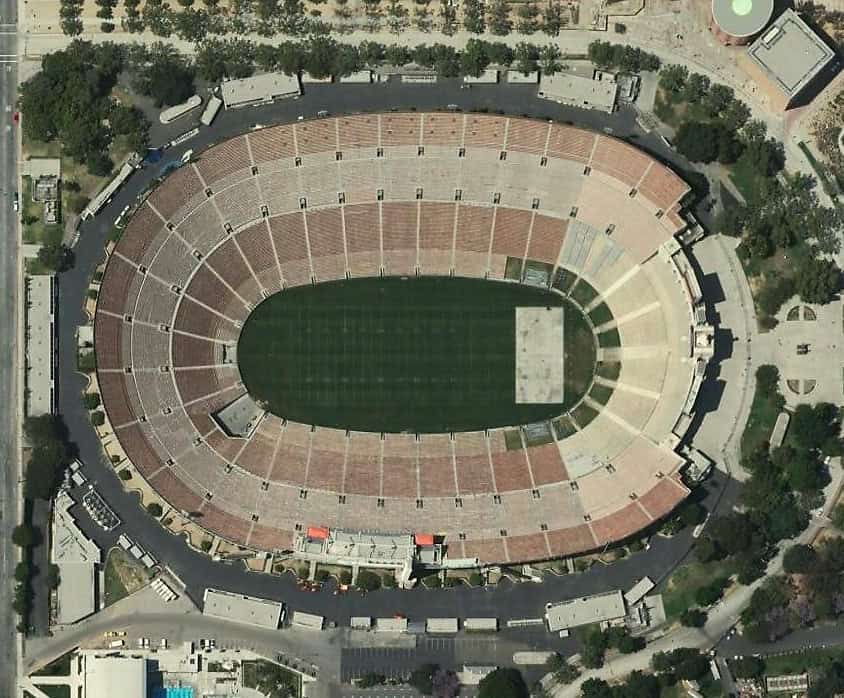
L.A Coliseum Seating Chart
The current seating capacity of the LA Coliseum is 77,500, achieved through a major renovation completed in 2019 that reduced capacity from the previous 93,000+ to create a more intimate experience with wider seats and modern amenities. The renovated facility features 42 suites, 1,100 club seats, 24 loge boxes, and a 500-person rooftop terrace. Here is the updated Seating Chart.
Tickets To USC Football
For all the reasons we’ve already mentioned, USC games at the historic LA Coliseum can be a challenging ticket, especially with the Trojans’ move to the Big Ten Conference bringing marquee matchups to Los Angeles. If you plan far enough in advance, though, you should be able to find tickets to Trojan Football without much of a problem. To get tickets to a USC football game, you have several options:
Getting Tickets:
- Official USC Athletics Website: Visit the official USC Athletics website to purchase tickets directly. Season tickets start at $70/game, with mini plans starting at $100 per plan covering 2-5 games.
- SeatGeek: SeatGeek offers a wide variety of USC Trojans Football tickets with prices starting from around $96 for rivalry games.
- Ticketmaster: The official ticketing partner offers individual game tickets and season ticket options.
- Ticket Exchanges and Resale: Explore StubHub, Vivid Seats, and other reputable secondary markets
Remember to purchase tickets from reputable sources to avoid scams or counterfeit tickets. Check the ticket seller’s reviews and policies before making a purchase.
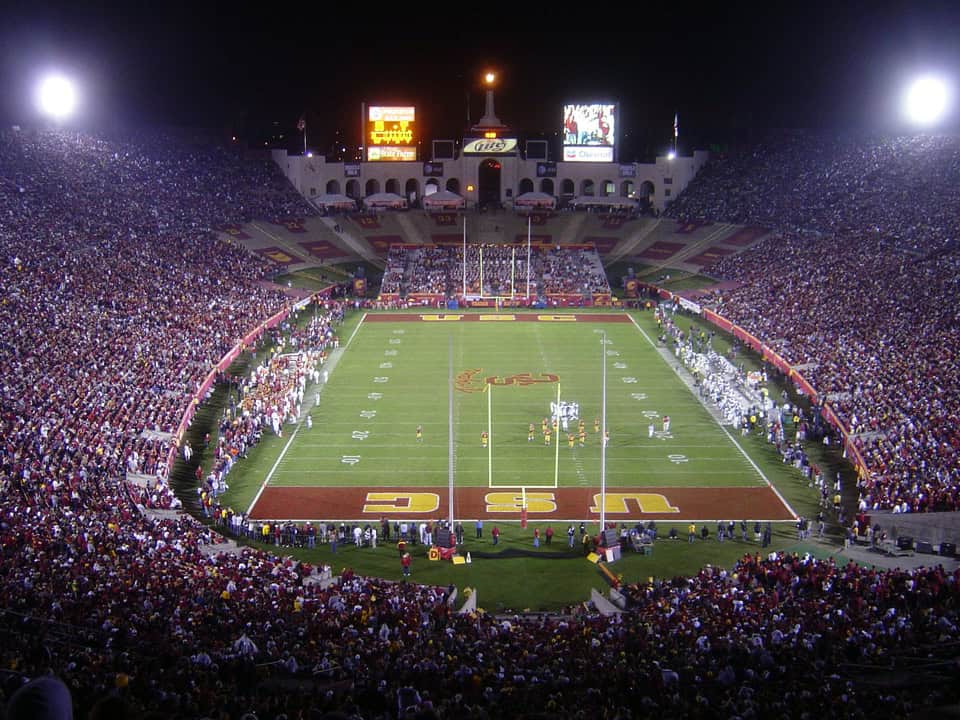
L.A Coliseum Bag Policy
The Coliseum enforces a strict clear bag policy: One clear plastic, vinyl, or PVC bag not exceeding 12″ x 6″ x 12″, or a one-gallon clear plastic Ziploc-style bag. You can also bring a small clutch purse approximately the size of a hand (with or without handle or strap) in addition to the clear bag.
Prohibited items: Backpacks, coolers, briefcases, fanny packs, cinch bags, luggage, camera bags, or any bag larger than the size limit. Diaper bags and medically necessary items are allowed after proper inspection.
No bag check is available—if you bring a non-compliant bag, you’ll have to take it back to your car or dispose of it.
Key Stadium Policies
Outside food and beverages: Factory-sealed bottles of water (17 oz. or less) are allowed—limit two per person. No other outside food or beverages, and no alcoholic beverages are permitted.
Cashless parking: USC campus parking is 100% cashless—credit card or mobile payment only.
Metal detector screening: All guests go through metal detectors and bag inspections upon entry. Arrive early to account for security lines, especially for high-demand games.
Here is the Coliseum’s handy guide: LA Coliseum A to Z Guide
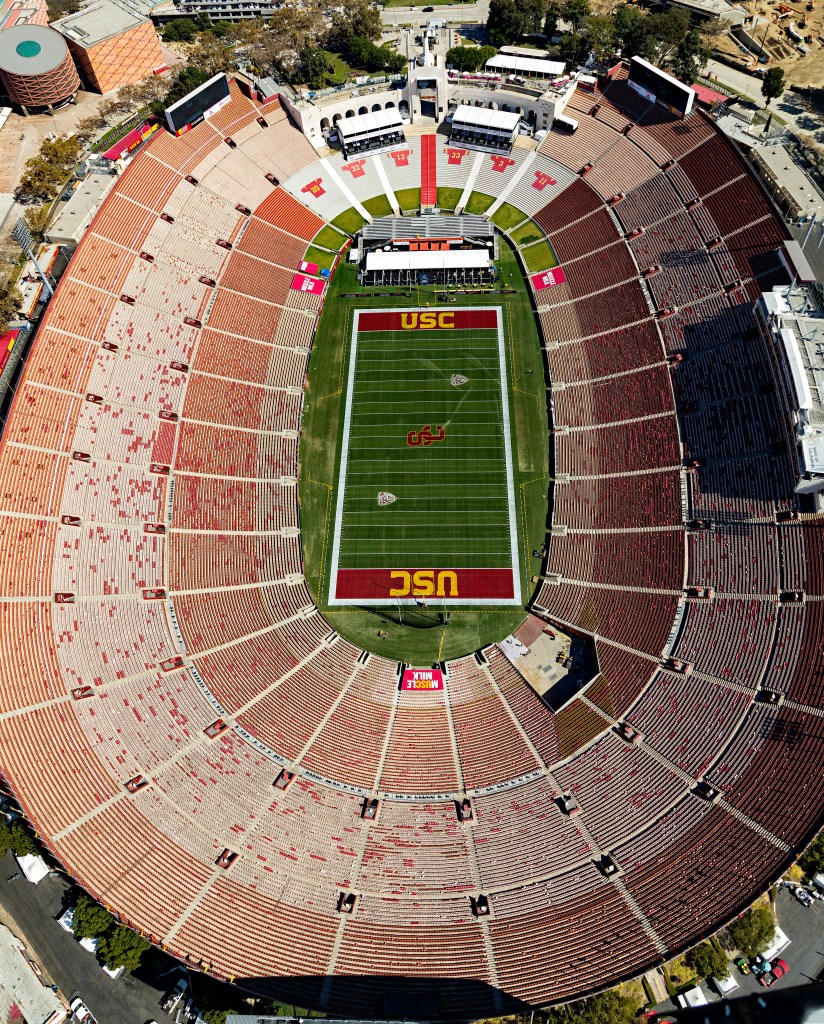
Getting To The Coliseum
The Coliseum is located in Exposition Park, just south of downtown Los Angeles. Public transit (Metro E Line) is genuinely the best option for most fans—it’s faster than driving, costs $3.50 round trip, and you completely avoid parking drama. If you’re driving, USC campus parking is your only option since Exposition Park lots are permit-only for USC games.
L.A Coliseum Parking
Exposition Park lots are permit-only for USC games—there are no cash lots available. Your only option for driving is USC campus parking, which costs $50 per vehicle (cashless payment only—credit card or mobile payment). A $0.50 transaction fee applies for mobile payments.
How USC campus parking works: Lots open 6 hours before kickoff, and parking is first-come, first-served except for reserved structures. You’re looking at a 10-15 minute walk from most USC parking structures to the Coliseum.
Available parking structures (first-come, first-served with Text2Park):
- Downey Way Structure – Closest option, about a 10-minute walk to the Coliseum. Supports drive-up credit card payment and Text2Park.
- Figueroa Street Structure – About a 10-minute walk, Text2Park available
- McCarthy Way Structure – About a 12-minute walk, Text2Park available
- Jefferson Structure – Text2Park available
Reserved parking (must prepay online):
- USC Shrine Structure and Grand Avenue Parking Center – Available through ParkWhiz or JustPark for around $48.50-$50. These structures require advance purchase and are closer to the Coliseum (about an 8-10 minute walk).
How to use Text2Park: Park in any unmarked space in an available structure, find the location code near the elevator or stairwell, text the code to 25023, then enter your license plate and payment details. Pay immediately when you park—the structures are patrolled using license plate recognition technology and you’ll get a citation if you don’t pay right away.
Timing: Arrive at least 2 hours before kickoff for big games (Notre Dame, UCLA, top-10 opponents) or 90 minutes for regular games if you want a parking spot without circling. Traffic into Exposition Park gets heavy as kickoff approaches.
Important: All visitors entering USC campus pass through security checkpoints and may need to show a government-issued photo ID.
Public Transit (Metro E Line) – Highly Recommended
The Metro E Line (formerly Expo Line) has two stops right next to the Coliseum: Expo Park/USC and Expo/Vermont, both less than a 5-minute walk to the entrance gates. The E Line runs from East LA to Santa Monica with easy connections downtown, and Metro provides enhanced service on game days.
How it works: Trains run every 8-10 minutes during peak hours and cost $3.50 round trip. Buy a TAP card and load it at the station before you board—you’ll need to tap before getting on the train. Service runs from approximately 4:30am to 11:45pm daily, so you’re covered for any kickoff time.
Park-and-ride option: Park at Metro E Line stations farther from downtown (Expo/Bundy, Expo/Sepulveda, Culver City) and ride the train directly to the Coliseum. Most stations offer parking for $3 on weekdays or free on weekends. This is the smartest move if you’re coming from West LA or the South Bay—you avoid all traffic and parking stress.
Pro tip: After the game, expect the E Line to be packed. If you want a more comfortable ride home, hang out near the stadium for 20-30 minutes and let the first wave of fans clear out, then board a less crowded train.
Rideshare (Uber/Lyft)
Drop-off locations: Expo Park Drive (accessed from Figueroa Street) is the standard drop-off point. During larger events, rideshare drop-off is located at Vermont Avenue between Exposition Boulevard and Downey Way.
Pick-up after the game: Exit Gate 19 or 23, walk north to Exposition Boulevard, then west to Vermont Avenue for the designated rideshare pickup area.
Rideshare services are prohibited from entering the Exposition Park area until 45-60 minutes after the event ends due to traffic patterns. This means if you leave right when the game ends, you’ll either have to walk several blocks away from the stadium to get picked up, or wait nearly an hour for the traffic ban to lift. Expect to pay $15-30 from most LA neighborhoods before the game, and 2-3x that after the game when surge pricing kicks in.
Pro tip: Either grab food and drinks at a nearby spot for 60 minutes after the game ends and wait for the rideshare ban to lift and surge pricing to drop, or walk a few blocks away from Exposition Park to get picked up faster.
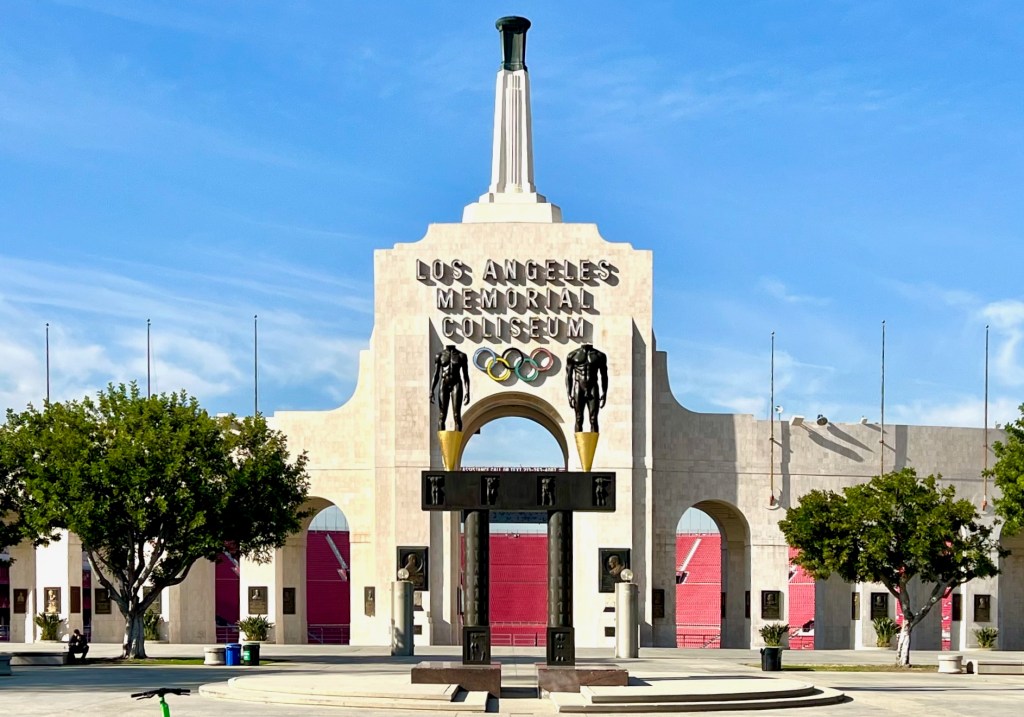
USC Gameday Tips and Things to Do
USC gameday is different from any college town experience—you’re on an urban campus in the middle of Los Angeles with palm trees, world-class food, and Metro trains dropping off thousands of fans in cardinal and gold. The scene isn’t centered around parking lot tailgating; it’s campus lawns, food halls, and traditions that have been happening for decades. Most out-of-town fans (especially alumni) arrive early to experience the Trojan Walk, grab food at The Fields LA or on-campus dining, and soak in the atmosphere before heading into the Coliseum. Here’s where people actually go, what traditions you can’t miss, and the insider moves that make USC gameday work.
USC Traditions You Can’t Miss
Trojan Walk (2 Hours 30 Minutes Before Kickoff): The team buses now drop off at the Southeast Corner of the stadium near the Olympic Gateway. The team walks past the iconic bronze Olympic statues, through the Peristyle arches, and down the tunnel into the Coliseum—it’s one of the most photogenic and intimate player-fan interactions in college football. Fans line up along the route to high-five players, cheerleaders, and coaches as they walk by.
Pro tip: Stand near the Olympic Gateway statues for the best photos of players entering the historic Peristyle arches. Arrive at least 20-30 minutes early (around 3 hours before kickoff) to get a good spot on the rail. For marquee games (Notre Dame, UCLA, Big Ten rivals), fans start lining up even earlier.
“Kick the Flagpoles” Tradition: On the walk from campus to the stadium along Exposition Boulevard, it’s tradition for fans to kick the base of the flagpoles for good luck. You’ll hear the metallic clang all the way down the street—it’s one of those quirky USC rituals that makes no logical sense but everyone does it anyway.
The 4th Quarter Olympic Torch: Between the 3rd and 4th quarters, the Olympic Torch perched atop the Peristyle is lit. The stadium goes dark, and the entire crowd lights up their phones—it’s a genuine goosebump moment that connects you to the Olympic history of the venue. Don’t leave early or you’ll miss it.
Tommy Trojan & The Marching Band (2 Hours Before Kickoff): The iconic bronze Tommy Trojan statue sits at the center of USC’s campus and is a must-see for first-time visitors. Two hours before kickoff, the USC Marching Band (Spirit of Troy) performs a concert at Tommy Trojan, then marches to the Coliseum leading thousands of fans singing fight songs. This is one of the best traditions at USC—follow the band and you’ll walk into the stadium with the full gameday energy.
The tradition you’ll hear about: During UCLA week, the Trojan Knights student group wraps Tommy in duct tape and guards him 24/7 to prevent rival pranks. The sword has been stolen so many times over the years that USC now gives Tommy a wooden sword instead of expensive brass.
Where to Eat & Drink Before the Game
The Fields LA – A 200-seat food hall right next to the Coliseum (inside BMO Stadium) with multiple bars, outdoor seating, and around 10 food vendors. Open daily 11am-10pm, not just on game days. Standout vendors include Burritos La Palma (birria burritos, a local favorite) and Barbara Jean (elevated soul food).
The roof deck hack: The Fields often hosts pre-game parties on the roof deck with better beer options and atmosphere than general tailgate areas. Check their schedule before gameday if you want something more upscale.
9-0 Bar & Grill (901 Bar) – The legendary student dive bar on Figueroa. The warning: The line on gameday is absurd (2+ hours after noon). If you want to experience the student scene, go on Friday night instead when it’s packed but manageable. If you show up Saturday afternoon, you’ll waste half your pregame standing in line.
USC Hotel Venues: If you’re staying on campus or want an alumni-heavy vibe, the USC Hotel has three gameday spots: The Lab Gastropub (happy hour specials, USC memorabilia, sports-themed lounge), McKay’s Restaurant (breakfast buffet and game day specials), and the USC Hotel lobby bar (game day cocktails and relaxed atmosphere).
Campus Dining (TAF Members & Ticket Holders): Moreton Fig offers seasonal dishes with a shaded patio beneath historic fig trees, elevated chef’s stations, and hosted open bar—upscale and requires reservations. Tommy’s Tavern opens 3 hours before kickoff exclusively for Trojan Athletic Fund (TAF) members and guests, featuring music, yard games, TVs, and meet-and-greet opportunities with USC athletes.
Quick Casual Near Campus: Im a fan of Dog Haus Biergarten USC it serves gourmet hot dogs and craft beer with happy hour Monday-Friday 3-6pm. 23rd Street Café is a fusion spot mixing Indian, Mexican, and American cuisine (the chicken tikka masala quesadilla is weird and good). El Huero (Chano’s) is open 24/7 for Mexican food—a USC tradition for late-night cravings and post-game meals.
Free Fan Activities
Modelo Ultimate Tailgate – FREE fan zone on Christmas Tree Lane (east of the Coliseum) that opens 4 hours before kickoff. Interactive games, music, TVs showing other college games, food trucks, beer gardens, giveaways, and photo opportunities. Open to all fans, all ages.
Level Up by Bandai Namco – Opens 2 hours before kickoff on the second floor of The Fields LA. Full-service bar with open seating and free-to-play arcade games—great if you’re bringing kids or want something different.
Access & Gate Strategy
The Peristyle Entry Hack: Most fans flood the massive North gates (Gates 4-8), which creates long security lines. Instead, walk around to the East End (Peristyle) and use Gates 1 or 33. These gates are often less crowded, and you get to walk in under the Olympic Torch and through the iconic Peristyle arches—the coolest entrance in college football.
Security screening: Everyone goes through metal detectors at all gates. Have your phone, keys, and any large metal items out of your pockets and visible before you get to the detector. If you have no bag, use the Express Lanes which are clearly marked and move faster.
When to arrive: Get to the gates at least 60-90 minutes before kickoff to avoid long security lines, especially for big games. If you want to experience pregame traditions (Trojan Walk, band performance), arrive 3 hours before kickoff.
Food & Drink Strategy Inside the Coliseum
The Coliseum has significantly upgraded its concessions in recent years with 22 new points of sale and better food options than most college stadiums.
What’s actually good:
- Tri-Tip Sandwich on garlic buttered bread—fans consistently call this the best food at the Coliseum
- Street Tacos (carne asada, chicken adobo, al pastor)—better than generic stadium nachos
- Loaded Asada Fries—a fan favorite
- Hot Honey Chicken Sandwich and Chicken & Waffles—new items added in 2025
- Korean Fried Chicken Sandwich at Gate 4
- BBQ Chicken Sandwich with signature slaw on a potato bun
New additions : Mushroom torta, loaded mac and cheese, grab-and-go markets on lower and upper concourses, and self-serve draft “beer jets” at Tunnels 17 and 21.
Alcohol sales: The Coliseum now sells alcohol stadium-wide, but sales stop strictly at the end of the 3rd quarter.
Timing hack: Buy food during the first quarter or early in the third quarter when lines are shorter. Halftime is a disaster—everyone hits the concession stands at once and you’ll wait 20+ minutes.
Outside food allowed: Factory-sealed bottles of water (17 oz. or less) are permitted—limit two per person. This is unusual for a major stadium and a money-saver. Bring your own water instead of paying $6 per bottle inside.
Instagrammable Spots & Photo Ops
The Peristyle Arches – The iconic Olympic arches at the east end zone are the most photogenic spot at the Coliseum. Shoot from the field level if you can access it pre-game, or from the lower bowl end zone sections. They’re lit beautifully at night.
Tommy Trojan Statue – On USC’s campus, about a 10-minute walk from the Coliseum. Go 3+ hours before kickoff to avoid crowds. Every USC fan takes a photo here.
Olympic Gateway Statues – The bronze Olympic statues near the Southeast Corner where the Trojan Walk happens. Great background for pre-game photos.
The Olympic Torch – Outside the Peristyle. It’s lit during the 4th quarter, but you can take photos of it anytime.
The “Victory Dog” Post-Game Tradition
When you leave the stadium, you’ll smell bacon. Hundreds of street vendors line the exits selling “Danger Dogs” (bacon-wrapped hot dogs with grilled peppers and onions). This is the unofficial food of Los Angeles sports—every local knows you haven’t done a real USC game until you’ve eaten a Danger Dog on the walk back to your car or the Metro.
The verdict: Eat one. Bring cash or Venmo ($10-15)—the street vendors don’t take cards. It’s greasy, it’s perfect, and it’s a LA sports tradition that goes back decades.
The Coliseum’s Olympic Future (2028)
The LA Memorial Coliseum will host track and field (athletics) during the 2028 Summer Olympics, making it the first stadium ever to host three different Olympic Games (1932, 1984, and 2028). The Coliseum will also share duties for the opening and closing ceremonies with SoFi Stadium
What this means for USC fans: The Coliseum will be unavailable for USC home games during summer 2028, and the stadium will likely undergo significant transformation starting in late 2027. If you want to experience USC football at the Coliseum before it temporarily becomes an Olympic venue, plan to attend games during the 2026 or 2027 seasons. I don’t know if its offical yet, but i imagine the Trojans will play at SoFi while this is going on.
What Makes USC Pregame Different
USC isn’t a traditional college town—the vibe blends college football energy with LA sophistication: you might see celebrities tailgating next to students, and many alumni treat gameday as part of a full LA weekend (brunch in Beverly Hills, Trojan Walk on campus, rooftop bars downtown after the game). It’s a different rhythm than most college football experiences, and that’s what makes it special
Hotels Near The L.A Coliseum
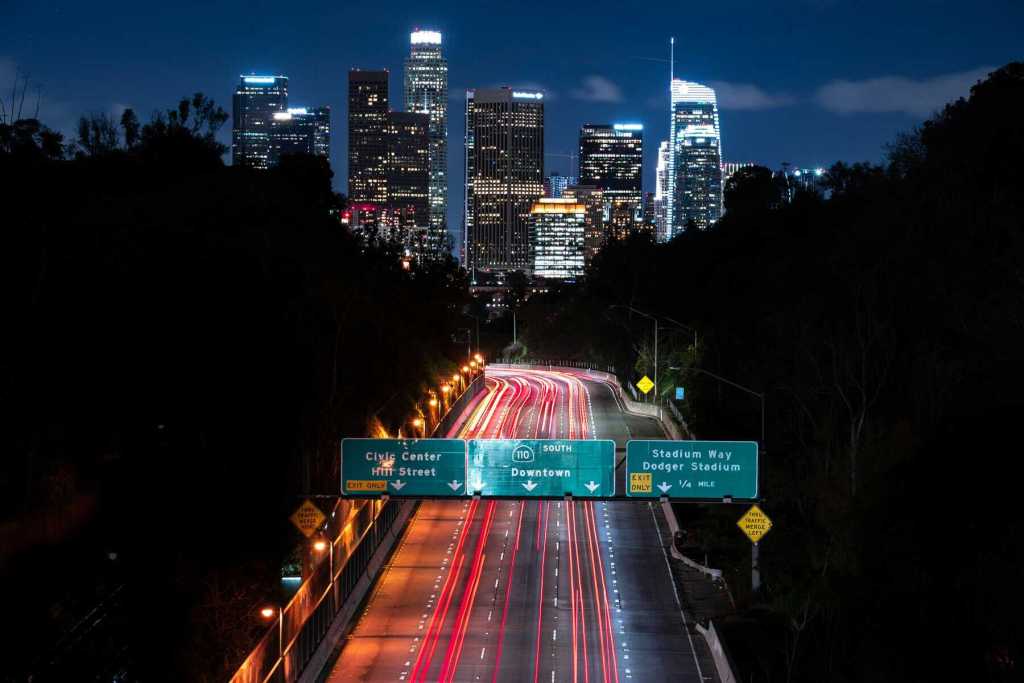
Most USC fans coming from out of town are alumni looking for a quality experience—your choice comes down to whether you want campus nostalgia or the full LA urban experience. Stay on campus if you want to walk to the Coliseum, hear the marching band practice, and immerse yourself in Trojan traditions. Stay downtown if you want luxury hotels, rooftop bars, world-class restaurants, and easy access to LA’s cultural attractions beyond the game. Both options put you close to the Metro E Line for easy transportation.
On-Campus: Your Best Option
USC Hotel – The only hotel owned and operated by USC, located adjacent to campus and a 3-minute walk to the Coliseum. Features 240 rooms, onsite dining, fitness center, outdoor pool, and you’ll be surrounded by fellow Trojans all weekend. Self-parking $40 overnight. This is the move if you want maximum convenience and the deepest connection to USC gameday—you’re literally on campus. Book 6+ months ahead for big games (Notre Dame, UCLA) or you’ll miss it.
Downtown LA: Luxury & Urban Experience
JW Marriott Los Angeles L.A. LIVE – Luxury hotel in the heart of downtown at L.A. LIVE, steps from the Convention Center and Crypto.com Arena. Features 6 restaurants including an Argentine steakhouse, rooftop pool with panoramic city views, spa services, and marble bathrooms. Rooms offer downtown views, and you’re surrounded by nightlife and entertainment. About a 15-minute rideshare to the Coliseum or take the Metro E Line from nearby 7th St./Metro Center. Valet parking $66 daily. Perfect for alumni who want to make a weekend of it and experience LA beyond football.
The Ritz-Carlton, Los Angeles – Sophisticated luxury in the same 54-story tower as the JW Marriott at L.A. LIVE. Features 123 rooms with marble bathrooms, rooftop heated pool on the 26th floor with panoramic city and mountain views, The Ritz-Carlton Spa, and Club Level accommodations with exclusive lounge access. Valet parking $66 daily. This is the premium choice for alumni celebrating milestone reunions or entertaining clients—top-tier service and amenities.
Omni Los Angeles Hotel at California Plaza – Upscale downtown hotel sitting atop historic Bunker Hill, across from the Museum of Contemporary Art and steps from Grand Central Market, The Broad, and Angels Flight Railway. Features refined rooms with floor-to-ceiling windows, outdoor heated lap pool, spa, and the acclaimed Noé Restaurant with Neo Bistro cuisine and stunning downtown skyline views from the outdoor patio. Great location for exploring downtown LA’s cultural attractions before or after the game.
Hotel Figueroa – Unbound Collection by Hyatt – Stylish downtown hotel with eclectic atmosphere, excellent restaurant scene nearby, and convenient to LA’s cultural attractions. About a 10-15 minute rideshare to the Coliseum. Good for younger alumni who want a trendy downtown experience with walkable nightlife.
DoubleTree by Hilton Los Angeles Downtown – Full-service hotel in Little Tokyo, just blocks from the Financial District and Union Station. Features 434 modern rooms, rooftop garden with city views, 24-hour fitness center, and over 50 restaurants within walking distance. Two blocks from LA Metro for easy access to the Coliseum. Solid mid-tier choice for alumni who want downtown convenience without luxury pricing.
Mid-Range Downtown Options
Moxy Downtown Los Angeles – Modern, trendy hotel in downtown LA with great views and a younger, energetic vibe. About a 10-15 minute rideshare to the Coliseum. Good for groups of younger alumni who prioritize location and nightlife over luxury amenities.
Courtyard by Marriott Los Angeles L.A. LIVE – Reliable Marriott quality right at L.A. LIVE in the entertainment district. About a 15-minute rideshare to the Coliseum, walkable to downtown attractions and restaurants. Predictable service and amenities at a more accessible price point than the luxury options.
Booking Tip: Reserve 6+ months in advance for marquee games (Notre Dame, UCLA, Big Ten rivals like Michigan or Penn State). Hotels near USC and downtown LA fill up fast and prices can double for rivalry weekends.
Things to Do Near The Coliseum
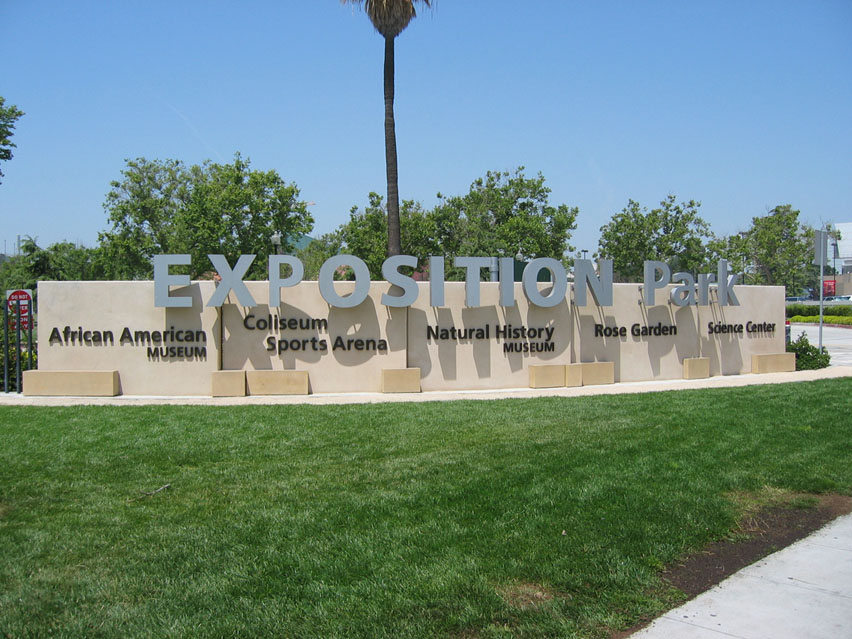
Just steps from USC’s main campus lies Exposition Park, home of some of LA’s greatest cultural attractions and sports venues, including the California African American Museum, California Science Center, Natural History Museum of Los Angeles County, Los Angeles Memorial Coliseum, BMO Stadium and the upcoming Lucas Museum of Narrative Art.
Exposition Park
Natural History Museum of Los Angeles County Houses one of the world’s most extensive and valuable collections of natural and cultural history – more than 35 million objects, some as old as 4.5 billion years. The extraordinary collection includes a 63-foot whale skeleton at the entrance and Dinosaur Hall, featuring the world’s only Tyrannosaurus rex growth series.The 75,000 square-foot NHM Commons expansion includes a 400-seat theater, newly landscaped plaza and garden, and the Judith Perlstein Welcome Center with “Gnatalie,” a green dinosaur skeleton that measures over 75 feet long.
California Science Center Home to the Space Shuttle Endeavour and featuring interactive exhibits that make science accessible and engaging for all ages. The center offers free admission and provides hands-on experiences that bring scientific concepts to life.
California African American Museum Free admission museum celebrating African American art, history, and culture with rotating exhibitions and permanent collections highlighting the African American experience.
Lucas Museum of Narrative Art Opening in 2025, co-founded by George Lucas and Mellody Hobson, will be devoted to celebrating the power of visual storytelling. On display will be an extensive collection of paintings and illustrations as well as comic and digital art, photography, costumes, storyboards, and daily film screenings.
BMO Stadium Home to Major League Soccer’s Los Angeles Football Club and National Women’s Soccer League’s Angel City FC, the 22,000-seat stadium opened in April 2018 and is the first open-air stadium built in LA since Dodger Stadium in 1962.
Why You Should Go
The Los Angeles Memorial Coliseum is one of the most historic sports venues in America—it’s hosted two Olympics, countless legendary games, and has been the home of USC football for over 100 years. The atmosphere on a fall Saturday is electric, the peristyle arches are iconic, and the recent renovation brought modern amenities while preserving the stadium’s character. If you’re looking for a classic college football experience in a stadium with genuine history and tradition, the Coliseum delivers
Check out our College Football Page. And here are some guides to LA’s great venues:
SoFI Stadium and the Rose Bowl
Dodger Stadium and Angel Stadium
Crypto.com Arena and Intuit Dome
Written by Brad Richards. Founder of Gameday Guides. This guide includes insights from personal visits as well as updated info from team sources, fan forums, and stadium policies. We aim to help you plan with confidence — enjoy your gameday. Let us know if we missed anything or if we need to make corrections.